Please Sign In

Please enter a valid username and password
  • Log in with Facebook
» Not a member? Take a moment to register
» Forgot Username or Password

Why Register?
Signing up could earn you gear (click here to learn how)! It also keeps offensive content off our site.

110 Greatest Tips

Hunting tips, tricks, and advice from ten of Field & Stream's greatest writers ever. Today: Birds and Big Game; tips 69-97.

BIRDS; TIPS 69-79

069
BREAK OUT OF A SLUMP.
The best way to start hitting again is to swing through the birds from tail to head. If you shoot as the gun passes the bird's head, the gun actually fires well in front of it due to the fast swing plus ignition delays from human reaction time and the gun's lock time. B.B., December 1998

070
PUSH PHEASANTS.
The trick to driving cornfields is to position the shooters at one end of the rows without making a sound. They should be all set before the birds in the field know there is a man within miles. Then, and only then, should the beaters start through. And as they go, they should talk-talk to one another, talk to the dogs, talk to themselves. It doesn't matter what they say, just as long as they talk. The human voice is anathema to a pheasant. T.T., October 1961

071
MAKE A WIGEON WHISTLE.
Take two bottlecaps and drill a 3/16-inch hole through their centers so they line up perfectly when the caps are placed lip-to-lip. With the holes perfectly aligned, epoxy the two caps together and you have made a wigeon whistle. It'll work like magic. N.S., November 1989

072
GIVE BIRDS THE FINGER.
Sporting clay pros often point the index finger of the forward hand at targets to get a more precise readout of their speed and angle. Hunters can do that on real birds and gain new trust in the body's incredible, instinctive ability to obtain instant alignment with a moving object. B.B., December 1998

073
SAVE A FEATHER (OR 20).
Can't remember how many gamebirds of each species that you shoot each year? Save a tail feather from each bird as a tally. At season's end, arrange a "bouquet" of them in a small vase half filled with sand, for a souvenir of the hunting season. T.T., November 1972

074
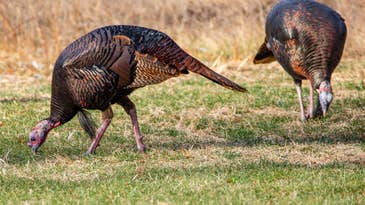
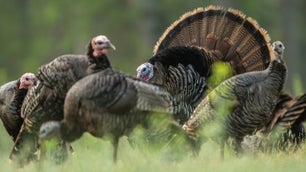
SCRATCH LIKE A TURKEY.
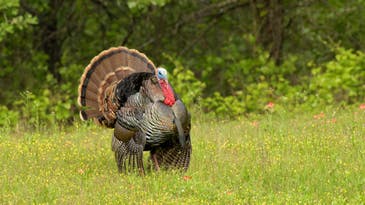
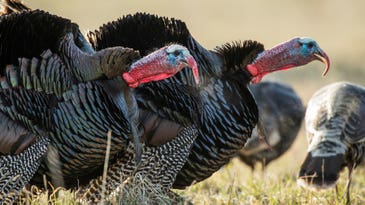
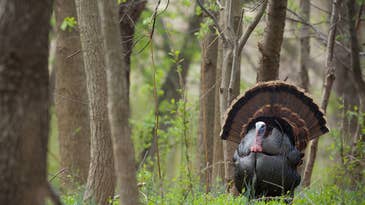
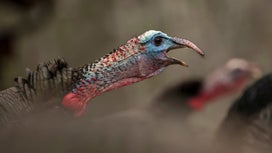
A wild turkey scratches once with its left foot, then twice with its right when searching for food beneath leaves and forest litter. These contented feeding sounds are reassuring to approaching turkeys, particularly in autumn when turkeys are motivated by feeding routines rather than breeding. To imitate the sound, brush dry leaves with your hand or a twig in a 1-pause-2-3 rhythm. Combine the sound with contented purrs and clucks from your turkey call. You'll fool even the most suspicious gobbler. J.B.R., September 2001

075
DON'T SHOOT.
Bird dogs become more reliable on point if gunners avoid shooting at birds that flush wild. Saving your shots for birds that the dog has pointed teaches the dog that shooting is a reward for a job well done. J.B.R., April 1995

076
SHOOT INTO THE WIND.
If a duck or goose is traveling into a strong wind (even with wings cupped and seeming to be almost motionless), swing through and give him more forward allowance than seems necessary. This will help compensate for the wind drift of the shot pattern. If the bird is going downwind, lead him as you normally would. He will seem to be going faster, and you'll instinctively give him more lead. Shot drift will be in the same direction as the bird. B.B., June 1974

077
SHARE A DRINK WITH YOUR DOG.
If you're right-handed, pull the dog's lower left lip from his gums at the side of his mouth, make a trough of the lip, and pour water into the trough. Gauge the flow. Pour no more than he can lap. Never try to pour water down his throat, or straight into his mouth. He'll just gag. Bill Tarrant, September 1980

078
GO WHEN IT'S COLD.
For waterfowlers, bitter is better. Cold weather forces ducks to feed more often and for longer periods of time to maintain energy. Bad weather also seals off many freshwater and saltwater feeding grounds with a mantle of ice. The birds are limited to a few special spots that remain open by virtue of warm springs, tides, or river currents, and theconcentrate there, often in unbelievable numbers. N.S., October 1978

079
AMBUSH A GOBBLER.
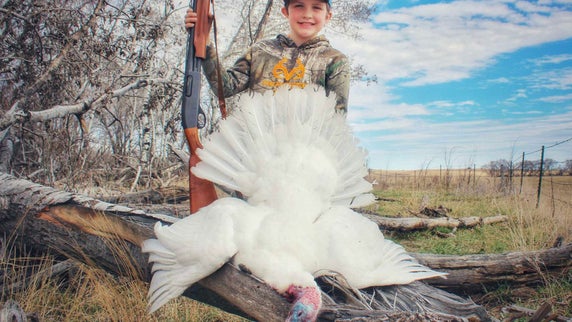
Wild turkeys usually prefer to walk to destinations rather than fly. Consequently, they are most likely to cross streams on fallen logs or other natural bridges when they can. Make note of these natural bridges, and set up near them whenever you are hunting turkeys in those vicinities. J.B.R., August 2000 [NEXT "BIRDS, CONTINUED; TIPS 80-86"]

BIRDS, CONTINUED; TIPS 80-86

080
USE A SEAGUL.
Your decoys may pull in more sea ducks if you add a gull decoy to them. Gulls often light among live du.cks but never really among decoys, and ducks seem to know this. If you can't find a seagull decoy, one or two Canada goose decoys sometimes help to convince wary ducks. H.G.T., November 1983

081
GIVE DECOYS LIFE.
To rig a dipping decoy, cast a cement anchor in a tin can with an eyebolt in the middle. Screw a smaller eyebolt under the tip of the bill of a decoy. Tie fishing line to the decoy's bill, then run the line through the anchor and to your blind. When you tug on the line, the decoy will dip exactly like a feeding puddle duck, creating ripples and reflections that can be seen from miles away. N.S., July 1986

082
FINISH THE RETRIEVE.
Never pull a bird from the dog's mouth, always push it. That's right. Take the bird in hand, then gently press it forward. This will naturally open the dog's jaws and release his hold on the bird. If he still holds, push with more pressure while at the same time turning the bird in the pup's mouth. This will release the carcass from his teeth, plus gag him. He'll literally cough up the bird. B.T., September 1980

083
HUNT ALL THE WAY.
Always hunt a piece of pheasant cover-swamp, swale, or weedfield-to its very end, even though it seems barren of birds. Ringnecks would rather run than fly, and often stay in cover till the last possible moment, then flush at the extreme edge. H.G.T., October 1973

084
STEP UP IN SIZE.
Use small shot during the early part of the bird season, then switch to larger shot as the cover thins and birds start flushing farther from the gun. In the case of pheasants, for example, start with 71/2s, then change to 6s. H.G.T., October 1973

085
KEEP YOUR PUP COMPANY.
The new puppy's first night in a strange home is a fearsome experience, and he usually lets the world know it by wailing inconsolably from dusk till dawn. Both you and the pup can get a night's sleep if you put a wind-up alarm clock beside his bed or in his kennel. The sound of its loud ticking will reassure him and supply the companionship he longs for. H.G.T., February 1952

086
PUT ON A SHOW.
When dove hunting, always carry one extra box of shells hidden on your person. It doesn't matter if you have to tape them to your body like a drug smuggler or bury them in the field a day or so in advance-you must have more shells available than your audience thinks you have. G.H., August 1984 [NEXT "BIG GAME; TIPS 87-97"]

BIG GAME; TIPS 87-97

087
SNEAK UP ON PRONGHORNS.
If you're stalking on open terrain, "Frenchwalk." This is an interesting exercise in calisthenics that finds you sinking lower and lower to the ground with each step. It creates the illusion of a profile that's proceeding toward the horizon, and darned if it doesn't calm the suspicions of antelope and other wildlife. N.S., July 1983

088
WATCH THE WIND.
Always tie or tape a piece of light thread near the end of your barrel. The "telltale," as sailors call it, shows how the wind blows, helping you still-hunt or make distant shots. H.G.T., December 1964

089
ESTIMATE RANGE.
The best way to learn how to judge distance is to guess the range to objects like telephone poles and then pace it off. You can practice it any time you take a walk. Whenever you kill an animal, step off the distance afterward. T.T., October 1969

090
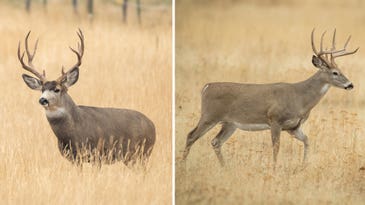
HUNT THE EDGES.
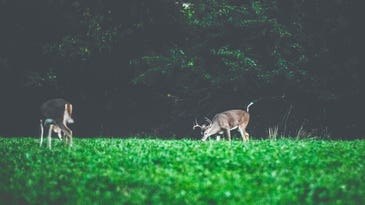
Mule deer prefer the edges-the edges of big timber, the edge where brush joins grass or meadow, and all the other places where two kinds of vegetation meet. Food is more abundant here and occurs in a greater variety. Unbroken timber and big brush usually provide no food, yet are good escape cover, and food is plentiful in the lower growth adjoining them. T.T., October 1967

091
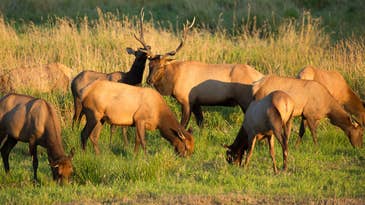
TRACK AN ELK.
Don't try to watch the tracks right at your feet. They're easier to see at some distance-possibly 4 or 5 yards. Alternate your glances at the footprints with careful looks ahead. After all, the purpose of following a trail is usually to get a shot at the animal that made it. If you lose the trail, remember that any game will normally pick the easiest, most logical route unless wounded or frightened. Go ahead a few yards in the direction you'd take yourself, and you'll probably pick up the trail again. T.T., October 1958

092
GET OUT OF THE WIND.
On a windy day you'll always find wildlife on the lee side of natural windbreaks, or holed up in quiet crannies in the timber. N.S., March 1991

093
SCOPE THE ANIMAL.
The easiest way to locate game in a scope, particularly in heavy timber or brush, is to keep both eyes open and bring the gun up into position so that the shooting eye is seeing the game through the scope and the other eye is keeping it in view for insurance. With practice, it will become second nature. B.B., December 1972

094
FIND ELK.
You would be far better off to spend all day inspecting 1 square mile of tumbledown terrain where the going is difficult than to cover 10 square miles of easily hiked, easily glassed openings. Along this line of thought, natural barriers to easy access make for a top spot to prospect. N.S., October 1979

095
USE YOUR HAT.
One of the handiest shooting rests for hunting out West is the cowboy hat. The crease in it holds the gun nicely, and the hat has enough "give" to prevent the gun from throwing its bullets upward away from the rest. B.B., December 1972

096
LOOK SOUTH.
Southern exposures that absorb maximum fall and winter sunlight continue to produce food long after shaded plants have become dormant. Once elk are stressed by a few snowstorms, you can always find them on a south-facing slope. N.S., March 1991

097
ACT LIKE A SPIKE.
One of the most common mistakes hunters make is trying to sound like a big bull. Throwing in half a dozen ringing grunts and a lot of chuckling at the end of the bugle might impress your hunting partner, but a herd bull's usual response is to round up his harem and nose tace it off. You can practice it any time you take a walk. Whenever you kill an animal, step off the distance afterward. T.T., October 1969

090
HUNT THE EDGES.
Mule deer prefer the edges-the edges of big timber, the edge where brush joins grass or meadow, and all the other places where two kinds of vegetation meet. Food is more abundant here and occurs in a greater variety. Unbroken timber and big brush usually provide no food, yet are good escape cover, and food is plentiful in the lower growth adjoining them. T.T., October 1967

091
TRACK AN ELK.
Don't try to watch the tracks right at your feet. They're easier to see at some distance-possibly 4 or 5 yards. Alternate your glances at the footprints with careful looks ahead. After all, the purpose of following a trail is usually to get a shot at the animal that made it. If you lose the trail, remember that any game will normally pick the easiest, most logical route unless wounded or frightened. Go ahead a few yards in the direction you'd take yourself, and you'll probably pick up the trail again. T.T., October 1958

092
GET OUT OF THE WIND.
On a windy day you'll always find wildlife on the lee side of natural windbreaks, or holed up in quiet crannies in the timber. N.S., March 1991

093
SCOPE THE ANIMAL.
The easiest way to locate game in a scope, particularly in heavy timber or brush, is to keep both eyes open and bring the gun up into position so that the shooting eye is seeing the game through the scope and the other eye is keeping it in view for insurance. With practice, it will become second nature. B.B., December 1972

094
FIND ELK.
You would be far better off to spend all day inspecting 1 square mile of tumbledown terrain where the going is difficult than to cover 10 square miles of easily hiked, easily glassed openings. Along this line of thought, natural barriers to easy access make for a top spot to prospect. N.S., October 1979

095
USE YOUR HAT.
One of the handiest shooting rests for hunting out West is the cowboy hat. The crease in it holds the gun nicely, and the hat has enough "give" to prevent the gun from throwing its bullets upward away from the rest. B.B., December 1972

096
LOOK SOUTH.
Southern exposures that absorb maximum fall and winter sunlight continue to produce food long after shaded plants have become dormant. Once elk are stressed by a few snowstorms, you can always find them on a south-facing slope. N.S., March 1991

097
ACT LIKE A SPIKE.
One of the most common mistakes hunters make is trying to sound like a big bull. Throwing in half a dozen ringing grunts and a lot of chuckling at the end of the bugle might impress your hunting partner, but a herd bull's usual response is to round up his harem and nose t

Post a Comment

Post a Comment