


March 13, 2013
Gun History: The Million Dollar Luger in .45 ACP
By Phil Bourjaily
Currently Dave and I are writing a sort of followup to the Total Gun Manual entitled “100 Great Guns” and as I have been reacquainting myself with the world’s most famous firearms, I was reminded of the interesting story behind the very rare .45 caliber Luger.
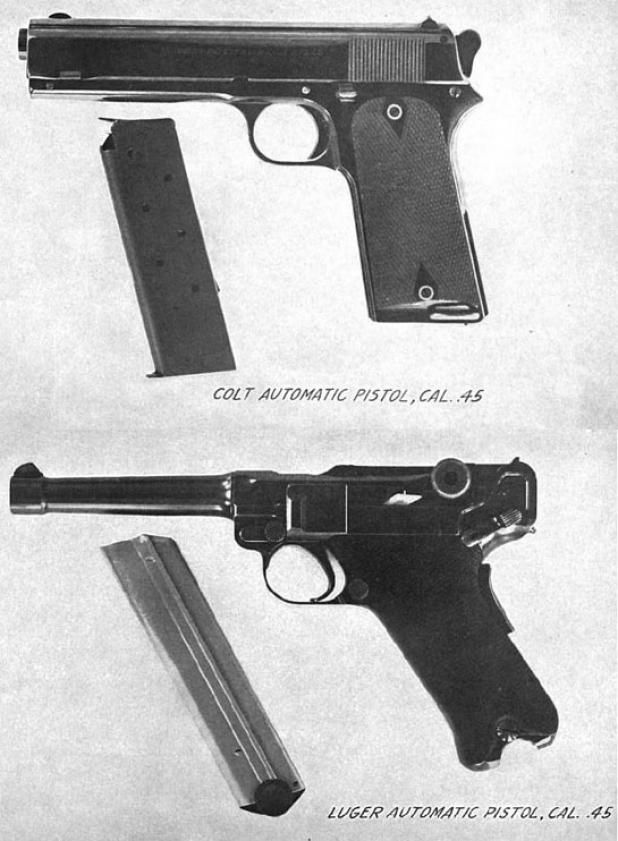
In the movie Wall Street, greedmeister Gordon Gekko brags about owning “the rarest pistol in the world,” and shows off a (prop) .45 caliber Luger. Also known as “the million dollar Luger” the pistol was not merely a product of Oliver Stone’s imagination; it does exist as an interesting footnote to the familiar story of the Army’s adoption of the 1911 as its sidearm.
The Philippine Insurrection and the Army’s own testing — which involved shooting a bunch of live cattle and human cadavers with pistols — determined that the Army’s new sidearm should be of at least .45 caliber, as .38s had failed to make much impression on charging Moro tribesmen.
One of the several pistols submitted for the test was a .45 caliber version of the Luger semiautomatic pistol. The Army had previously purchased 1,000 7.65mm Lugers and a few in 9x19mm (aka 9mm parabellum/Luger), but only two .45 caliber Lugers were specially made up for the Army tests in 1907 by manufacturer DWM.
The Army was interested enough in it to order more for additional testing. By the time they did, DWM turned the Army down, perhaps because they had already signed a contract with the German military. Whatever the reason, that pair of Lugers remain the only two ever made in .45 ACP. The whereabouts of one is unknown. The other was sold for a $1,000,000 in 1989, although when it was auctioned in 2010 it brought “only” $494,500. So it’s really the “almost-half-a-million-dollar Luger,” but it does exist.
Image from Wikipedia.
Comments (21)
How well did it shoot? and how did it compare with the other pistols tested?
Earlier tests of the 7.65 and 9mm Lugers conducted by the Army showed the pistol to be insufficiently reliable. However, the .45 impressed the Army was impressed enough that they ordered more.
Nothing compared to the 1911 in the Army tests. It fired 6,00 rounds without a stoppage, beating the other two finalists, the Savage and the colt.
In 1960 the "million dollar" Luger was test fired 150 times without a stoppage.
I note that the .45 version of the Luger had a grip safety much like the 1911. The 9mm adopted by German military did not have a grip safety. Interesting. I also note that the patent drawings from 1904 show a grip safety as well.
Hmmmm. Looks like the commercially manufactured Lugers also had a grip safety. Must be a story in there. Whataya say, Phil?
Surprised Luger was in 45 acp. I believe Luger had reliability problems in 9mm.
As I was reading this I started day dreaming about my Luger being 45, so much so that I ran to the safe and grabbed the pistol to only be brought back to reality. Keep these articles coming Phil, but I will say that there is a gun on my wishlist now that I will never own.
I have the other one.
OH --
From what I understand the Army expressed a preference for grip safeties. Some Lugers did have grip safeties, but not the ones used by the German military, I don't think.
Murdock32 -- hang onto that pistol. If the price of the other one keeps falling you can pick it up and have one for each hand!
and the Colt revolver, which was used as 'control' during the reliability testing, fired along with the 1911 without a hiccup. When WW1 was joined, America found itself lacking 1911's so Colt and S&W produced .45ACP revolvers to make up for the shortage. in the interwar years these revolvers found their way to the Pacific forces - Army and USMC - and were used against the Japs.
Lugers are more reliable with European ammo, which is a lot hotter than ours. It would seem to me that the Luger basic configuration is a good one, as the fixed barrel should make for an accurate piece, and no slide means it could be a compact, light one. Now that we have precision automatic machine cutting, the complexities of the design shouldn't mean as much now as they did when the whole piece had to be hand-fitted. And as the ..45 is fairly low pressure, it isn't hard on guns. Hey, gun makers, I have a great idea...
I think the toggle action is overcomplicated and probably what caused it to malfunction more than the 1911. More parts = more chance for failure.
I wonder where the other one is ?? Did anyone ever try to find it??
I have an old Luger in the dark depths of my gun safe that great uncle Preston brought back from when he served in the 42nd in WWI. Danged 9 em&ems wont fit the magazine and fall right into the chamber when I try to single feed them. Does anybody know where I can get it rebarreled to 9 mm on the cheap? It is in like new condition with the only flaw being that the hole in the barrel is way too big for a 9 or a 7.65 making it a useless POS.
The army wanted a grip safety for a reason. They still had cavalry in those days. The pistol needed to be unholstered and shot with one hand so was carried "cocked and locked". The grip safety added an extra measure of safety.
Interesting, Harold. Thanks for that. I always thought the grip safety on 1911 was sort of useless overkill. That explains it.
The story I heard was although the Luger was ergonomically better and a natural pointer. It was too finely fitted and susceptible to the dirt of battle. It was also not that easy to break down and clean. But most of all America wanted a gun that was American made. Something that was mentioned when we switched to the Beretta.
I recall an article in a major gun magazine(can't recall which one) in the 1970s describing how a fellow took two low value Lugers and cut the frames in two asymmetrically. He then joined the left side of one to the right side of the other to create a .45 Luger receiver, then fabricated a barrel and magazine in .45. I can't recall how the story explained his dealing with other parts and pieces, but he ended up with a fully functioning pistol.
Isawooa, is your piece entirely made of identical serial numbered parts? Many that returned Stateside and Canada after the WW's were not. As they failed in-field, parts were scavenged during the campaigns to maitain working status. Pieces with all same numbered parts are valuable these days. May I suggest buying a new/ other barrel? The largest working inventory on Lugers I've seen is at Collectors Firearms in Houston, TX (www.collectorsfirearms.com). My own has two diff numbers. It is persnickity with feeding diff brands of cartridges as I have a few diff clips, but it shoots all of them very well. Dad took it from a Germ naval officer during the end of WWII. Its is a PO8.
Thanks!
Duff: Thanks so much for the very interesting and potentially useful information for Luger owners. I confess that I have not owned a Luger since about 1973 when I sold off a DMW for a hefty sum. Beautiful piece but difficult to get either magazine to adequately feed it. Regardless my previous post was a deliberate attempt to confound and create a few laughs by implying that I am the owner of the mystery missing second .45 ACP Luger. If you are offended I apologize.
A few years ago a fellow, I believe in Vegas, was supposedly building stainless steel Lugers in .45 ACP. I don't remember more than that and wonder if this plan ever worked out. I think he wanted $100,000 for each pistol. Anyone remember this?
Also if you examine an German issued pistol case which was actually a holster you will see how delicate the Nazis felt their P-38s and Lugers actually were. Very protective affairs but also difficult to unbuckle or unsnap in order to get the piece into action. Now even these holsters sell for $200-$400 each depending of course on condition.
It has been said that John Browning did not care for grip safeties, and therefore omitted that feature when designing the P-35 (Browning Hi-Power).
Actually, Browning was following the specifications of the French military in designing the Hi-Power, just as he followed the specs of the U.S. military in designing the 1911, which did have a grip safety.
The French government instead preferred a magazine disconnect safety, and demanded that feature in the specs for the P-35 Hi-Power.
Post a Comment
I think the toggle action is overcomplicated and probably what caused it to malfunction more than the 1911. More parts = more chance for failure.
I have an old Luger in the dark depths of my gun safe that great uncle Preston brought back from when he served in the 42nd in WWI. Danged 9 em&ems wont fit the magazine and fall right into the chamber when I try to single feed them. Does anybody know where I can get it rebarreled to 9 mm on the cheap? It is in like new condition with the only flaw being that the hole in the barrel is way too big for a 9 or a 7.65 making it a useless POS.
Duff: Thanks so much for the very interesting and potentially useful information for Luger owners. I confess that I have not owned a Luger since about 1973 when I sold off a DMW for a hefty sum. Beautiful piece but difficult to get either magazine to adequately feed it. Regardless my previous post was a deliberate attempt to confound and create a few laughs by implying that I am the owner of the mystery missing second .45 ACP Luger. If you are offended I apologize.
I have the other one.
OH --
From what I understand the Army expressed a preference for grip safeties. Some Lugers did have grip safeties, but not the ones used by the German military, I don't think.
Murdock32 -- hang onto that pistol. If the price of the other one keeps falling you can pick it up and have one for each hand!
The army wanted a grip safety for a reason. They still had cavalry in those days. The pistol needed to be unholstered and shot with one hand so was carried "cocked and locked". The grip safety added an extra measure of safety.
The story I heard was although the Luger was ergonomically better and a natural pointer. It was too finely fitted and susceptible to the dirt of battle. It was also not that easy to break down and clean. But most of all America wanted a gun that was American made. Something that was mentioned when we switched to the Beretta.
I recall an article in a major gun magazine(can't recall which one) in the 1970s describing how a fellow took two low value Lugers and cut the frames in two asymmetrically. He then joined the left side of one to the right side of the other to create a .45 Luger receiver, then fabricated a barrel and magazine in .45. I can't recall how the story explained his dealing with other parts and pieces, but he ended up with a fully functioning pistol.
Isawooa, is your piece entirely made of identical serial numbered parts? Many that returned Stateside and Canada after the WW's were not. As they failed in-field, parts were scavenged during the campaigns to maitain working status. Pieces with all same numbered parts are valuable these days. May I suggest buying a new/ other barrel? The largest working inventory on Lugers I've seen is at Collectors Firearms in Houston, TX (www.collectorsfirearms.com). My own has two diff numbers. It is persnickity with feeding diff brands of cartridges as I have a few diff clips, but it shoots all of them very well. Dad took it from a Germ naval officer during the end of WWII. Its is a PO8.
Thanks!
How well did it shoot? and how did it compare with the other pistols tested?
Earlier tests of the 7.65 and 9mm Lugers conducted by the Army showed the pistol to be insufficiently reliable. However, the .45 impressed the Army was impressed enough that they ordered more.
Nothing compared to the 1911 in the Army tests. It fired 6,00 rounds without a stoppage, beating the other two finalists, the Savage and the colt.
In 1960 the "million dollar" Luger was test fired 150 times without a stoppage.
I note that the .45 version of the Luger had a grip safety much like the 1911. The 9mm adopted by German military did not have a grip safety. Interesting. I also note that the patent drawings from 1904 show a grip safety as well.
Hmmmm. Looks like the commercially manufactured Lugers also had a grip safety. Must be a story in there. Whataya say, Phil?
Surprised Luger was in 45 acp. I believe Luger had reliability problems in 9mm.
As I was reading this I started day dreaming about my Luger being 45, so much so that I ran to the safe and grabbed the pistol to only be brought back to reality. Keep these articles coming Phil, but I will say that there is a gun on my wishlist now that I will never own.
and the Colt revolver, which was used as 'control' during the reliability testing, fired along with the 1911 without a hiccup. When WW1 was joined, America found itself lacking 1911's so Colt and S&W produced .45ACP revolvers to make up for the shortage. in the interwar years these revolvers found their way to the Pacific forces - Army and USMC - and were used against the Japs.
Lugers are more reliable with European ammo, which is a lot hotter than ours. It would seem to me that the Luger basic configuration is a good one, as the fixed barrel should make for an accurate piece, and no slide means it could be a compact, light one. Now that we have precision automatic machine cutting, the complexities of the design shouldn't mean as much now as they did when the whole piece had to be hand-fitted. And as the ..45 is fairly low pressure, it isn't hard on guns. Hey, gun makers, I have a great idea...
I wonder where the other one is ?? Did anyone ever try to find it??
Interesting, Harold. Thanks for that. I always thought the grip safety on 1911 was sort of useless overkill. That explains it.
A few years ago a fellow, I believe in Vegas, was supposedly building stainless steel Lugers in .45 ACP. I don't remember more than that and wonder if this plan ever worked out. I think he wanted $100,000 for each pistol. Anyone remember this?
Also if you examine an German issued pistol case which was actually a holster you will see how delicate the Nazis felt their P-38s and Lugers actually were. Very protective affairs but also difficult to unbuckle or unsnap in order to get the piece into action. Now even these holsters sell for $200-$400 each depending of course on condition.
It has been said that John Browning did not care for grip safeties, and therefore omitted that feature when designing the P-35 (Browning Hi-Power).
Actually, Browning was following the specifications of the French military in designing the Hi-Power, just as he followed the specs of the U.S. military in designing the 1911, which did have a grip safety.
The French government instead preferred a magazine disconnect safety, and demanded that feature in the specs for the P-35 Hi-Power.
Post a Comment