February 12, 2010
Chad Love: Are Coyotes Good For Quail?
One of the quickest way to start a gentlemanly debate among upland bird hunters (and it will remain gentlemanly, urbane and witty because, well, they're upland bird hunters...) is to bring up the relative merits of predator control versus habitat. It's also an argument that very much applies to prairie pothole waterfowl production, but since duck hunting debates often result in the angry flinging of decoys, I'll save that one for later.
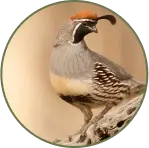
It would be reasonable to assume that having fewer coyotes in an area will result in at least marginally more quail, right? Sounds logical. Coyotes are, after all, predators who would never pass up the opportunity to raid a nest.
But according to this article from the folks at quailresearch.org (hat tip to the guys at Upland Journal for the find) the exact opposite may be true: a healthy population of coyotes might actually be beneficial to quail production. Why? Because coyotes prey on smaller mammals like raccoons, skunks and opossums far more than they do on quail. And guess which mammalian predators are the worst when it comes to nest predation on ground-nesting birds? Yep, raccoons, skunks and opossums.
From the story:
It is tough being a quail. From egg to adult you are constantly tops on the dinner menu. But what do we really know about the predators of quail? Based on covert photography at nest sites, we tend to assume that raccoons, coyotes, bobcats, skunks and a host of other small predators spend much of their time on search and destroy missions against hapless quail. Yet predator removal programs consistently fail to create an abundance of quail. Something is amiss in our perception of the effect of predation on quail populations?
At RPQRR, we have an abundance of coyotes, a modest population of raccoons, but skunks are uncommon, and none of us has ever spotted an opossum, nor its tracks. Dr. Rollins hypothesizes that the coyotes suppress smaller mesocarnivores, either directly (i.e., preying on them) or indirectly (i.e., by restricting them to certain areas [e.g., riparian areas]).
It's a great read for anyone concerned with the gradual range-wide decline of upland birds like the bobwhite, and it will certainly be interesting to see the group's research turns out to support the hypothesis.
But here's the rub: if it does turn out that healthy coyote populations mean healthier quail populations, what does that mean for hunting and trapping coyotes? Would you stop shooting coyotes where you quail hunt? What about deer? Would more coyotes have a detrimental effect on fawn survival? Does it inevitably turn into a question of what's more important, quail or deer? Can you manage for both?
Comments (20)
What little I know about quail, I have read it is a love/ hate relationship. Yotes keep raccoon and wild hog populations down, I am told that the combination of hogs and raccoons do far more damage to quail than yotes can do so it is a necessary evil.
Interesting one chad, Which hunt-able species attracts the most intelligent hunters?
SBW
I do not believe that the size of the coyote population is relevant to the dynamics of either quail or grouse populations. Repetitive research in Scotland with red grouse shows clearly that host/parasite relationships are of paramount importance. Not hard for me to believe that Ruffed Grouse populations in western Canada rise and fall for the very same reasons. At the same time, I'm faintly surprised that some enterprising graduate student hasn't investigated quail/parasite biologies.
Very interesting read. Hadn't thought about that.
It's called mesopredator release, when top carnivores are removed from a community, allowing raccoons, foxes, etc to multiply. Higher predators, such as coyotes, are beneficial for many birds, especially ground-nesting songbirds. It was tested in South America using artificial nests with quail eggs in areas with and without top predators. Those with the predator chain still intact had lower predation on the nests.
You left the raptors out of the equation. I read somewhere that raptors may have a bigger effect on ruffed grouse and other upland birds than the four footed predators. That doesn't surprise me when you drive down a road and see a redtail or Coopers hawk about every mile. They go after adult game birds year round - easy targets. And the raptors are protected - can't even possess a raptor feather without permission.
Yes, I do believe that coyotes affect deer populations. And when game populations dwindle the yotes migrate toward the suburbs. But so do the raptors - a Coopers hawk in my own neighborhood did a fine job with the pigeons and squirrels. Not sure if the zoo appreciated her periodic visits, though.
I don't think the nature manages itself as well as theorized - after all thousands, if not millions, of species went kaput long before man got involved. But once man steps into the picture the balance is permanently changed. Man is also part of nature, after all. But we can help it along. That's the difference in philosophies between environmentalists and conservationists. Environmentalists want to leave nature alone to work itself along. Conservationists believe we need to manage resources. Problem is, for both groups, we often cannot completely foresee the results of our good intentions. At least we are learning and adjusting - at least those that aren't so hardheaded.
i've been taking all the fisher cats out around my house
I dunno bout coyotes but I've noticed that where there are Gray Fox Quail seem to flourish ...and there is a balance between predator and prey.
Okay, in a pure natural habitat, 'possums and 'coons do the most damage, by raiding nests. However, in today's world, the feral house cat and the fire ant do much more damage to quail than any of the "natural" predators. Coyotes impact on the hatch, and mature birds, is negligible.
Daemon619, nail those Fisher cats! I loose poultry to 'em every year.
If the Wolf makes the Caribou strong is it so far fetched to assume that the 'Yote will make the quail strong? I can definately see the coon, skunk and possum angle. The point made about raptors is a good one as is the parisitology angle. I suggest that all animals thrive when a balanced ecosystem is achieved, and balanced ecosystems include everything from Bears and Deer to wolves and panther, coons and skunks, rabbits and voles, the whole contents of the Ark! In general it seems, that every time humanity interferes we mess up the balance of nature, because of our preferences for certain species and our tunnel vision stemming from our inability to comprehend the entirety of ecosystems, but only such fragments of it that appeal to our senses.
I know it's way back up the page but in saying the coyotes control coyotes by rabbitpolice that not a true statement where i live.I would say that it is more than likely the opposite for a coyote to go into a sounder of hogs some weighing in at 500lbs.I have had hog dogs trained and veterans to this endeaver get killed by hogs.
Ahog can run as fast as a coyote and with a swing of the head cut on into with tusk as sharp as razors
Makes sense. Keep the cat population down as well
I have read studies that say that unless you can take out greater than 70% of a coyote population, you will still have the same number of coyotes the next year. I know for a fact that the 1-3 coyotes I shoot every year is just a drop in the bucket and I am more than likely neither helping nor hurting my local quail population. Given the info above, however, I plan on shooting every skunk, coon, or opossum that I come across while turkey hunting this spring!
well one of the best answers i have found is to... dadaadaaaaa shoot the coyotes and the raccons, and bobcats i don't think i have too many skunks in my area so that's fine but still there will always be predators
All could be saved if there were more coon hunters running the hounds.
Well, if there's a market for badger and raccoon furs then perhaps we should eliminate more coyotes, raccoons, and badgers.
I think they can be very beneficial, to a point. There is no doubt in my mind that the explosion of furbearing mammals (coons, possums, skunks) has had more impact on quail numbers from a predatory standpoint than most folks realize. Eggs can't hide or escape. So, if coyotes eat these critters then it defintitely will help quail nest success. However, if the coyotes eat every other living thing and are left themselves to nest raiding, then they obviously become a burden to population.
If it doesn't stop snowing soon it isn't going to matter!!
I believe that any ground hugging animal is a threat to the quail population. In my home state of Kansas we have seen a decrease in numbers almost simultaneously with the decrease in fur trade. There are less trappers and coyote hunters, and that hurts the quail population here. One other theory that i believe is hurting out bird population here is the number of Hawks, and also Wild Turkeys. Some may say that's bogus, because Turkeys feed on insects and such. But have you ever seen a recently hatched quail? Its as small as the end of your thumb, or and insect. I do believe our numbers are on the rise, but the population is still in danger.
m65 kamagra attorney lawyer scrub
Okay, in a pure natural habitat, 'possums and 'coons do the most damage, by raiding nests. However, in today's world, the feral house cat and the fire ant do much more damage to quail than any of the "natural" predators. Coyotes impact on the hatch, and mature birds, is negligible.
welcome to buy coach handbags on coach online store . here you can find coach 14503, coach 14515,coach 14829 and so on with discounted price . to buy cheap price but high quality
coach handbags now . http://www.nicecoachhandbags.com
Post a Comment
You left the raptors out of the equation. I read somewhere that raptors may have a bigger effect on ruffed grouse and other upland birds than the four footed predators. That doesn't surprise me when you drive down a road and see a redtail or Coopers hawk about every mile. They go after adult game birds year round - easy targets. And the raptors are protected - can't even possess a raptor feather without permission.
Yes, I do believe that coyotes affect deer populations. And when game populations dwindle the yotes migrate toward the suburbs. But so do the raptors - a Coopers hawk in my own neighborhood did a fine job with the pigeons and squirrels. Not sure if the zoo appreciated her periodic visits, though.
I don't think the nature manages itself as well as theorized - after all thousands, if not millions, of species went kaput long before man got involved. But once man steps into the picture the balance is permanently changed. Man is also part of nature, after all. But we can help it along. That's the difference in philosophies between environmentalists and conservationists. Environmentalists want to leave nature alone to work itself along. Conservationists believe we need to manage resources. Problem is, for both groups, we often cannot completely foresee the results of our good intentions. At least we are learning and adjusting - at least those that aren't so hardheaded.
Okay, in a pure natural habitat, 'possums and 'coons do the most damage, by raiding nests. However, in today's world, the feral house cat and the fire ant do much more damage to quail than any of the "natural" predators. Coyotes impact on the hatch, and mature birds, is negligible.
One more culprit that is severaly over looked, the Road Runner
Interesting one chad, Which hunt-able species attracts the most intelligent hunters?
SBW
I do not believe that the size of the coyote population is relevant to the dynamics of either quail or grouse populations. Repetitive research in Scotland with red grouse shows clearly that host/parasite relationships are of paramount importance. Not hard for me to believe that Ruffed Grouse populations in western Canada rise and fall for the very same reasons. At the same time, I'm faintly surprised that some enterprising graduate student hasn't investigated quail/parasite biologies.
Very interesting read. Hadn't thought about that.
It's called mesopredator release, when top carnivores are removed from a community, allowing raccoons, foxes, etc to multiply. Higher predators, such as coyotes, are beneficial for many birds, especially ground-nesting songbirds. It was tested in South America using artificial nests with quail eggs in areas with and without top predators. Those with the predator chain still intact had lower predation on the nests.
i've been taking all the fisher cats out around my house
I dunno bout coyotes but I've noticed that where there are Gray Fox Quail seem to flourish ...and there is a balance between predator and prey.
Daemon619, nail those Fisher cats! I loose poultry to 'em every year.
If the Wolf makes the Caribou strong is it so far fetched to assume that the 'Yote will make the quail strong? I can definately see the coon, skunk and possum angle. The point made about raptors is a good one as is the parisitology angle. I suggest that all animals thrive when a balanced ecosystem is achieved, and balanced ecosystems include everything from Bears and Deer to wolves and panther, coons and skunks, rabbits and voles, the whole contents of the Ark! In general it seems, that every time humanity interferes we mess up the balance of nature, because of our preferences for certain species and our tunnel vision stemming from our inability to comprehend the entirety of ecosystems, but only such fragments of it that appeal to our senses.
Makes sense. Keep the cat population down as well
well one of the best answers i have found is to... dadaadaaaaa shoot the coyotes and the raccons, and bobcats i don't think i have too many skunks in my area so that's fine but still there will always be predators
All could be saved if there were more coon hunters running the hounds.
What little I know about quail, I have read it is a love/ hate relationship. Yotes keep raccoon and wild hog populations down, I am told that the combination of hogs and raccoons do far more damage to quail than yotes can do so it is a necessary evil.
I know it's way back up the page but in saying the coyotes control coyotes by rabbitpolice that not a true statement where i live.I would say that it is more than likely the opposite for a coyote to go into a sounder of hogs some weighing in at 500lbs.I have had hog dogs trained and veterans to this endeaver get killed by hogs.
Ahog can run as fast as a coyote and with a swing of the head cut on into with tusk as sharp as razors
I have read studies that say that unless you can take out greater than 70% of a coyote population, you will still have the same number of coyotes the next year. I know for a fact that the 1-3 coyotes I shoot every year is just a drop in the bucket and I am more than likely neither helping nor hurting my local quail population. Given the info above, however, I plan on shooting every skunk, coon, or opossum that I come across while turkey hunting this spring!
Well, if there's a market for badger and raccoon furs then perhaps we should eliminate more coyotes, raccoons, and badgers.
m65 kamagra attorney lawyer scrub
Okay, in a pure natural habitat, 'possums and 'coons do the most damage, by raiding nests. However, in today's world, the feral house cat and the fire ant do much more damage to quail than any of the "natural" predators. Coyotes impact on the hatch, and mature birds, is negligible.
I think they can be very beneficial, to a point. There is no doubt in my mind that the explosion of furbearing mammals (coons, possums, skunks) has had more impact on quail numbers from a predatory standpoint than most folks realize. Eggs can't hide or escape. So, if coyotes eat these critters then it defintitely will help quail nest success. However, if the coyotes eat every other living thing and are left themselves to nest raiding, then they obviously become a burden to population.
If it doesn't stop snowing soon it isn't going to matter!!
I believe that any ground hugging animal is a threat to the quail population. In my home state of Kansas we have seen a decrease in numbers almost simultaneously with the decrease in fur trade. There are less trappers and coyote hunters, and that hurts the quail population here. One other theory that i believe is hurting out bird population here is the number of Hawks, and also Wild Turkeys. Some may say that's bogus, because Turkeys feed on insects and such. But have you ever seen a recently hatched quail? Its as small as the end of your thumb, or and insect. I do believe our numbers are on the rise, but the population is still in danger.
How to use Remote Desktop Connection for the two systems which have same IP Address?
cheap hosting | ucvhost | windows vps
I was very pleased to find this site.I wanted to thank you for this great read!!
windows vps | cheap vps | cheap hosting | forex vps | ucvhost
welcome to buy coach handbags on coach online store . here you can find coach 14503, coach 14515,coach 14829 and so on with discounted price . to buy cheap price but high quality
coach handbags now . http://www.nicecoachhandbags.com
It is true that Duck Hunting requires a bit more masculinity than the rest. The only exception I ever heard of was a certain HOMOwner thought he wanted to go duck hunting. But I am now convinced that it must have been because of a spelling error.
Post a Comment