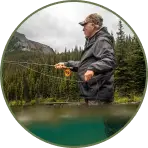
I know my knowledge is pretty limited to the basics and/or to the waters I fish. But I typically cast upstream about 45 degrees and let my fly drift down with enough slack so the line drag in the current doesn't affect the fly, then retrieve when it goes taught at the end. Streamers about the same, working them across the current as the drift down. That all varies depending on eddies, accessability, fishes' likely position vs. mine, water speed/depth, etc.
One rule of thumb that dictates all is you want to place it where it will naturally pass the trout. So gauge the waters speed and depth and how far you do or don't want the fly to sink. You don't want to slap it down on top of his head or have it pass across the flow because a cross current has drug your line that way and your fly with it.
Great advice for fly fishing. If you are fishing with lures then the answer is yes cast upstream and downstream. i also like to cast straight across and pull it across with the current
To catch fish, do everything you can imagine. Stop doing things that don't work. If someone says you're doing it wrong, ask them to show you how. If they catch something, try it for yourself. If they don't catch anything, just smile indulgently.
My grandparents taught me to cast and wade upstream using dry flies on floating line. This keeps them floating and the water ahead clear. You can take up the slack line as it comes toward you, and if some of it gets around you, well, it's behind you and not in your way. A dry fly will pop under at the end of its run if you let it float downstream, and sometimes that's when a fish hits it. But if you leave it there, it will just look like something caught at the end of a line. And it gets wet, and stops floating. The idea of dry flies is to make them look like they are drifting, not swimming.
If you are using line or bait that does not float, fish it downstream. Upstream, the current is in control, not you. Floating line just keeps it up where you can deal with it.
That's a lure that is supposed to work. I have not caught a trout on it. Caught smallies on spinners, but I've gravitated to soft twister jigs as cheaper and without treble hooks, less prone to fouling themselves.
If the concept of bait doesn't trouble you, canned corn or salmon eggs work great, floated without weight among stones and small eddies. I've caught the most trout in small streams with pockets of deeper water. The trick is being alert to the slightest tension on the line.
I use spinners and spoons alot when using spinning tackle.I usually cast across stream and let the current swing the lures in front of or behind cover.
When fly fishing, the goal is to have your fly look as real as possible. If you cast down stream and strip it up stream, well fly's just don't do that. Fish now this and will not go for it. If you cast up stream and let it float down, this is what fly's do. The trout will go for it and u will hook them.
I cast slightly upstream so I can get the bait down to the fishes level. Live bait I use enough split shot to get it to bounce off the bottom but not sit on the bottom. Always try to keep a tight line.
The single most effective way to catch trout (for me) is float fishing. use floats designed for rivers that are long and slender, not the round red and white bobbers. You can cast slightly upstream and let you presentation drift as far down as possible without getting "drag" on the float. You want your presentation to drift slightly slower than the speed of the surface current.
Great advice for fly fishing. If you are fishing with lures then the answer is yes cast upstream and downstream. i also like to cast straight across and pull it across with the current
To catch fish, do everything you can imagine. Stop doing things that don't work. If someone says you're doing it wrong, ask them to show you how. If they catch something, try it for yourself. If they don't catch anything, just smile indulgently.
My grandparents taught me to cast and wade upstream using dry flies on floating line. This keeps them floating and the water ahead clear. You can take up the slack line as it comes toward you, and if some of it gets around you, well, it's behind you and not in your way. A dry fly will pop under at the end of its run if you let it float downstream, and sometimes that's when a fish hits it. But if you leave it there, it will just look like something caught at the end of a line. And it gets wet, and stops floating. The idea of dry flies is to make them look like they are drifting, not swimming.
I know my knowledge is pretty limited to the basics and/or to the waters I fish. But I typically cast upstream about 45 degrees and let my fly drift down with enough slack so the line drag in the current doesn't affect the fly, then retrieve when it goes taught at the end. Streamers about the same, working them across the current as the drift down. That all varies depending on eddies, accessability, fishes' likely position vs. mine, water speed/depth, etc.
One rule of thumb that dictates all is you want to place it where it will naturally pass the trout. So gauge the waters speed and depth and how far you do or don't want the fly to sink. You don't want to slap it down on top of his head or have it pass across the flow because a cross current has drug your line that way and your fly with it.
If you are using line or bait that does not float, fish it downstream. Upstream, the current is in control, not you. Floating line just keeps it up where you can deal with it.
That's a lure that is supposed to work. I have not caught a trout on it. Caught smallies on spinners, but I've gravitated to soft twister jigs as cheaper and without treble hooks, less prone to fouling themselves.
If the concept of bait doesn't trouble you, canned corn or salmon eggs work great, floated without weight among stones and small eddies. I've caught the most trout in small streams with pockets of deeper water. The trick is being alert to the slightest tension on the line.
When fly fishing, the goal is to have your fly look as real as possible. If you cast down stream and strip it up stream, well fly's just don't do that. Fish now this and will not go for it. If you cast up stream and let it float down, this is what fly's do. The trout will go for it and u will hook them.
I use spinners and spoons alot when using spinning tackle.I usually cast across stream and let the current swing the lures in front of or behind cover.
I cast slightly upstream so I can get the bait down to the fishes level. Live bait I use enough split shot to get it to bounce off the bottom but not sit on the bottom. Always try to keep a tight line.
The single most effective way to catch trout (for me) is float fishing. use floats designed for rivers that are long and slender, not the round red and white bobbers. You can cast slightly upstream and let you presentation drift as far down as possible without getting "drag" on the float. You want your presentation to drift slightly slower than the speed of the surface current.
Answers (17)
I know my knowledge is pretty limited to the basics and/or to the waters I fish. But I typically cast upstream about 45 degrees and let my fly drift down with enough slack so the line drag in the current doesn't affect the fly, then retrieve when it goes taught at the end. Streamers about the same, working them across the current as the drift down. That all varies depending on eddies, accessability, fishes' likely position vs. mine, water speed/depth, etc.
Casting upstream is almost always best. The fish will be looking away from you and cannot see your movement.
One rule of thumb that dictates all is you want to place it where it will naturally pass the trout. So gauge the waters speed and depth and how far you do or don't want the fly to sink. You don't want to slap it down on top of his head or have it pass across the flow because a cross current has drug your line that way and your fly with it.
Great advice for fly fishing. If you are fishing with lures then the answer is yes cast upstream and downstream. i also like to cast straight across and pull it across with the current
If you're usin' spinners or little crankbaits in fast current, cast downstream and don't reel in.This is called hanging,the current does all the work.
To catch fish, do everything you can imagine. Stop doing things that don't work. If someone says you're doing it wrong, ask them to show you how. If they catch something, try it for yourself. If they don't catch anything, just smile indulgently.
My grandparents taught me to cast and wade upstream using dry flies on floating line. This keeps them floating and the water ahead clear. You can take up the slack line as it comes toward you, and if some of it gets around you, well, it's behind you and not in your way. A dry fly will pop under at the end of its run if you let it float downstream, and sometimes that's when a fish hits it. But if you leave it there, it will just look like something caught at the end of a line. And it gets wet, and stops floating. The idea of dry flies is to make them look like they are drifting, not swimming.
If you are using line or bait that does not float, fish it downstream. Upstream, the current is in control, not you. Floating line just keeps it up where you can deal with it.
what about spinning for them?
That's a lure that is supposed to work. I have not caught a trout on it. Caught smallies on spinners, but I've gravitated to soft twister jigs as cheaper and without treble hooks, less prone to fouling themselves.
If the concept of bait doesn't trouble you, canned corn or salmon eggs work great, floated without weight among stones and small eddies. I've caught the most trout in small streams with pockets of deeper water. The trick is being alert to the slightest tension on the line.
Casting upstream is best...fish typically swim upstream not downstream..
I use spinners and spoons alot when using spinning tackle.I usually cast across stream and let the current swing the lures in front of or behind cover.
When fly fishing, the goal is to have your fly look as real as possible. If you cast down stream and strip it up stream, well fly's just don't do that. Fish now this and will not go for it. If you cast up stream and let it float down, this is what fly's do. The trout will go for it and u will hook them.
I cast slightly upstream so I can get the bait down to the fishes level. Live bait I use enough split shot to get it to bounce off the bottom but not sit on the bottom. Always try to keep a tight line.
The single most effective way to catch trout (for me) is float fishing. use floats designed for rivers that are long and slender, not the round red and white bobbers. You can cast slightly upstream and let you presentation drift as far down as possible without getting "drag" on the float. You want your presentation to drift slightly slower than the speed of the surface current.
When fishing bait, cast upstream and let the bait drift to the fish. When fishing lures, cast to and in-front of the fish.
Also, avoid casting to much, loud noises, splashing and otherwise disturbing the fish.
Post an Answer
Great advice for fly fishing. If you are fishing with lures then the answer is yes cast upstream and downstream. i also like to cast straight across and pull it across with the current
If you're usin' spinners or little crankbaits in fast current, cast downstream and don't reel in.This is called hanging,the current does all the work.
To catch fish, do everything you can imagine. Stop doing things that don't work. If someone says you're doing it wrong, ask them to show you how. If they catch something, try it for yourself. If they don't catch anything, just smile indulgently.
My grandparents taught me to cast and wade upstream using dry flies on floating line. This keeps them floating and the water ahead clear. You can take up the slack line as it comes toward you, and if some of it gets around you, well, it's behind you and not in your way. A dry fly will pop under at the end of its run if you let it float downstream, and sometimes that's when a fish hits it. But if you leave it there, it will just look like something caught at the end of a line. And it gets wet, and stops floating. The idea of dry flies is to make them look like they are drifting, not swimming.
I know my knowledge is pretty limited to the basics and/or to the waters I fish. But I typically cast upstream about 45 degrees and let my fly drift down with enough slack so the line drag in the current doesn't affect the fly, then retrieve when it goes taught at the end. Streamers about the same, working them across the current as the drift down. That all varies depending on eddies, accessability, fishes' likely position vs. mine, water speed/depth, etc.
Casting upstream is almost always best. The fish will be looking away from you and cannot see your movement.
One rule of thumb that dictates all is you want to place it where it will naturally pass the trout. So gauge the waters speed and depth and how far you do or don't want the fly to sink. You don't want to slap it down on top of his head or have it pass across the flow because a cross current has drug your line that way and your fly with it.
If you are using line or bait that does not float, fish it downstream. Upstream, the current is in control, not you. Floating line just keeps it up where you can deal with it.
what about spinning for them?
That's a lure that is supposed to work. I have not caught a trout on it. Caught smallies on spinners, but I've gravitated to soft twister jigs as cheaper and without treble hooks, less prone to fouling themselves.
If the concept of bait doesn't trouble you, canned corn or salmon eggs work great, floated without weight among stones and small eddies. I've caught the most trout in small streams with pockets of deeper water. The trick is being alert to the slightest tension on the line.
When fly fishing, the goal is to have your fly look as real as possible. If you cast down stream and strip it up stream, well fly's just don't do that. Fish now this and will not go for it. If you cast up stream and let it float down, this is what fly's do. The trout will go for it and u will hook them.
When fishing bait, cast upstream and let the bait drift to the fish. When fishing lures, cast to and in-front of the fish.
Also, avoid casting to much, loud noises, splashing and otherwise disturbing the fish.
Casting upstream is best...fish typically swim upstream not downstream..
I use spinners and spoons alot when using spinning tackle.I usually cast across stream and let the current swing the lures in front of or behind cover.
I cast slightly upstream so I can get the bait down to the fishes level. Live bait I use enough split shot to get it to bounce off the bottom but not sit on the bottom. Always try to keep a tight line.
The single most effective way to catch trout (for me) is float fishing. use floats designed for rivers that are long and slender, not the round red and white bobbers. You can cast slightly upstream and let you presentation drift as far down as possible without getting "drag" on the float. You want your presentation to drift slightly slower than the speed of the surface current.
Post an Answer