We may earn revenue from the products available on this page and participate in affiliate programs. Learn more
Every hunter needs a good binocular. But not every hunter needs a great one, and the difference between good and great seems to get slimmer every year. Having tested binoculars for going on a couple decades now, I’m perennially shocked by how good mid-priced models have become—to the point where the average hunter has to strain himself to see the difference between the very best and really good ones that cost half as much, or less. That’s great news for all of us.
But there is a difference between good and great. If you’re someone who’ll sit behind your glass for half a day trying tease antlers from a sea of sagebrush or count tines at 1,000 yards, you’ll want to know which ones are truly top-shelf. If you’re on a budget, however, or you hunt mostly mix-woods whitetails, for example, really good might be more than good enough for your needs. And a lot easier on your wallet.
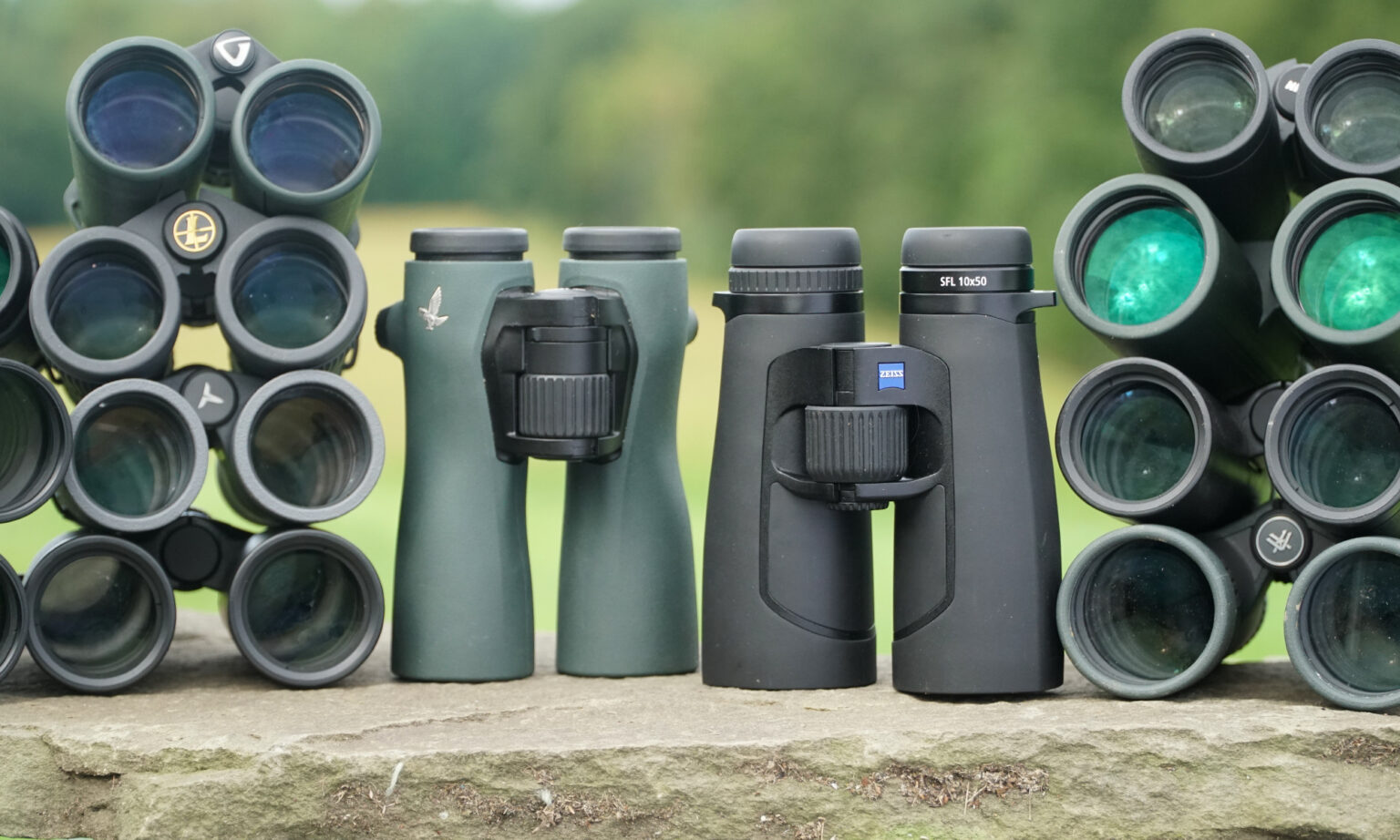
The question is, which is which? I have spent many weeks over the past several years putting the top hunting binoculars through the wringer to find out. Several of the binoculars listed below are brand new for 2026; others debuted a year or more ago. All represent the latest full-size hunting models from each company. You can check out the “How We Test Binoculars” section below to see exactly how I evaluated each binocular. What I’ll say for now is that ours is one of the toughest tests out there. Why so rigorous? Well, to help you, of course. That is, to help you identify the absolute best binoculars, as well as the really good ones that might suit your hunting to a tee and save you a few bucks in the bargain. Here’s the lowdown.
- Best Overall: Zeiss SFL 10×50
- Best Value: Nikon Monarch M7 10×42
- Best at Any Price: Swarovski NL Pure 10×42
- Best for About a Grand: Meopta MeoPro Air 10×42
- Best Low-Light: Vortex Razor UHD 10×50
The Rest of the Best
Best Overall: Zeiss SFL 10×50
best overall

Zeiss SFL 10×50
Pros
- Excellent resolution
- Superior image quality
- Great low-light performance
- Lightweight for a 10×50
Cons
- Noticeable color shift
Specs
- Magnification: 10x
- Objective Lens Diameter: 50mm
- Exit Pupil: 5.0mm
- FOV: 366’ @ 1,000 yards
- Size: 6.3 x 4.8 inches
- Weight: 30.8 ounces
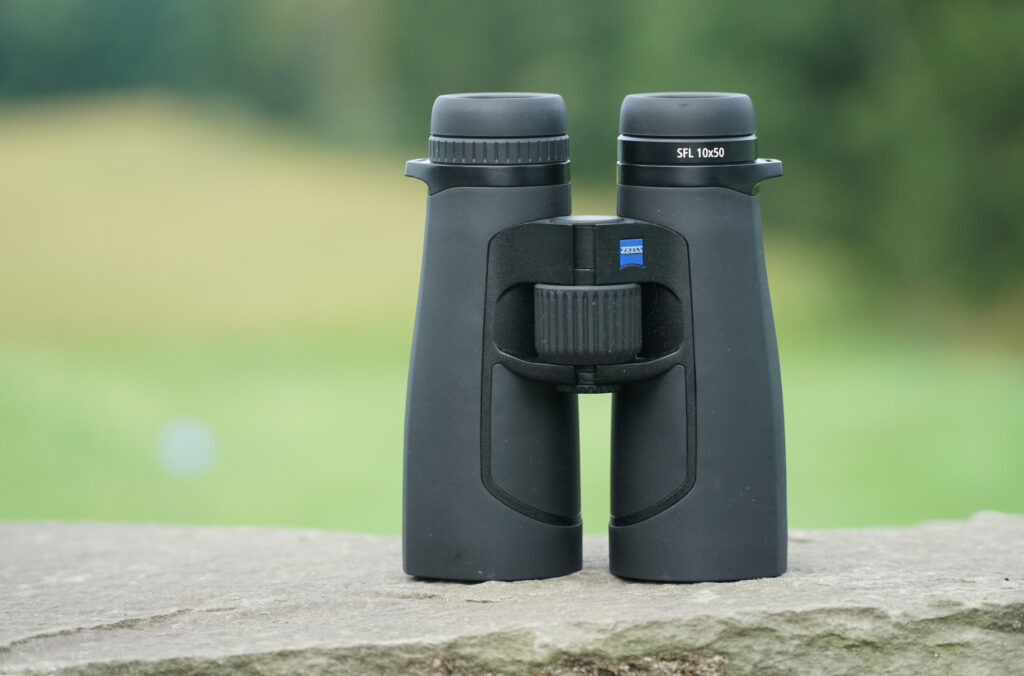
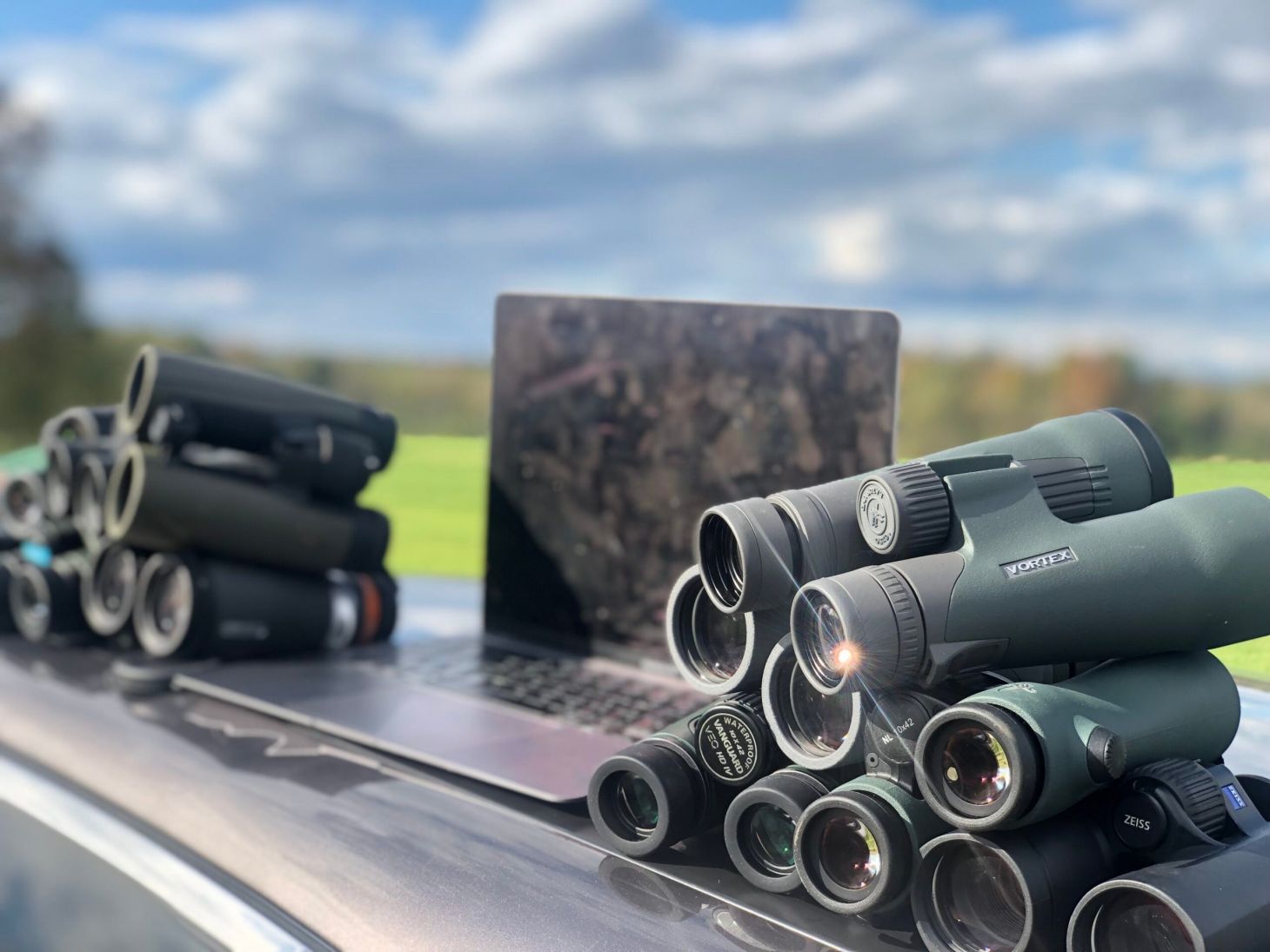
In 2022, Zeiss introduced their remarkable SFL 10×40. The binocular immediately won this test’s Best Overall award and stayed at the top our list through 2025. Now, Zeiss is offering the SFL in three additional configurations, including an 8×50, 10×50, and 12×50. So, I decided to test the 10×50 to make sure that the SFL is as good as ever and to see what the 10×50 configuration brings to the party.
Obviously, I wasn’t disappointed, but let’s quickly review what made the original such a big deal when it came out. It’s rare to see something truly game-changing in this field. Binocular manufacturers can’t come out with a new caliber or make their product modular. But every once in a while, a company finds a new way to make the same old thing much better—and that is what Zeiss did with the SFL 10×40.
By using a sturdy-yet-ultralight frame and a groundbreaking design that places thinner lenses closer together, Zeiss delivered outstanding optical performance in a lighter, more compact package. The 10×40 weighs a featherlight 22.6 ounces and is still an absolute joy to hunt with.
The new 10×50 is significantly larger and heavier, but for a high-end 10×50, it a dream. (Yes, you can find cheap 10x50s that weigh less, but do you want a cheap binocular?) At 30.8 ounces, the SFL 10×50 weighs right about the same as several top-tier 10x42s on this list and about 5 ounces less than several popular high-end 10x50s, including one on this list.
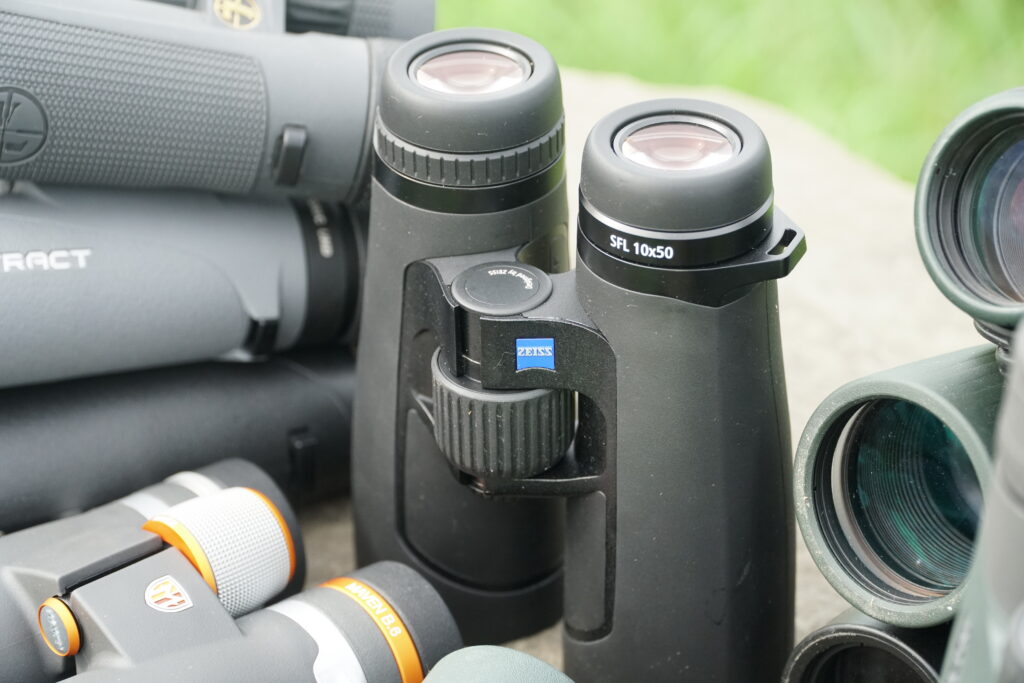
Just like the original SFL 10×40, the new 10×50 scored extremely well in all of our test categories. Resolution and overall image quality were both near the top, coming in just a tick below the Swarovski NL Pure (see below). Build quality, ergonomics, and weather resistance were also at or near the top. And with its larger exit pupil, the SFL 10×50 excelled in low-light performance. I was surprised to see noticeable color shift in my testing, in which high contrast subjects appear to be fringed with yellow-green and/or purple bars of light. This shouldn’t be an issue in most hunting situations, but it is there. In the end, with its smooth focus wheel and big, bright image, Zeiss’s latest delivers 10×50 light-gathering performance in package that handles more like a good 10×42.
Personally, for most of my hunting, I’d still take the 22.6-ounce 10×40, which remains available and is as great as ever. But because the 10×50 is newer and, along with the other new configurations, gives you more options in an already outstanding binocular, it get’s my 2026 Best Overall award. And as was the case with for the 10x40s, part of the reason is value. I know, $1,799 is hardly chump change for a binocular. But for a binocular this good, it is actually kind of a bargain. Ounce-for-ounce and dollar-for-dollar, the Zeiss SFL 10×50 (or the 10×40 if you prefer) is as good as it gets in 2026.
Best at Any Price: Swarovski NL Pure 10×42
best at any price
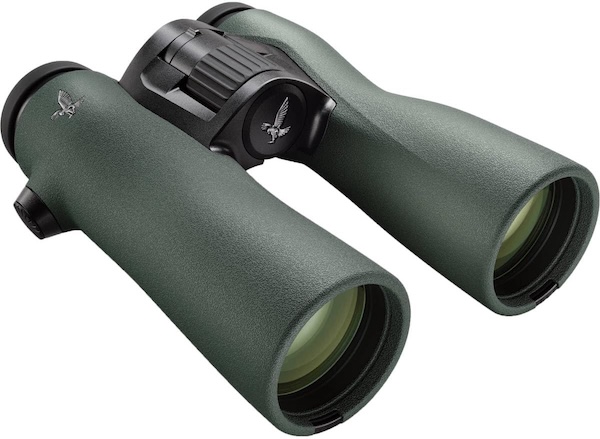
Swarovski NL Pure
Pros
Perfect scores in resolution and image quality
Unique styling and feel
Excellent low-light performance
Cons
- Expensive
Not especially weather-resistant
Specs
- Magnification: 10x
- Objective Lens Diameter: 42mm
- Exit Pupil: 4.2mm
- FOV: 399’ @ 1,000 yards
- Size: 6.2 x 5.1 inches
- Width: 5.1 inches
- Weight: 30 ounces
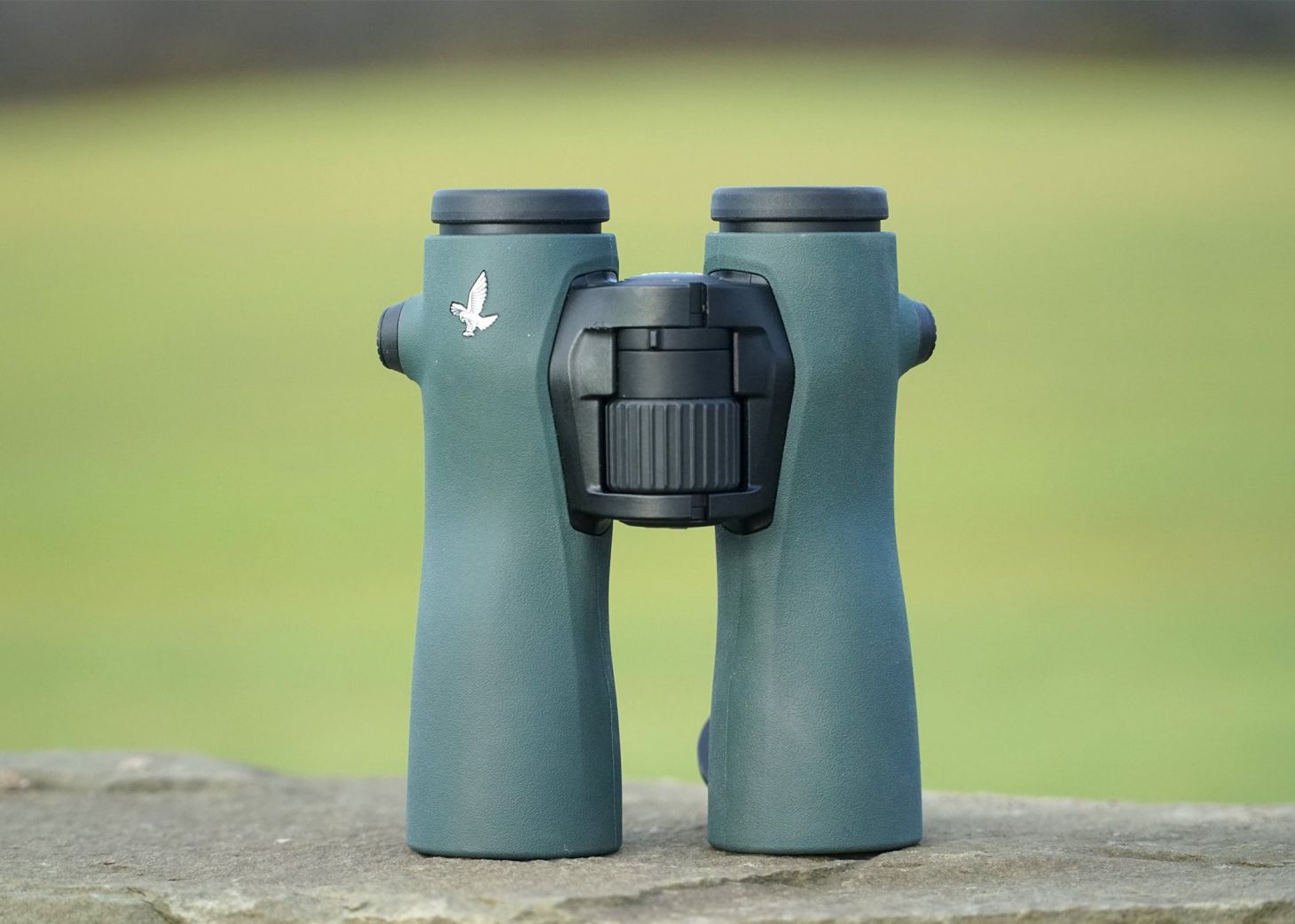
It’s true that the gap between good and great binoculars is closing. But a few still stand totally apart. The Swarovski NL Pure was the only binocular in this test to notch perfect scores in resolution and image quality, but it’s not enough to say that its optical performance is the best or even perfect. It’s more like a revelation. You look through this binocular and say “Wow!”—repeatedly.
I took the NL Pure 10×42 on an elk and deer hunt in Montana recently. At one point, we were glassing a bedded whitetail buck from long ways off, trying to figure out if he was worth a stalk. I was looking through the NL Pure and a buddy was looking through another $1,000-plus premium binocular. Studying the deer, I said, “He’s got decent mass but isn’t super tall or wide. He might go 130.” My buddy asked how I’d gotten all that from so far away. I handed him the NL Pure, he looked through them, and he said “Holy sh*t!” Then he studied the buck for minute and said, “Yup. Maybe 125.”
That’s what next-level resolution does for you, and it makes a real difference in the field. But world-class glass like this offers more than just stunning detail; it immerses you in the image. An optics professor I used to test binoculars with calls this “feeling of immersion.” With the NL Pure’s huge field of view and field-flattening lenses, you get the sense that you’ve stepped into the picture and that everything there is brilliant and vivid and free of the little imperfections that otherwise distract you from the experience.
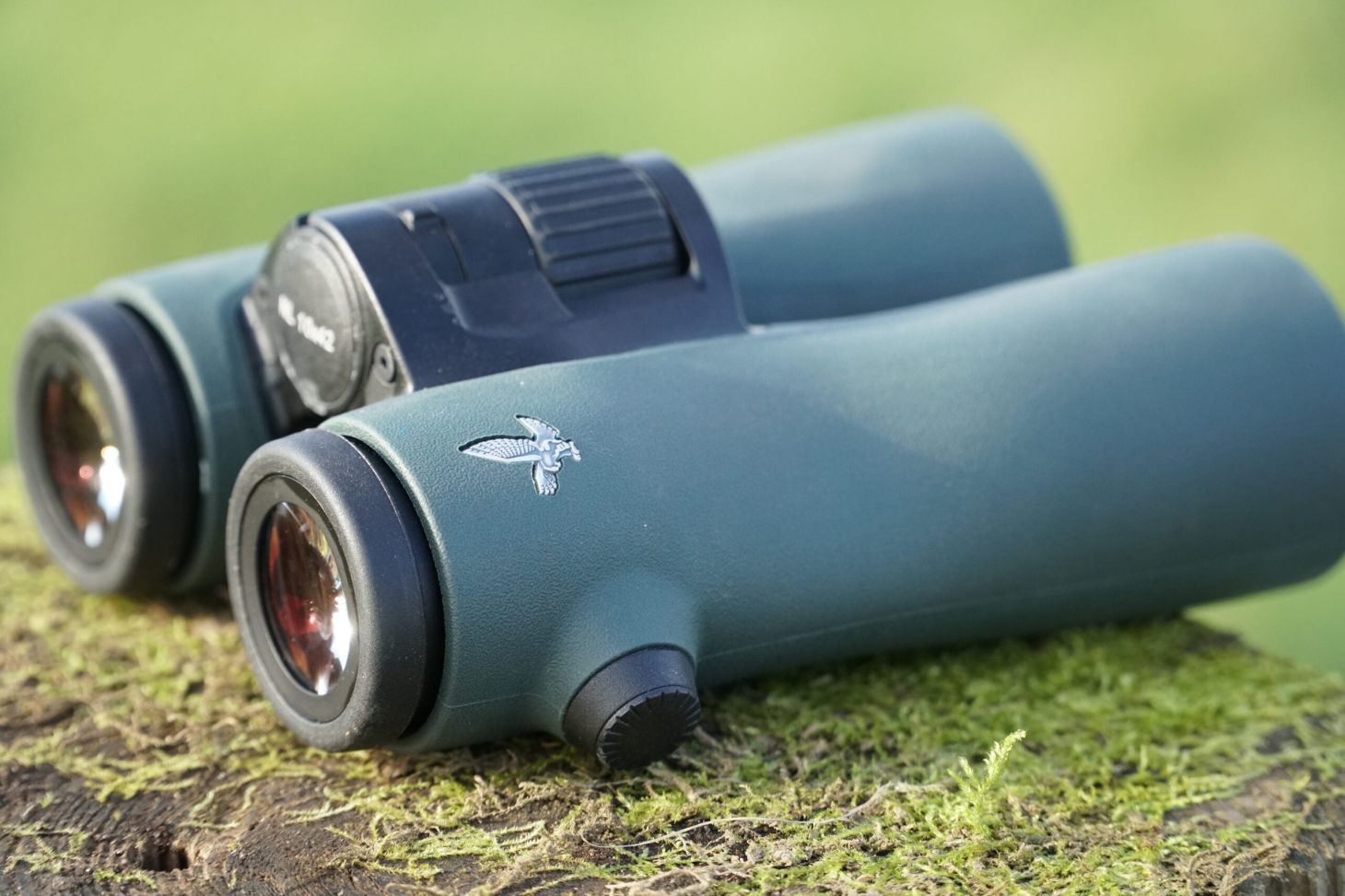
The NL Pure’s innovative hour-glass, open-bridge design not only saves weight but balances perfectly in the hand, making it easy to stabilize the binocular on long glassing sessions, and an available forehead rest adds to the comfort. The focus wheel is large, precise, and silky. The diopter and eyecup adjustments are positive and exact.
All of that said, the NL Pure is not flawless. To my surprise, it pretty much bombed the weather-resistance test. After the submersion portion, the image was useable but not especially clear, and it was close to unusable coming out of the deep freeze. Again, our test is tougher than what most hunters will face in the outdoors, but still, in an apples-to-apples comparison, only one binoculars on this list did worse.
That, however—and the price (oof!)—are the NL Pure’s only flaws. In every other way, this binocular is spectacular. Give it a little extra protection in the weather, and it will show you things other hunters will never see.
Best Value: Nikon Monarch M7 10×42
best value
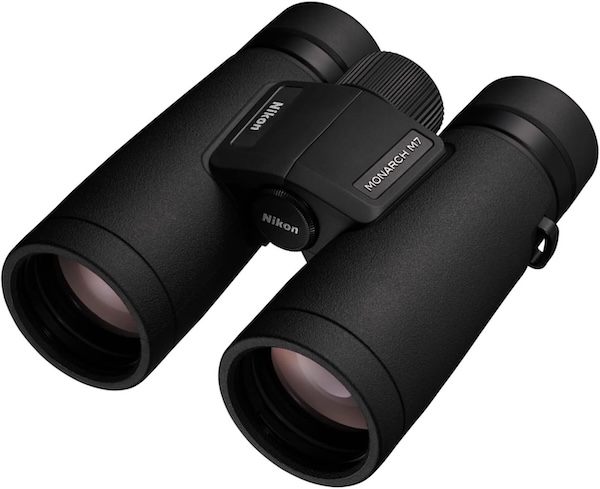
Nikon Monarch M7
Pros
Compact and lightweight
- Built tough
Impressive weather resistance
- Solid optics
- Locking diopter
Cons
Not the best low-light performance
Specs
- Magnification: 10x
- Objective Lens Diameter: 42mm
- Exit Pupil: 4.2mm
- FOV: 362’ @ 1,000 yards
- Size: 5.6 x 5.1 inches
- Weight: 24 ounces
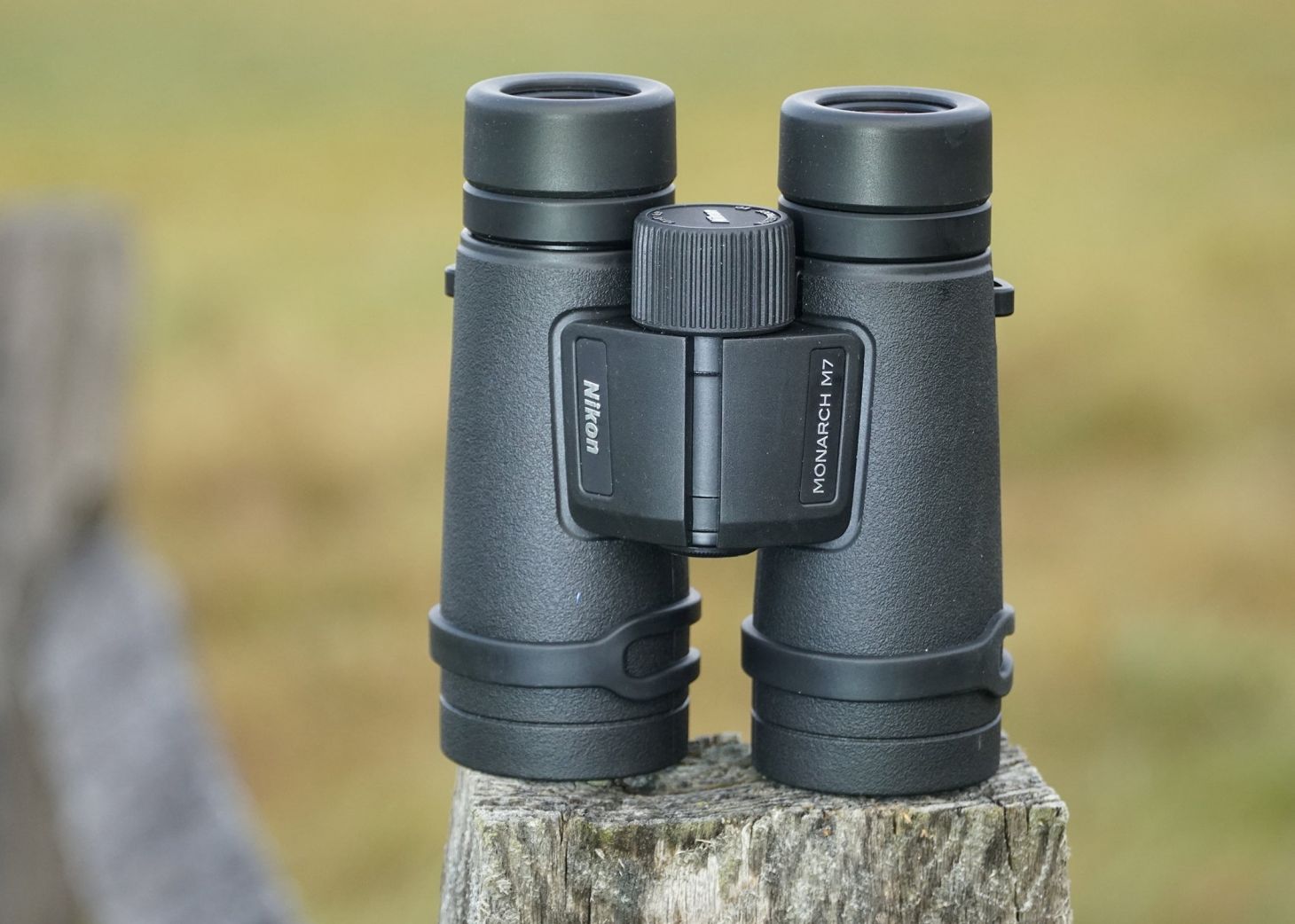
The Monarch M7 is not quite Nikon’s top-end binocular. (That would be the Monarch HG, which has been the company’s flagship model for 10 years now and remains a very good binocular at a good price.) The Monarch M7 is, however, the latest in Nikon’s popular and rugged Monarch line, and it brings some of the same qualities—and value—as the HGs.
Like so many binos with the Monarch name, the M7 exudes toughness; you put it in your hands and know instantly that you can hunt hard with the thing, thanks to its obvious build quality and thick rubber armoring. What you can’t tell instantly but was born out in the weather-resistance testing is that the optics themselves are just as rugged and reliable. Only one binocular did better in our brutal test, and only by half a point—and that binocular (the Zeiss above) costs more than three times as much.
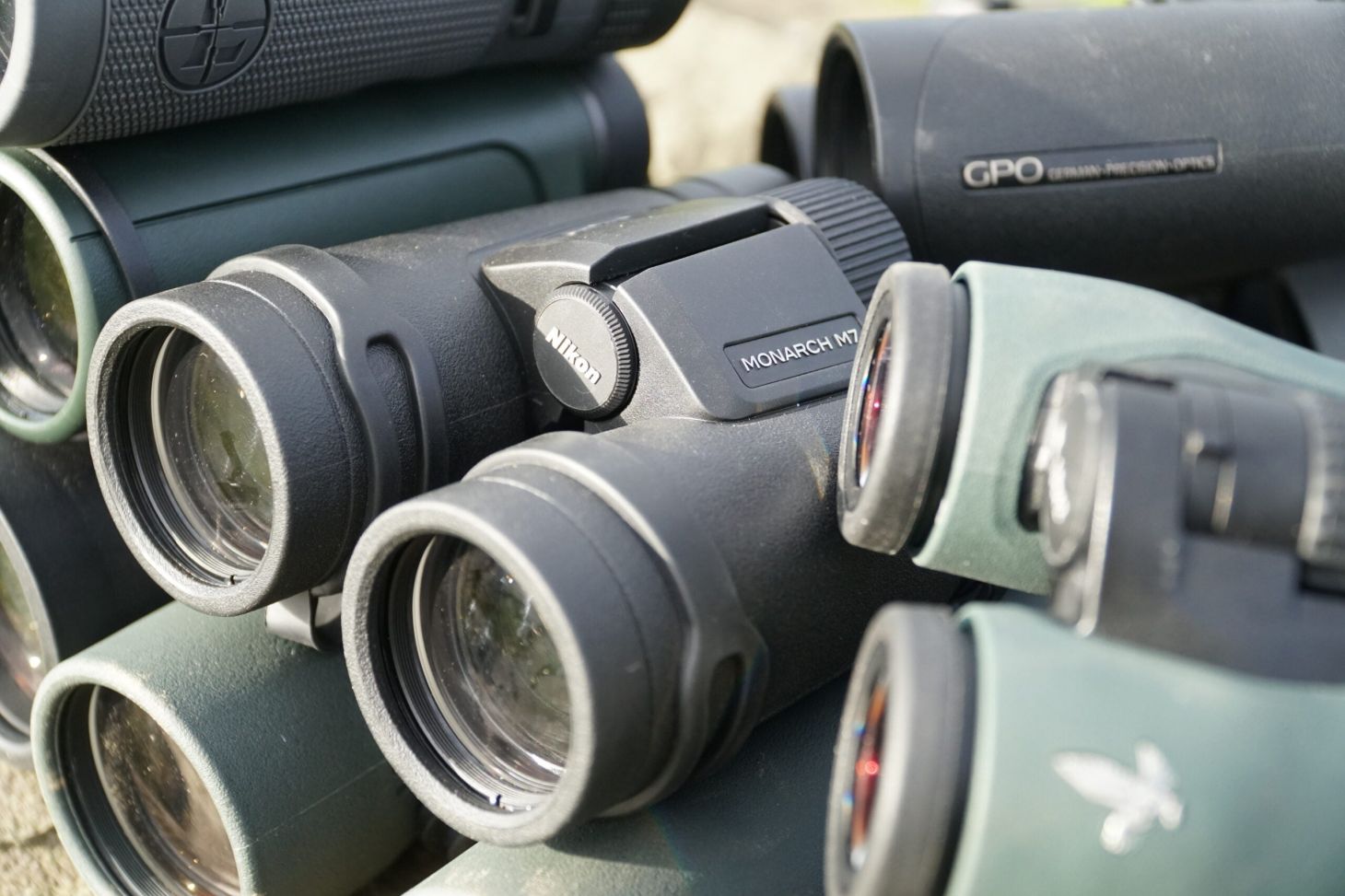
The M7’s ED glass delivered solid optical performance. Naturally, resolution and image quality was a step below the top-end glass, with a bit of tunneling, color shift, and blurring at the edges. Low-light performance was only O.K., but still not way off that of binoculars costing twice as much or more. The M7 got a nearly perfect score for handling; it fits nicely in your hands and feel good there, too, with it’s tacky rubber coating. The locking diopter is just what it should be, and although it’s a small thing, the objective lens caps, in terms of actually staying on the binocular, are as good as any and better than most. Where the M7 really shines, though, is value. For right around $500, you get a lightweight, compact full-size binocular that will hunt as hard as you do and deliver solid optical performance all the while. You can’t ask for much more than that.
Best for About a Grand: Meopta MeoPro Air 10×42
best for about a grand
Meopta MeoPro Air
Pros
Great image quality
Solid low-light performance
- Built to last
- Good value
Cons
- Nothing really
Specs
- Magnification: 10x
- Objective Lens Diameter: 50mm
- Exit Pupil: 5.0 mm
- FOV: 360’ @ 1,000 yards
- Size: 5.9 x 5.0 inches
- Weight: 29.2 ounces
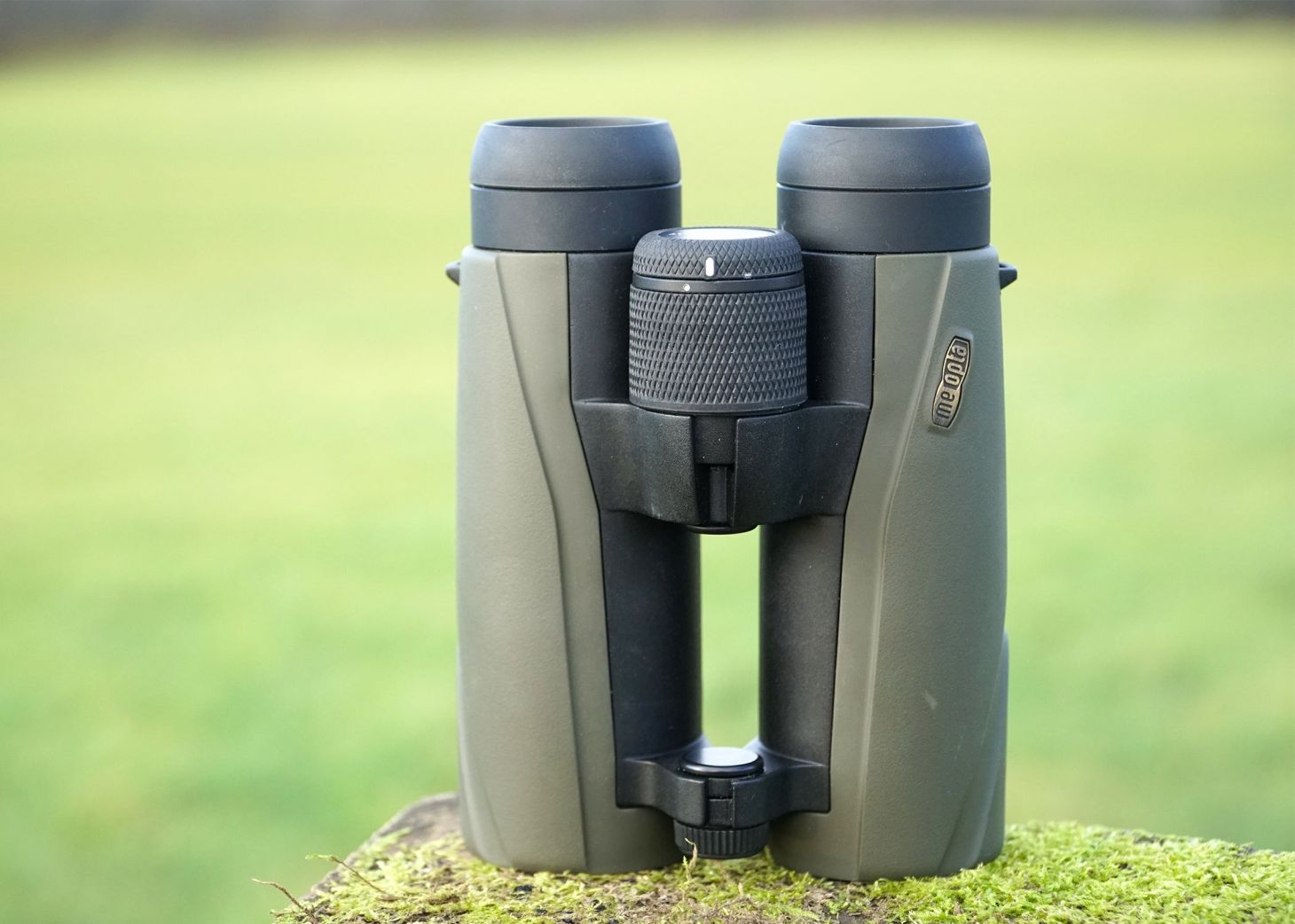
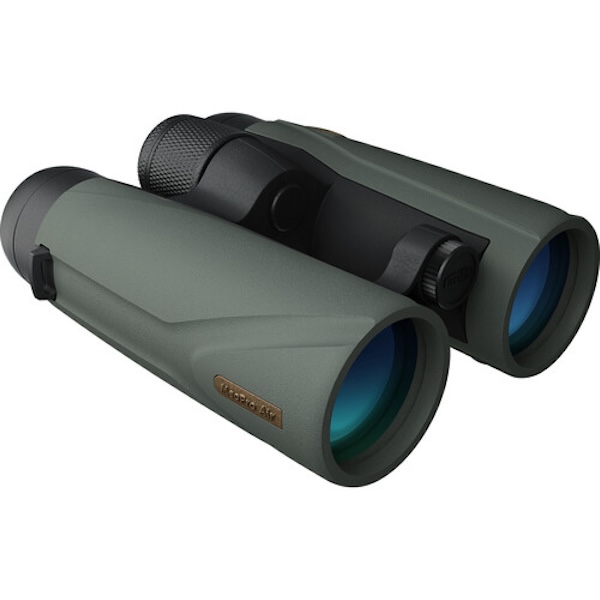
If you had $1,000 to spend on a binocular—that is, you wanted something really good but didn’t want to shell out for the absolute best—here’s what I’d tell you: “Find another $150 and get the Meopta MeaPro Air.” Or, “Wait for this one to go on sale and snap it up.” Had I scored the test categories with letter grades, this binocular would have averaged an A-minus across the board, ranging from quite good to very good in every category and not at all bad in any.
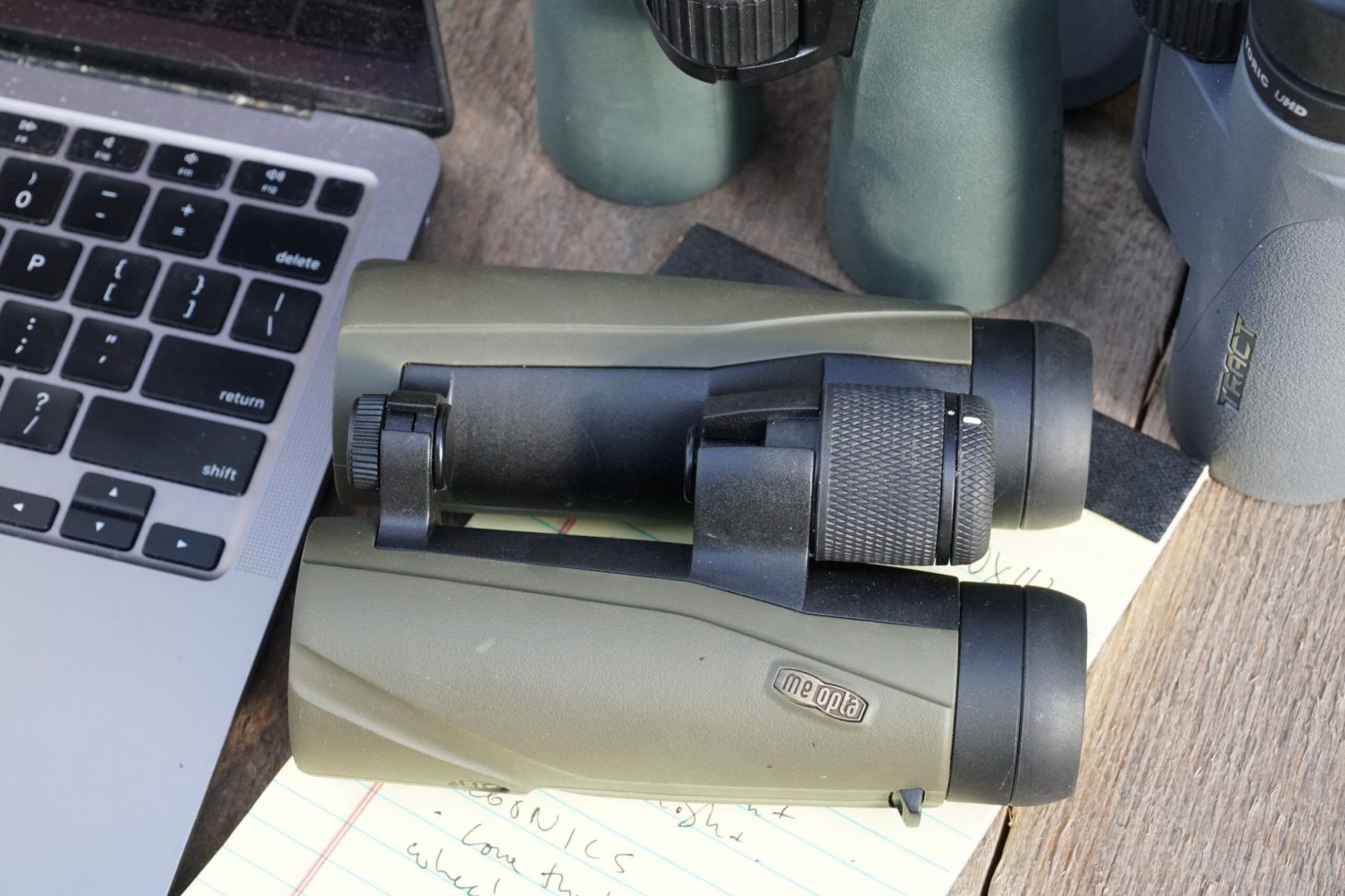
Where the MeaPro Air did stand out was in image quality, low-light performance, and weather-resistance. Meopta’s Czech glass is just a tiny step below the very best, delivering fine clarity, true, vibrant colors, and a great feeling of immersion, thanks in part to a generous field of view. It sailed through the weather-resistance test, delivering a quite-good image after submersion and a perfectly useful image after being frozen. The rubber-reinforced magnesium body is reasonably lightweight but tough, and the open-bridge design feels good in the hand. The focus wheel on my test model was a tad stiff and the non-locking diopter possibly just loose enough to bump out of whack on occasion—but this is nit picking. What you have here is a binocular that is just shy of the very best, at a well-shy-of-the-very-best price.
Best Low-Light: Vortex Razor UHD 10×50
Editor’s Pick
Vortex Razor UHD
Pros
Excellent image quality
Outstanding low-light performance
- Built tough
Excels in any weather conditions
Cons
Comparatively large and heavy
- Not cheap
Specs
- Magnification: 10x
- Objective Lens Diameter: 50mm
- Exit Pupil: 5.0 mm
- FOV: 341’ @ 1,000 yards
- Size: 7.6 x 5.9 inches
- Weight: 36.5 ounces
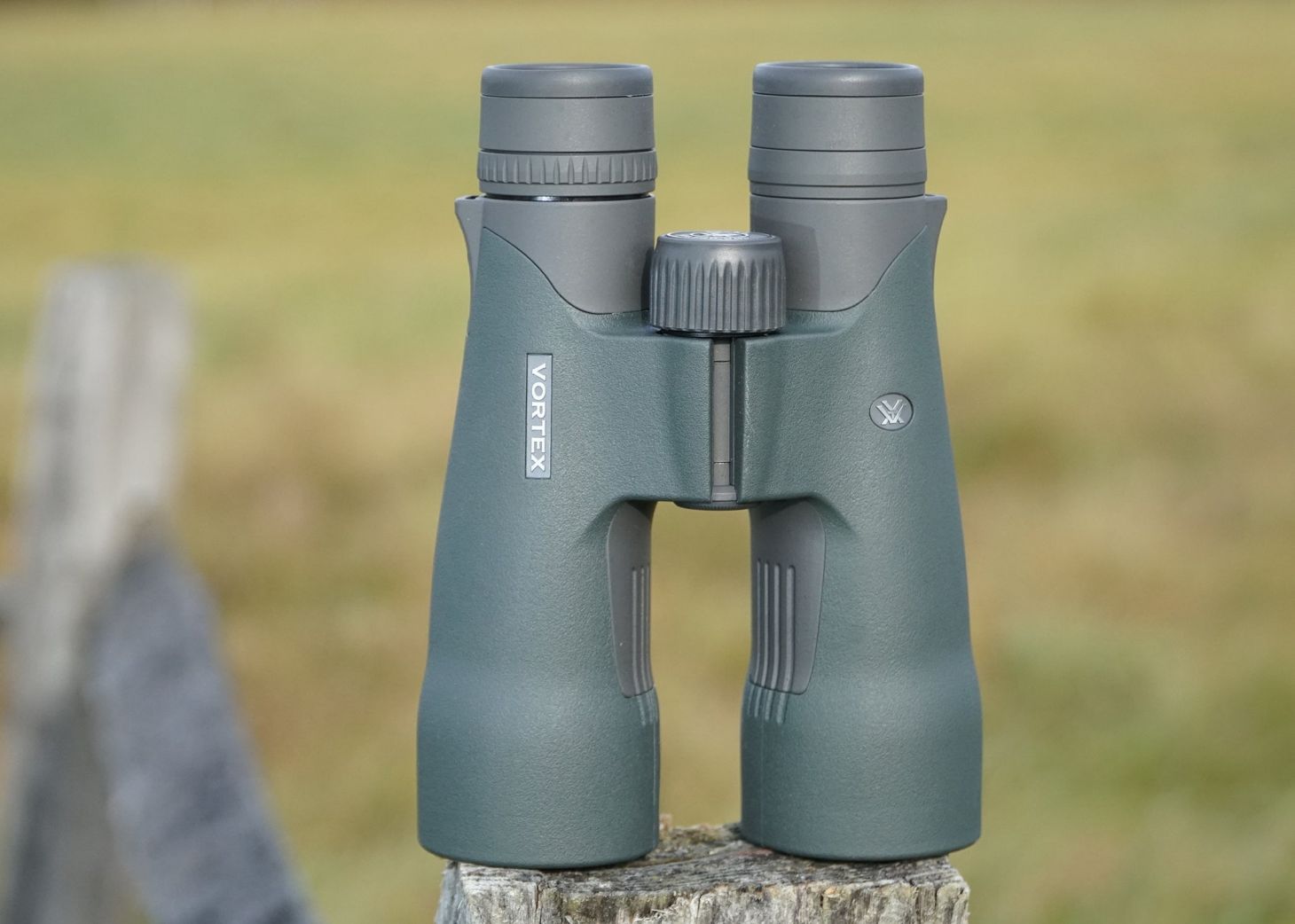
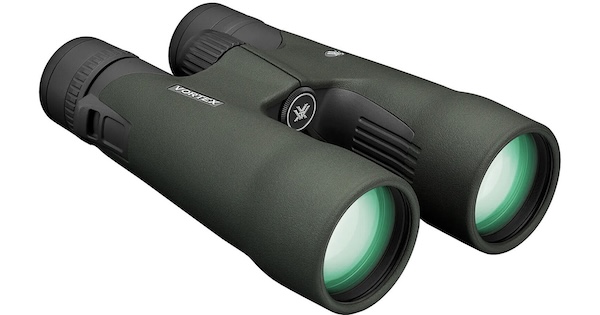
With this upgraded UHD model, Vortex’s premium Razor goes from “High Definition” to “Ultra High Definition”—a distinction that doesn’t always mean much, as these are marketing terms, but in this case boils down to one hell of a good binocular that’s even better than the last iteration. Resolution is quite good, but it’s the image quality and low-light performance that really grab you. The Razor’s clarity, feeling of immersion (the sense that you are stepping into the picture), and lack of visual artifact gave even the top-scoring Swaro a run for its money in the optical categories. This combined with the comparatively large exit pupil also helped the Razor notch the best low-light score in the test.
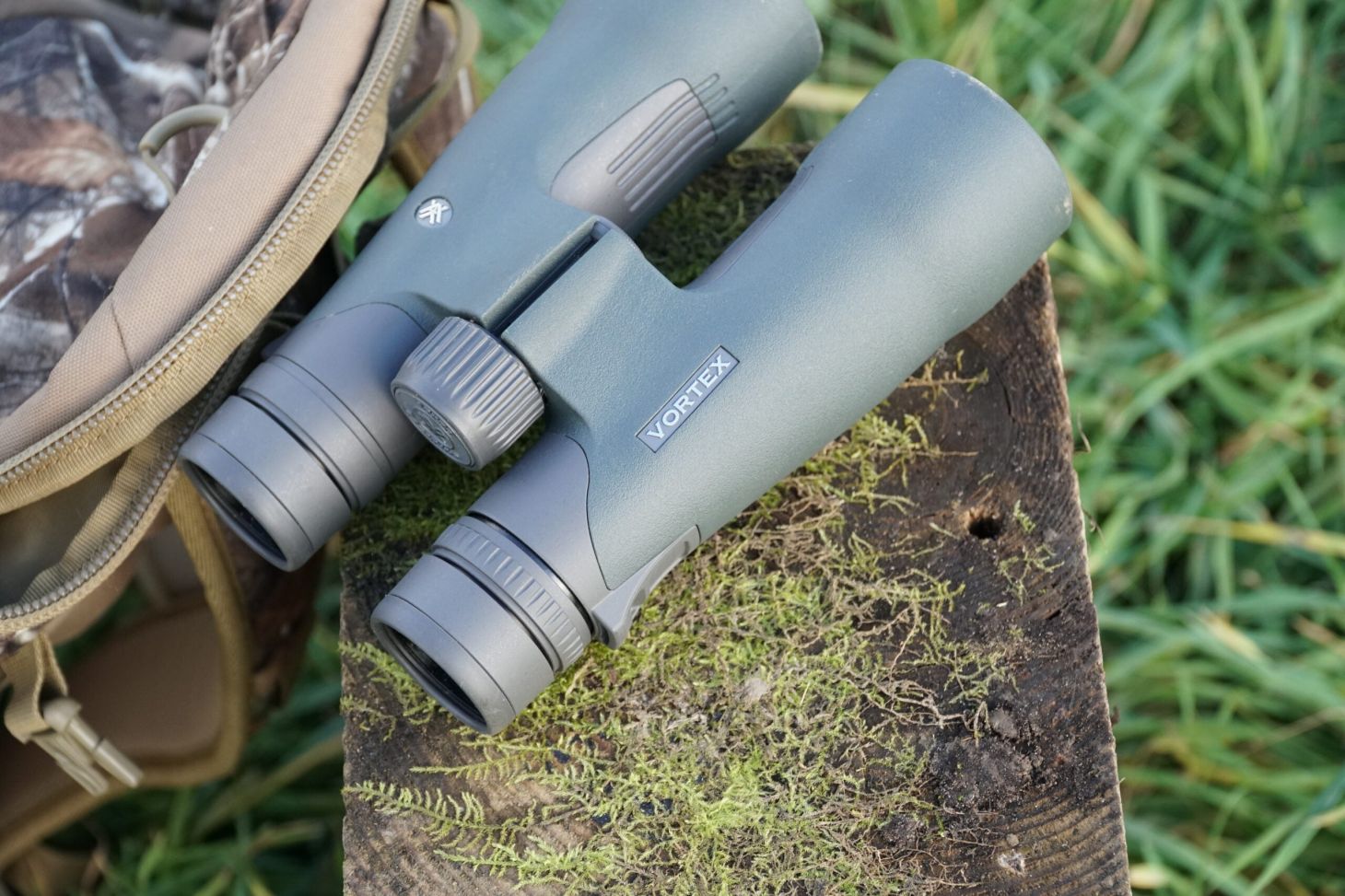
Build quality and ergonomics are also first-rate. The focus wheel is smooth and precise, and the locking diopter adjustment is about perfect. The only categories where the Razor fell down a bit were handling and value. So, let’s take them one at a time. Yes, the Razor is noticeably larger and heavier than most models here. But with few exceptions (like the Zeiss above), the very best binoculars run on the heavy side, and, of course, the larger objective lenses contribute to the low-light performance. So, it’s a trade-off. If you want to see right up to the very edge of darkness, the extra size and weight may well be worth it to you. As for value, the MSRP price of $2,749 sure isn’t pocket change, but I’ve seen this binocular on sale for under $2K, which is perfectly fair for a true premium binocular that’s right there with the very best.
Maven B.6 10×50
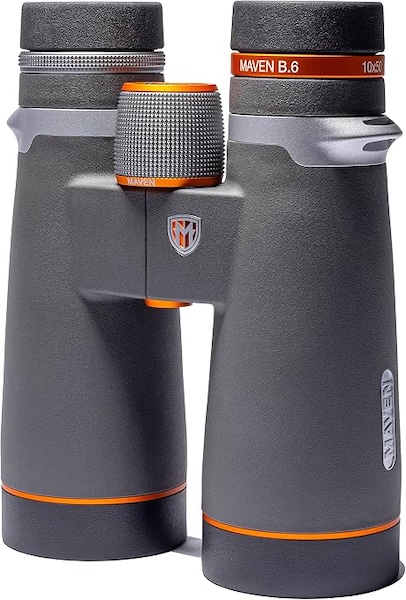
Maven B.6 10×50
Pros
- Great low-light performance
- Extremely weather-resistant
- Lightweight for 10x50s
- Great looks and ergonomics
Cons
- Noticeable color shift
Specs
- Magnification: 10x
- Objective Lens Diameter: 50mm
- Exit Pupil: 5.0mm
- FOV: 341’ @ 1,000 yards
- Size: 6.6 x 5.25 inches
- Weight: 30.7 ounces
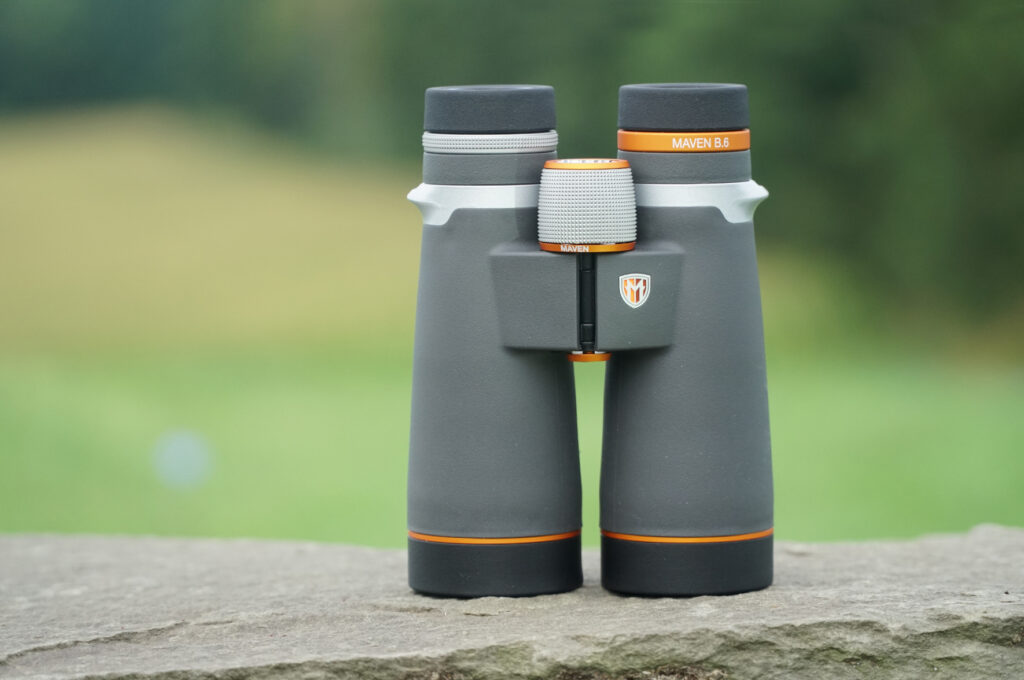
The B.6, Maven’s newest full-size hunting binocular, is essentially their flagship B1.2 souped up with larger objective lenses and a larger Schmidt-Pechan prism for better low-light performance. But here’s the real kicker: They managed to make these upgrades while adding only 3.9 ounces to the overall package. This means that the B.6 10×50 is even lighter (by an ounce) than the wonderfully lightweight Best-Overall-winning Zeiss SFL 10×50 above.
Overall optical performance was half a step down from the other 10x50s in this test, but so is the price (in fact, more like a step and a half in the case of the Vortex Razor). Compared to the other roughly $1,000 binoculars in this test, resolution, feeling of immersion, and edge-to-edge clarity were right on par and solidly in the Very Good category. There was some noticeable color shift, but that’s not uncommon and shouldn’t be an issue in most hunting situations.
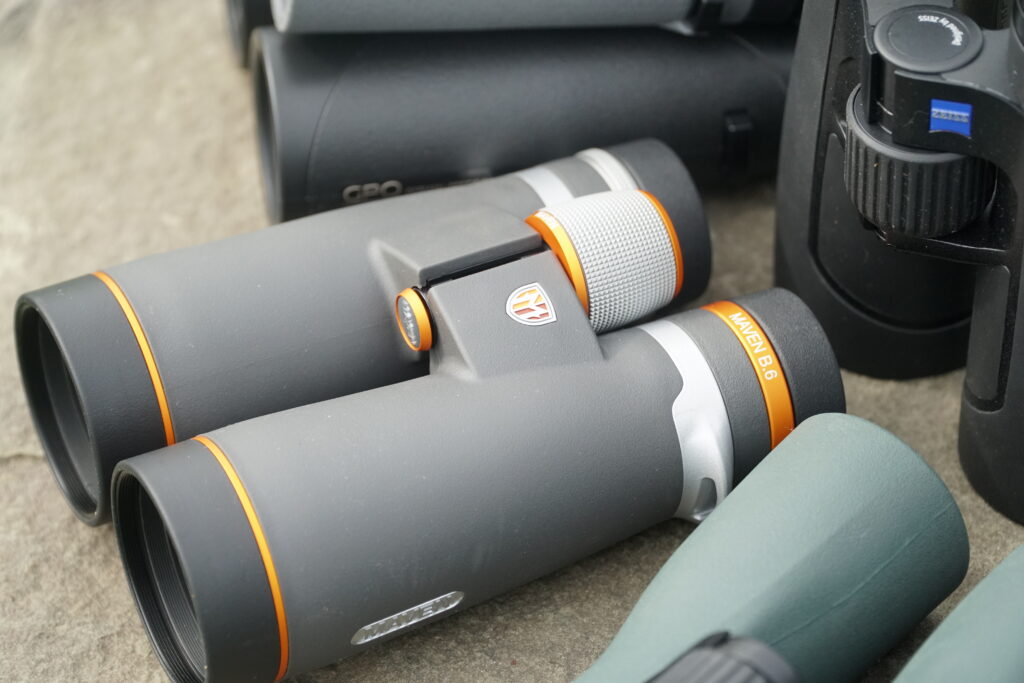
Where the B.6 stood out was in low-light performance, ergonomics and handling, and weather-resistance. Maven optics tend to be popular with western mountain hunters where the weather can get brutal, and the B.6s performance in my very tough weather-resistance test shows why. They delivered anywhere between a very good image to a perfectly useful image in every phase of the test. The knurled-aluminum finish on the focus wheel (which was smooth and precise) and diopter (which has the perfect tension) are nice touches on binocular that doesn’t just look sharp but is also built very tough.
Bottom line: If your budget tops out at $1,200 and your main priorities are to have a reasonably lightweight binocular that lets you resolve detail at the very edges of dawn and dusk, then the B.6 should be perfect for you.
GPO Passion HD 10×42
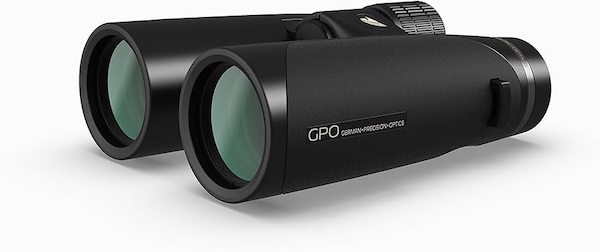
GPO Passion HD
Pros
Nice big field of view
Very good resolution and image quality
Cons
- coating is hard and slick
A little bigger and heavier than some
Specs
- Magnification: 10x
- Objective Lens Diameter: 42mm
- Exit Pupil: 4.2 mm
- FOV: 366’ @ 1,000 yards
- Size: 6 x 5.2 inches
- Weight: 29.6 ounces
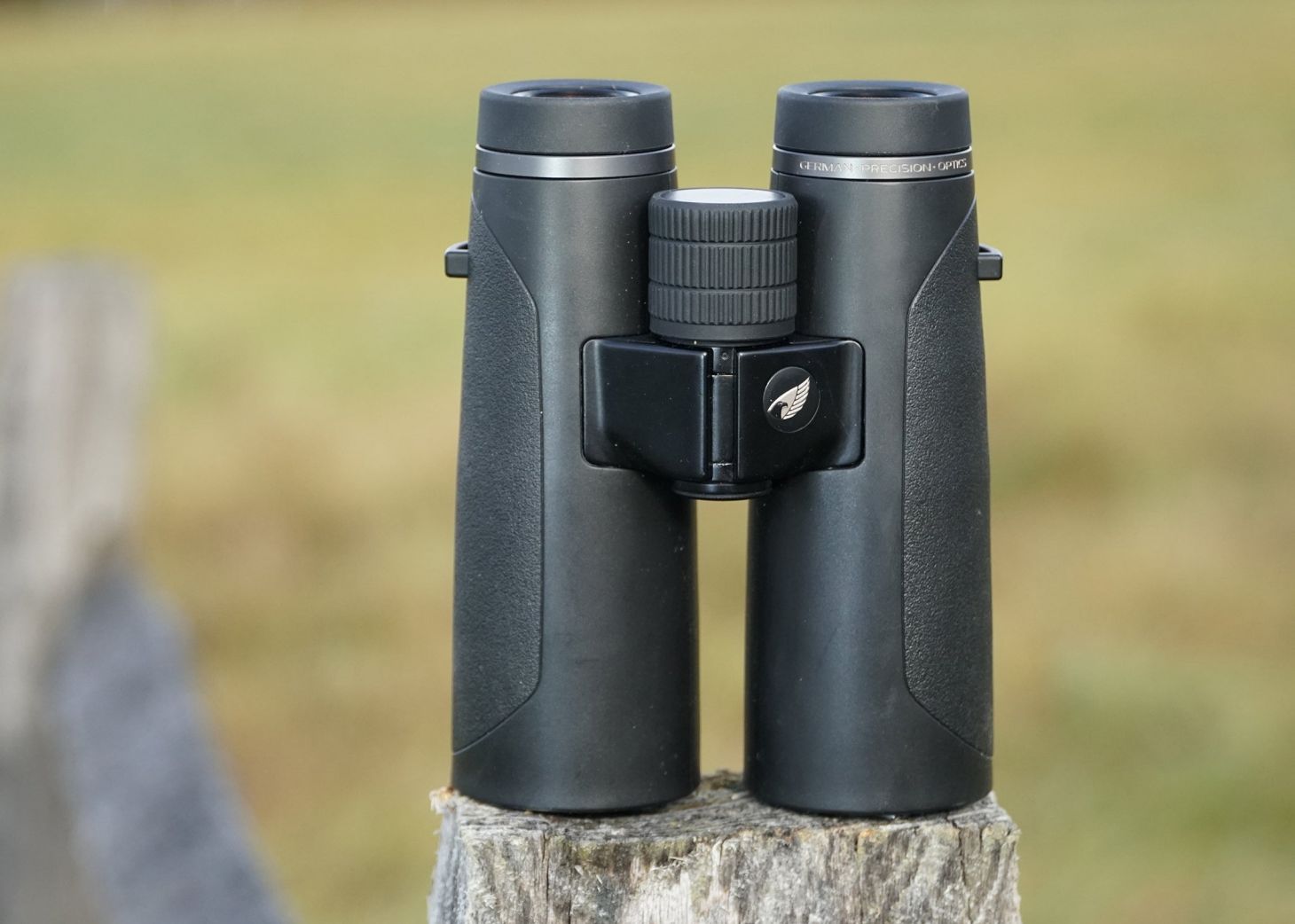
GPO stands for German Precision Optics, which references the fact that their scopes and binoculars are designed and engineered at the company headquarters in Germany, while the glass is sourced and the products manufactured primarily in Japan. According to the company, this arrangement has allowed them to offer European-like quality at a better price. The Passion HD has been their flagship binocular for some time and has always done well in our tests, especially in terms of optical performance.
Nothing has changed there. Only three binoculars on this list scored better than the GPO for resolution, and the same is true for image quality. Low-light performance was solid, if not quite great, and if you need a binocular that can deliver a clear image under virtually any conditions, the Passion HD is one, notching a near-perfect score in the weather-resistance test. It delivered a comparatively clear image after being submersed in water and a perfectly usable image coming out of the deep freeze.
When I originally tested this binocular, I had some trouble with the locking diopter built into the focus wheel. But GPO sent me another, saying that the problem had been fixed. And in fact it was. The diopter on the newer example worked perfectly. The only knock I have on the Passion HD is that I don’t love its feel in the hand; I find the coating a little hard and slick. But that’s a small point, and you may like it just fine. Most important, the Passion HD’s optical performance fits its price tag, and you can find it for closer to $900 if you poke around.
Tract Toric UHD 10×42
Tract Toric UHD
Pros
Solid image quality
Compact and lightweight
Great rubber armoring
- Very weather-resistant
- Great value
Cons
Some field curvature
Specs
- Magnification: 10x
- Objective Lens Diameter: 42mm
- Exit Pupil: 4.2mm
- FOV: 341’ @ 1,000 yards
- Size: 6 x 5 inches
- Weight: 27.2 ounces

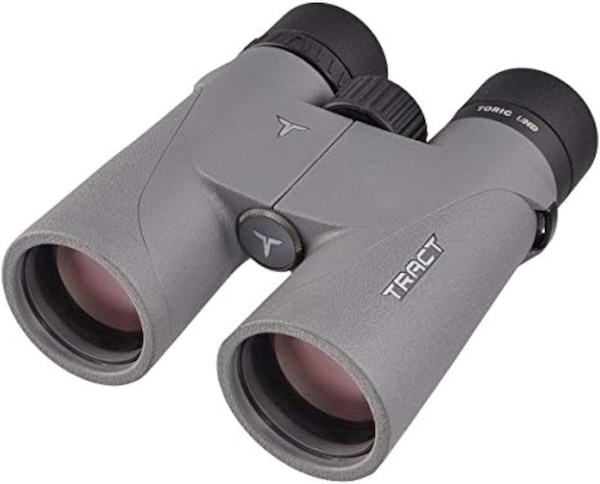
This is a very good binocular for $800. If the Nikon wasn’t so much less, this would have gotten the Best Value award. Tract Optics has made a name for itself as a direct-to-consumer brand that offers solid quality for a better price, and their Toric binocular has been a fine example of this for years—and remains so. It’s latest iteration, the UHD Toric has been upgraded with Schott HT extra-low dispersion glass, and the result is a lightweight, compact, full-size binocular that’s built very tough and feels good in the hand, with excellent rubber armoring and nice all-around ergonomics—all at a very fair price.
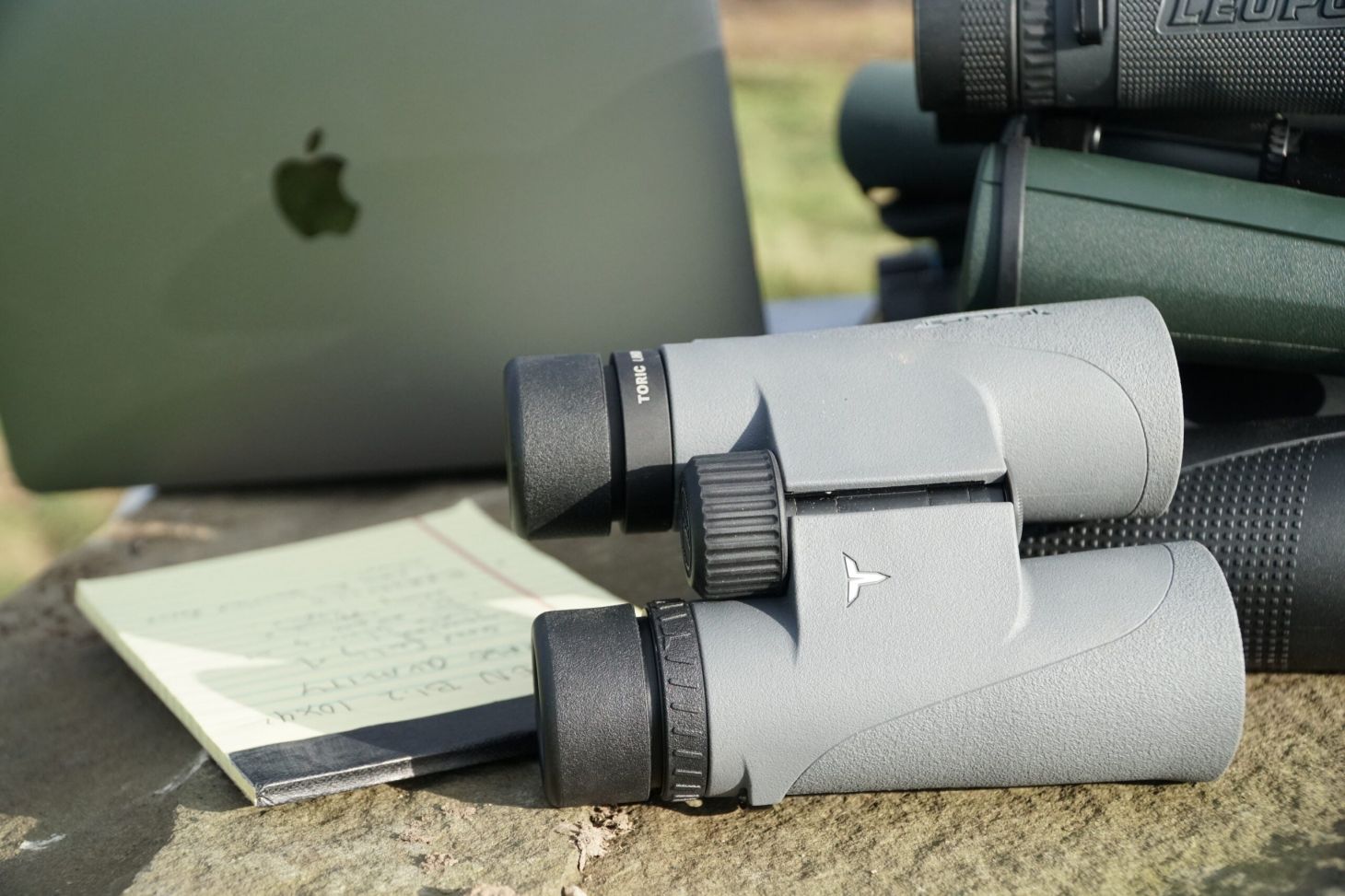
What about the optics? Resolution and low-light performance was right there with the $1,000 models and even a bit better than some. Image quality is quite good, too, with a bright, inviting picture. There is a bit of blurring at the edges of the image and a slight tunneling effect, but both are minor. The Toric aced my very tough weather-resistance test, has an impressively smooth focus wheel, and a good, locking diopter. All in all, this $800 binocular holds its own optically with models costing a couple hundred bucks more, and it feels a little better in the hand and is sharper looking than several, too.
Leupold BX-5 Santiam HD 10×42
Leupold BX-5 Santiam HD
Pros
Excellent build quality and ergonomics
Compact and lightweight
Feels great in the hand
Extremely weather-resistant
- Great low-light performance
Cons
Not the best resolution
Specs
- Magnification: 10x
- Objective Lens Diameter: 42mm
- Exit Pupil: 5.0 mm
- FOV: 341’ @ 1,000 yards
- Size: 5.9 x 5.1inches
- Weight: 24.3 ounces
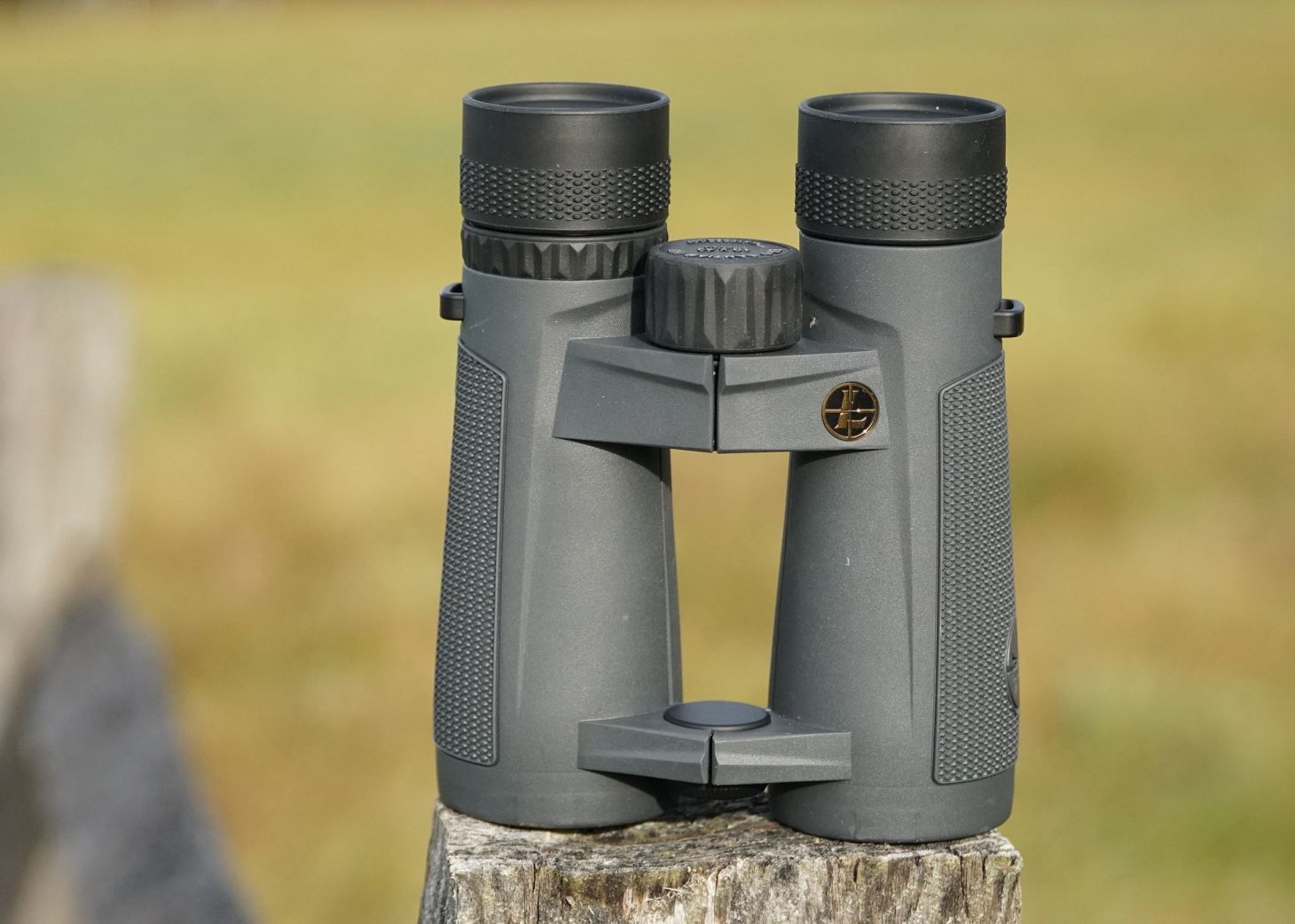
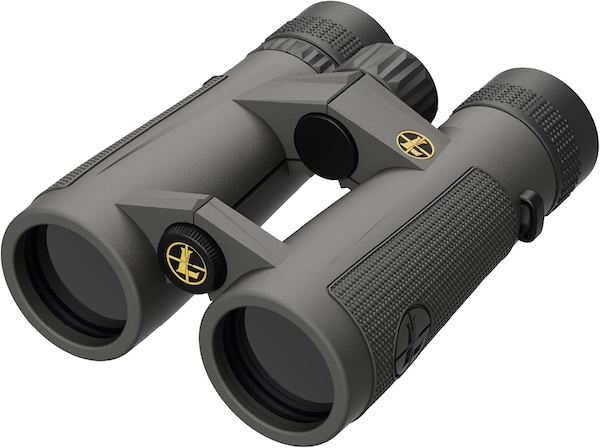
Leupold’s top-end binocular, the BX-5 Santiam HD has a similar quality to the Nikon Monarch M7 in that you pick it up and you know it’ll take a beating—that you can hunt hard with it and not worry. This one, though, comes in a more refined package. The build quality, fit and finish, and ergonomics of the Santiam are first rate. The knurled rubber armoring and open-bridge design combined with the compact size and light weight make for a binocular that feels great in the hand.
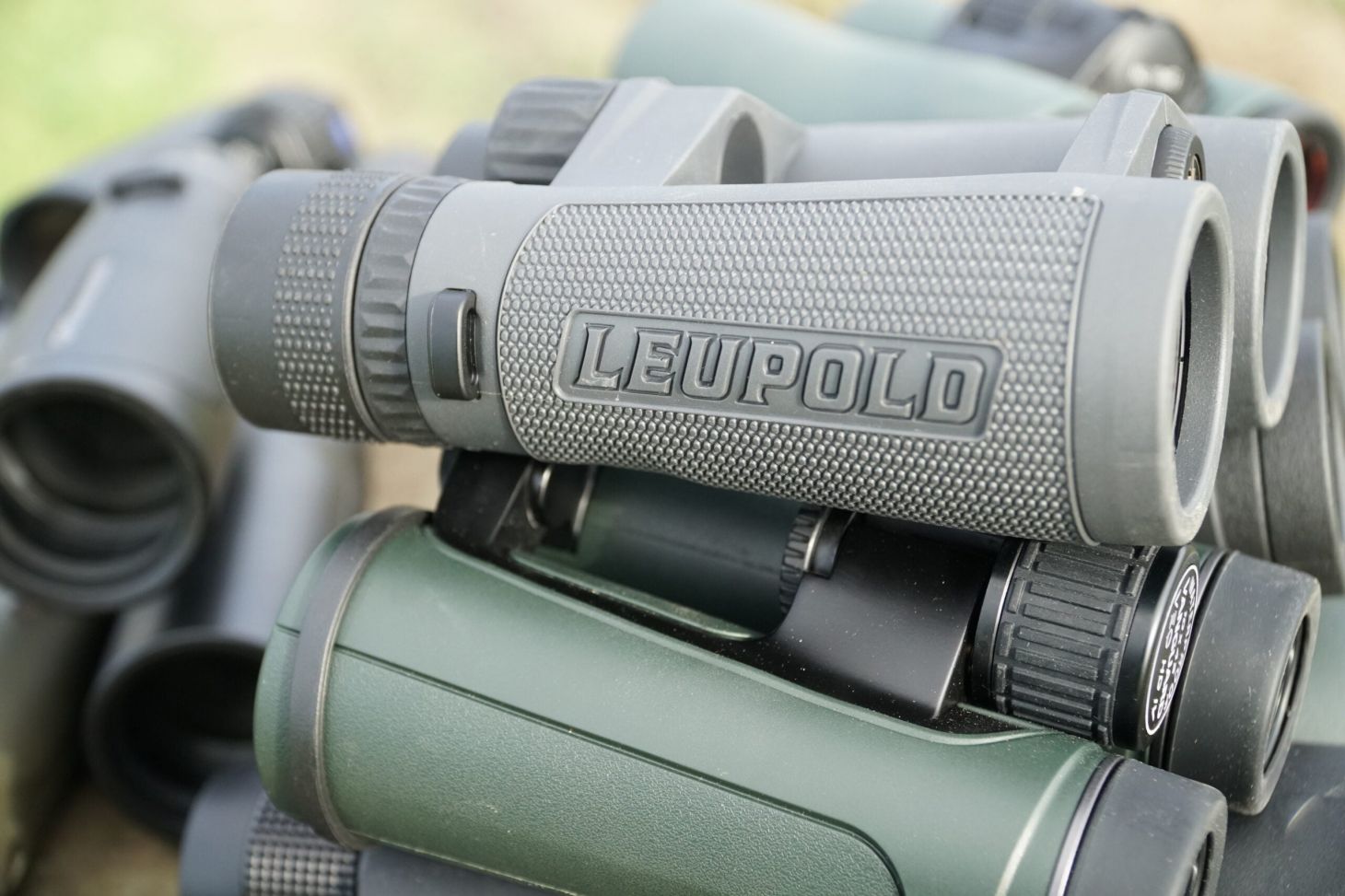
There’s a bit of a trade off in resolution, as this binocular scored a tick below others in its price range, partly due to some noticeable color shift. But it made up for it with solid scores in image quality and low-light performance and excellent scores in weather-resistance and handling. There was some edge blurring and a bit of tunneling, but the image is bright and vibrant. The focus wheel is about perfect, as is the tension on the non-locking diopter. My general feeling about the Santiam is that I would like it a lot if it cost just a little less. And low and behold, it kind of does. While the MSRP is $1,099, you can find it for closer to $900 if you poke around.
How We Tested Binoculars
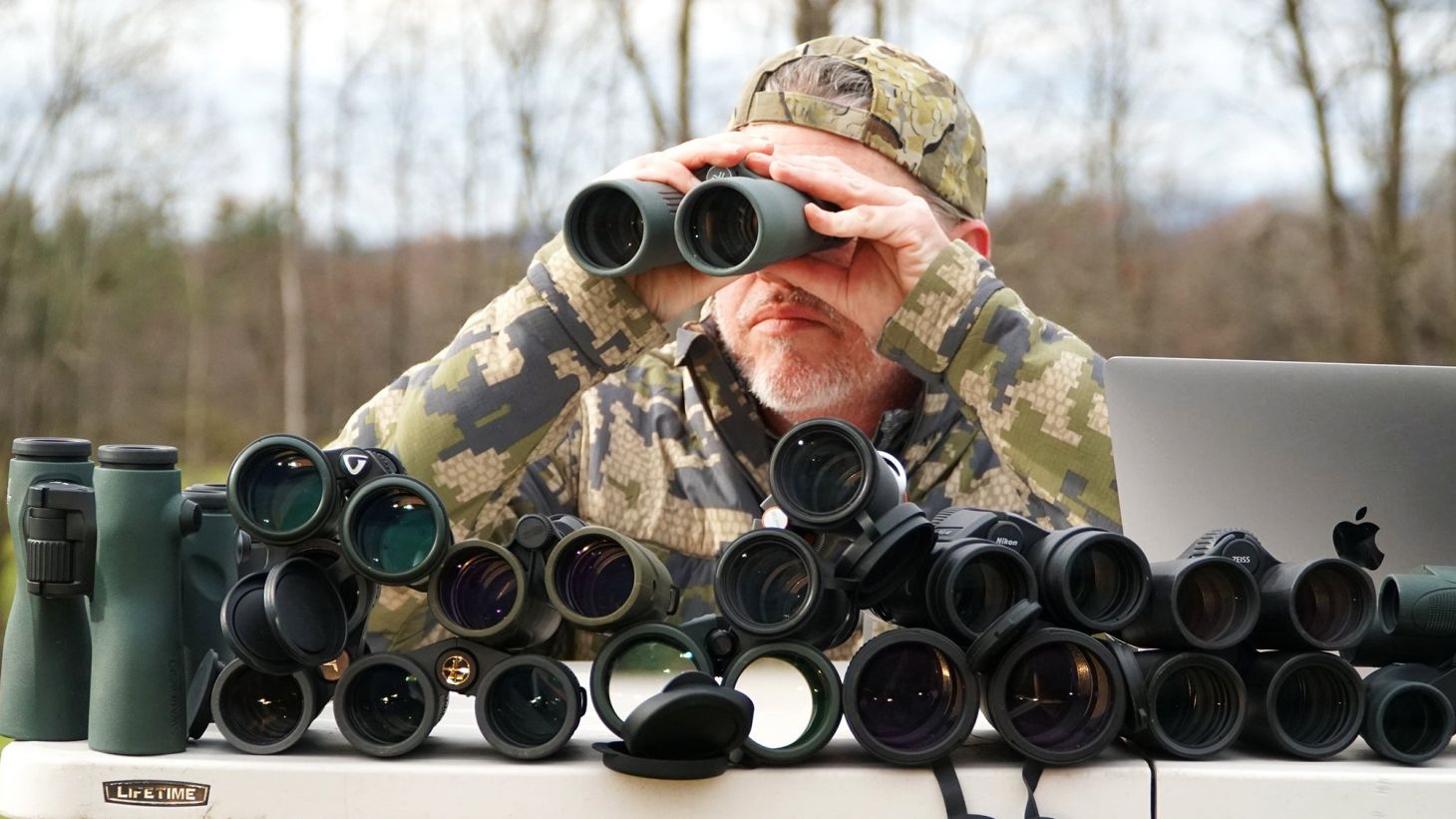
For decades, Field & Stream has been putting hunting glass through rigorous testing to help readers separate the great from the very good and the good from the garbage—and we’re not afraid to tell you which is which. You wont find a tougher, more thorough, or more honest optics test. Binocular manufacturers, to their credit, have always been on board to submit their products for evaluation.
Because binocular manufacturers do not unveil new products every year, I invited optics companies to send their best, most-recent full-size binocular in for testing. Upon their arrival, I checked each model to make sure they met advertised specs, and then I spent weeks on the range and in the field running them through a long list of tests and evaluations to determine how they all stack up.
How We Scored Binoculars
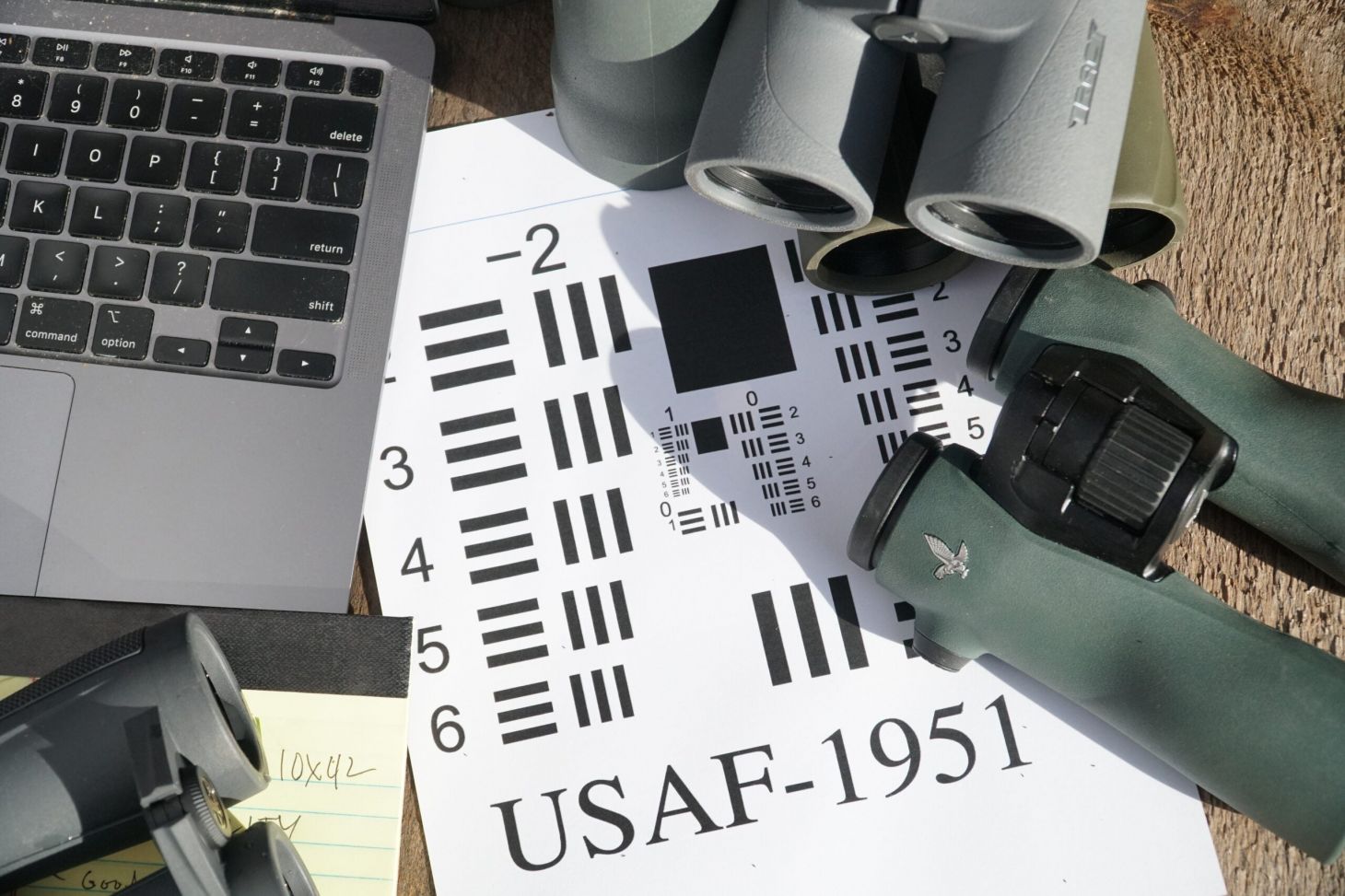
I evaluated each binocular for the following eight categories:
Resolution: I set up a 1951 USAF Resolution Test Chart and a color-artifact test at 50 yards and recorded values for each binocular corresponding to detail resolved and color shift perceived.
Image Quality: In a variety of landscapes and lighting situations, I evaluated each binocular’s image for clarity, feeling of immersion, and visual artifacts, including stray light and apparent field curvature (or blurring at the edges).
Low-Light Performance: This category aggregated exit pupil and low-light resolution, using a 1951 USAF Resolution Test Chart set up in the dark and lit only by a far-way flood light. (Why not at dawn and dusk? Because fading or growing light makes it impossible to compare each on a level playing field.)
Build Quality and Ergonomics: I judged overall feel in the hand, as well as the quality, feel, and functionality of the focus wheel, eyepieces, diopter adjustment, and lens covers.
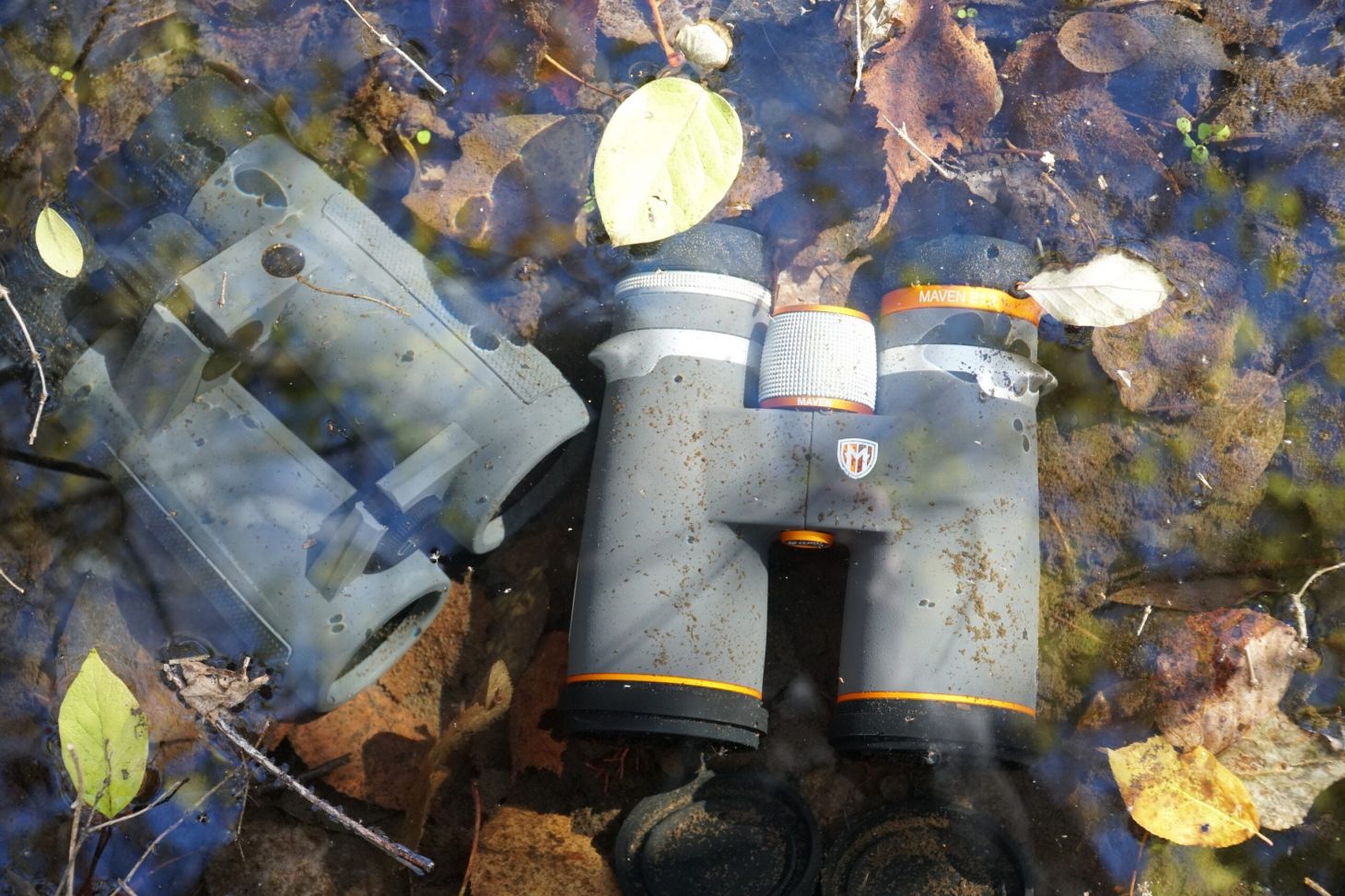
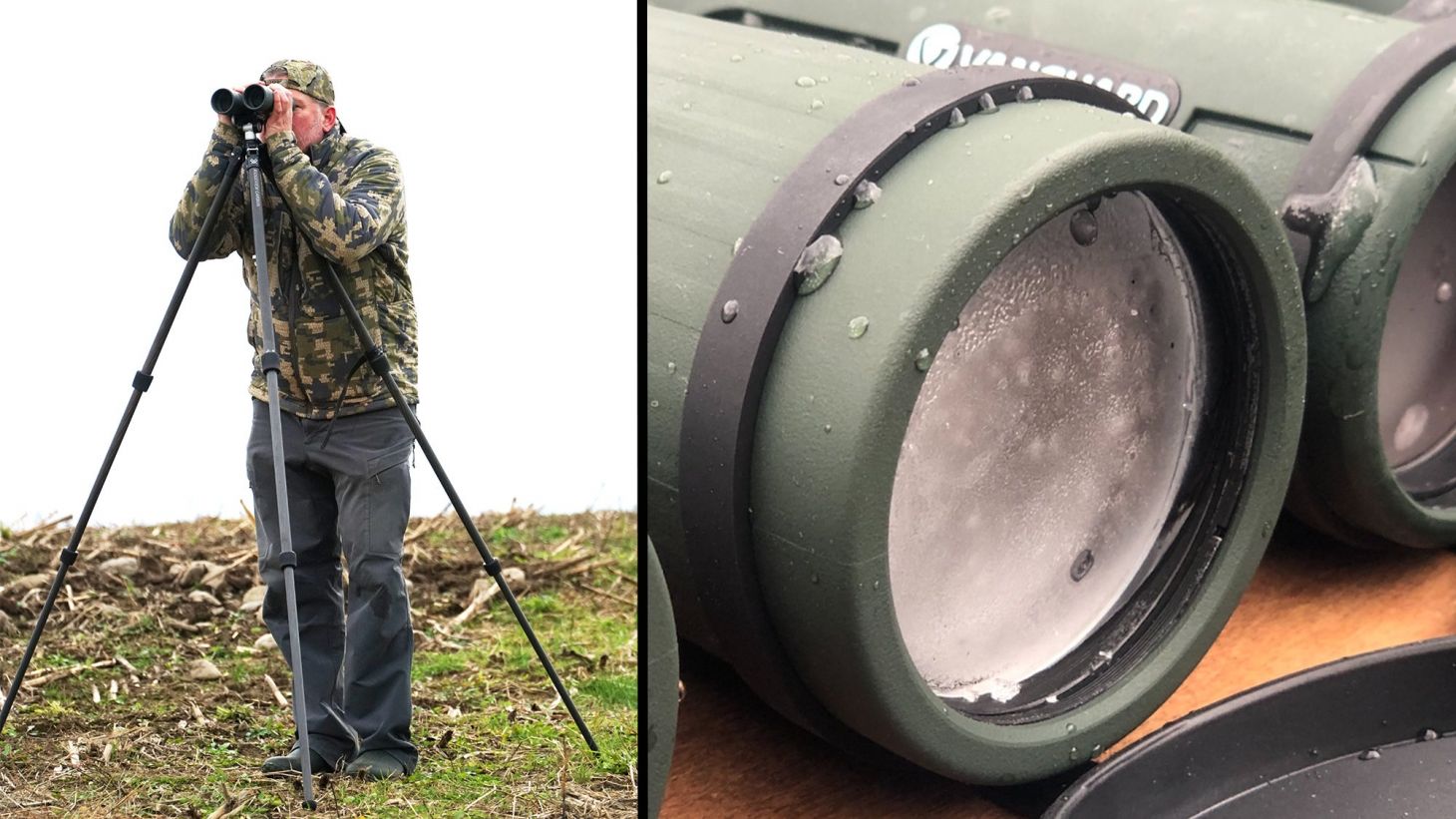
Weather Resistance: I submersed each binocular in a creek next to my house for a half hour, then took them out and scored them for image quality and resolution. Then I put them in a chest freezer for a half hour and rated them on image, resolution, and functionality immediately after and again a half-hour after coming out of the deep freeze.
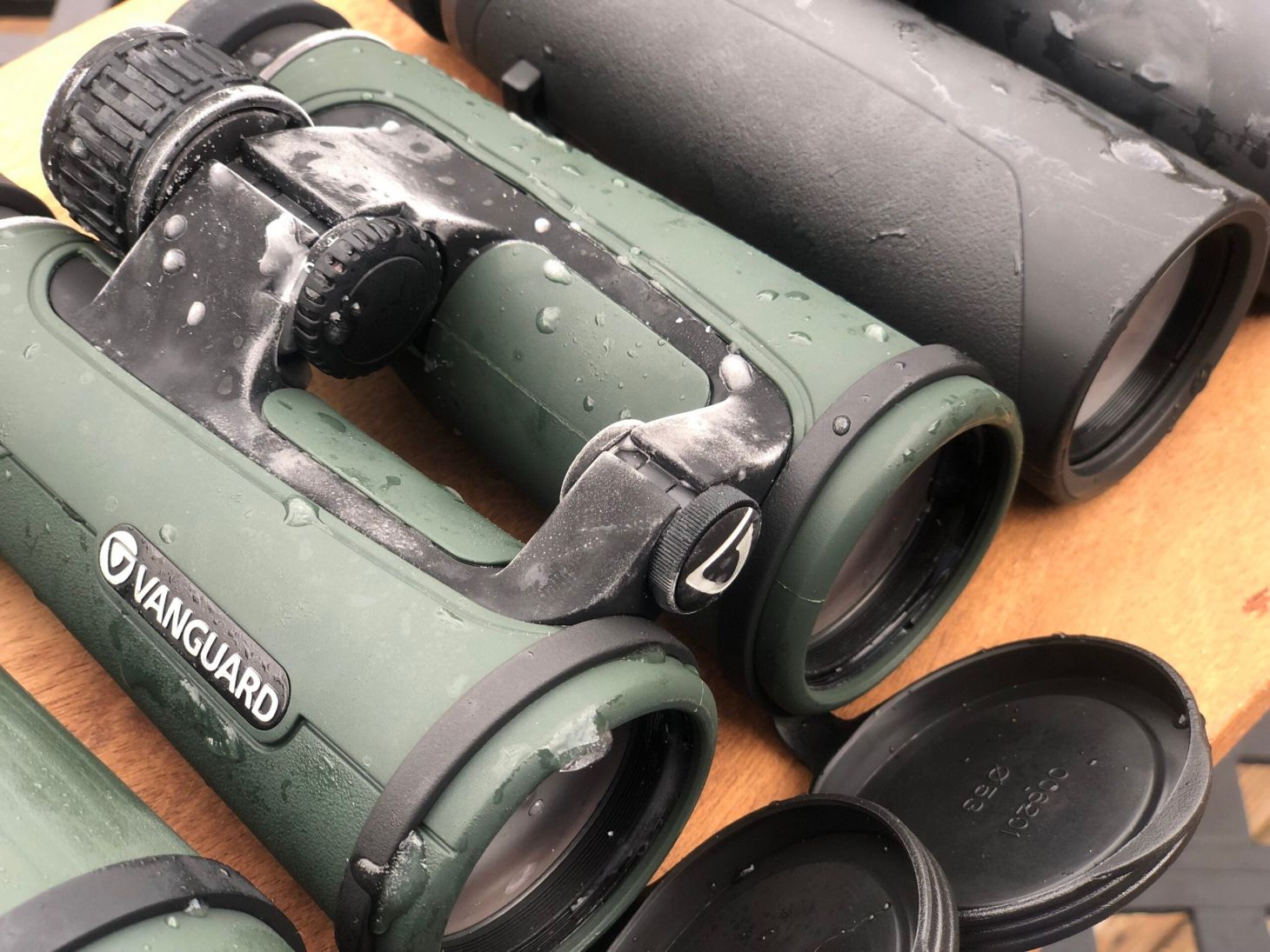
Handling: All else being equal, the lighter and more compact a binocular, the better, which is why this category is a straight reflection of each test model’s size and weight.
Value: Performance divided by price.
I scored each binocular on a 1 to 10 scale for all the categories above and then double the key ones or resolution (because seeing fine detail, like antler points, at distance is a big deal to most hunters), image quality (because it can make extended viewing so much more comfortable and enjoyable), and weather-resistance (because we need our binos to work no matter what), for a total possible score of 100 points.
Why Trust Us
For more than 125 years, Field & Stream has been providing readers with honest and authentic coverage of outdoor gear. Our writers and editors eat, sleep, and breathe the outdoors, and that passion comes through in our product reviews. You can count on F&S to keep you up to date on the best new gear. And when we write about a product—whether it’s a bass lure or a backpack—we cover the good and the bad, so you know exactly what to expect before you decide to make a purchase.
EXCITING NEWS
Membership Now Includes