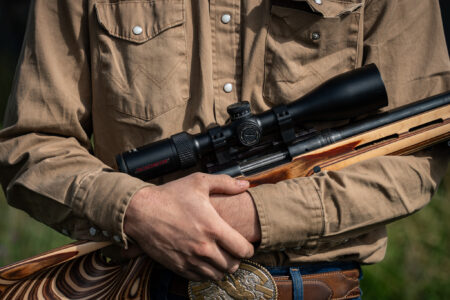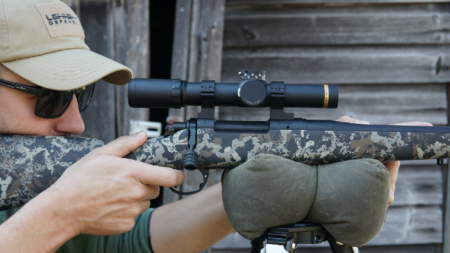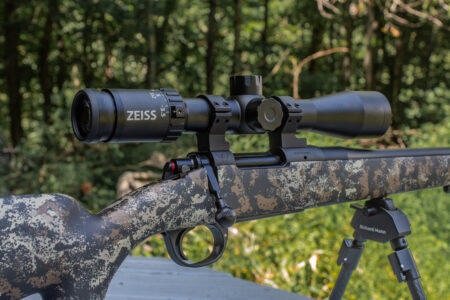
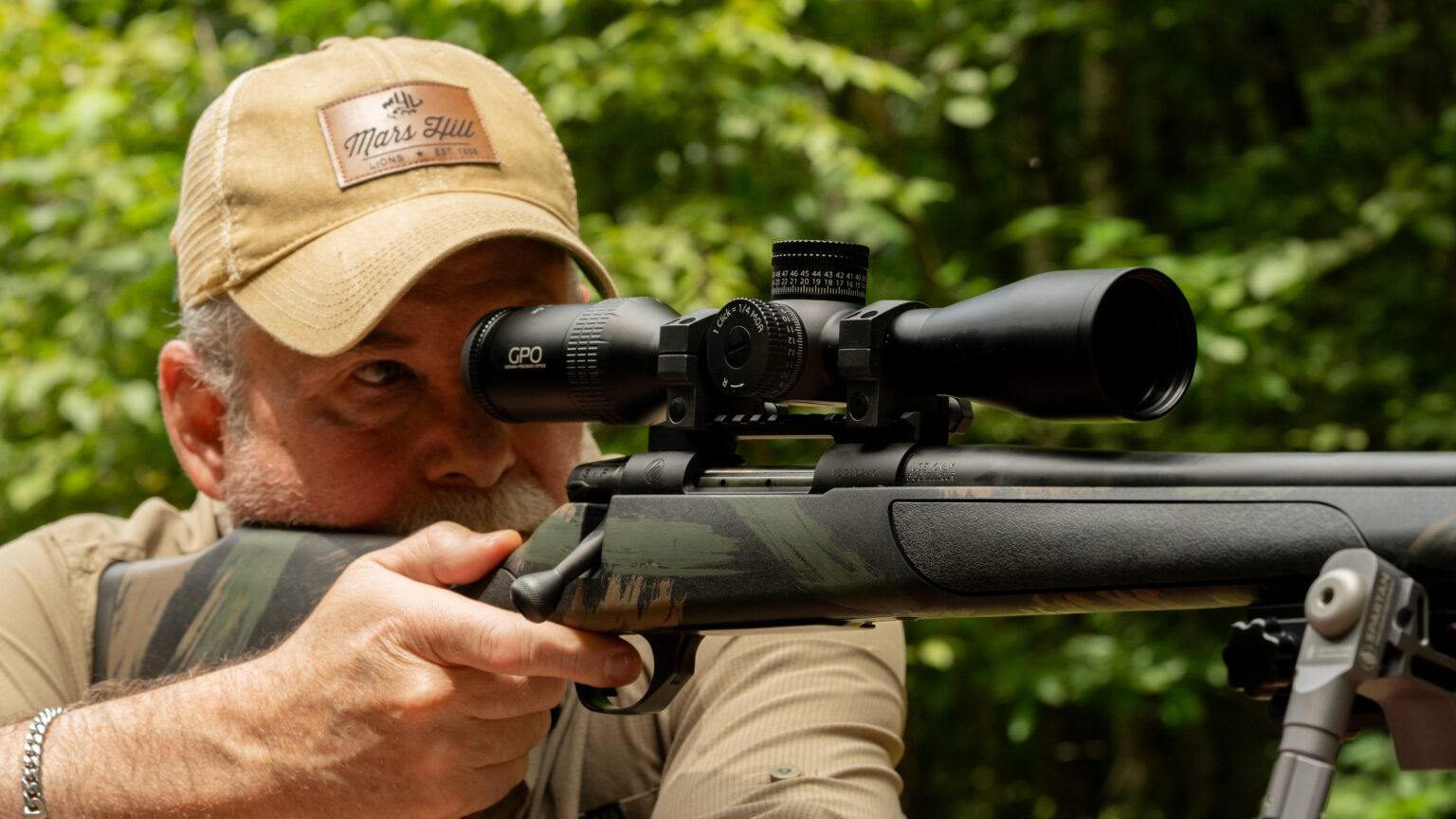
For hunters who want the best overall performance in a lightweight package, the Swarovski Z5i+ 2-10×42 leads the category. For long-range precision, the Tract Toric Ultra HD 2.5-15x MRAD Eagleman is the pick. Hunters working with a tighter budget will find the Burris Fullfield 3-12x56mm delivers strong value. Close-quarters and versatile applications point toward the Maven RS.6 1-10×28.
- The Swarovski Z5i+ 2-10×42 combines a 17-ounce frame with 91 percent light transmission and an illuminated reticle.
- The Burris Fullfield 3-12x56mm is the category's best value pick for hunters prioritizing performance per dollar.
- The Tract Toric Ultra HD 2.5-15x MRAD Eagleman is built specifically for long-range shooting where elevation precision matters most.
- The Maven RS.6 1-10×28 suits close-quarters and versatile applications but gives up the magnification ceiling of larger scopes.
- Every scope in this roundup delivered repeatable reticle adjustments regardless of price point, per the author's field testing.
We may earn revenue from the products available on this page and participate in affiliate programs. Learn more
Rifle scopes have evolved a great deal over the last quarter-century. We are far from the Burris Ballistic Plex reticle and simple, elevated turrets of the early 2000s. The current trend with hunting rifle scopes is the melding of features for shooting at distance with scopes powered and sized for hunting rifles. We’re also seeing a lot more specialization in scopes, with compact, practical options for close quarters and extreme distance shooting.
We put some of the newest hunting rifle scopes through a series of tests to determine how well they perform, what they might be best suited for, and to see if they’re really worth the money. What we found most inspiring is how well all these optics performed, regardless of price. Every scope tested provided repeatable reticle adjustments and was rugged enough to survive our abusive treatment. Not only do today’s rifle scopes have more features, but they’re better than those of two decades ago in every way. Here are the best.
- Best Overall: Swarovski Z5i+ 2-10X42
- Best Value: Burris Fullfield 3-12x56mm
- Best for Long Range: Tract Toric Ultra HD 2.5-15x MRAD Eagleman
- Leupold VX-6HD Gen 2 2-12×42
- Zeiss Conquest V6 3-18×50
- EOTECH 3-9×32 Vudu SFP
- GPO Centuri 3-18x44i
- Maven RS.6 1-10×28 MOA3-LPI
Best Overall: Swarovski Z5i+ 2-10X42
best overall
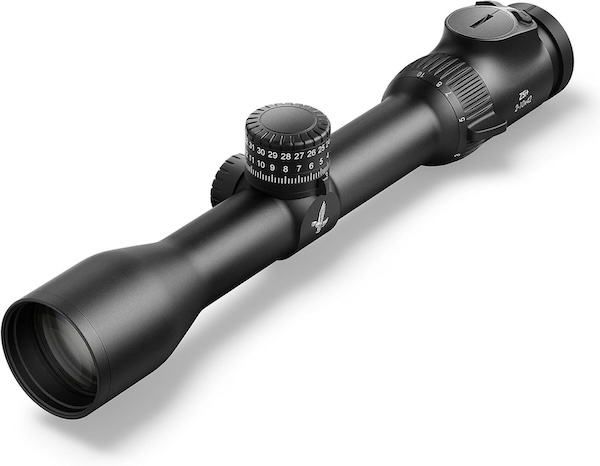
Swarovski Z5i+ 2-10X42
Pros
- Lightweight
- Compact
- Illuminated reticle
- 3 ballistic turret options
Cons
- Expensive
Specs
- Magnification Range: 2-10X
- Objective Diameter: 42mm
- Length: 11.9 inches
- Weight: 17 ounces
- Tube Diameter: 30mm
- Adjustment Range: 79 MOA
- Eye Relief: 3.74
- Reticle: PLEX-I
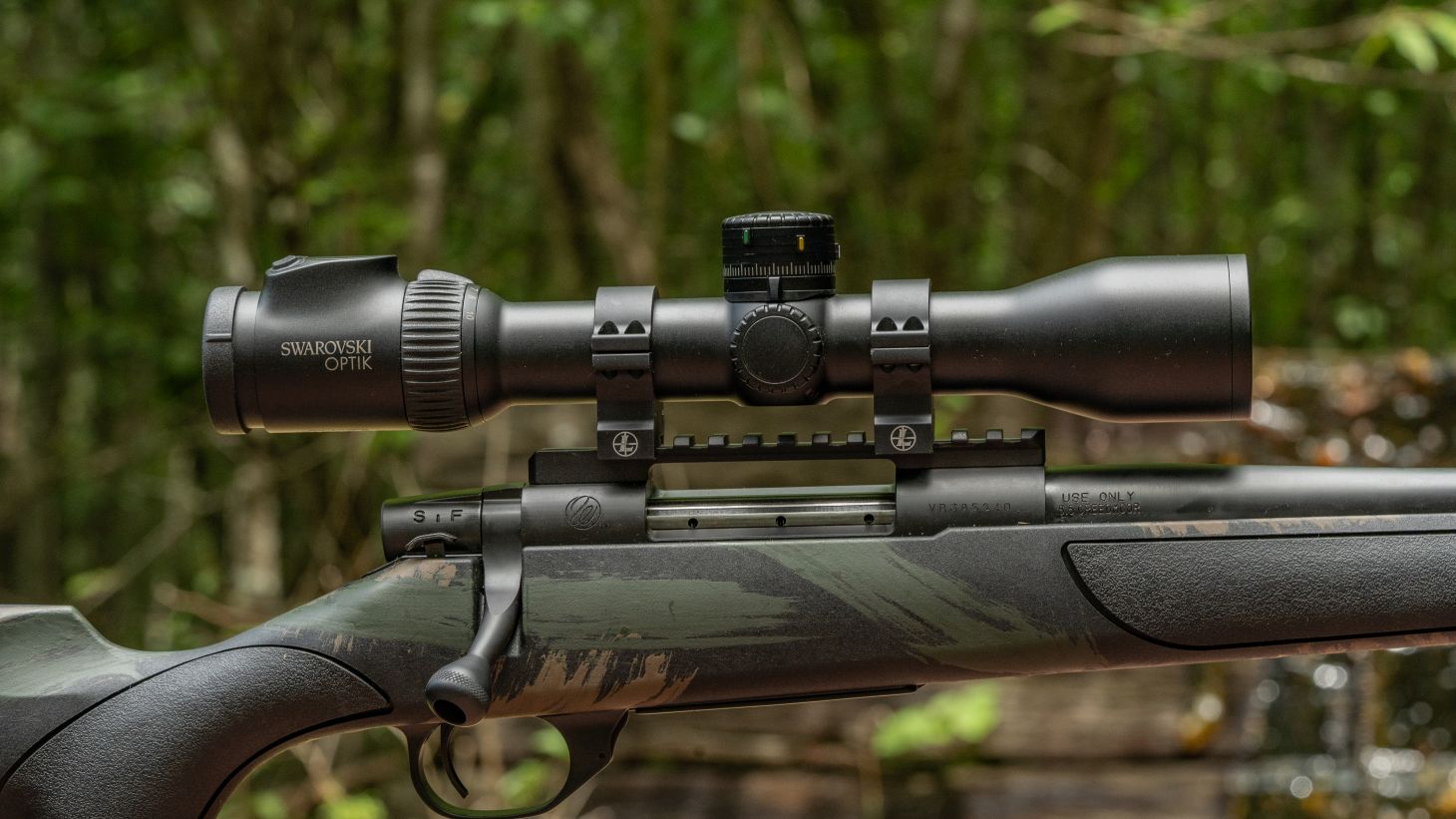
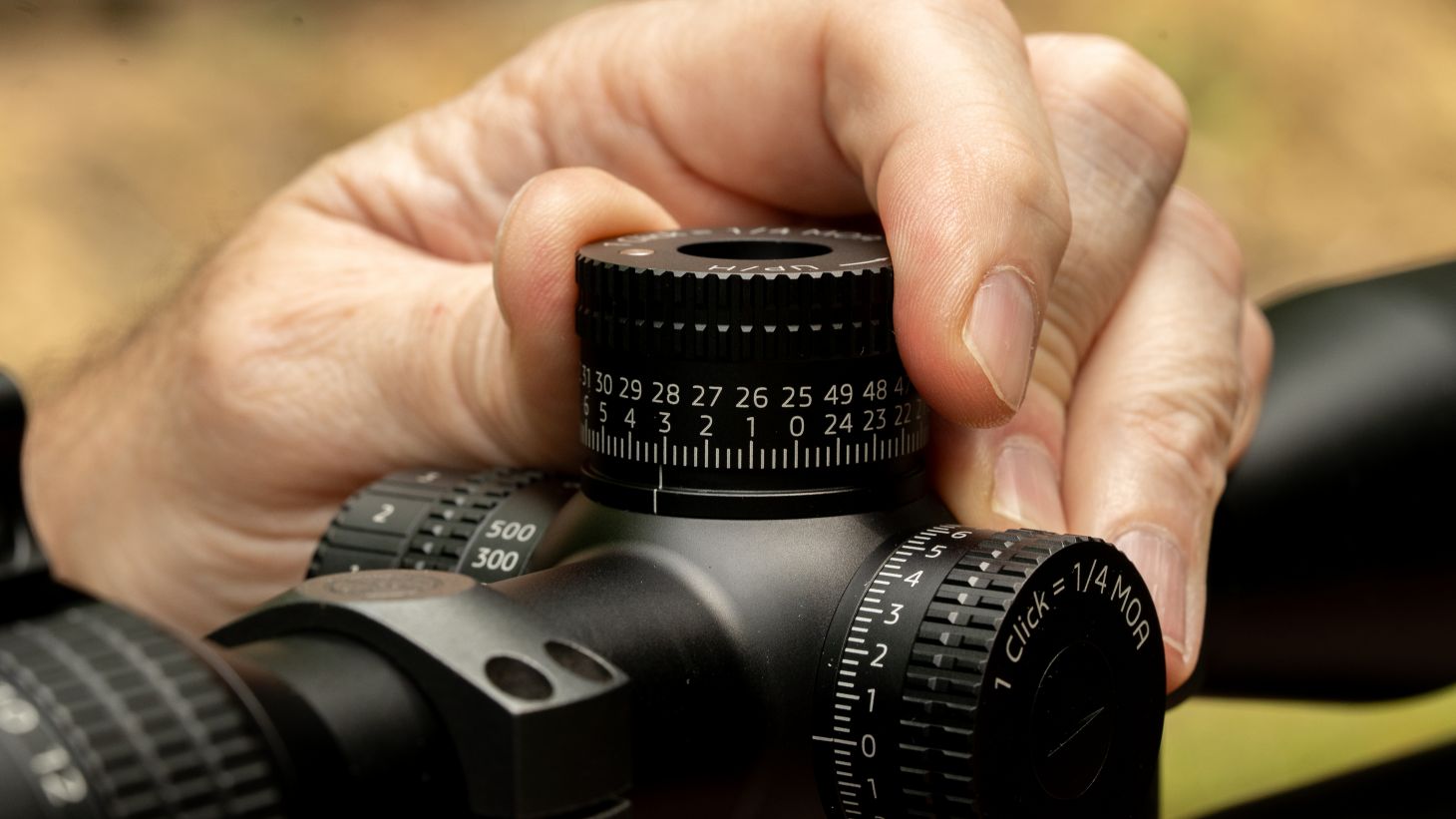
There is a full line of Swarovski Z5+ models, but the 2-10×42 L BT is likely the one most hunters will gravitate to. It has a second focal plane reticle and substantial upgrades over the original Z5 line. These include a 30mm tube, 80 MOA of reticle adjustment, an improved zero stop, and a turret that provides two uninterrupted rotations delivering 40 MOA of correction. It also has an elevation adjustment lock and Swarovski’s excellent lens coatings. This rifle scope relies on four coil springs as opposed to two leaf springs for erector support.
The model designations of “i,” “L,” and “BT” correspond to an illuminated reticle (i), ballistic turret (BT), and (L) for lightweight. What really sets the Z5i+ 2-10X42 L BT apart from most other scopes is its combination of features compared to its size and weight. It only weighs 17 ounces, and you get a practical magnification range, 91 percent light transmission, and a rheostat-controlled illuminated reticle that remembers its last setting. There’s also the unique, three-way, ballistic turret system. It comes with a ballistic ring graduated in ¼ MOA clicks, but it also comes with four thin ballistic rings—each with a visual and tactile indicator—so you can personalize your elevation correction. You can also order a custom ballistic ring to match your favorite load.
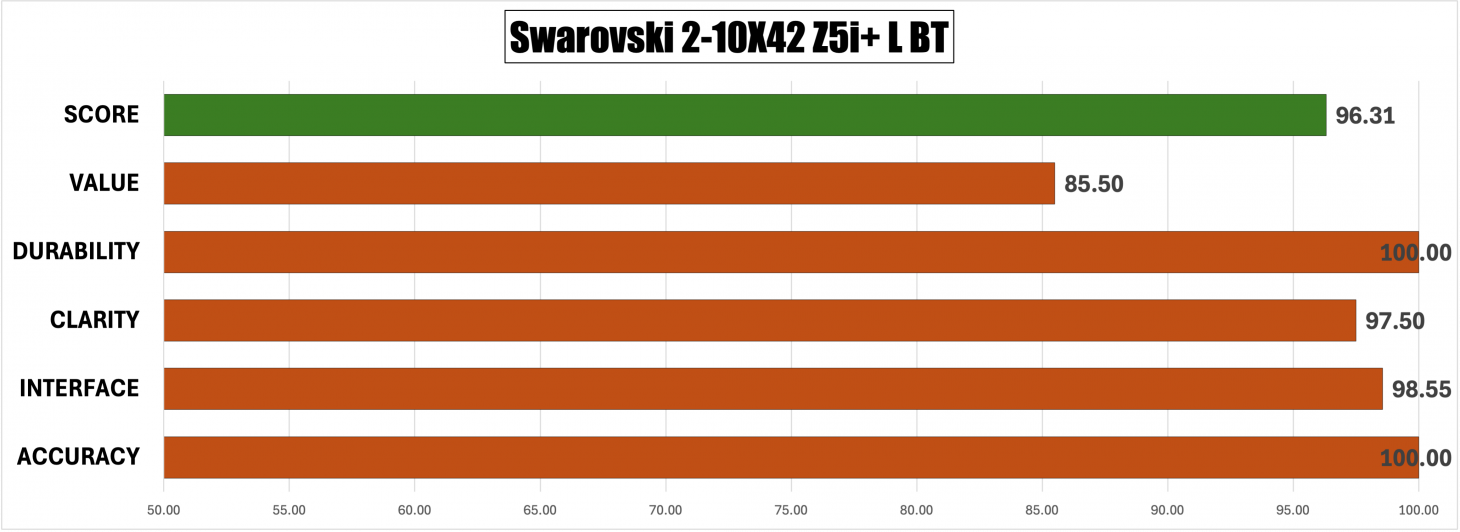
The scope performed wonderfully, especially in the user interface category. The focus, magnification, illuminated reticle brightness, and turret controls were all easy to adjust with precision; the magnification adjustment was smooth, and the elevation turret lock system is the best I’ve seen. This rifle scope will let you see clearly in any lighting condition, provide multiple aiming options, and it is not too big or heavy. It is also not cheap, but you won’t find all this goodness on any other for less.
Best Value: Burris Fullfield 3-12x56mm
best value
Burris Fullfield 3-12x56mm
Pros
- Very affordable
- Compact
- Reticle options
- Customizable turrets
Cons
- Heavy with limited features
Specs
- Magnification Range: 3-12X
- Objective Diameter: 56mm
- Length: 11.2 inches
- Weight: 19.7 ounces
- Tube Diameter: 30mm
- Adjustment Range: 95 MOA
- Eye Relief: 3.39 inches
- Reticle: Ballistic E3
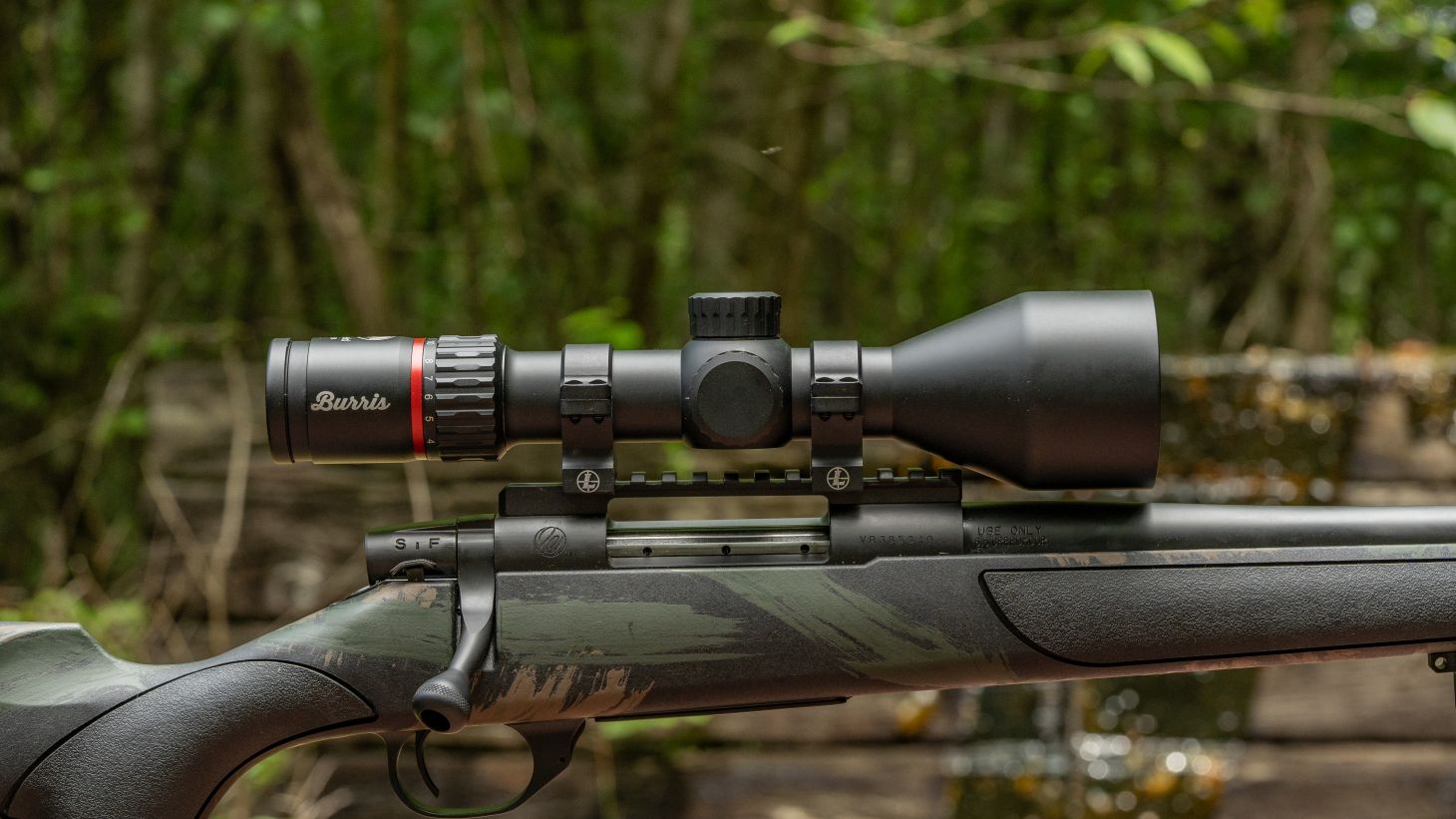
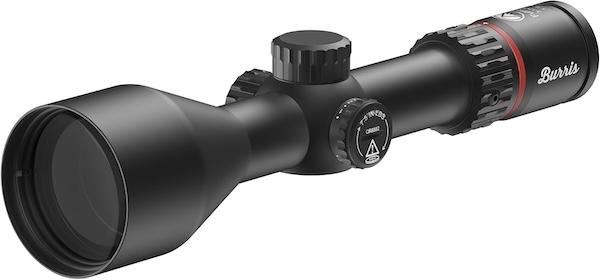
In 1975, Burris introduced the Fullfield rifle scope, and this year marks its fifth generation and 25th anniversary. The Fullfield has been a trusted and affordable option for hunters since its introduction. Burris is offering six variations of the new Fullfield which includes, 2-8x35mm, 2.5-10x42mm, 3-12x42mm, 4-16x50mm, 6-24x50mm, and the 3-12x56mm rifle scope I tested. The primary enhancement of the newest Fullfield is the new Knob Synergy, which is a universal reticle adjustment knob system that allows you to swap between capped and exposed elevation adjustment knobs. With this system, a shooter can use the standard knob (SC), the Capped Advanced Knob (AC), the Exposed Advanced Knob (AE), or the Custom Burris Lasered Knob.
Burris made history in 2000 when it introduced the simple but effective Ballistic Plex reticle, which to this day is arguably one of the easiest to use ballistic reticles. Sadly, this reticle is not available in the new Fullfield line, but—depending on the model—six other very practical reticles are. The test scope was equipped with the Ballistic E3 reticle, which is very similar to the original Ballistic Plex, with the addition of wind holds. This is a second focal plane rifle scope, and interestingly, at the top of the etched reticle, you see “E3 12X” to remind you that the ballistic corrections are set to apply at maximum magnification. With its 56mm objective, the scope is a bit large, but at less than 12 inches long, it is still compact. The big objective provides a 5mm exit pupil and good brightness in low light, but the shortness of the scope limits mounting space to only 4.7 inches.
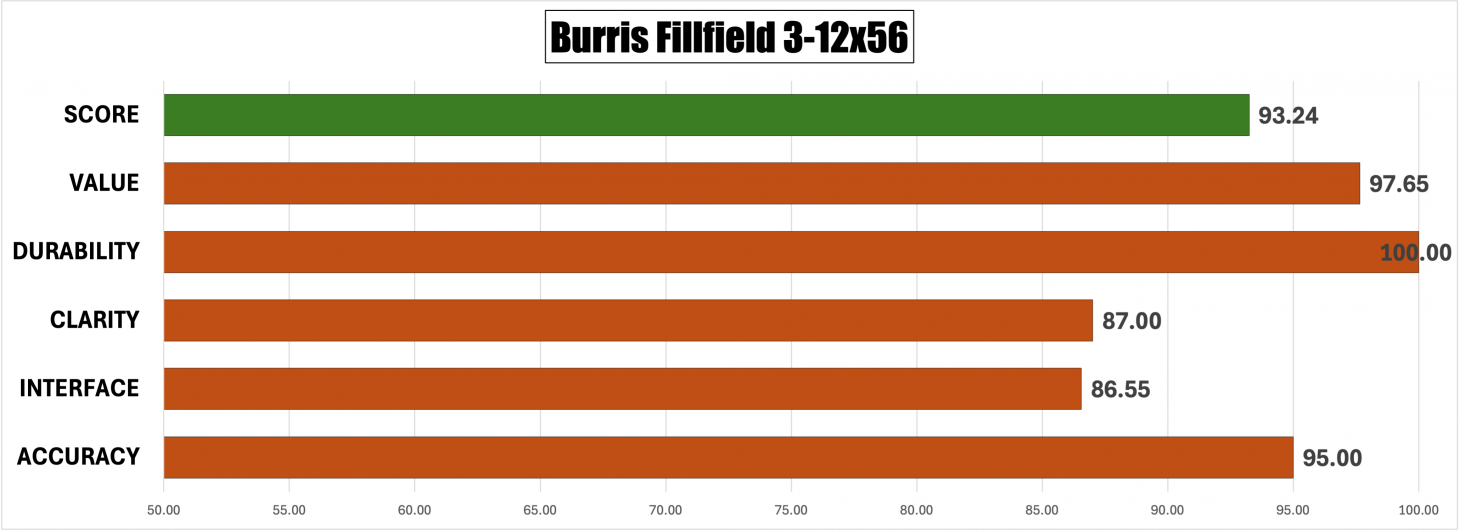
Though limited in features as compared to the other scopes we tested, the Fullfield performed admirably and would serve most hunters very well. There are several reticle options to include an illuminated version, the Knob Synergy system allows for some customization, and you can download the Burris Connect APP to calculate how the reticle will interface with the load you’re using. The best thing about the new Fullfield rifle scope is that it works and is very affordable.
Best for Long Range: Tract Toric Ultra HD 2.5-15x MRAD Eagleman
best for long range
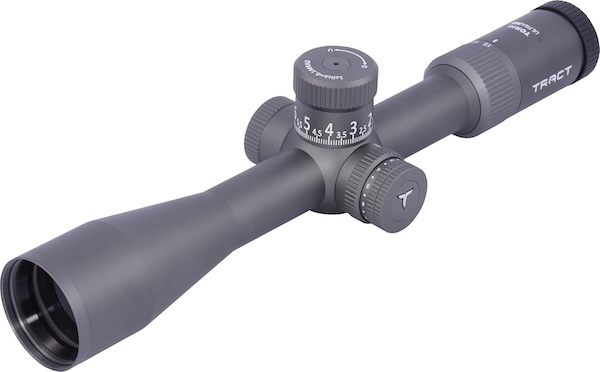
Tract Toric Ultra HD 2.5-15x MRAD Eagleman
Pros
- Easy to read and locking elevation turret
- Comes with a sunshade
- Illuminated reticle
- Not too expensive
Cons
- Long and heavy
Specs
- Objective Diameter: 44mm
- Length: 14 inches
- Weight: 29.8 ounces
- Tube Diameter: 30mm
- Adjustment Range: 100 MOA
- Eye Relief: 3.90 inches
- Reticle: Illuminated FFP MRAD hunting Reticle
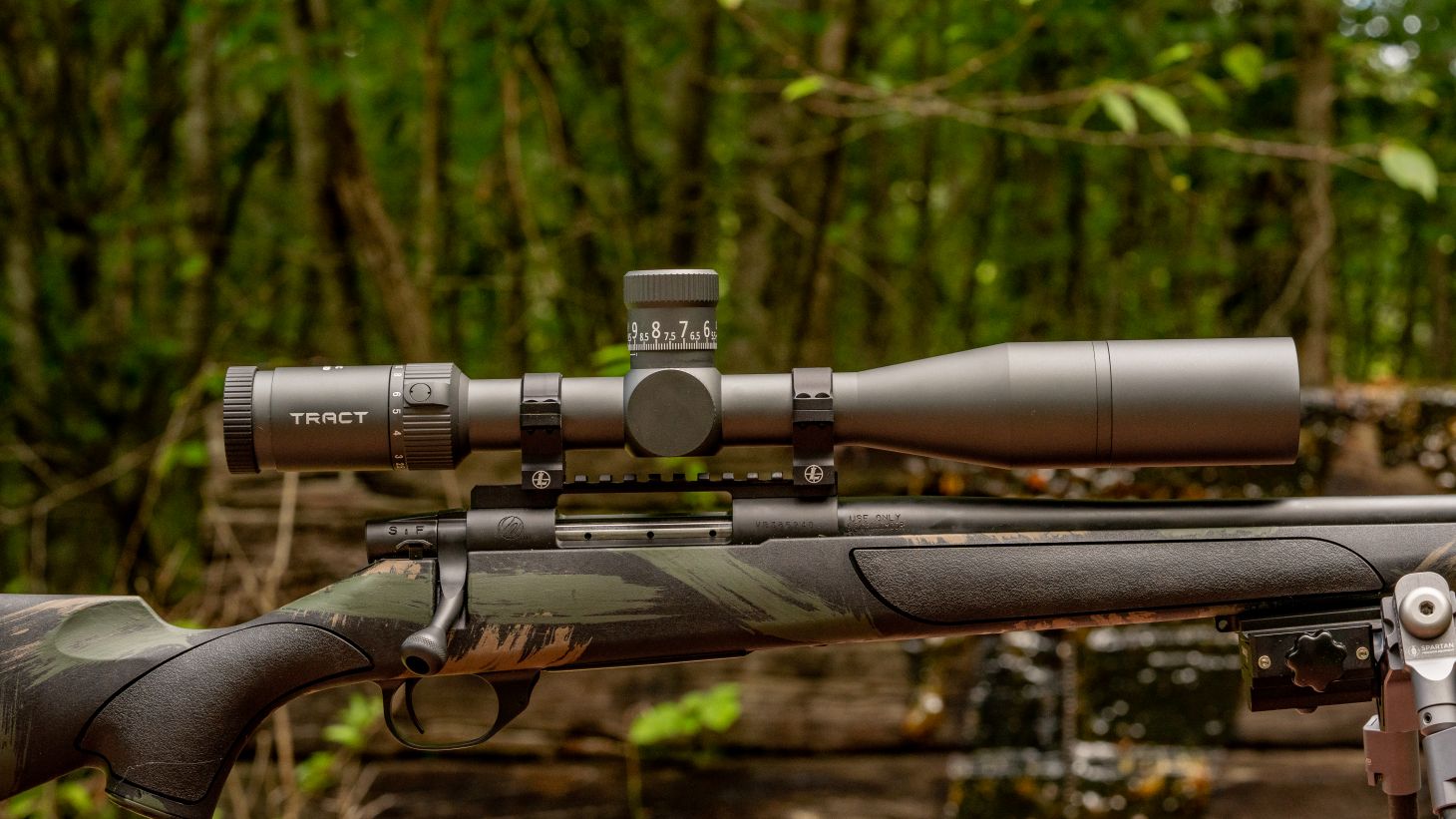
This rifle scope was purpose-built for hunters shooting at extended distances. Like many modern quality optics, Tract rifle scopes are made in Japan, but the company is headed up by two optical-savvy Americans with a long history at Nikon. Their goal is to bypass the middleman and provide high-quality optics at more affordable prices. The Toric Ultra HD 2.5-15x we tested is one of Tract’s latest offerings, and it features a reticle developed by James Eagleman at the Barbour Creek Long Range Shooting School.
This is an MRAD reticle that is unique in that it has wind direction indicators to let you know which way to hold for a left or right wind. It also has number indicators (left and right) that extend out to 8 MILs, up to 10 MILs, and down to 2 MILs. For those familiar with using a MIL reticle (the scope is also offered with an MOA reticle), this makes the scope simple to use for correction, even in low light, because the full MIL grid is illuminated with multiple brightness settings.
Other features include a constant and generous 4 inches of eye relief, multi-coated SCHOTT glass, Tract’s UHD optical system, a 30mm main tube with a unique grey finish, and an exposed elevation turret with a zero stop. But this turret is a bit different than what you will find on most rifle scopes intended for distance shooting. The primary numbers indicating MIL or MOA are very large, so they are very easy to see. In fact, they are a 1/4-inch tall.
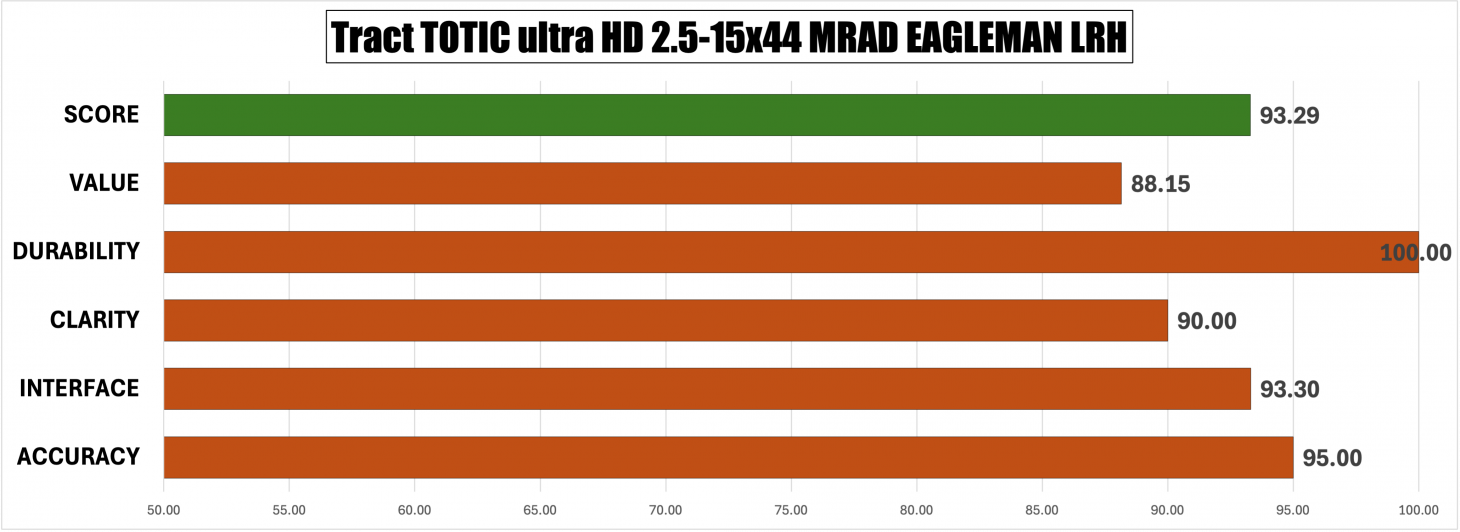
This rifle scope performed exceptionally well during testing, but it is big and heavy. It’s probably not a great choice for a conventional hunting rifle, but for those who want to shoot across beanfields, canyons, and down abandoned airport runways, this scope will get it done, and it costs less than a grand.
Leupold VX-6HD Gen 2 2-12×42
Leupold VX-6HD Gen 2 2-12×42
Pros
- Flip-up lens covers included
- Illuminated motion sensor reticle
- Easy-to-use custom dial system
Cons
- Expensive
Specs
- Magnification Range: 2-12X
- Objective Diameter: 42mm
- Length: 12.5 inches
- Weight: 21.0 ounces
- Tube Diameter: 30mm
- Adjustment Range: 120 MOA
- Eye Relief: 3.80 inches
- Reticle: Illuminated FireDot Duplex
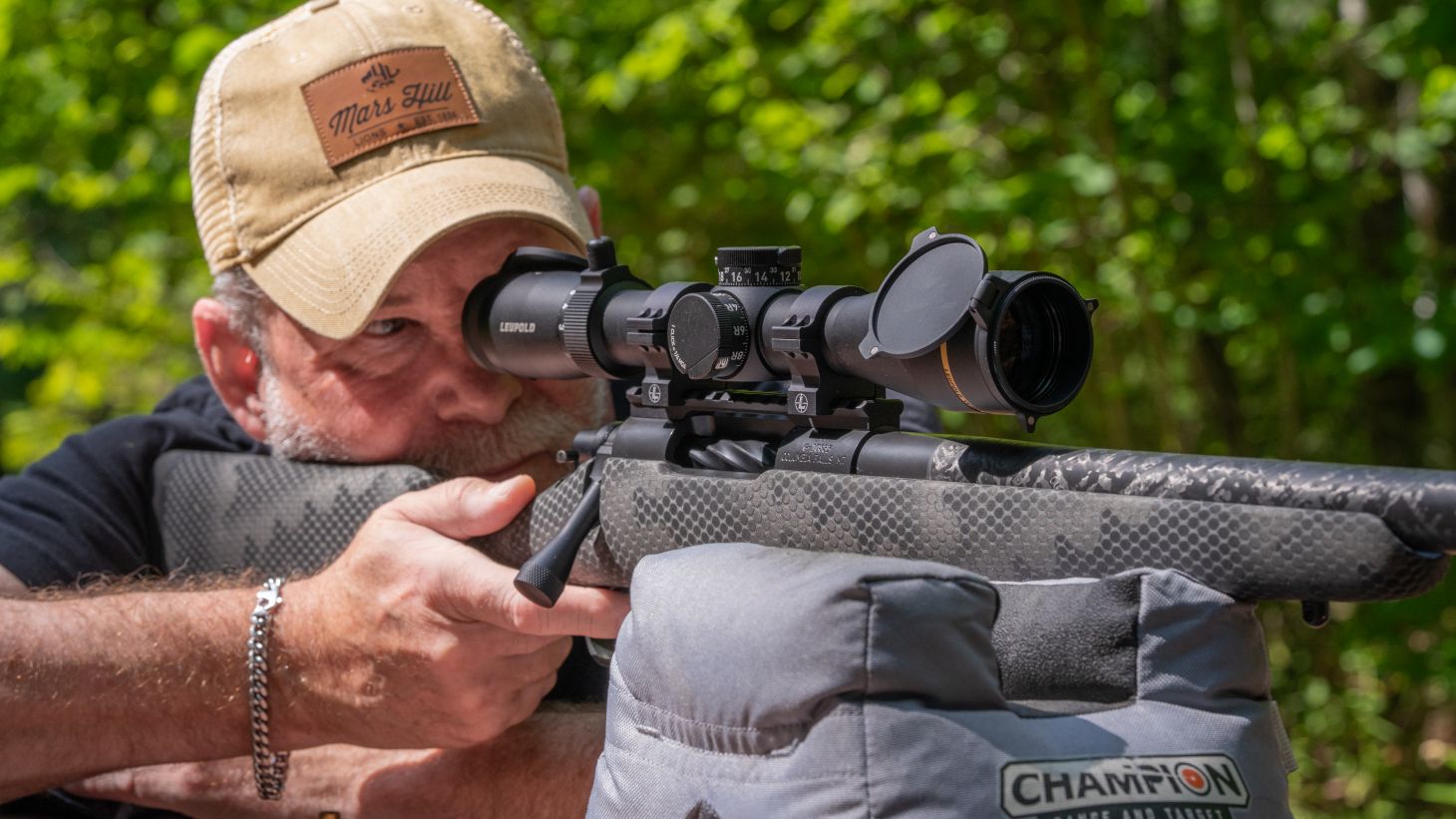
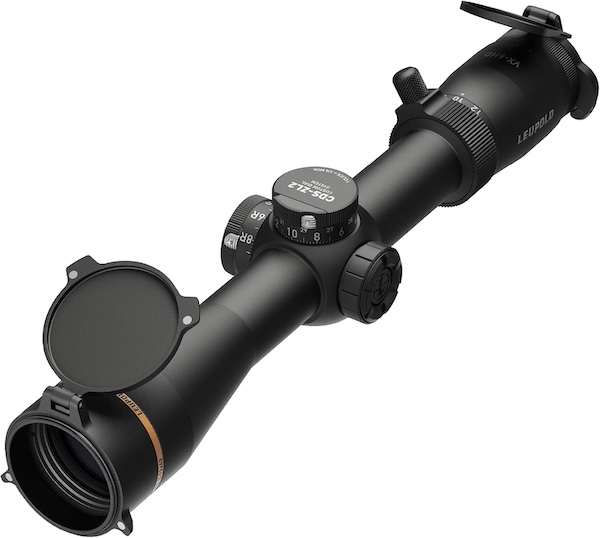
This scope was neck and neck with the Swarovski Z5i+. Leupold offers nine versions of the new VX-6HD Gen 2 rifle scope, and the 2-12×42 is probably the most suitable for general hunting applications. The scope comes with a removable throw lever to let you rotate through the 6X magnification range, and the included throw lever is smartly positioned to avoid interfering with the handle and knob on most bolt actions. The scope is outfitted with a duplex reticle in the second focal plane, and at its center, there is an illuminated dot you can turn on and off by pressing a button on the scope’s saddle. It has eight illumination settings, with motion activation to preserve battery life.
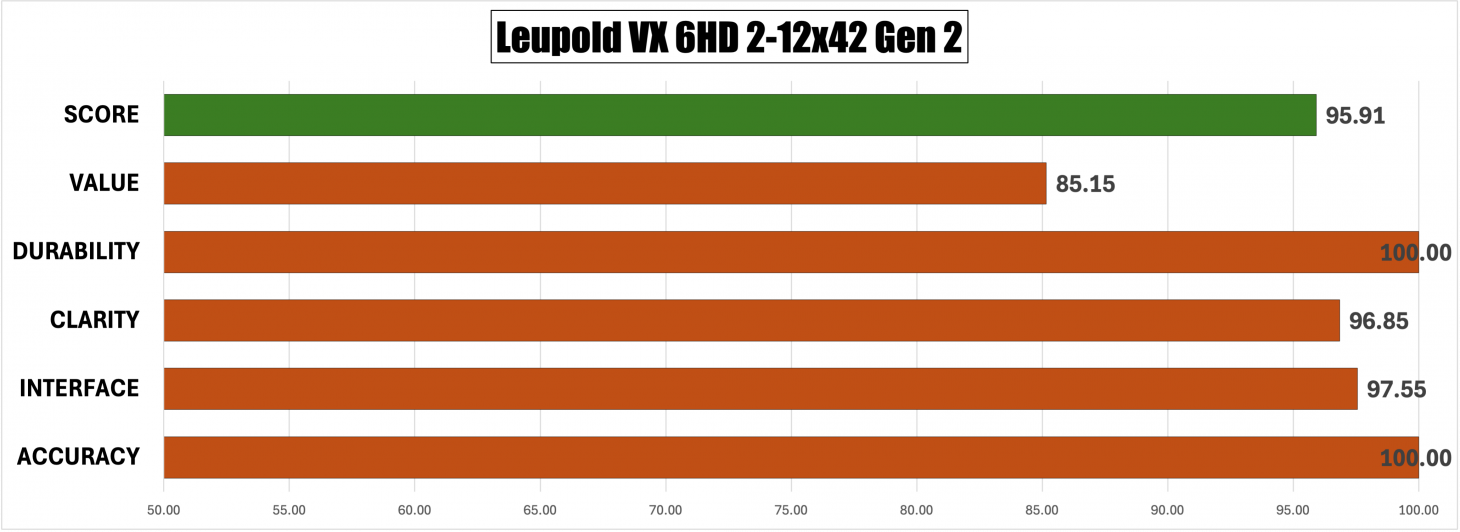
The scope’s coolest feature is the CDS-SZL2 Speedset dial system. This Speedset dial lets you reset zero in a matter of seconds with a locking lever on the elevation and windage dials. Once you’ve sighted-in or switched to another custom dial, just flip the lever, remove and rotate to zero, and lock the lever back in place. The CDS Speedset dial offers two uninterrupted rotations with 38 MOA of adjustment and a total adjustment range of 120 MOA. It’s also nice that the scope comes with Leupold’s Alumina Flip-Back lens covers that screw into the objective and ocular housings and easily flip out of the way. Weight matters to hunters, and the 21-ounce heft of this riflescope is a bit much. The VX-6HD Gen 2, 2-12×42 is also the most expensive scope we tested. On the other hand, this rifle scope does about anything a practical hunter will ask it to do, and it’s guaranteed for life.
Zeiss Conquest V6 3-18x50mm
Zeiss Conquest V6 3-18x50mm
Pros
- Large mounting space
- Excellent optical performance
- Easy-to-use custom dial system
Cons
- Expensive for no illumination
- Non-locking turret
Specs
- Magnification Range: 3-18X
- Objective Diameter: 50mm
- Length: 13.3 inches
- Weight: 22.2 ounces
- Tube Diameter: 30mm
- Adjustment Range: 103 MOA (elevation)/58 MOA (windage)
- Eye Relief: 3.54 inches
- Reticle: ZMOA-2
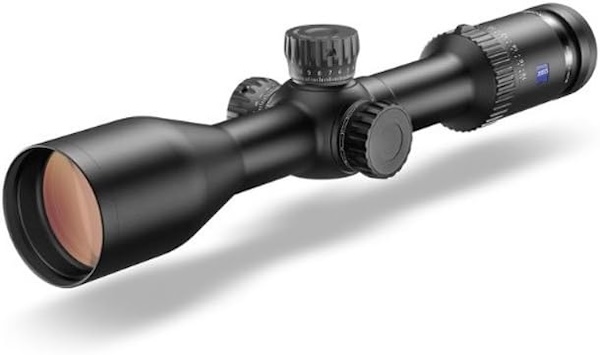
Zeiss has a long history of providing premier quality optics, and the Conquest V6 line costs a bit more than their entry-level, Conquest V4 line. Zeiss offers four models in the Conquest V6 line that include a 1-6X24mm, 2-12x50mm, 3-18x50mm, and a 5-30x50mm. All models offer a 6x zoom factor. The 3-18x50mm Conquest V6 I tested is available with three different reticles that include a simple duplex style reticle, the ZBR-2 reticle that offers MOA windage and elevation correction, and the ZMOA-2 reticle that was on the test scope, which offers 20 MOA of elevation correction with windage correction only on the primary horizontal cross wire. Unfortunately, and somewhat oddly, the only Conquest V6 scopes with an illuminated reticle are the 1-6X24mm and 2-12x50mm versions.
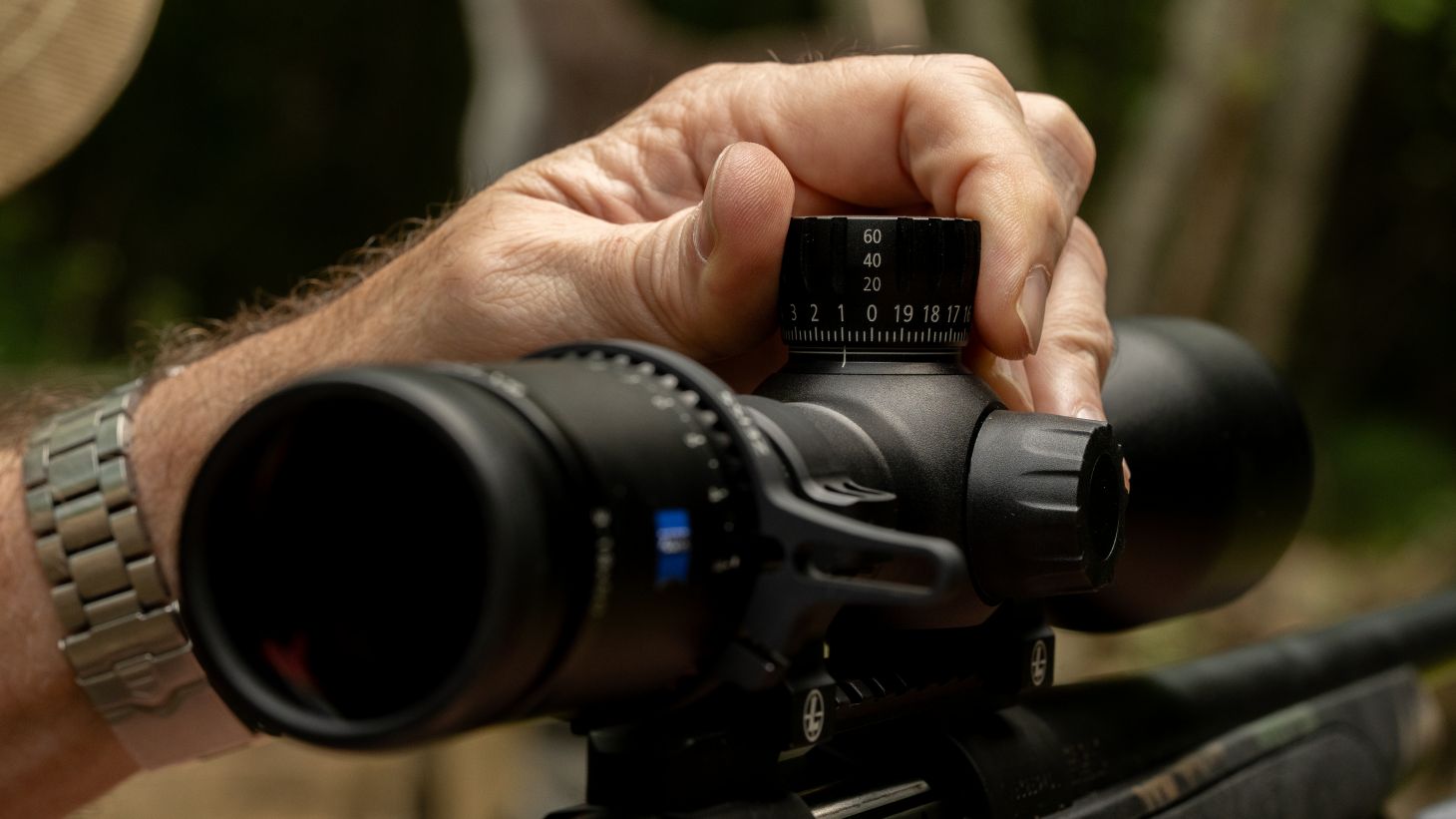
Reticle adjustments are made with ¼ MOA clicks—20 MOA per rotation—and the test scope provides an uninterrupted 2.5 rotations for a total of 50 MOA of correction. Lines around the base of the turret become exposed to indicate the number of turret rotations induced into the system. There is also a resettable zero stop and a left side parallax adjustment dial, but the elevation turret is not lockable.
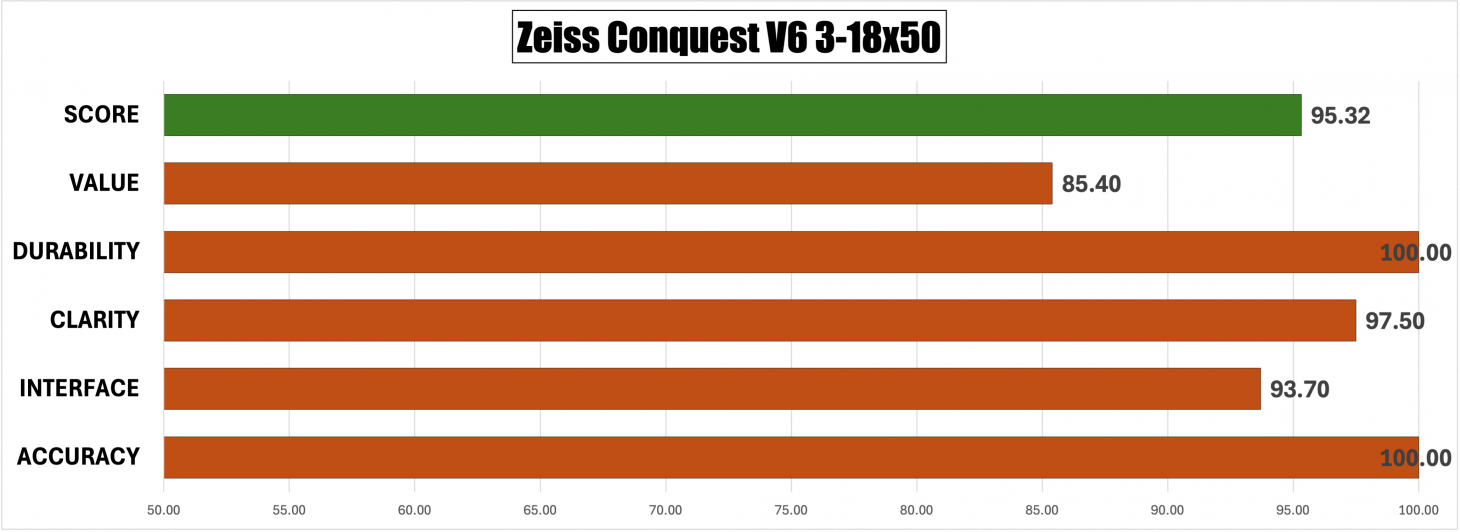
Clarity and resolution on the Zeiss Conquest V6 3-18×50 were excellent, and the rifle scope did not disappoint in performance. It had excellent mounting space for a riflescope of this length and magnification range. Zeiss provided an accessory throw lever ($79.99), which I used. It worked, but extended far enough to potentially interfere with bolt operation when used on low magnification. The eye relief was a bit short, and I think Zeiss missed an opportunity to compete with the Swarovski Z5i + and Leupold VX-6HD Gen 2 by not offering this model with the illuminated reticles offered in the Conquest V6, 1-6X24mm, and 2-12x50mm models. Regardless, the Conquest V6 3-18×50 will hold its own in terms of clarity, resolution, and repeatability. It’s a trustworthy scope any hunter should be proud to own.
EOTECH 3-9x32mm Vudu SFP
EOTECH 3-9x32mm Vudu SFP
Pros
- Flip-up lens covers included
- Illuminated reticle
- Extremely compact
- Lifetime warranty
Cons
- Mounting limitations
Specs
- Magnification Range: 3-9X
- Objective Diameter: 32mm
- Length: 6.8 inches
- Weight: 16.0 ounces
- Tube Diameter: 30mm
- Adjustment Range: 90 MOA
- Eye Relief: 3.10 inches
- Reticle: Vudu HC1 MOA second focal plane reticle
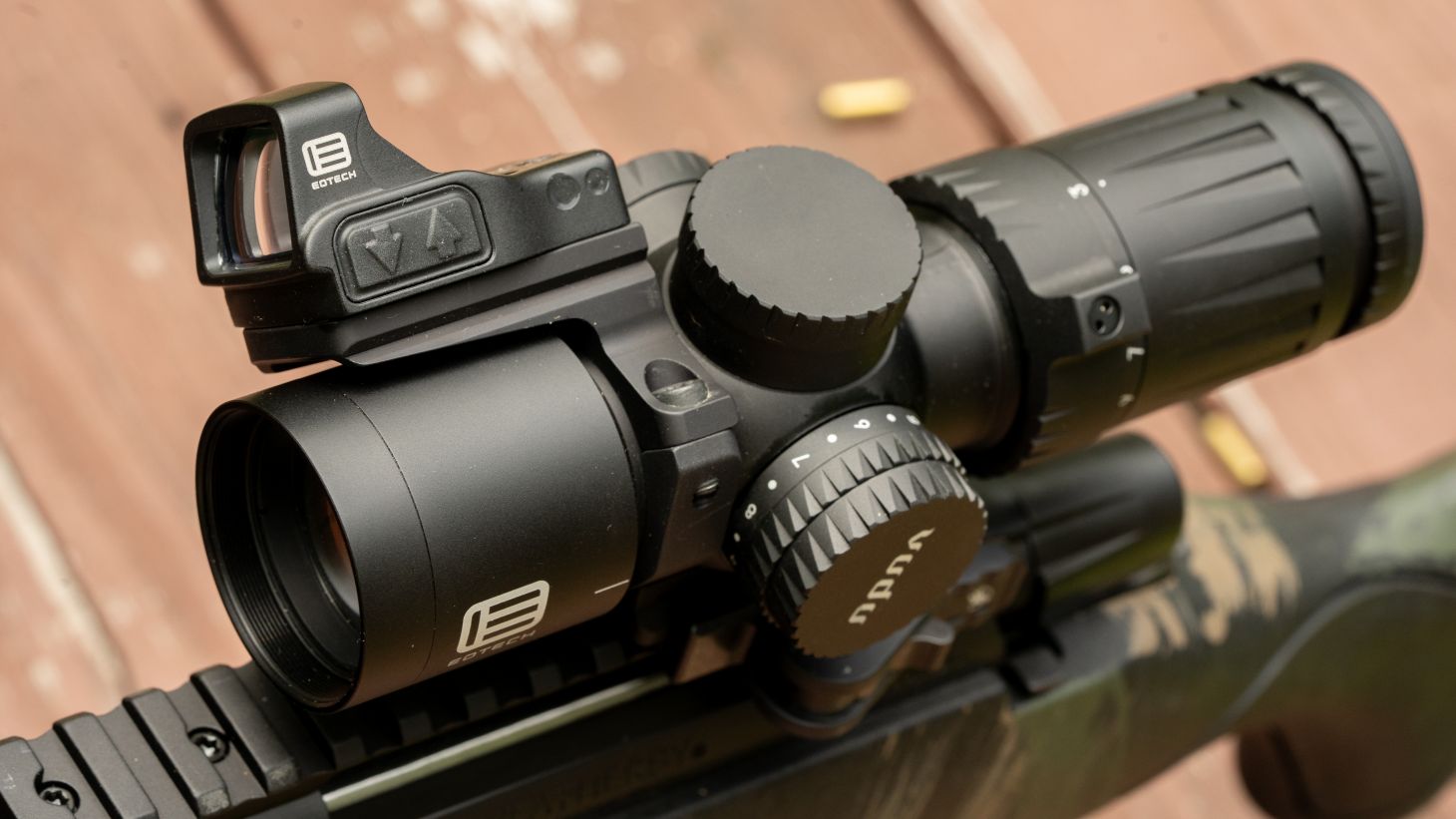
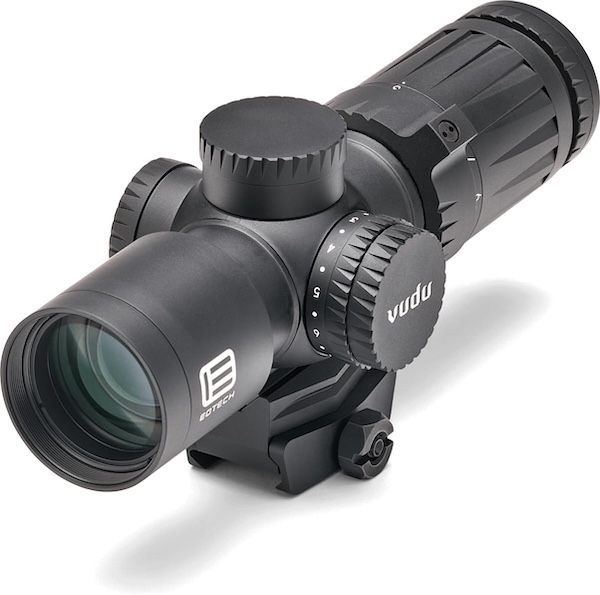
The 3-9X rifle scope was the hunting scope standard for many years, and at only 6.8 inches long, this is an extremely compact model. It’s also relatively light, but its most unique feature is the mounting system. Underneath the scope there is a 1.7-inch rail, and it comes with a mount that interfaces with a Picatinny rail. This mount adds about 0.55 inches to the mounting height, positioning the centerline of the scope at about 1.56 inches above the mounting rail. If you have an AR-15 style rifle, this is a very practical optic, and with a lower aftermarket mount—any mount that will work with a mini-ACOG—it will work on a bolt-action rifle, too.
The 3-9×32 Vudu SFP is suitable for short to moderately long range shots, and a version is offered with the EOTECH EFLX reflex sight that attaches to the scope for ultra-close quarter shooting. The second focal plane reticle has a cross configuration, and MOA hash marks have an illuminated center, and you control illumination brightness via a rheostat-like dial on the left side of the scope. There are 10 brightness settings with intermittent off settings.
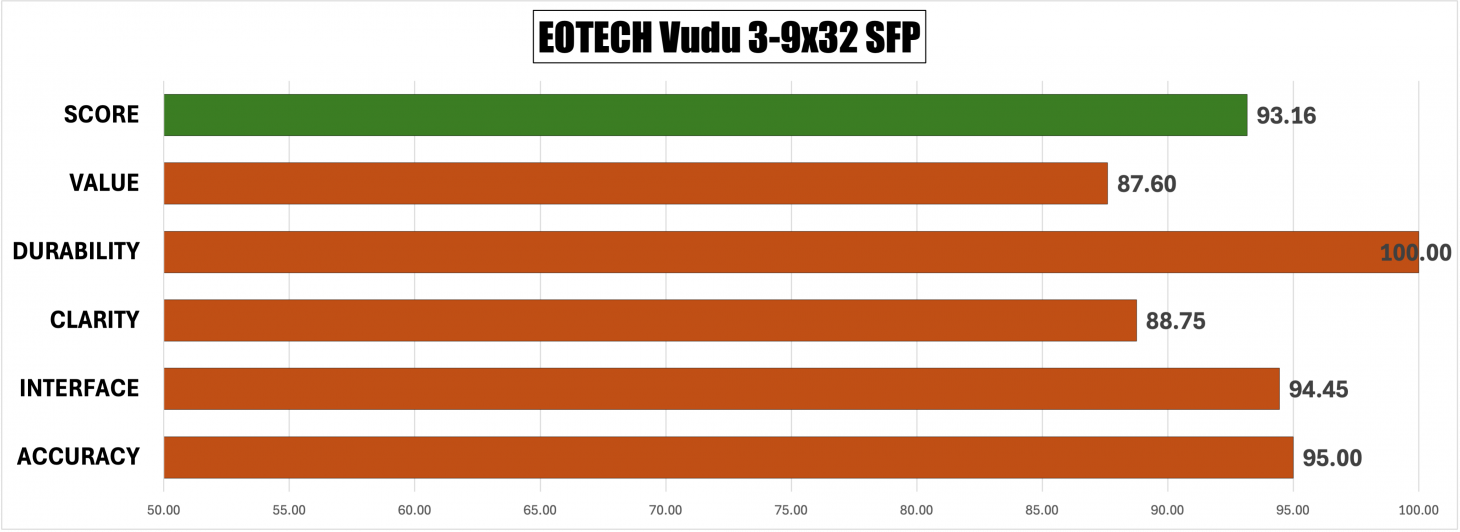
This scope adds very little real estate to your rifle, magnification adjustment rotation is short, and the reticle is versatile and practical for low-light shooting. Eye relief is a bit short for a rifle with substantial recoil, and mounting options are limited on bolt guns. Though it is well-suited to general-purpose applications, it will not jive perfectly with every rifle. However, it is a unique, compact, and lightweight option that’s moderately priced.
GPO Centuri 3-18x44i
GPO Centuri 3-18x44i
Pros
- Illuminated reticle
- Lifetime warranty
- Good eye relief
- Reasonably affordable
Cons
- A tad heavy
Specs
- Magnification Range: 3-18X
- Objective Diameter: 44mm
- Length: 13.3 inches
- Weight: 23.3 ounces
- Tube Diameter: 30mm
- Adjustment Range: 90 MOA
- Eye Relief: 4.0 inches
- Reticle: MOAi
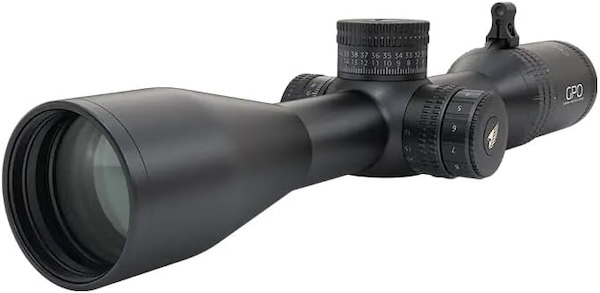
GPO, USA is American-owned and operated by Michael Jensen, who has a background at Zeiss, Swarovski, Remington, and Marlin. GPO USA works with a German-based company owned and operated by a former Zeiss CEO, so there is skill and experience behind the brand. They offer premium optics with a lifetime warranty, and they offer a full line of hunting and tactical riflescopes. The Centuri 3-18x44i is one of their newest offerings.
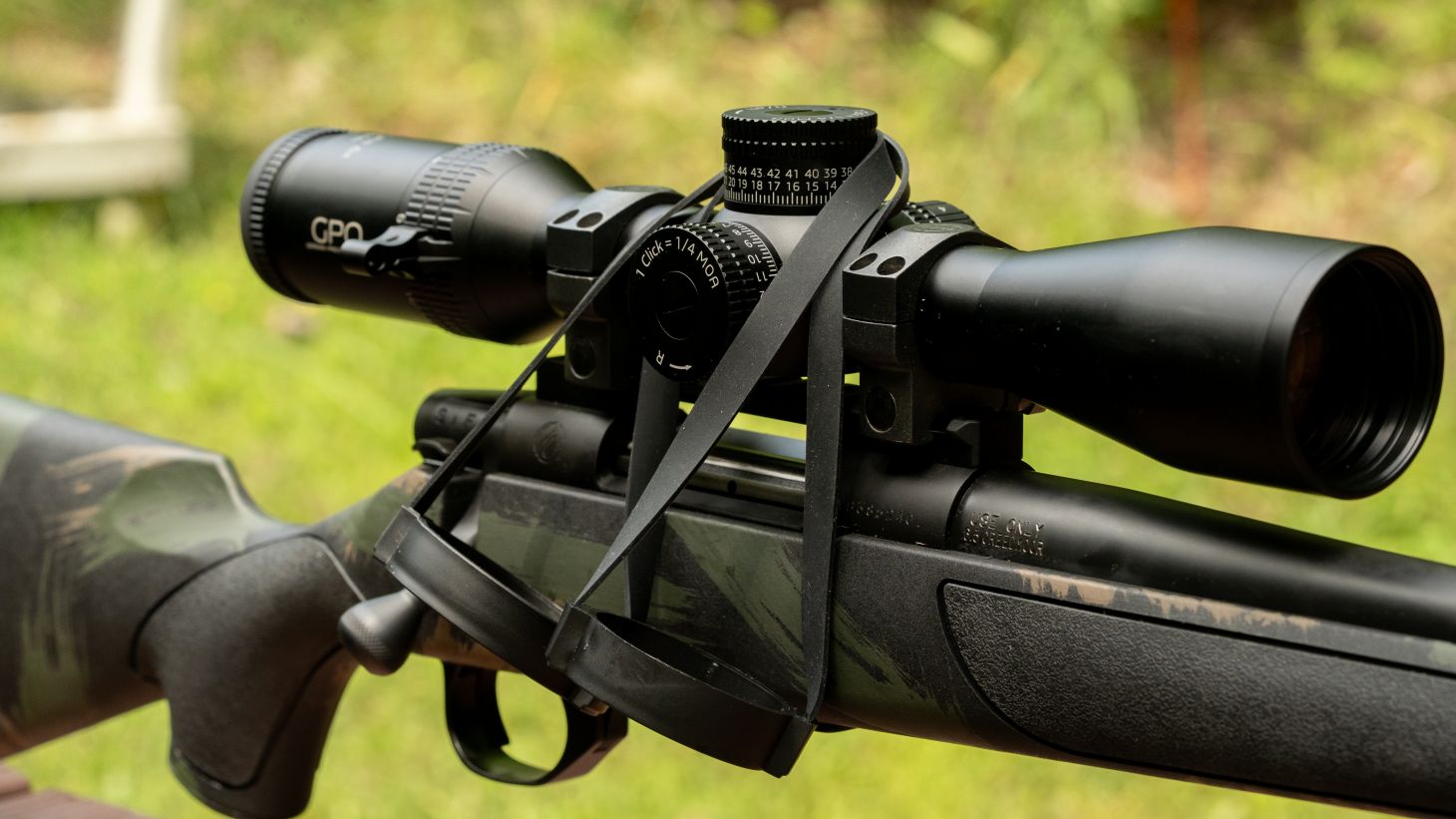
Built on a 30mm tube, the Centuri 3-18x44i has very audible and tactile ¼ MOA adjustments on the exposed windage and elevation turrets, and there is a zero stop. The elevation turret offers 49 MOA of adjustment with two rotations, and it has a second rotation indicator. Additionally, when you purchase the scope, you qualify for a free ballistic turret from Kenton Industries that is cut to your cartridge’s ballistics. The second focal plane reticle offers 10 MOA of windage correction, left and right, and 30 MOA of elevation correction. It also has an illuminated—rheostat controlled—center dot.
During testing, the Centuri 3-18x44i functioned without fail, but we did find the parallax and reticle adjustments a bit stiff to turn. Though it’s debatable if either is truly a bad thing, they would probably prevent unintentional adjustment. On the positive side, this rifle scope had the longest eye relief of any tested, and it comes with a see-through bikini cover and a magnification throw lever.
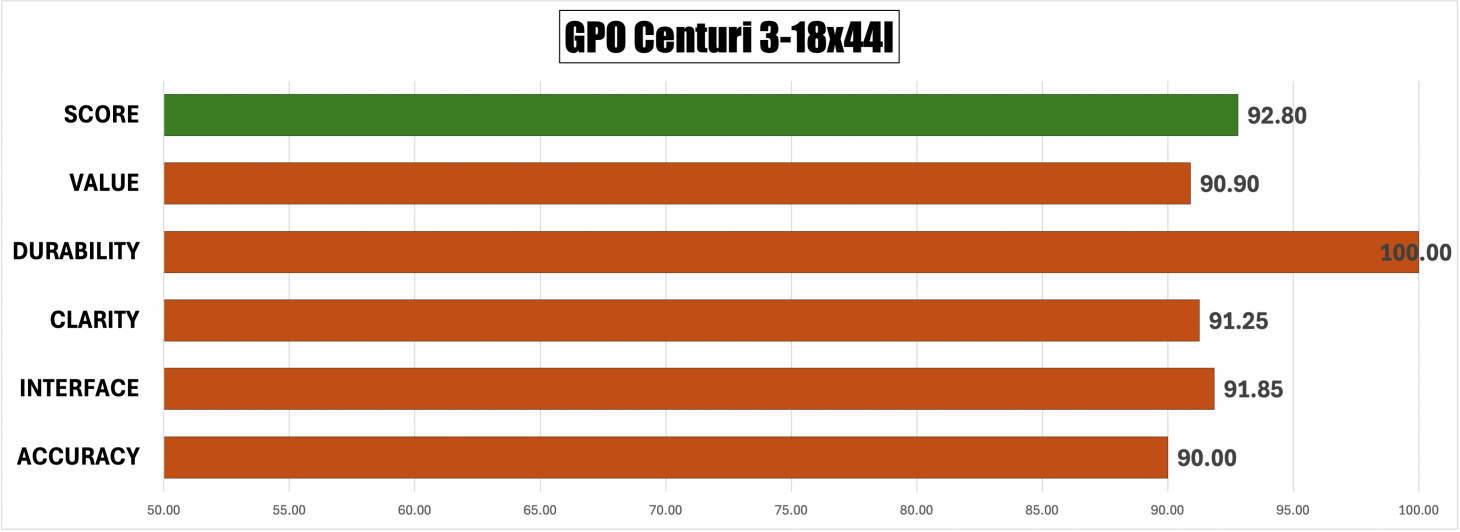
Overall, the GPO Centuri 3-18x44i outperformed the Burris Fullfield, but not enough to overcome its additional weight and length, and the fact that it costs almost twice as much. On the other hand, if you’re looking for a scope with a bit more magnification and that is also better configured for shooting at extended range, out of the box, the GPO Centuri 3-18x44i is probably worth the extra cost, and it’s only about a third the cost of the Leupold, Swarovski, or Zeiss.
Maven RS.6 1-10×28 MOA3-LPI
Maven RS.6 1-10×28 MOA3-LPI
Pros
- Lockable and exposed elevation turret
- Dual illuminated reticle
- 10X zoom range
Cons
- Expensive
- 34mm tube
Specs
- Magnification Range: 1-10X
- Objective Diameter: 28mm
- Length: 10.6 inches
- Weight: 20.1 ounces
- Tube Diameter: 34mm
- Adjustment Range: 100 MOA
- Eye Relief: 3.89 inches
- Reticle: MOA3 LPI
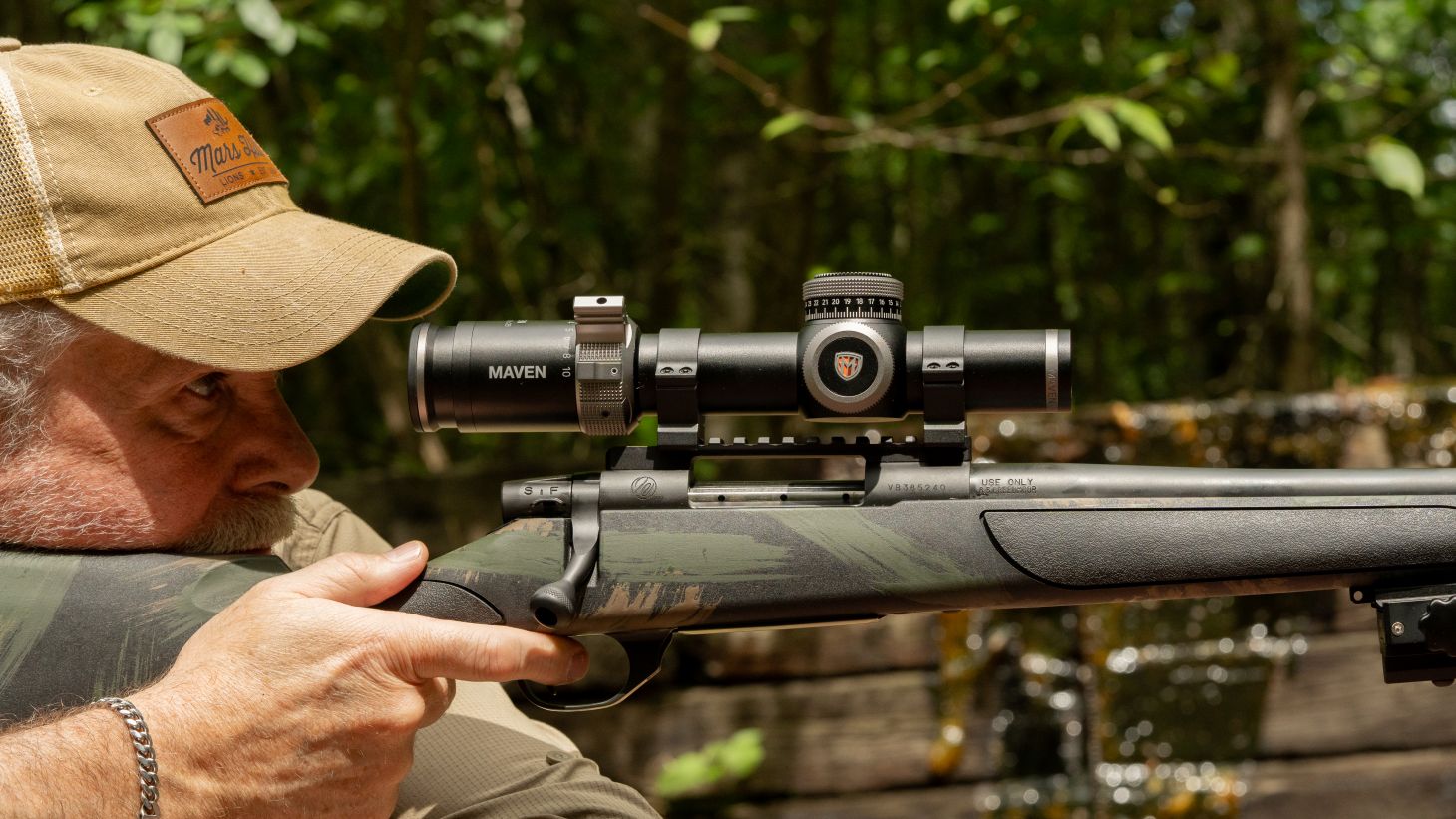
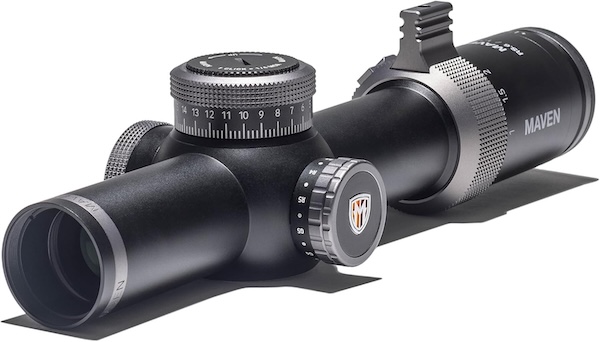
Maven rifle scopes are made in Japan with high-end components, and Maven offers a wide range of styles across a spectrum of prices. The RX.6 1-10×28 is one of the most expensive, and what sets it apart from most other LPVO (low power variable optics) is its 10X (1X to 10X) zoom range. This allows the hunter to make close-in shots as well as shots at what most consider the practical limit for big game hunting. Also, unlike most LPVO-type rifle scopes, the turret on the RX.6 1-10×28 is well adapted for long-range application.
Maven accomplished this with an exposed elevation turret with MOA graduations that offers 25 MOA of adjustment per revolution. But the turret provides an uninterrupted two revolutions for a total of 50 MOA of correction, and there is a second revolution indicator. The turret also has a resettable zero stop. All this, combined with the MOA3 LPI reticle, makes correction for distance and windage easy. The reticle is quite unique in that it offers both red and green illumination with an adjustable brightness for both. Also, first focal plane reticles can be difficult to see at low magnification and in low light, but the illumination that extends to the large outer circle effectively addresses this issue.
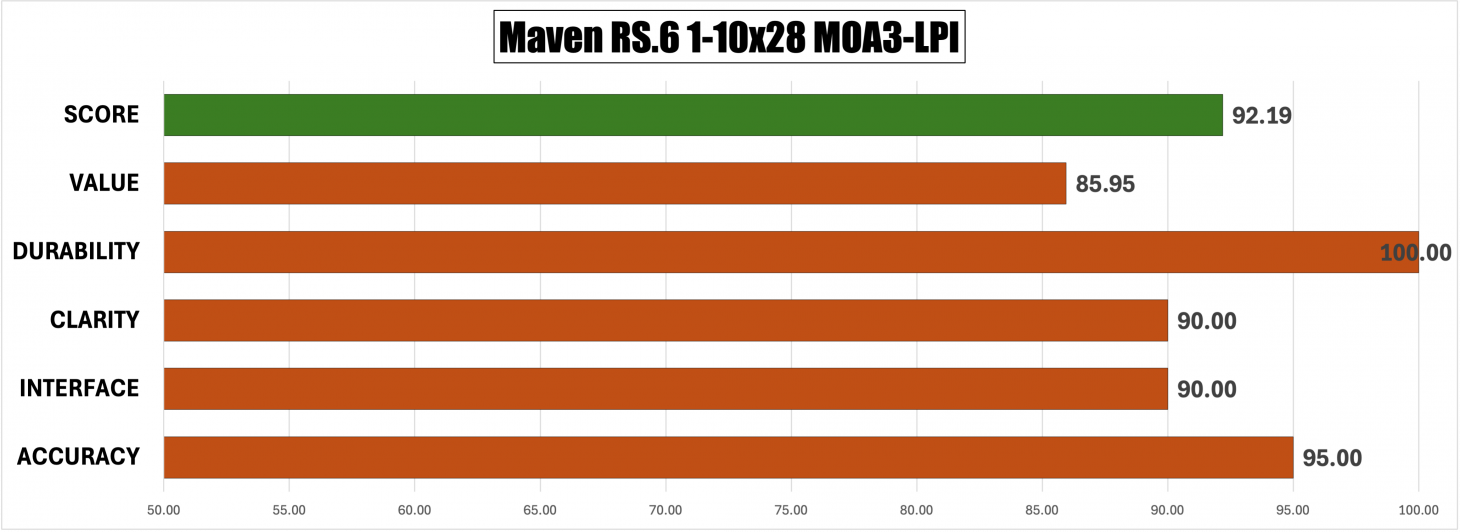
The RX.6 1-10×28 performed well during testing with no notable issues. However, for its magnification range, it is big and heavy with a 34mm tube. Also, as wonderful as the reticle was, the eye box was a bit tight regarding eye placement. Overall, the scope’s size, weight, and cost shaved points from its overall score, but this is a superbly performing—though niche—scope that might very well serve many hunters well. It would be a great match to a rifle chambered for a subsonic or supersonic cartridge like a 300 or 8.6 Blackout, offering trajectory correction for both slow and fast loads. This is especially true for an AR-style rifle you might want to use for home defense or for predator or big game hunting in mixed, close cover, and open country situations.
How We Tested Rifle Scopes
Accuracy
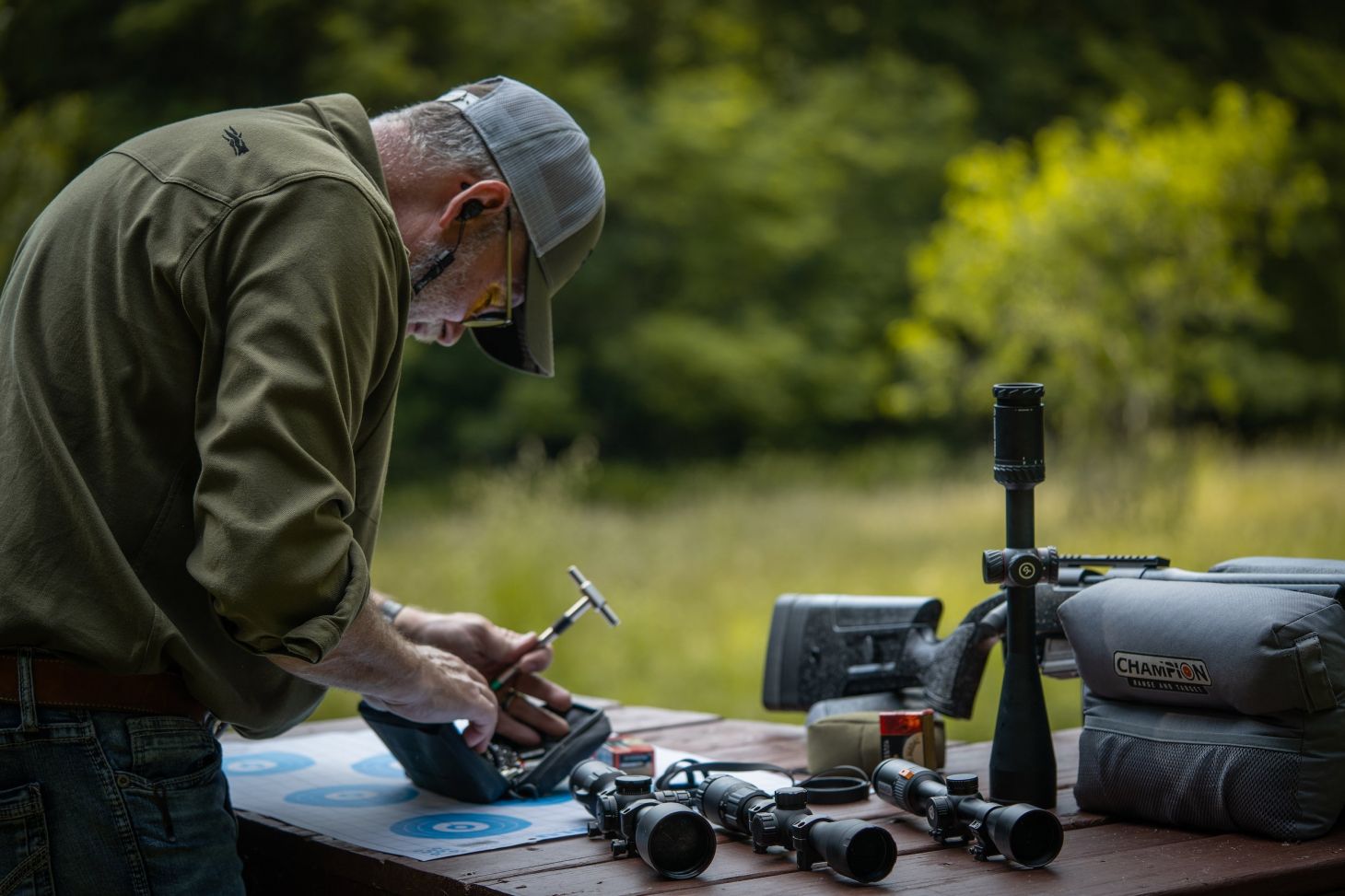
The primary purpose of a rifle scope is to direct your bullet to the spot you’re aiming at. For this to happen, you must be able to zero precisely, and the scope must maintain that zero. To test the adjustments, using Leupold rings, I mounted every scope to a Weatherby Vanguard Black Hills rifle chambered in 6.5 Creedmoor. The scope was zeroed at 100 yards, and then a box drill was fired. Next, the scope was removed and dropped onto a hard surface from head height three times. After that, it was remounted, and another box drill was performed.
Clarity
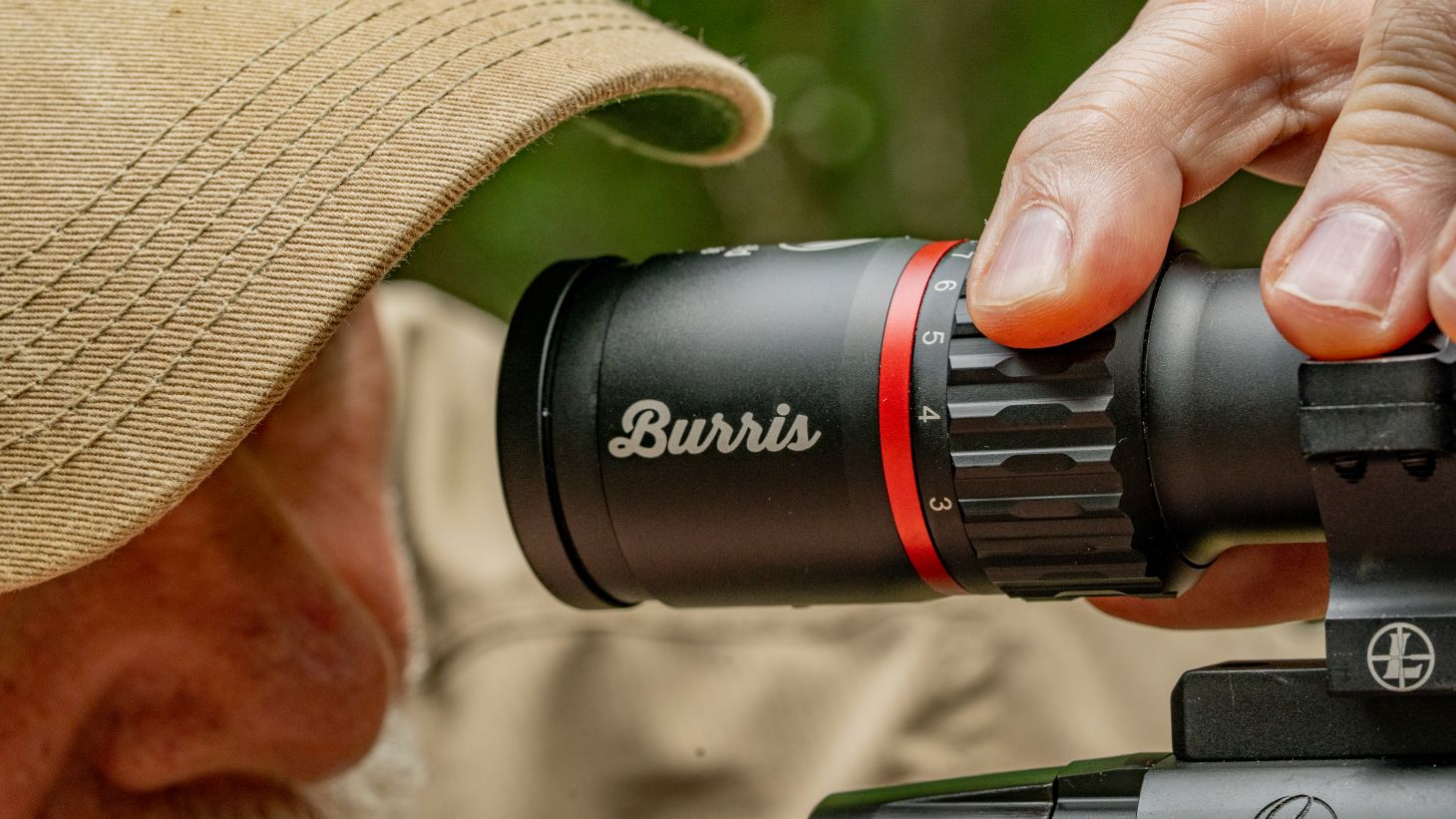
A rifle scope should allow you to see your target clearly. This requires good glass, good lens coatings, and exactness in assembly. For testing, I placed an optics chart, a dollar bill, and a multicolored target in the shade and in good light at 100 yards. Then I studied the targets with each scope to evaluate brightness, resolution, and image quality.
Durability
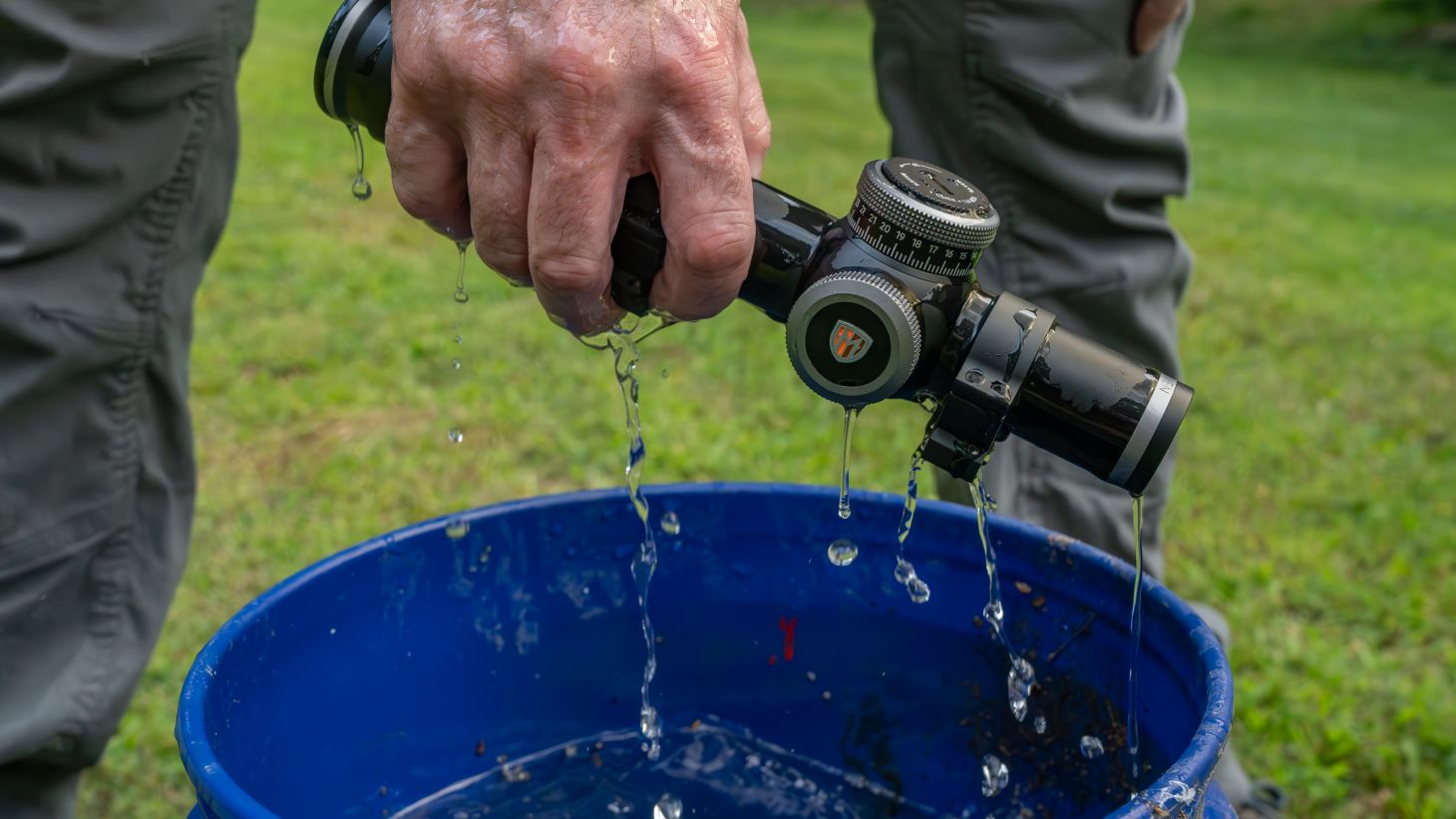
A rifle scope must be able to survive the elements, so you can use it in the field no matter how harsh the conditions. For this evaluation, I dunked each scope in water for 30 seconds and then tossed it in the freezer overnight. The next day I checked each for leakage and proper function.
User Interface
For best performance, a rifle scope needs to interface well with you. All the adjustments and controls should be easy to operate and intuitive. It should not be too heavy or long, should provide a reasonable mounting space, and the reticle should be easy to see in all lighting conditions and not be overly complicated.
Value
It can be challenging to put a value on the cost of a rifle scope because the least expensive ones have fewer features. To score value, we compared the performance of each scope in terms of accuracy, clarity, durability, and user interface, with its suggested retail price, and then weighted the score based on features offered.
Why Trust Us
For more than 125 years, Field & Stream has been providing readers with honest and authentic coverage of outdoor gear. Our writers and editors eat, sleep, and breathe the outdoors, and that passion comes through in our product reviews. You can count on F&S to keep you up to date on the best new gear. And when we write about a product—whether it’s a bass lure or a backpack—we cover the good and the bad, so you know exactly what to expect before you decide to make a purchase.