

We may earn revenue from the products available on this page and participate in affiliate programs. Learn more
Fishing kayaks today rival the features of larger fishing boats without the major drawbacks. You get to be out on the water, where shore anglers can’t reach, without the major price tag of a bigger bass boat. You can get into those tricky, shallow spots or fish deep water. You can carry all your gear without needing a big budget to outfit your kayak. Not to mention, you don’t have to spend a fortune on gas.
Now is the perfect time to get on the water in a new kayak, as anglers have better options than ever for getting a fishing kayak that exactly matches their needs. Whether you’re fishing for striped bass on the flats of New England, paddling out for miles in the gulf coast for mahi mahi, or throwing frogs among the lily pads for big largemouth bass—a kayak is often one of the best ways to get on the water. Here are some of the best fishing kayaks around.
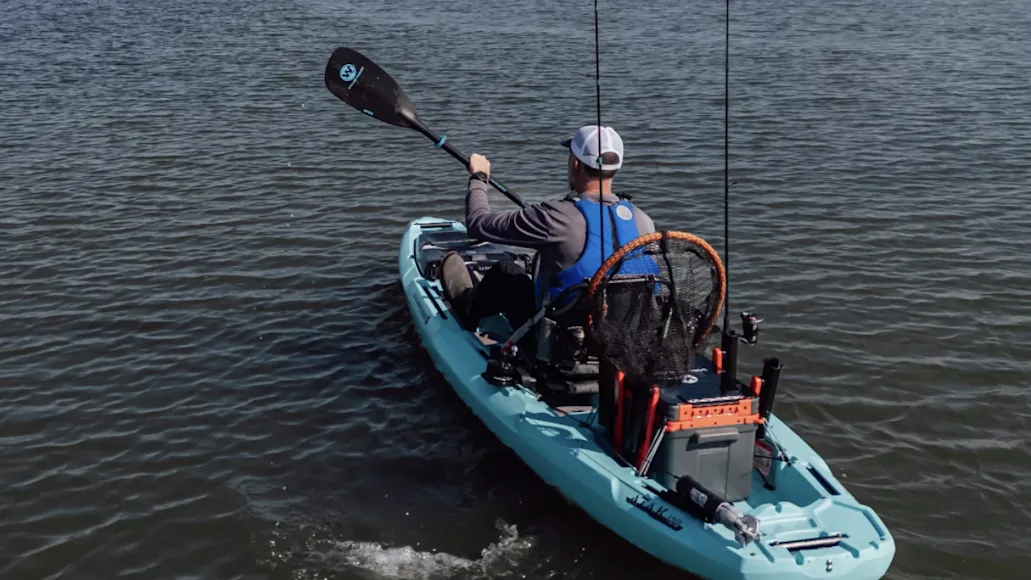
Best Overall: Old Town Sportsman BigWater ePDL+ 132
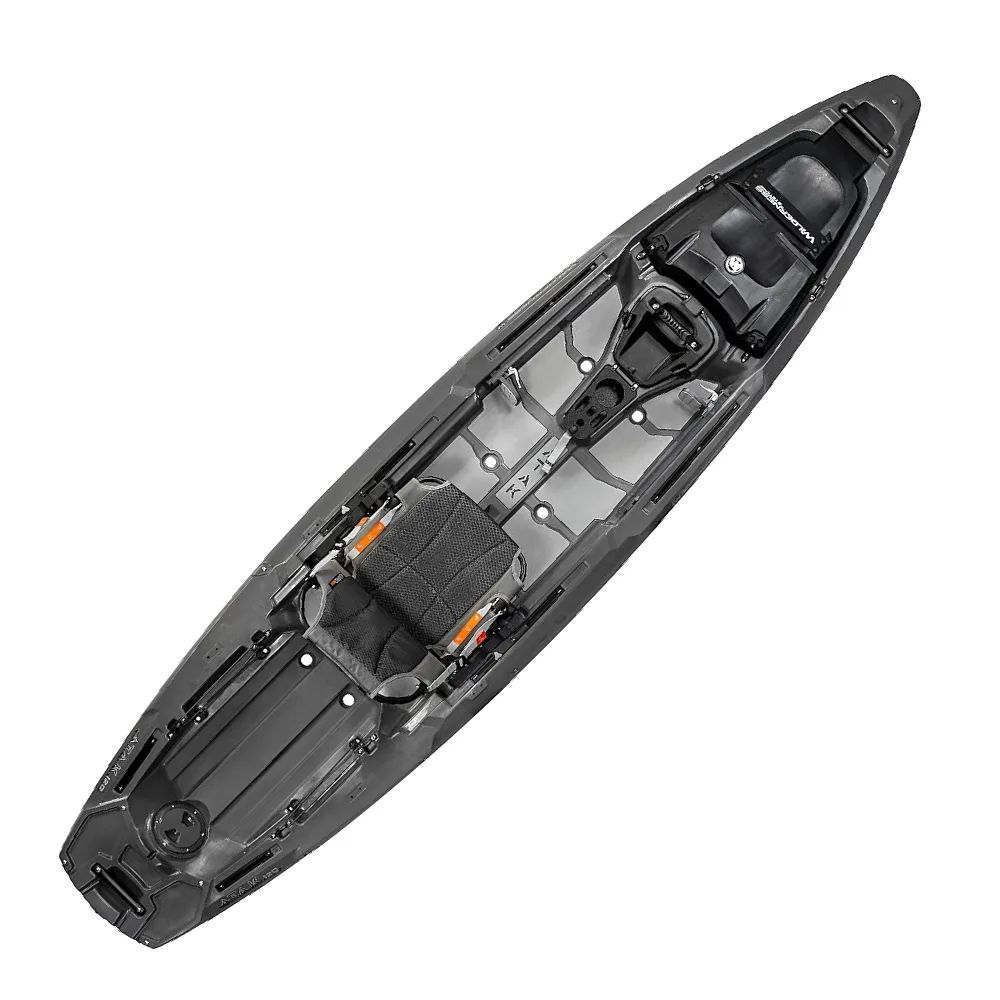
Best Sit-On-Top: Wilderness Systems ATAK 120
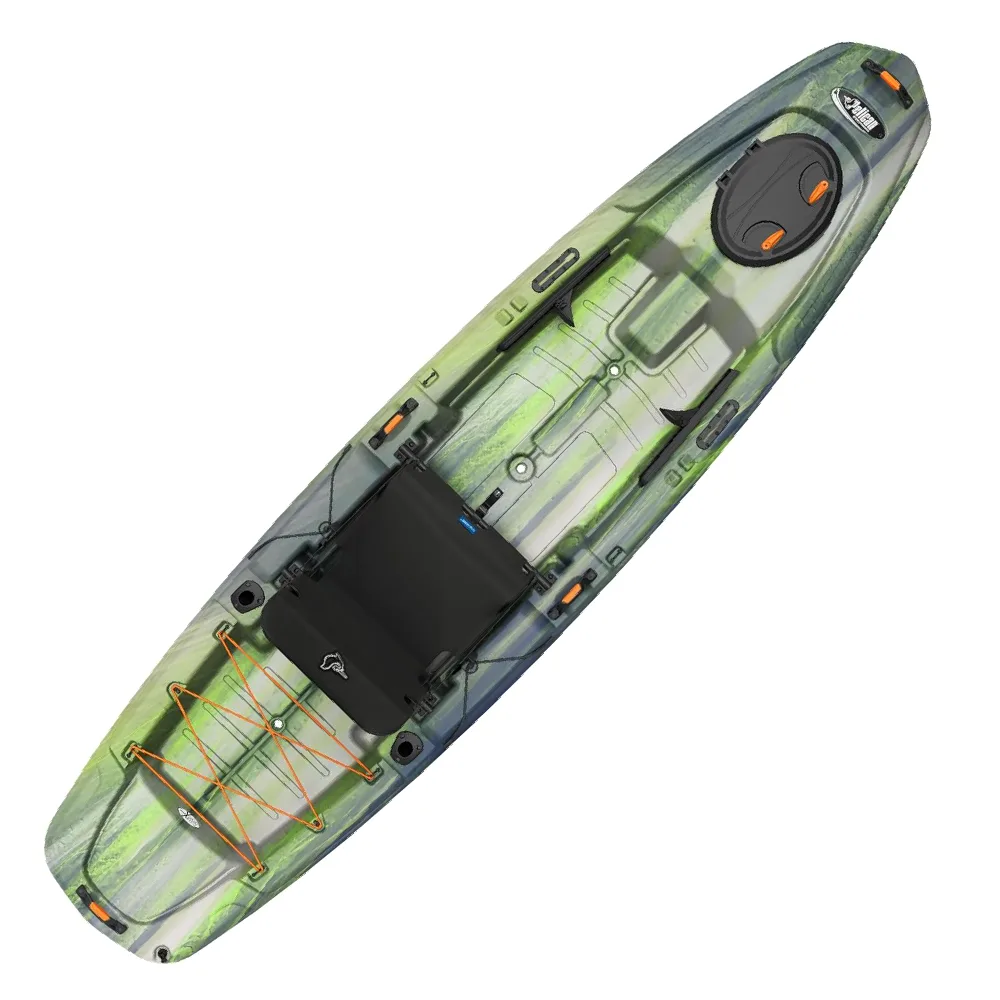
Best Under $1,000: Pelican Catch Classic
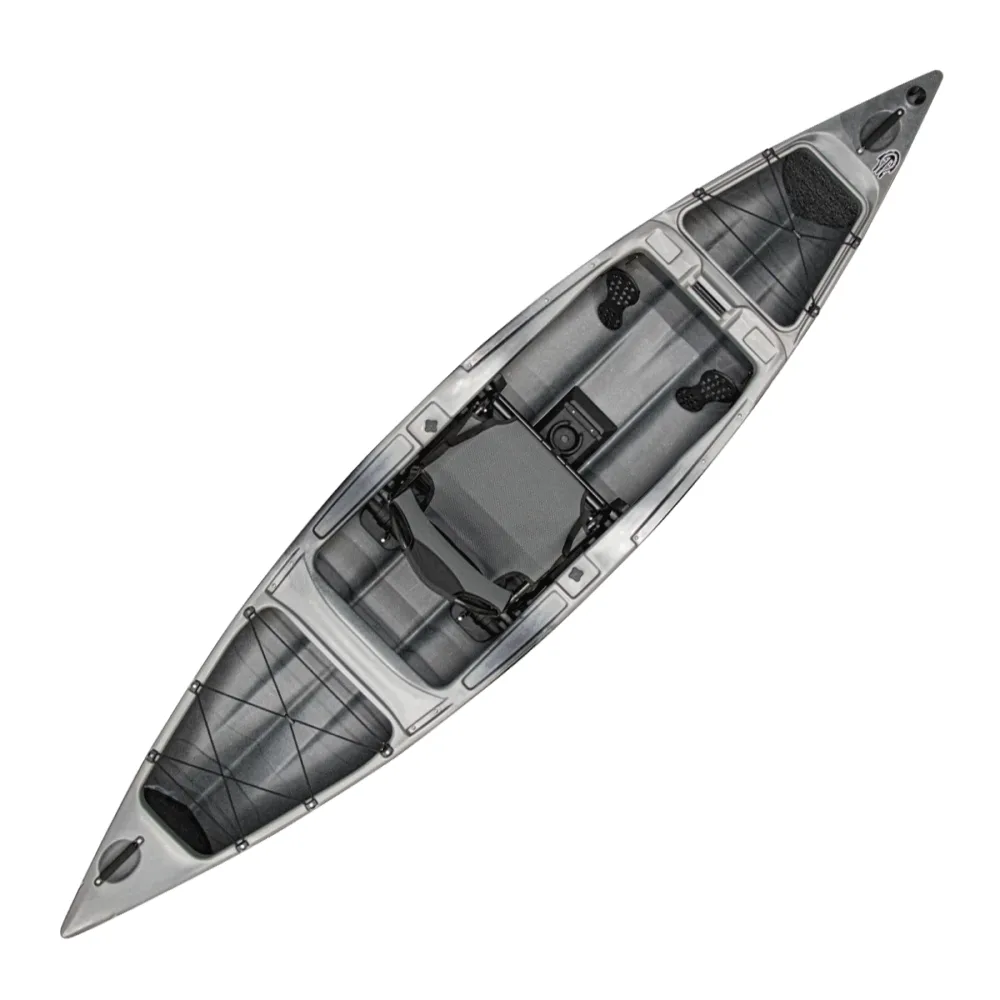
Best Sit-In: Native Ultimate FX12
Best Ocean: Wilderness Systems Radar 135
Best Overall: Old Town Sportsman BigWater ePDL+ 132
Specs
Length: 13’ 2”
Width: 36”
Weight: 143 pounds
Pros
Built-in pedal assist with powerful motor
Easy to steer sans paddling
Very stable for standing
Tons of thoughtful features specifically for anglers
Fun!
Cons
Expensive
Difficult for one person to load into the water


Best Sit-On-Top: Wilderness Systems ATAK 120
Specs
Length: 14’ 1”
Width: 34”
Weight: 95 pounds
Pros
Hull Design: The ATAK 120 is a joy to paddle, short or long distances
Storage: There’s a giant front storage hatch, a rear tankwell, and in-hull rod storage
Comfortable Seat: A seat with multiple positions means no more sore backs
Cons
Weight: This is a heavy kayak to lug around at 95 pounds
Center Hatch: Hard to open while sitting down
Rear Tankwell: Smaller than expected on a boat this size
Anglers looking for a sit-on-top kayak will be hard pressed to find a better boat than the Wilderness Systems ATAK 120. Where some boats get blown around on the water, this one keeps a low profile and stays put. The designers of this boat made it open concept. This means you can tailor it to your needs, based on either your fishing style, or your target species that day. The seat can move nearly the length of the deck, and the many positions means you can stay comfortable all day long.
There’s a ton of storage on this boat, and the stability of the hull means you can access the giant bow hatch even while you’re on the water. The boat feels nimble, even at 34 inches wide, and is enjoyable to paddle long distances. The Flex Pod OS electronics console is handy to use, and can even be swapped out for a Helix MDTM Motor Drive if you get tired of paddling.
Best Under $1,000: Pelican Catch Classic
Specs
Length: 11’ 6”
Width: 34”
Weight: 68 lbs
Pros
Weight: Car topping or carrying this kayak doesn’t break the back.
Seat: The seat is surprisingly comfortable for a boat at this price point.
Rod Holders: This budget boat holds all your rods securely.
Cons
Construction: The hull has some give under your feet, as do the footrests.
Speed: The tunnel hull design has some difficulty tracking in the wind.
Stability: Anglers should stand in one position, near the main balance point.
The Pelican Catch Classic 120 has some drawbacks compared to boats at a higher price point, as should be expected, but it still performs admirably where it counts—the fishing. I’ve fished in kettle ponds and larger lakes across New England in this fishing kayak, with little complaint. One of the best fishing kayaks under $1,000, this boat gets in those tight spaces, and the seat is comfortable for long stretches in the saddle.
The Catch Classic 120 is a breeze to carry from your truck to the water, but that lightness comes at a cost, as the hull feels thin when standing. The slight give to the hull could be destabilizing for some anglers, though most will get used to it quickly. The rear tankwell and front hatch offer plenty of storage space for the sub-12’ length.
Best Sit-In: Native Ultimate FX12
Specs
Length: 12’ 2”
Width: 30.5”
Weight: 65 pounds
Pros
Weight: Easy to throw over a shoulder and walk to the water
Stability: Lower center of gravity means standing to fish is a breeze
Foot Braces: Anglers with larger feet will love the big, wide foot braces
Cons
Mounting Points: Not as many mounting points as other boats
Range: Agile hull design means paddling for longer distances does wear on you a bit
Color Options: Limited colorways for such a popular boat model among anglers
The Native Watercraft Ultimate FX 12 is a bit of a hybrid, blending the best parts of sit-insides with some of the flavor of a sit-on-top fishing kayak. It has an open cockpit like a canoe, but the angler’s feet sit slightly below the waterline due to the tunnel hull design. This means the boat is incredibly stable, while still being nimble to paddle around in tight spaces. The sharp bow also cuts through the water nicely, helping it track tightly, even in stronger winds. These characteristics have led to a cult-like following over the years; one I have personally participated in. The original version of this boat was my first fishing kayak ever. I was able to paddle all the ponds, lakes, and protected saltwater bays to target fish in skinny water, jig down deep, and everything in between.
The stability makes this boat ideal for fly fishing, or other activities like photography––it’s rock solid and predictable. The low center of gravity means you can shift your body weight from leg to leg and feel the boat react underneath you, unlike some heavier, dead-feeling sit-on-tops. The footwells do leave your feet with limited positions inside the boat however, so standing for a long time can become slightly uncomfortable. Good thing the seat set the standard for comfort in the kayak fishing industry all those years ago.
Best Ocean: Wilderness Systems Radar 135
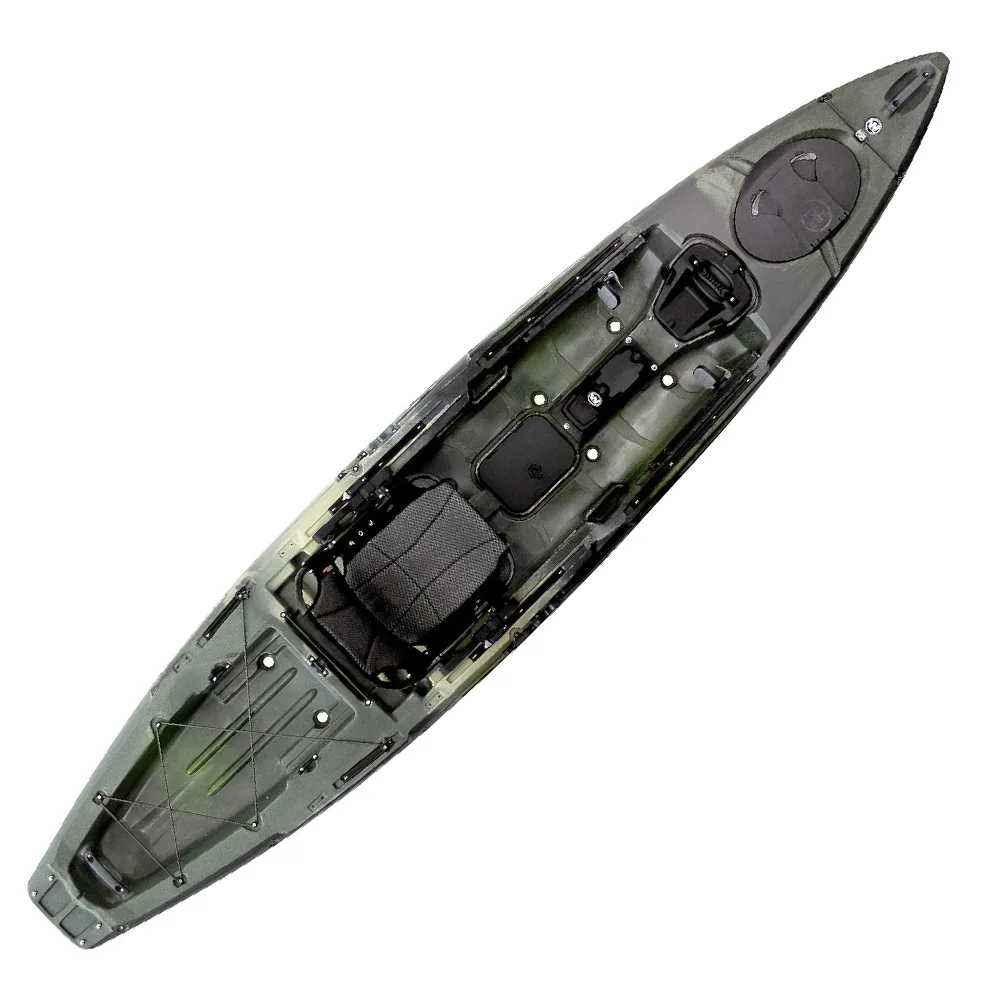
Specs
Length: 13’ 6”
Width: 34”
Weight: 90 pounds
Pros
Hull Design: This boat paddles well and slices through chop, tides, and surf
Tri-Power: Paddle, pedal, or power your kayak across the ocean
Comfortable Seat: The AirPro MAX makes fishing all day enjoyable
Cons
Weight: This boat is best paired with a kayak cart for launches at long beaches
Small Scuppers: Waves drain a little slowly from inside the cockpit
Side Handles: Lack of side handles makes it awkward to move the boat around
Saltwater anglers are an interesting bunch, and they need a special fishing kayak to handle the harsher elements of the ocean. The Wilderness Systems Radar 135 carefully balances those needs with a boat that’s a joy to paddle, while still being wide enough to feel stable, even in rocking surf conditions. At the same time it has a comfortable length that can be paddled over long or short distances, and the stability to land fish and battle waves. It also has enough storage to carry all of the gear needed for a long day in the salt.
The storage areas include a giant rear tankwell, a small center hatch, and another front sealed hatch. The Flex Pod OS electronics console is a game changer, allowing you to install a fish finder, or swap in alternative propulsion modes, such as pedal and power options. The large cockpit offers plenty of space for a long day of fishing. This is a comfortable workhorse for anyone looking for a solid saltwater fishing kayak.
How We Tested Fishing Kayaks
We narrowed down our selections of the best fishing kayaks by scouring the current offerings of the top brands throughout the fishing kayak industry, and matching them up with the needs of most anglers across the country. We made sure that most anglers could pick up one of these fishing kayaks, bring it to their local fishery, and get after their target species while having the a great time doing so.
Many factors were considered while drafting this list, such as fishability, price, weight, common features, brand reputation, and more, as well as the experience of our editorial team. We don’t make these decisions lightly––we consider all of the brands and products available to anglers today.
What to Look for When Choosing a Fishing Kayak
With so many different fishing kayaks available on the market, anglers can feel overwhelmed with choice. What brands are the ones that stand out from the rest? What kind of kayak suits your fishing needs the most? How much does the boat of your dreams cost? Will you flip over the first time you hit the water? All of these question are important to think about. Let’s look into other crucial considerations before you buy a fishing kayak.
Hull Type
The first thing you need to think about is hull type. Do you want a sit-on-top or a sit-inside kayak? Most fishing kayaks nowadays are sit-on-tops, because they are self-bailing. This means there are holes in the bottom of the hull that allow water to drain freely, so you don’t swamp your boat and sink. They usually offer a greater weight capacity, which is good for anglers that carry a lot of gear. But, the boats themselves are often heavier. Plus, they leave you open to the elements and often offer a wetter ride than a sit inside.
Sit inside kayaks are without holes. Often their gunwales, the sides of the hull, come up higher so that you’re sitting deep inside the hull, like a canoe. These are nicknamed “sinks” because when water comes inside the hull it has nowhere to go. They do offer better protection from the elements, so many cold water anglers prefer a sit-inside. They’re also lighter than most sit-on-tops, which makes getting to and from the water easier.
Length
When considering the length of your ideal fishing kayak, think of how much distance you’ll need to cover to get to the fishing grounds. The longer and thinner a boat is, the faster it will be. Speed plays a large role in how tired you’ll feel at the end of a long paddle. But longer boats are harder to maneuver. If you need to spin on a dime, like on a river, then shorter, more nimble kayaks are your best bet.
Weight
The weight of a fishing kayak plays a huge role in how it will behave on the water, and how you get it there. Many anglers transport their boats on the roof of a car, which means they’ll be lifting the kayak frequently. Even if it’s thrown into the bed of a truck, you’ll still need to get it to the water. Kayak carts make your life a little easier with a heavy kayak, but consider what those extra pounds are worth before you have to drag it a quarter mile down the beach.
On the water, heavier boats are generally slower boats. So, if performance is a top priority, choose a lighter boat. Even if performance isn’t a factor, heavier boats require more effort to paddle, so be prepared for your arms to be tired if you choose the heavier kayak. Pedal drive systems make heavier boats easier to live with, as your legs use larger muscles to move the boat than your arms. Still, those pedal boats need to make it back to your truck.
Price
Budget is often one of the most important considerations for a fishing kayak. It’s often the reason an angler chooses to fish from a kayak in the first place, instead of a shiny new motorized bass boat. While bass boats will set you back upwards of $60K, a great fishing kayak can be found, and fully outfitted, for just a few thousand bucks.
Paddle vs. Pedal Kayaks
The fishing kayak industry is constantly changing. Nowadays, it’s just as common to see a fishing kayak with a pedal drive system as it is to see one propelled by a paddle. Even fishing kayaks with electric motors are becoming more and more common.
I’m a paddler myself, and that’s always what I’ll choose for my personal fishing kayak. Paddling is fun for its own sake. Much like fishing, paddling offers its own learning curve, its own skills and techniques, and its own rewards. Done well, paddling can be just as efficient, if not more efficient than pedaling can be. And there’s nothing like showing off to a group of pedal drive anglers that you can move sideways with a simple draw stroke of your paddle when moving up tightly against a dock or piece of structure. Anglers that fish in the best pedal kayaks will often talk about the ability to fish while moving, or fishing “hands-free”. This is a large selling point. Paddlers are often forced to choose between fishing or moving their boat. One-handed paddling works in a pinch, but if you need to fish while moving, a pedal boat is likely to work better for your fishing style.
FAQs
Q: What sort of paddle should I buy?
The type of kayak paddle you should buy depends mostly on your budget, and the size of your kayak. Simply put, you should buy the best paddle you can afford: Think of your paddle as the engine of your car, you want the most powerful one you can afford. That way your paddle strokes are transferring the most power from your arms as possible, wasting the least amount of energy. Wasted energy is just going to leave you tired at the end of a long day of paddling, with a few more miles to go before you get back to the launch.
Q: Do I need to wear a PFD (personal flotation device)?
Wearing a PFD, or personal flotation device, like a kayak life vest shouldn’t be optional. That is a lifesaving piece of equipment, which should be enough reason on its own, but it’s also a handy tool while fishing. Many fishing PFDs have handy features such as tool clips, pouches to stash gear or snacks, and usually a lash point for knives, another essential piece of safety, and useful gear. Plus, it should be noted again, that PFD could save your life if you find yourself overboard, conscious or not.
Q: Will I flip my kayak, and what happens if I do flip?
Flipping your kayak is not likely to happen every time you go out on the water, but it could happen any time you paddle away from shore. It’s best to be prepared. Lash down all of your gear that doesn’t float. It often helps to lash things together so that your gear floats as one big piece, rather than ten separate pieces of gear you need to chase down. It’s also crucial to practice re-entering your kayak from the water so that if you do flip over, you can safely right your boat and get back inside. Worry about getting yourself back on board before thinking about any of your gear floating away.
Why Trust Us
For more than 125 years, Field & Stream has been providing readers with honest and authentic coverage of outdoor gear. Our writers and editors eat, sleep, and breathe the outdoors, and that passion comes through in our product reviews. You can count on F&S to keep you up to date on the best new gear. And when we write about a product—whether it’s a bass lure or a backpack—we cover the good and the bad, so you know exactly what to expect before you decide to make a purchase.