Since the late 1930s the 357 Magnum has been the king of revolver cartridges. But in 2008 Federal introduced the 327 Federal Magnum. And while it is not as powerful on target as the 357, it can do a lot of the same things the 357 Magnum does with less recoil. Of course, the 357 Magnum has a long history, not just with law enforcement but with sportsmen as well. And because of that history and its iconic status, many shooters and hunters overlook the 327 Federal Magnum. But should they? Let’s break down the ballistics of these two cartridges to find the answer.
327 Federal vs. 357 Magnum: Table of Contents
The 357 Magnum
The 327 Federal Magnum
327 Federal vs. 357 Magnum: Velocity & Energy
327 Federal vs. 357 Magnum: Terminal Performance
327 Federal vs. 357 Magnum: Accuracy & Precision
327 Federal vs. 357 Magnum: Guns & Ammo
And The Winner Is
The 357 Magnum
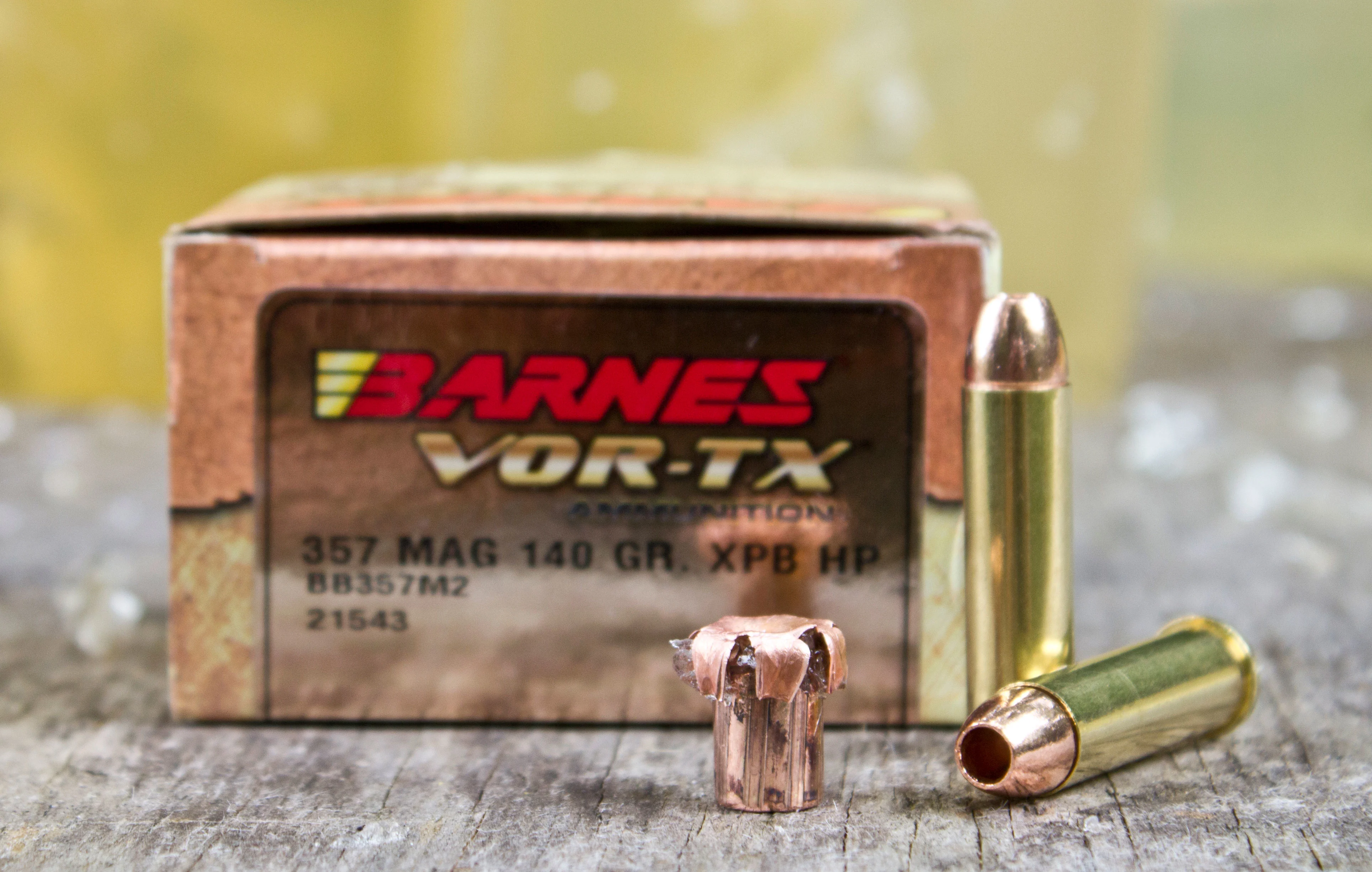
The great cowboy and gun writer Elmer Keith had a hand in the development of the 357 Magnum. To make it, Smith & Wesson lengthened the 38 Special cartridge and upped the pressure form 17,000 psi to 35,000 psi. The 357 Magnum even generates 75 percent more pressure than +P 38 Special ammunition. However, because the 357 is just a lengthened 38 Special, you can safety fire 38 Special ammo in a 357 Magnum revolver, which makes it very appealing as a general purpose cartridge. It’s also worth noting that the 38 Special does not fire 0.38-caliber bullets, it fires the same bullet diameter—0.357—as the 357 Magnum. The “38” in the 38 Special name is a holdover from blackpowder revolver days.
Though the 357 gained its fame in a revolver—largely with police departments—it has also been chambered in various rifles like the 1894 Marlin, Henry Big Boy, and the Model 73, and 92 Winchesters. However, Ruger also offers the 357 Magnum in their 77 Series rifles. A lot of shooters and hunters like the idea that they can have a revolver and rifle that share ammunition, and in a rifle—out to about 150 yards—the 357 Magnum is an excellent cartridge for deer and feral hogs.
The 327 Federal Magnum
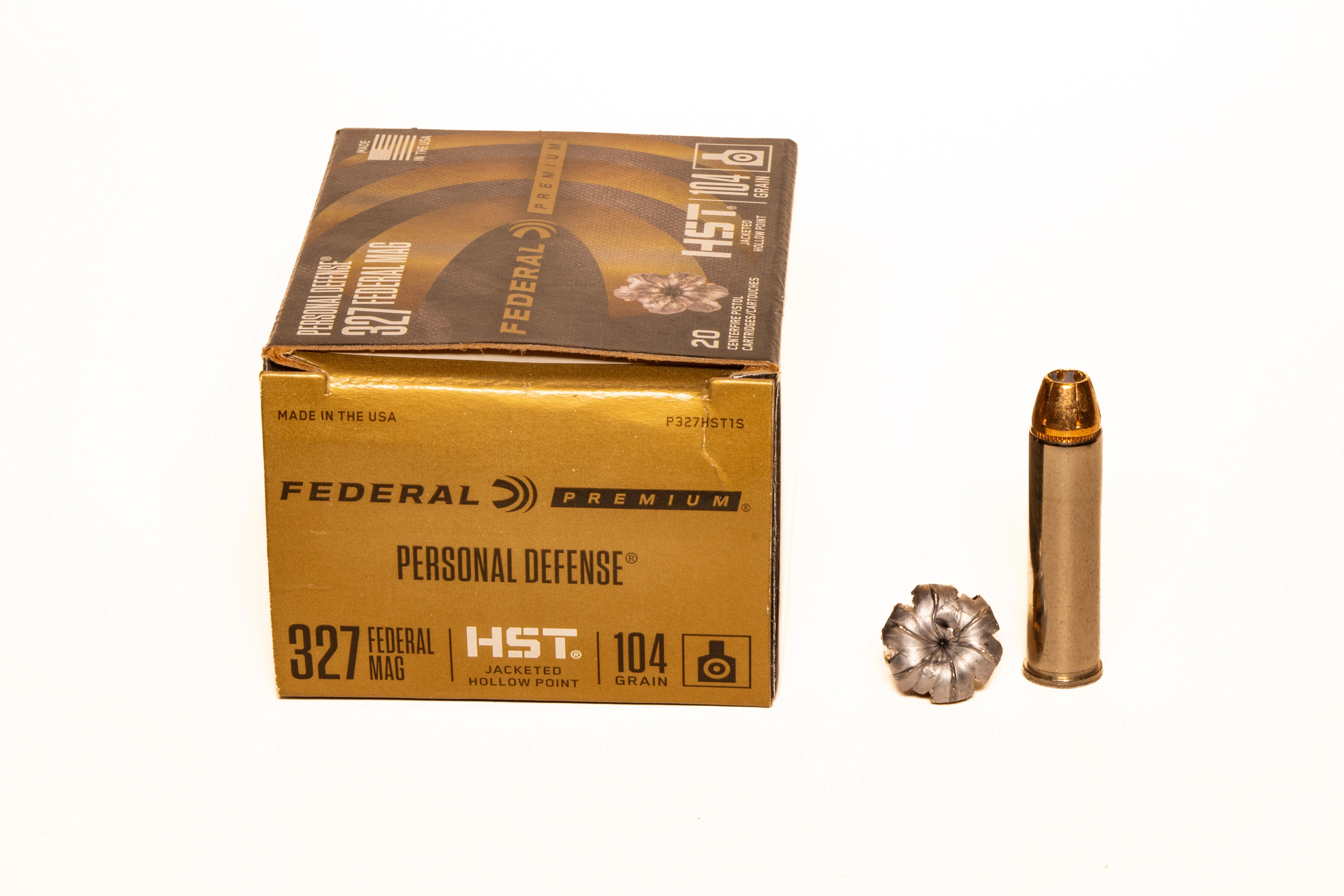
Federal introduced the 327 Federal Magnum in 2008. Essentially, they just lengthened the 32 H&R Magnum case and loaded the cartridge to a maximum average chamber pressure of 45,000 psi, which is nearly 30 percent more than the pressure the 357 Magnum is loaded to, and it actually fires a bullet that is 0.31-caliber instead of 0.32. Its main appeal is that it provides near 357 Magnum performance with less recoil, while also allowing an additional round in the cylinder of most revolvers. The 327 can also be had in a smaller revolver. For example, Ruger offers the 327 Federal Magnum in a seven-shot single action that is sized the same as their Single Six for the 22 Long Rifle, but their smallest single action 357 Magnum is in their Blackhawk line, and it weighs 23 percent more.
One really appealing feature of 327 Federal Magnum revolvers is that they can also chamber and fire the 32 H&R Magnum, the 32 Long, the 32 Short, and even the 32 Auto ammunition. Granted, these are all less powerful cartridges, but it provides the same but broader appeal of a 357 Magnum firing 38 Special ammunition. Now almost 20 years old, what has hurt the popularity of the 327 Federal Magnum the most has been a lack of diverse factory loads, and a wide array of factory guns chambered for it. Ruger and Taurus offer revolvers in 327, Henry has a couple lever guns, and that’s about it.
327 Federal vs. 357 Magnum: Velocity, Energy, and Recoil
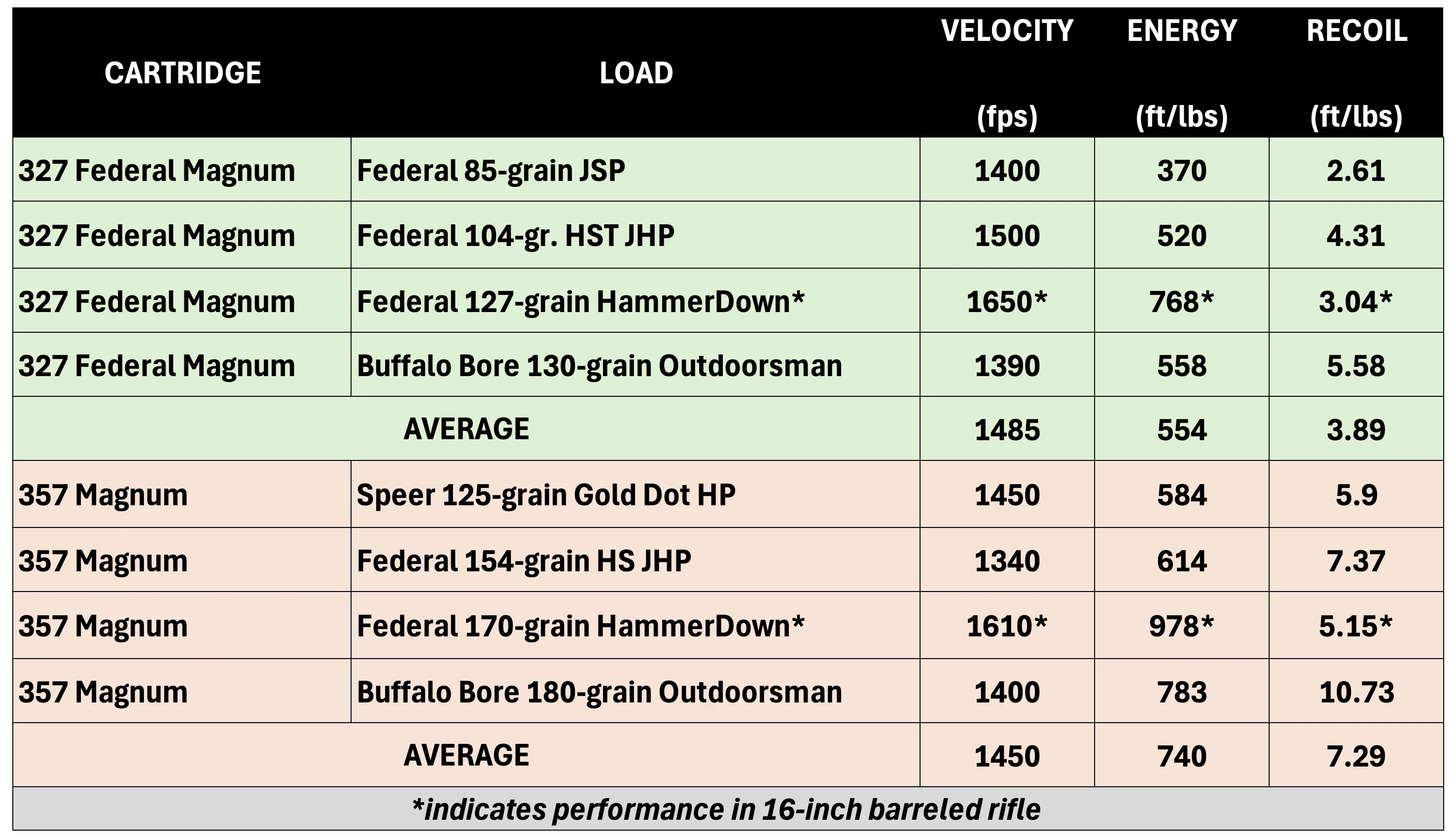
The supplied chart breaks down the velocity, energy, and recoil of the 327 Federal Magnum and the 357 Magnum through the common bullet weights you see offered in both cartridges. As you can see, on average, the 327 Federal Magnum has a slight velocity edge, but not enough to be of any consequence. The 357 Magnum’s real advantage is in kinetic energy, where it averages 33 percent more. That’s substantial and will generally mean a bit more penetration. However, larger diameter bullets use up more kinetic energy to deform, and their larger upset diameter also limits penetration.
The most noticeable difference you will be able to see as a shooter is in recoil. On average, the 357 Magnum produces about 85 percent more force. This is substantial in a revolver, and your hand will definitely feel it. However, with similar bullet weights, like with the 130-grain in the 327 and the 125-grain in the 357, there is minimal difference in recoil. The beautiful thing about revolvers and rifles in both cartridges is that you can also shoot lesser recoiling cartridges like the 32 H&R Magnum and the 38 Special.
Advantage: 357 Magnum
327 Federal vs. 357 Magnum: Terminal Performance
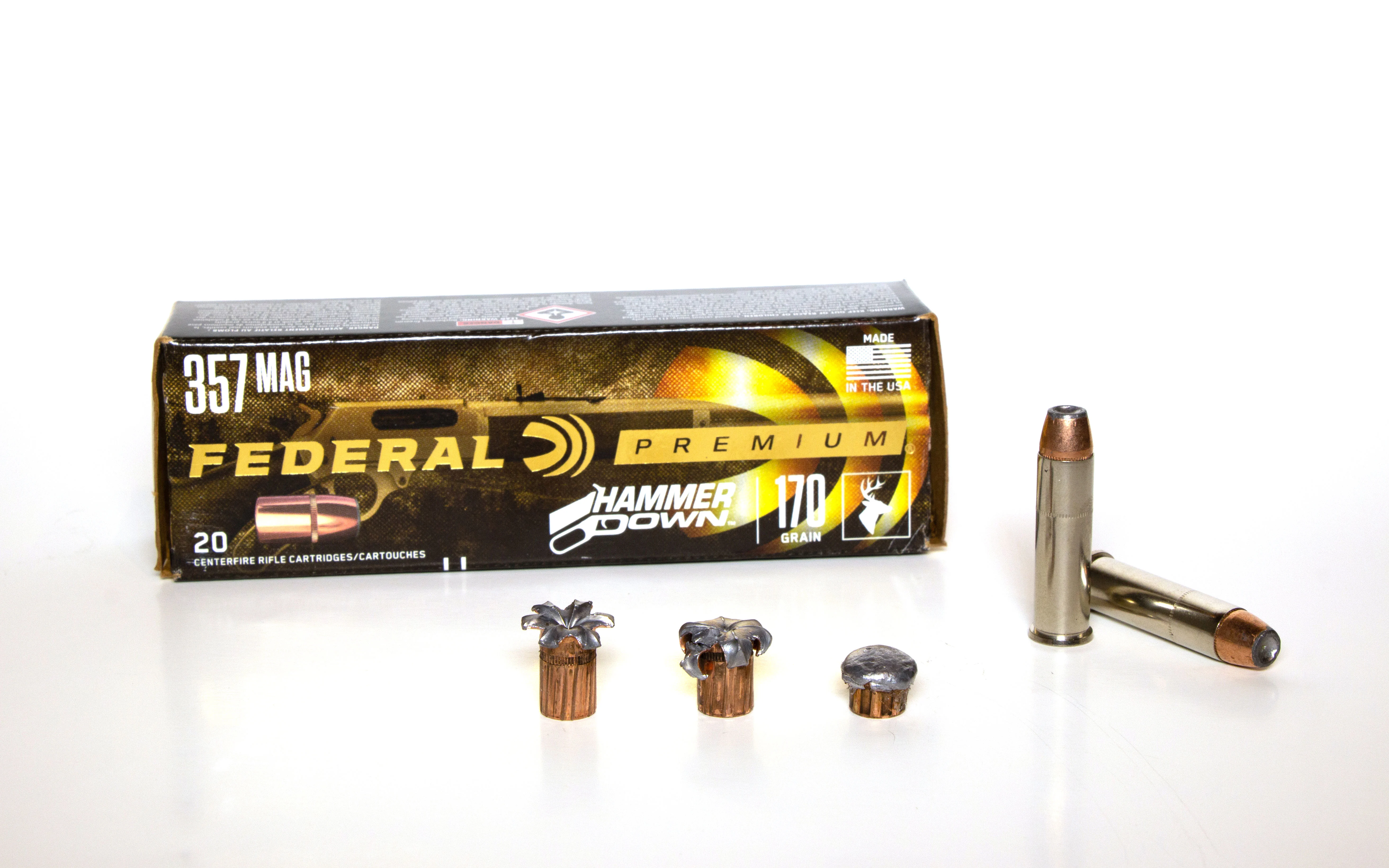
This category is a bit harder to see notable differences in. That might seem surprising since the 357 has such an advantage in kinetic energy. The thing is, more kinetic energy does not always translate to increased wounding, particularly when the bullets are of the same type and impact velocities are similar. What you can expect with the 357 Magnum is a hole that is about 10 percent larger in diameter, and larger diameter holes can influence tissue damage and increase hemorrhaging. From a practical standpoint, when using bullets of a similar design you will struggle to find a situation where the 357 Magnum would work, but a 327 Federal Magnum would fail.

Advantage: 357 Magnum
327 Federal vs. 357 Magnum: Accuracy & Precision
Historically, 0.32-caliber revolvers have a stellar reputation when it comes to precision on target. I’ve seen it, and I cannot explain it, but I’ve never had a 38 Special or 357 Magnum handgun or rifle that would shoot as well as the 0.32-caliber rifles and handguns I’ve owned. I had one of the few 1894 Marlin rifles in 32 H&R Magnum that was capable of sub MOA performance at 100 yards, and when I had it rechambered to 327 Federal Magnum, it still shot almost as precise. Similarly, my experiences with 327 Federal Magnum and 357 Magnum revolvers have been the same. Maybe it’s the heavier recoil of the 357 that makes it harder to shoot, and maybe it’s just been the luck of the draw. Regardless, in terms of precision on target I would have to give the 327 Federal Magnum the advantage.
Advantage: 327 Federal Magnum
327 Federal vs. 357 Magnum: Guns & Ammo
I’ve already touched on this, but it deserves repeating because there is really no comparison when it comes to the availability of guns and ammo for these two cartridges. A major online ammunition retailer lists almost 100 different loads for the 357 Magnum—including shot shells—and only 10 for the 327 Federal Magnum. When it comes to guns the story is the same; there is just no comparison in the options available. The only thing the 327 Federal Magnum has going for it when it comes to the available guns is that you can find lighter revolvers in 327 Federal Magnum that have a higher capacity.
Advantage: 357 Magnum
And The Winner Is…
If the question is simply which of these two cartridges can deliver the most power on target, the answer is simple, it’s the 357 Magnum. That’s really not up for debate. However, if power on target is what you want, there are other more powerful revolver cartridges to choose from. The thing that matters the most to most shooters, and especially hunters, is which cartridge might fill their needs the best. Of course, the answer to this is, it depends—it depends on what your needs are.

For self-defense, there is just not enough difference in the terminal effectiveness of the two cartridges to matter. On the other hand, the 327 Federal will have less recoil, and it will be easier to put more rounds on target, faster. For predator defense, and for game larger than deer or hogs, the extra power of the 357 Magnum has an edge and is probably the way to go. On the other hand, if you want a comfortable revolver to shoot, that will provide great service on the trail, and that is also suitable for small game, deer and hogs, there is nothing wrong with the 327 Federal Magnum, especially if you can find it in the revolver or rifle you like. I own 327s and 357s but rarely carry or use the latter.