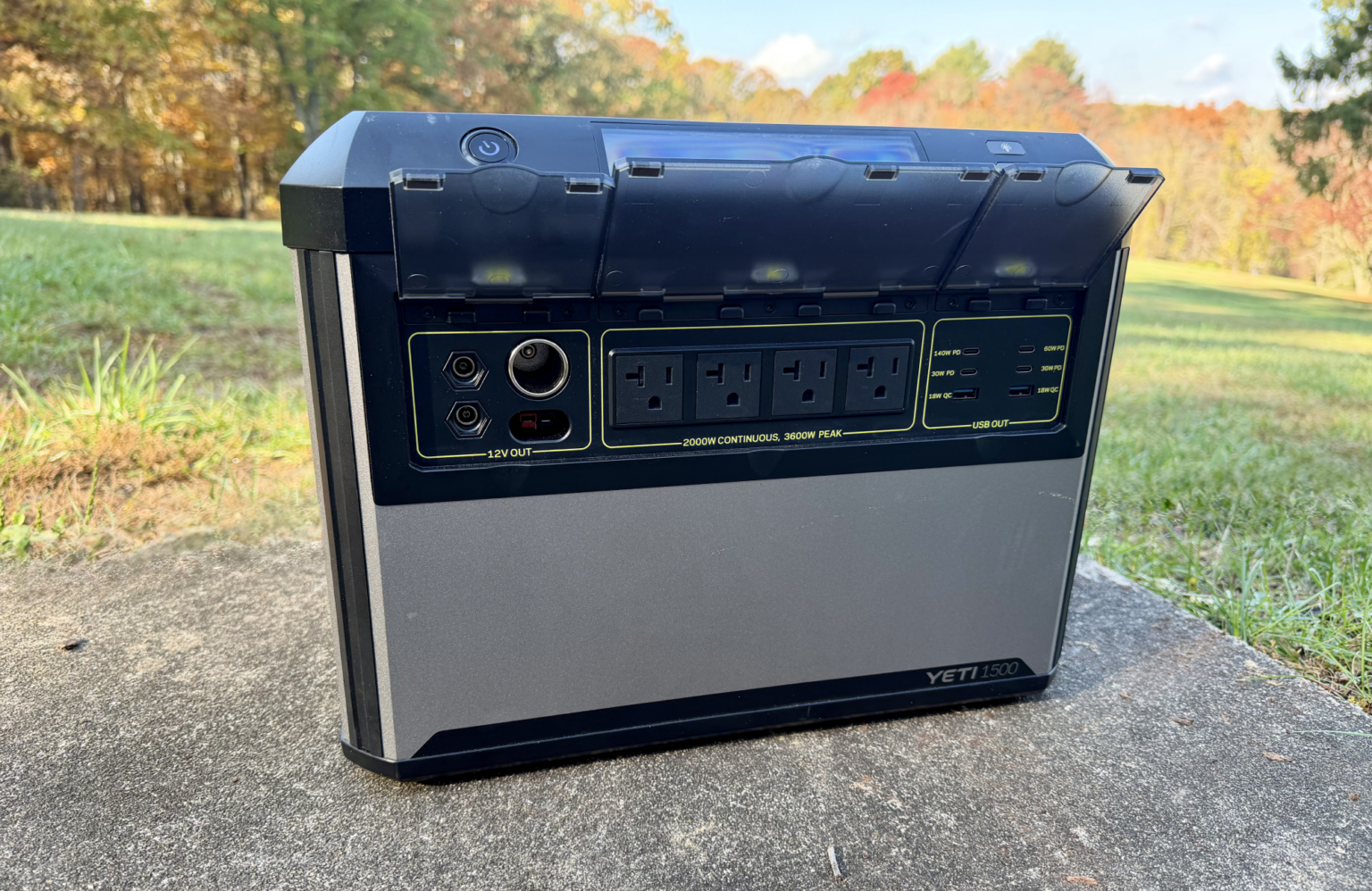
The Goal Zero Yeti 1500 is a capable, easy-to-use portable power station built for both camping and home backup. Its 2,000W continuous output, fast wall recharge, and solar compatibility make it a serious option. The one real tradeoff: at nearly 53 pounds, it takes effort to move. If you can live with the weight, the performance justifies the price.
Whether you spend your weekends camping or you just want to be prepared in case of a power outage, a portable generator is one of those things that you probably want—or maybe even need—to have on hand. There are plenty to choose from, but Goal Zero’s new-for-2026 Yeti 1500 caught our attention with its rugged build, fast charging, and battery designed to last for years. We spent weeks this summer testing the $1,500 power station to see how it performed, what we liked (and didn’t), and whether it’s worth the price.
Quick Overview
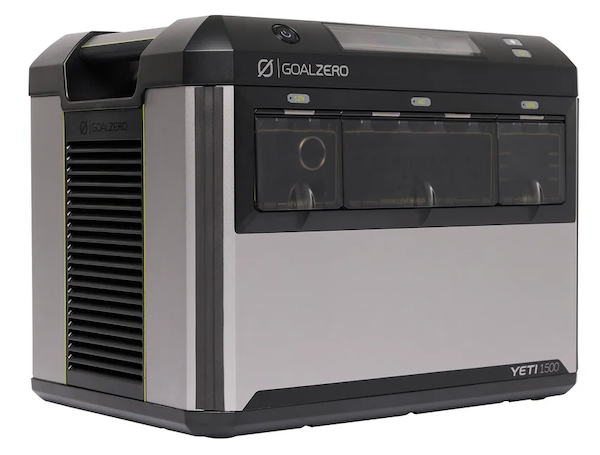
Goal Zero Yeti 1500 Portable Power Station
Pros
- More than enough power
- Plenty of ports
- Long battery life
- Works with solar panels
Cons
- Heavy to carry around
Specs
- Battery Capacity: 1,505Wh (LiFePO4)
- Power Output: 2,000W continuous / 3,600W surge
- Ports: 4 AC outlets, 4 USB-C ports, 2 USB-A ports, 1 12V car outlet, and additional 12V outputs
- Recharge Time: 1.1 hours via AC wall outlet; supports up to 900W solar input
- Weight: 52.8 lbs
Testing Results
Ease of Use
I found the Goal Zero Yeti 1500 easy to use right out of the box. The display is simple to navigate and shows how much battery is left, how much power you’re using, and how quickly it’s charging. I also like that there are plenty of ports, so I can plug in multiple devices without having to swap things around. The only real downside is the weight. At nearly 53 pounds, it’s a little cumbersome to move around, especially if you’re hauling it to a campsite or lugging other gear.
Power and Performance
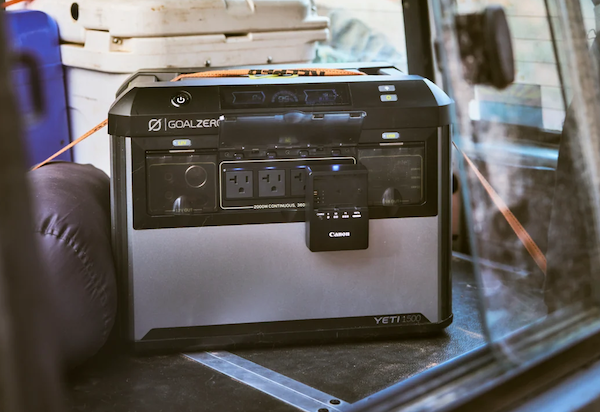
What stood out to me during testing was how much the Yeti 1500 can handle at once. I can keep multiple devices plugged in without having to constantly unplug one thing to charge another, and the display makes it easy to see how much power I’m using. With 2,000 watts of continuous output, it has enough capacity for more than just phones and smaller electronics. We used it to power an electric cooler on an 8-hour road trip to the beach this summer, and it worked like a dream. I’d honestly feel comfortable keeping it on hand for backup power at home, too.
Battery and Charging
Battery life is one of the most important features of a power station, especially if you’re taking it camping or relying on it during an outage. With a 1,505Wh battery, the Yeti 1500 can keep your devices charged for a good while before you’ll need to recharge it. And when you do need to recharge it, I like how quickly it powers up, going from empty to full in just over an hour when plugged into a wall outlet. Bonus: If you’re using it off-grid or for camping, you can pair it with one of the compatible solar panels to recharge the generator without needing a power source.
Final Verdict
The Goal Zero is worth every penny. Full stop. It’s easy to use, has plenty of power (and battery life) for camping trips and emergency backup, and recharges fast enough that you’re not waiting around all day to use it again. At $1,500, it’s definitely an investment, but if you spend a lot of time in the outdoors or want something reliable to have on hand when the power goes out, I think the performance and peace of mind justify the price.
Why Trust Us
For more than 125 years, Field & Stream has been providing readers with honest and authentic coverage of outdoor gear. Our writers and editors eat, sleep, and breathe the outdoors, and that passion comes through in our product reviews. You can count on F&S to keep you up to date on the best new gear. And when we write about a product—whether it’s a bass lure or a backpack—we cover the good and the bad, so you know exactly what to expect before you decide to make a purchase.
A portable power station lives or dies by one question: can you trust it when it matters? Running an electric cooler on an 8-hour road trip is a real-world test, not a spec sheet exercise, and the Yeti 1500 passed it without drama. What the testing here surfaces is a broader principle experienced campers already know: capacity headroom matters more than you think. A unit that can handle multiple devices simultaneously without compromise is the difference between convenience and frustration in the field. The solar compatibility extends that logic further, turning a capable camp accessory into a genuine off-grid tool.

All new! 1871 Club Field Trips