For the most versatile all-around option, the Okuma Safyre is the best sub-$100 spinning reel tested, covering freshwater and saltwater alike. For the best bang-for-buck pick, the Shimano Catana FE wins on value. Anglers on a tight budget should look at the Daiwa Crossfire LT. Match your technique and budget to the right reel before buying.
- Okuma Safyre: 7+1 bearings, corrosion-resistant build, and sizes 1000–4000 make it the most versatile pick tested.
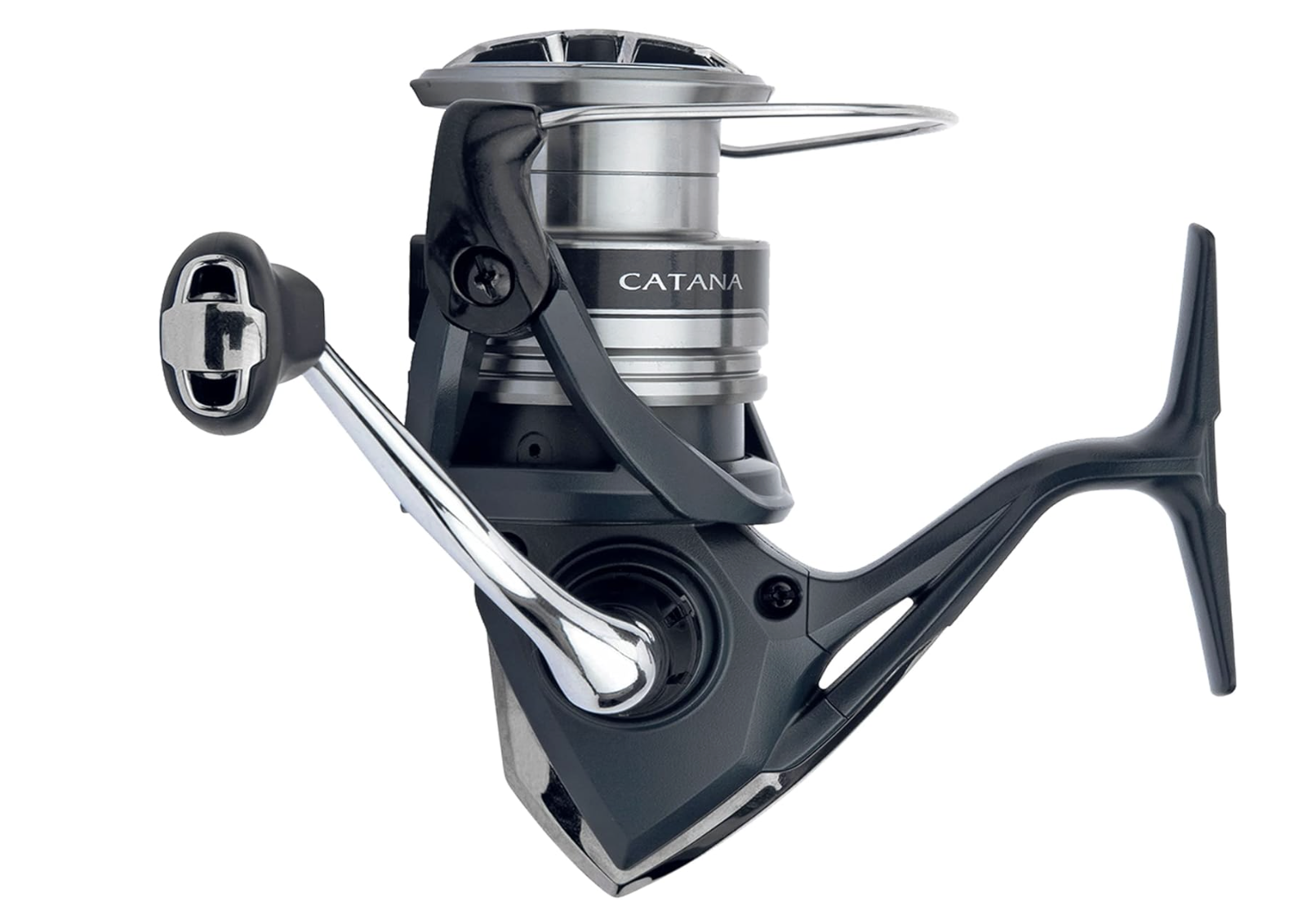
- Shimano Catana FE earns the best-value designation — confirmed Shimano quality at the bottom of the price range.
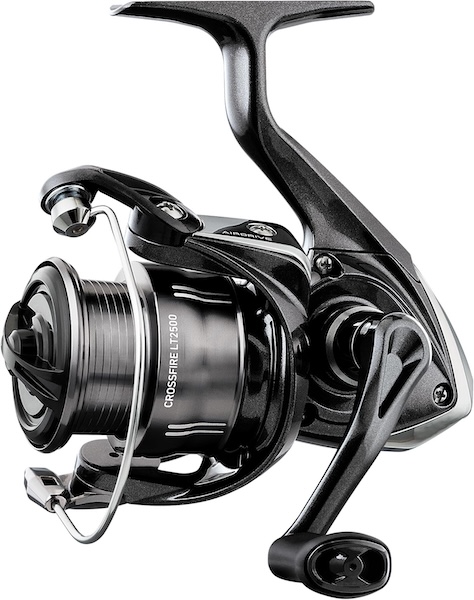
- Daiwa Crossfire LT is the explicit budget pick — expect functional performance with trade-offs in refinement vs. pricier options.
- The Okuma Safyre's corrosion-resistant frame and gearing make it a legitimate saltwater crossover at this price point.
- Premium spinning reels run $500–$1,000; every reel in this roundup sacrifices some durability or weight to hit the sub-$100 ceiling.
We may earn revenue from the products available on this page and participate in affiliate programs. Learn more
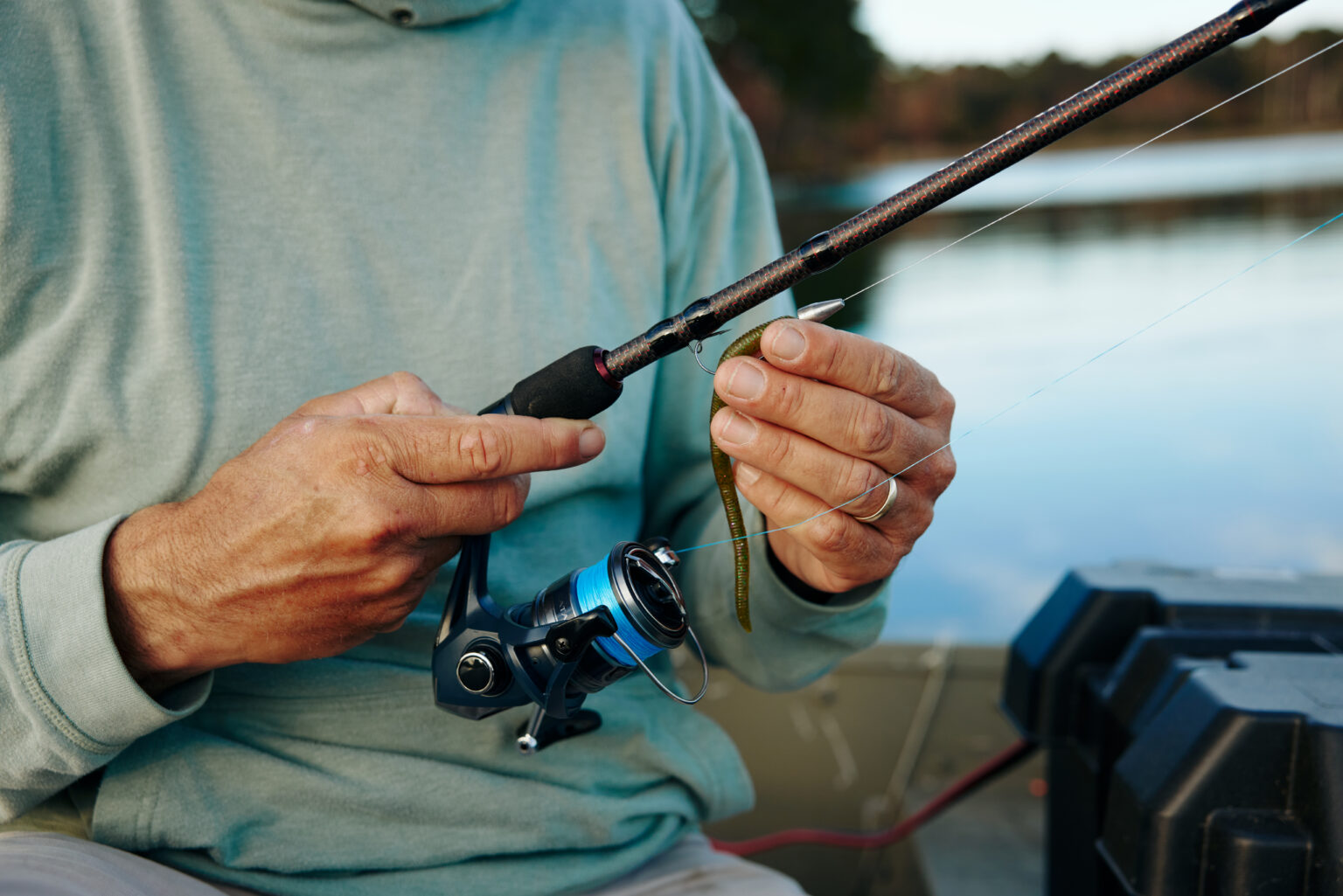
Spinning reels are extremely versatile. They can be paired with a dropshot rod to fish in deep water, used to drag hair jigs across structure, or rigged to skip wacky baits under docks. Bass-specific spinning reels are normally used for finesse-style techniques, but spinning reels are also better suited than casting reels for throwing light baits and for fishing lures vertically. Plus, the sensitivity and precise drag systems of spinning reels are better equipped to handle a big fish that’s pinned by a tiny hook.
The only problem is that premium spinning reels can cost anywhere from $500 to $1000. And while it’s nice to have the durability and lightweight construction of top-end reels, most anglers can’t afford it. So I put together this lineup of my favorite affordable spinning reels, including a few new options for 2026. All of these models will excel on the water without breaking the bank. Here are the best spinning reels for under $100.
- Best Overall: Okuma Safyre
- Best Value: Shimano Catana FE
- Best Budget: Daiwa Crossfire LT
- Daiwa Regal LT
- Shimano Sedona FJ
- Lew’s Speed Spin Gen 2
- Daiwa Legalis LT
Best Overall: Okuma Safyre
Best Overall
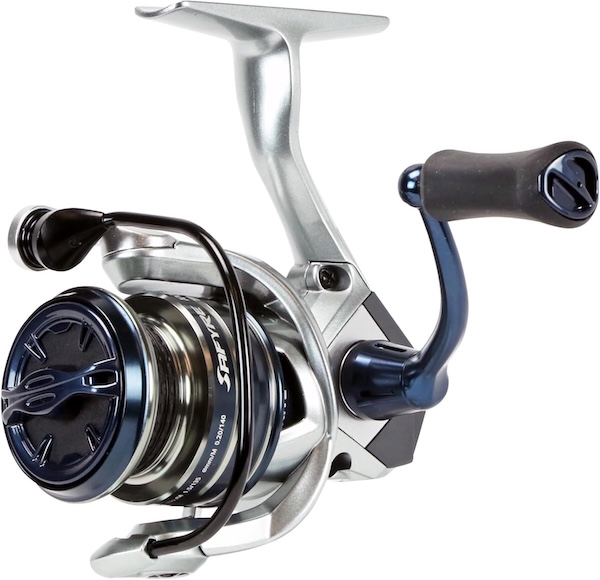
Okuma Safyre
Specs
- Retrieves: Right and left
- Gear Ratios: 5.2:1, 5.3:1, 6.0:1
- Bearings: 7+1
- Sizes: 1000, 2000, 2500, 3000, 4000
- Price: $84.99 (1000), $89.99 (2000, 2500, 3000), $96.99 (4000)
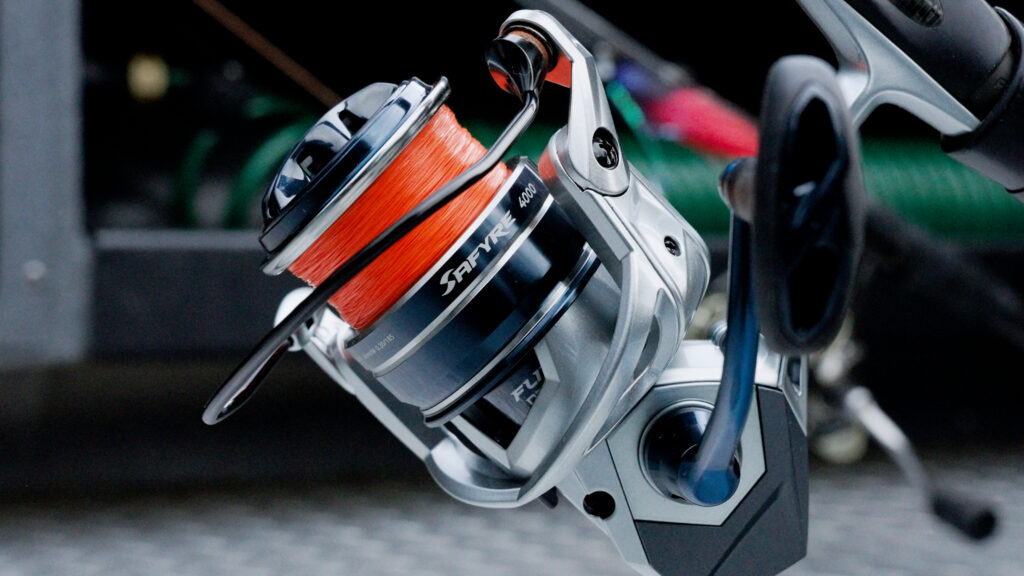
The Okuma Safyre is the most versatile sub-$100 spinning reel we tested. Though we focused primarily on freshwater applications, this reel features corrosion-resistant rotors, frame, and gearing, making it a great saltwater option, too. The wide range of sizes (1000 to 4000) also lends itself to a wide variety of techniques. With 7 bearings, the Safyre casts and reels extremely smoothly. Plus, it’s super durable.
Throughout testing, the Safyre landed more bass than the other reels. Speaking of landing fish, the drag on this reel is great for fighting and controlling big bass. I primarily used it when fishing a jighead minnow—a technique that requires extreme accuracy. It was easy to hit small targets and tight spots while casting, resulting in more fish in the boat. Overall, it is fairly lightweight, durable, and extremely versatile. And if I’m being honest, I’m not sure how Okuma manages to sell this reel for under $100. You might want to pick one up before they come to their senses.
Best Value: Shimano Catana FE
best value
Shimano Catana FE
Specs
- Retrieves: Right and left
- Gear Ratios: 5.0:1, 5.8:1, 6.2:1
- Bearings: 3+1
- Sizes: 1000, 2500, 3000, 4000
- Price: $47.99 (1000, 2500, 3000) $57.99 (4000)
When I went back and looked at the price of the Shimano Catana, I was shocked. For around 50 bucks, depending on the size you go with, the Catana offers an unbeatable value. This Shimano reel is solid and sturdy, has a smooth drag system, and casts really well. The frame is designed to shift the center of gravity closer to your hand, which Shimano claims reduces fatigue and enhances comfort. I found it to be comfortable for all-day use, so there might be some truth to it. Either way, the Catana performs well above its price.
Best Budget: Daiwa Crossfire LT
best budget
Daiwa Crossfire LT
Specs
- Retrieves: Right and left
- Gear Ratios: 5.2:1, 5.3:1
- Bearings: 3+1
- Sizes: 1000, 2000, 2500, 3000
- Price: $34.99 (1000, 2000, 2500, 3000 sizes) $44.99 (4000, 5000 sizes)
The Daiwa Crossfire LT is hands down the best budget spinning reel you can buy. With all six models priced below $50, and all common bass sizes at just $35, you won’t find a better spinning reel for the price. The Crossfire LT is as smooth, strong, durable, and capable as any. Daiwa advertises specific features of this reel with fancy terminology such as the Airdrive Rotor (which maintains strength while reducing weight), LT Concept (good materials), and Tough Digigear (a larger diameter with bigger teeth). At the end of the day all you need to know is that this reel flat out performs. Plus, it looks like it should cost twice as much with a slick, shiny black and chrome build.
Daiwa Regal LT Spinning Reel
Daiwa Regal LT
Specs
- Retrieves: Right and left
- Gear Ratios: 6.2:1
- Bearings: 6+1
- Sizes: 1000, 2000, 2500, 3000
- Price: $79.99
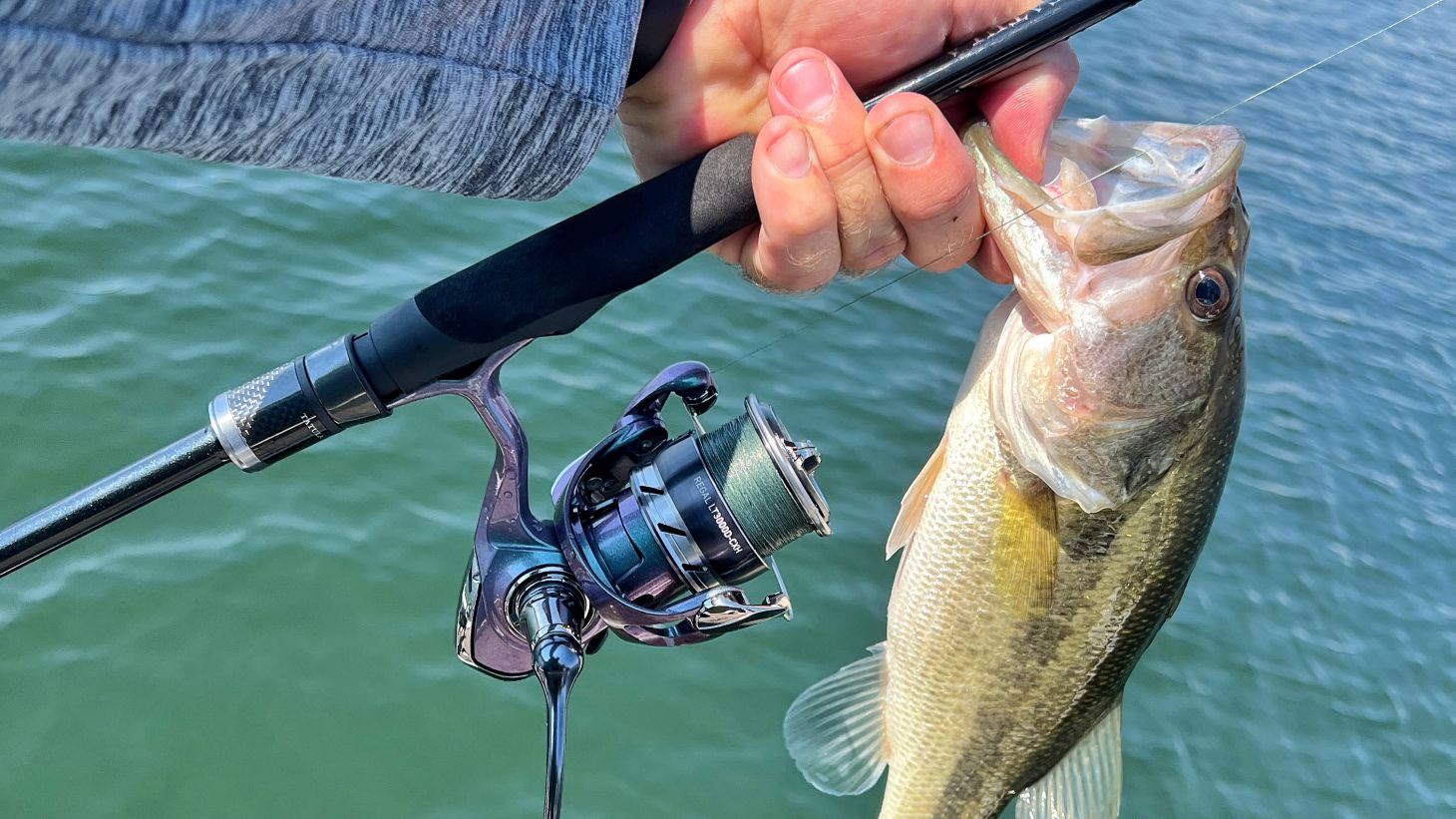
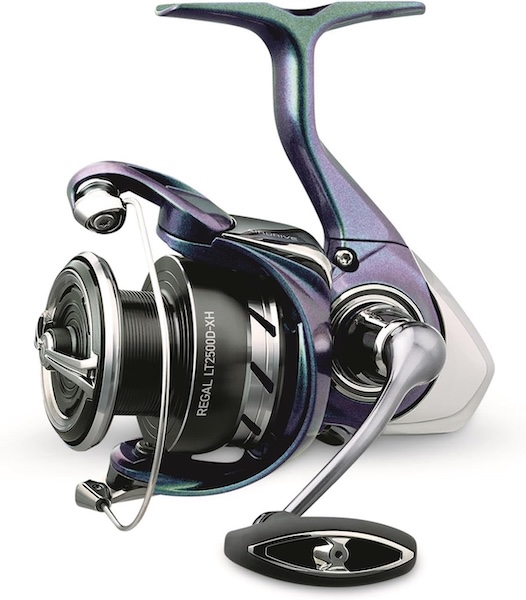
My Daiwa Regal LT test reel was a 3000 size, but I’ve also liked fishing with the 2500. Spooled with 15-pound braid and a 10-pound fluoro leader, the Regal made for an effective all-around bass fishing reel that I’d feel comfortable pairing with anything from a dropshot to a spybait to a wacky rig. It casts well, has a smooth drag, and is very light. The materials come together to reduce reel weight and ensure smooth rotation. And while the high-tech mumbo-jumbo stuff is impressive, it was something as simple as the large flat knob that set this reel apart. It is great for both the novice angler and the seasoned weekend warrior.
Shimano Sedona FJ

Shimano Sedona FJ
Specs
- Retrieves: Right and left
- Gear Ratios:
- Bearings:
- Sizes:
- Price: $74.99 to $84.99
One of Shimano’s best reels, the Sedona FJ is another bang for your buck. I tested the Sedona in the 2500 size and was blown away by how close it performed to my Shimano favorite, the Stradic Ci4+. Much of the technology found in Shimano’s premium reels is also seen in the Sedona. For instance, the cold-forged Hagane gears make this reel extremely durable. It also casts smoothly and is well-balanced, with a great drag system. It has everything you could want in a spin reel.
Lew’s Speed Spin Gen 2
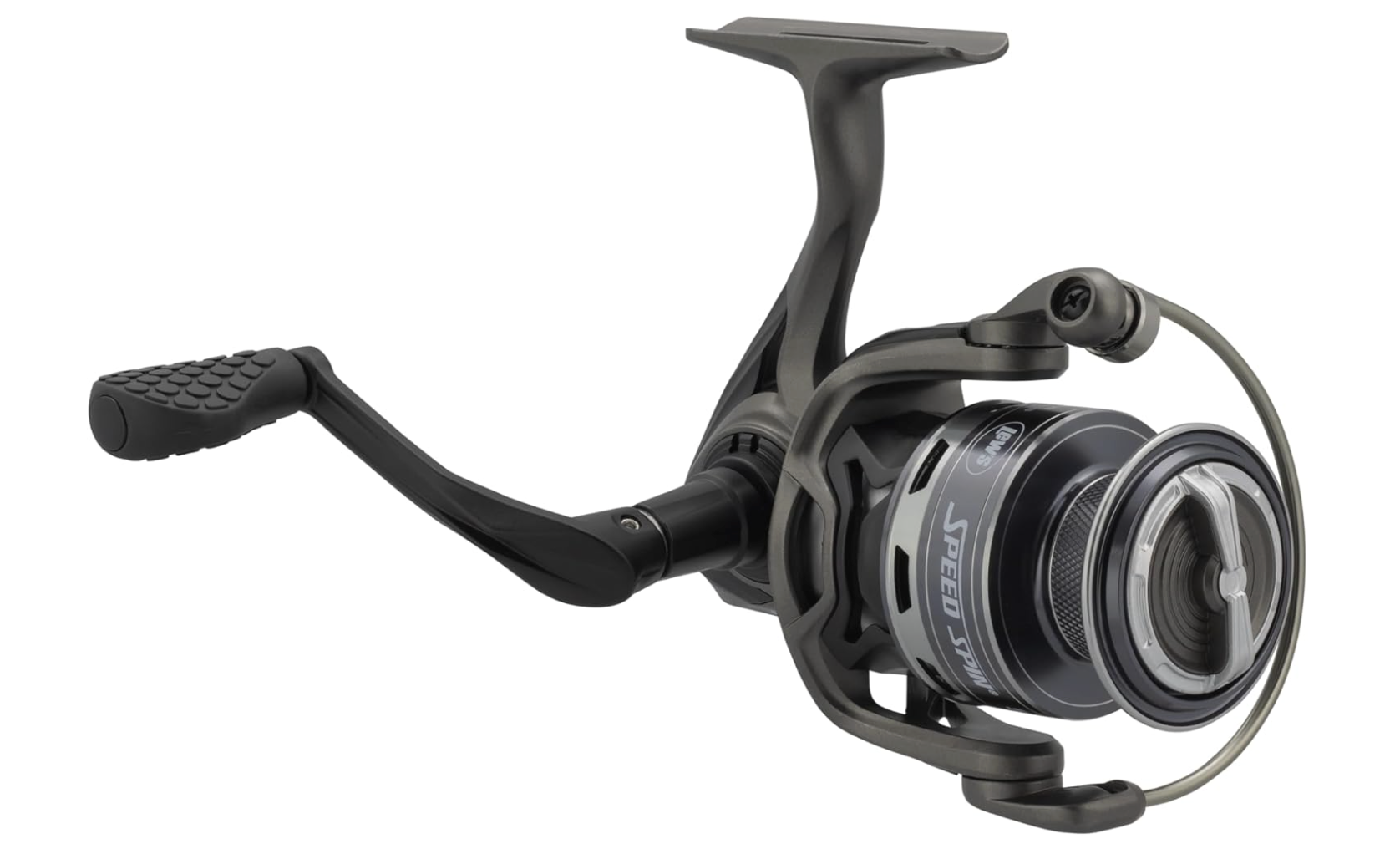
Lew’s Speed Spin Gen 2
Specs
- Retrieves: Right and left
- Gear Ratios: 5.2:1 and 6.2:1
- Bearings: 10(9 in the 75 size)
- Sizes: 75, 100, 200, 300, 400
- Price: $59.99
I tested the Speed Spin in a 2000 size, which is a little smaller than both the Daiwa Regal 3000 and the Shimano Sedona 2500. The Speed Spin still proved plenty big enough for skipping Senkos and other mid-range techniques. It was also a little lighter and more compact, so it was easier to handle and fish with. One feature I really like is the braid-ready aluminum spool. Most spools are super slick, so the braid has nothing to grip and will just spin on the spool unless you start with a little monofilament backing or add a small piece of tape to secure it. This reel has a textured surface on the spool with a bunch of little teeth that grip the slick braid and allow you to cinch it down. It’s a huge help and something other manufacturers should take note of.
Daiwa Legalis LT

Daiwa Legalis LT
Specs
- Retrieves: Right and left
- Gear Ratios: 5.2:1, 5.3:1, 6.2:1
- Bearings: 5+1
- Sizes: 1000, 2000, 2500, 3000, 4000
- Price: $99.99 (1000, 2000, 2500, 3000), $109.99 (4000)
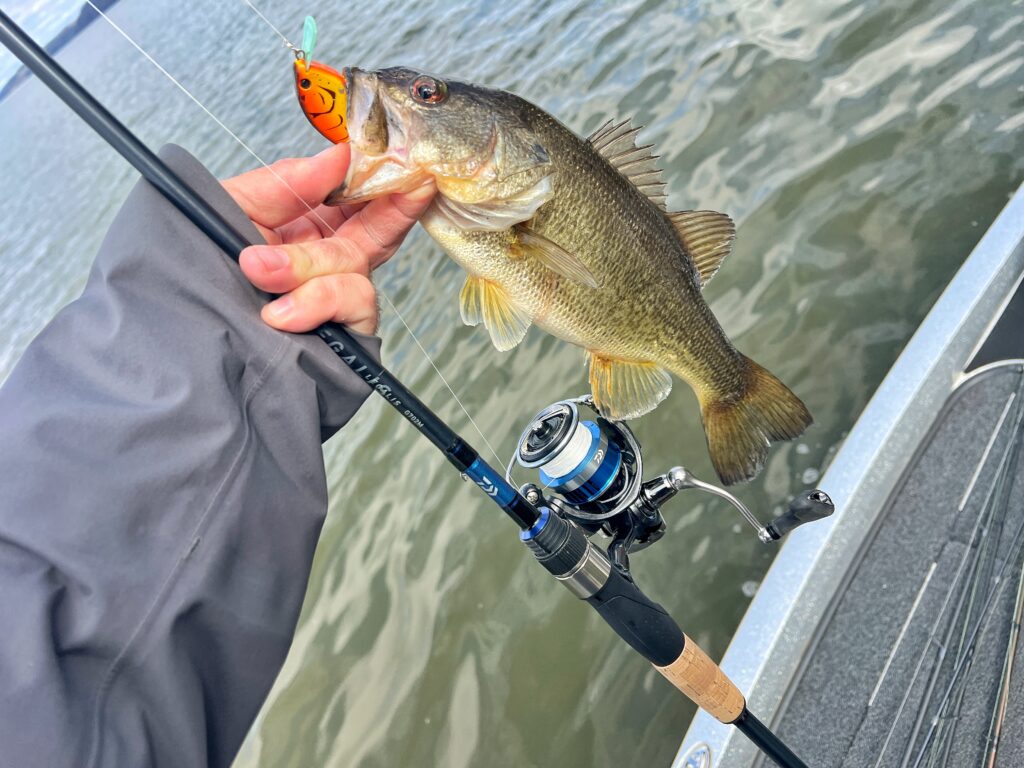
The Daiwa Legalis LT barely made the price cutoff for this test at $99.99. But I’m glad it did because this reel is phenomenal. Packed with high-end Daiwa features, this $100 reel is ready for anything a bass angler could throw at it. The ATD drag system is fantastic, super smooth, and strong. And the reel is lighter than several of the others in the competition. The Leaglis also has a large flat knob, which I’m partial to. It was one of the top performers of the test and came close to winning the Best Overall award. It comes in five sizes and three gear ratios, but the 2500 is perfect for most bass applications.
How We Tested Spinning Reels
Over the last year, I took 11 spinning reels priced under $100 and noted each model’s performance. I’ve used these reels to fish everything from Ned rigs to miniature chatterbaits—and I landed plenty of bass in the process. I judged the reels on casting ability, design, ergonomics, drag performance, durability, and overall strength. Based on these findings, I awarded winners for Best Overall, Best Value, and Best Budget categories.
What to Look for When Choosing a Spinning Reel
Frame Construction
Most premium reels on the market today come equipped with internal brass or alloy gears, but cheaper options are often made of aluminum or graphite (a.k.a. plastic). You may find a few reels with components crafted from carbon fiber, but in the value-priced arena, aluminum is the norm. Graphite is fine if you’re angling for smaller species, but it can flex slightly under heavy strain, which can lead to issues with gears not meshing smoothly or the rotor becoming out of balance. Aluminum, carbon fiber, and graphite all resist corrosion brilliantly and keep the reel’s overall weight down.
Weight
A few ounces can make a huge difference. In addition to keeping the rod well balanced, a reel that comes in under the 8-ounce mark will actually help you feel the bite a little better when the fish are playing with their food instead of taking the bait. With less weight, you can also keep the rod in perfect position throughout a long day of finesse presentations when the bite is tough.
Drag System
The drag system on a spinning reel is often the difference in landing big fish when they make a hard run. The drag allows the line to slip smoothly off the reel when sufficient tension is applied. Instead of allowing the line to snap, a good drag system will give the fish room and reduce strain. Modern drag systems are usually made of oiled felt pads, ceramic discs, or carbon fiber plates. The ceramic and carbon fiber offer a lifetime of service and resist the heat created from the friction of the rotating spool, but if you primarily chase crappie, bream, or smaller saltwater species like speckled trout, a reel with an oiled felt drag system pays out line more smoothly. In either case, look for reels that have a sealed drag system, as it prevents debris from getting between the discs and causing premature wear and sticky performance.
Bearings
The number of ball bearings in the reel is critical to the smoothness of the retrieve, but it’s not just about numbers; the quality of those bearings plays a huge part in performance. Even reels with six ball bearings can offer smooth turns of the handle, and the difference in performance between six- and seven-ball bearing reels may not even be noticeable to the average angler. However, light-line specialists who keep the spinning reel in their hands all day will attest that more is definitely better when it comes to bearings.
FAQs
Spinning reel size is primarily dictated by the species you are after and the size of the fishing line and rod you’re using. Finesse specialists will pay close attention to the line diameter for which the reel was designed to ensure minimal twist. Trying to run a line diameter that’s too large on a small reel can cause massive headaches with loops and knots after a few hours of fishing. Bass anglers who are going to spend a day fishing with monofilament usually opt for 2500- or even 3000-sized reels, as the larger-diameter spool can prevent the line from coiling up after being stored on the spool all day in the heat.
Most spinning reels sport a 5.2:1 gear ratio, with some bumping up the retrieve to 6.2 revolutions of the bail for every crank of the handle. While this may seem like a disadvantage, it usually does not hinder performance. Most bass and panfish techniques requiring spinning gear call for small, lightweight lures that can’t be fished quickly anyway. The slower 5.2:1 ratio enables the line to stack smoothly back in place without incurring excess twist that can cause tangles and loops. Anglers using braided line on their spinning rods or fishing live bait with few casts can step up to faster reel ratios, but for day-in, day-out performance with monofilament or fluorocarbon lines, keeping the ratio under 6-to-1 will prevent plenty of headaches.
The number of ball bearings in a reel is often used as an indicator of quality. If the bearings are of the same construction and design, then more would always be preferred. However, the quality of the bearing construction also plays a significant role in a reel’s smoothness. Some reels with six high-quality, ceramic ball bearings offer much smoother performance than cheaply made reels with nine roughly finished steel bearings. Still, any spinning reel should have a minimum of four to five ball bearings to deliver enough smoothness to enhance your fishing day without feeling like you’re grinding sand in the reel’s gears. Most of my favorite spinning reels sport six or seven ball bearings and one roller bearing.
Why Trust Us
For more than 125 years, Field & Stream has been providing readers with honest and authentic coverage of outdoor gear. Our writers and editors eat, sleep, and breathe the outdoors, and that passion comes through in our product reviews. You can count on F&S to keep you up to date on the best new gear. And when we write about a product—whether it’s a bass lure or a backpack—we cover the good and the bad, so you know exactly what to expect before you decide to make a purchase.

*WARNING - DANGER AHEAD*
THE FALL JOURNAL COMING SOON