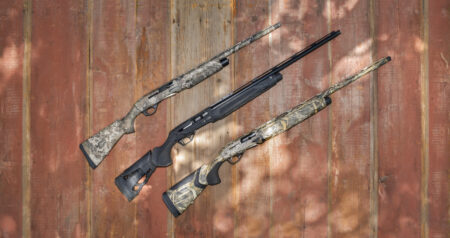

For budget-conscious hunters who need a reliable pump under $500, the Mossberg Maverick 88 or Remington 870 Express are the proven choices. For hunters who want an inertia semi-auto without the Benelli price tag, the Stoeger M3000 is the standout pick. For those who can stretch closer to $1,000, the Beretta A300 Outlander and Winchester SX4 represent the category's best value-to-performance ratio.
- Mossberg Maverick 88 is the least expensive pump on the list, proven reliable on the skeet field and in the field.
- Remington 870 Express won the best pump gun award in Field & Stream's duck hunting shotgun test under new RemArms ownership.
- Stoeger M3000 delivers Benelli-style inertia action at less than half the price, with a tradeoff in fit and finish.
- 870 Express finish is quick to rust and requires consistent care — a real consideration for waterfowl hunters.
- Maverick 88 is 12-gauge only in black synthetic — hunters needing 20-gauge or .410 options must look elsewhere on this list.
We may earn revenue from the products available on this page and participate in affiliate programs. Learn more
Shotguns digest more shells in a season than most rifles will in a lifetime. They get knocked around in the uplands, and splattered with mud in the marsh, and shot and shot and shot at the range. A lot of people don’t like the idea of spending any more than necessary on a gun that has to take such abuse. This list is for them, the practical among us, who will skip a frill here, an engraved pheasant there, in order to maximize their bang for the buck. What follows are nine shotguns that represent extremely good values in their categories. One of them is most likely the best budget shotgun you can buy for the type of hunting you do.
- Mossberg Maverick 88
- Mossberg Maverick SA
- Spandau S2
- Beretta A300 Outlander
- Winchester SX4
- Retay ACE-R
- CZ Drake
- Weatherby Orion I Matte Blue
- Franchi Instinct
Mossberg Maverick 88
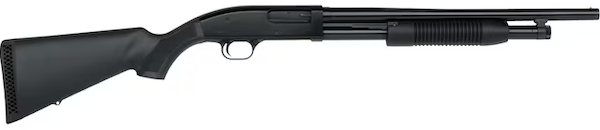
Mossberg Maverick 88
Made in Mexico, the Maverick 88 is a budget Mossberg 500, which seems redundant. It’s essentially the same gun as the Model 500 but with a crossbolt safety in place of the top safety. The Maverick 88 also starts below $300. For that, you get a lock, stock, barrel, and not much else. Well, you get one choke tube and a middle bead, too. I have shot 25 straight on the skeet field with a Model 88, which suggests they shoot where you point them, and I’ve seen them at work in the field, too. They come in black plastic, 3-inch 12- and 20 gauges, in full-size and scaled-down Bantam models.
Mossberg Maverick SA

Mossberg Maverick SA
Friends don’t let friends shoot cheap gas semiautos. They are a headache, unless they are the Maverick SA. This plain Turkish-made gas gun is slim, it’s light, and it does nothing but work. The design is outdated; you have to switch between two different pistons depending on whether you’re shooting light or heavy loads, but outside of that minor inconvenience, the SA delivers reliable performance so long as you break it in with a box or two of heavy loads, and don’t try to make it shoot super-light target ammo. It’s light, listed at 6 ¾ pounds in 3-inch 12 gauge, but fairly soft-kicking. It comes in walnut and black synthetic models with spacers to adjust stock length. This gun joins the 20-, 28-gauge, and .410 SAs already in the Mossberg line.
Spandau S2
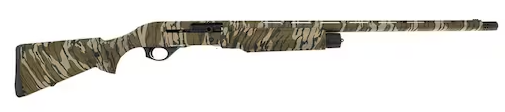
Spandau S2
If you want an inertia gun but don’t want to shell out for a Benelli, the Spandau S2 offers a clone of the old-style Benelli M2 at a great price. It looks like an M2, works very well, and I can’t bump mine out of battery. I shot the 12-gauge turkey version for the 2026 gun test and loved it enough that I’m taking it to the woods next spring. The Turkish-made S2 accepts M2 parts, which is a bonus, since there are a ton of aftermarket add-ons for M2s. Even without Benelli parts, it’s a good gun on its own. It comes in 3-inch 12- and 20-gauges, with 24- or 28-inch barrels, and starts at a ridiculously low price. There are also combo sets with 24- and 28-inch barrels.
Beretta A300 Outlander

Beretta A300 Outlander
When people ask me what they should buy for a first shotgun, I point them to the A300. It’s based on second-generation technology, but in this case, it’s a budget version of the excellent Beretta 391, simplified, changed a little, and made in the United States. The least expensive model is the synthetic version, which features spacers that let you adjust the stock length up to an inch to fit smaller shooters, plus a version of Beretta’s Kick-Off recoil reducer. The gas system is famously reliable, and the gun shoots all loads without adjustment. It comes in just below $1000, at $999.
Winchester SX4

Winchester SX4
The latest in the family of Browning/Winchester semiautos spawned by the Browning Gold back in the ’90s, the X4 is made as a price-point gun, but it still comes packed with features. A redesign of the X3, it features a larger square safety, bolt handle, and bolt release button for easier use in cold weather. It has a bright, TruGlo bead, too, for those who like them, and inside it has the same excellent, reliable, easy-care, soft-shooting gas system of the Gold/X2/X3 family. It comes in 12 gauge, black synthetic at just over $1000.
Retay ACE-R

Retay ACE-R
The ACE represents an excellent buy in an inertia gun. Well-made in a very modern Turkish factory, it features deep-drilled barrels for better patterns, a trigger group that you can remove with the push of a button, and a bolt that can’t be bumped out of battery. The two-piece receiver gives you easy access to the action if you need to maintain it in the field. The “Airy” recoil pad works, and the gun shoots a very flat 50/50 pattern. After a couple of early bobbles, mine has hit its stride and become very reliable. The gun also comes in an ACE version without the square-backed receiver, and both are made in 3 ½-inch 12, 3-inch 20, and 3-inch 28 gauges. They come in wood and synthetic models.
CZ Drake
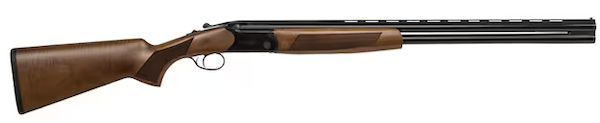
CZ Drake
The CZ Drake’s price tag reads like a typo. No O/U should cost as little as it does, yet it’s a solid gun that gives you all the advantages of a break action—two chokes, compact balance—at low semiauto pricing. Made in Turkey, the Drake comes in 12, 20, 28, and .410. It doesn’t have much in the way of engraving or fancy wood, and it has extractors that lift spent shells instead of kicking them out like ejectors. In short, it’s a bare-bones O/U that works, and that’s no small thing for $629 complete with hard case and five choke tubes.
Weatherby Orion I Matte Blue
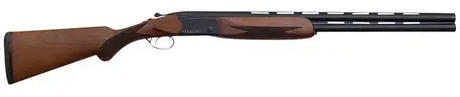
Weatherby Orion I Matte Blue
The current version of the Orion, Weatherby’s long-time entry-level O/U, is a solid, dependable Turkish-made O/U. It has a low-profile action and a racy Prince of Wales grip. The Grade A walnut stock of the Matte Blue version is matte-finished to match the matte metal. The gun comes in 12- and 20-gauges, with a choice of 26- or 28-inch barrels in 12-gauge and 28-inch in 20. The barrel has a nicely subdued brass bead, and ventilated top and mid-ribs. In all, it’s an excellent value, and if you want to step up to traditional Weatherby glossiness, you can pay $100 more for the Orion I.
Franchi Instinct
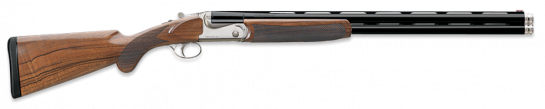
Franchi Instinct
As the price of O/Us climbs, the Instinct holds the line at the sub-$2000 price point. The entry-level Instinct, the L model, features a case-colored receiver and Grade A satin-walnut wood. The guns have Prince of Wales grips, rounded forends, and vent top and mid-ribs. They come with a full set of tubes and a small fiber-optic bead. The 12-gauge weighs in around 7 pounds; the 20 is 6 ½, just right for carrying and shooting in the uplands. If you want a lighter gun, you’ll have to pay more for the alloy-framed Instinct SL.
What To Consider When Buying a Used Gun
Used models are the best budget shotguns going. The original buyer takes the depreciation hit, you get a deal, and as a bonus, someone else puts the first ding in the stock, saving you the anguish of worrying about it. If it weren’t for used guns, I’d hardly have any guns at all. Still, you have to be careful. Do your homework. The Blue Book of Gun Values is your guide to how much you should pay. It lists virtually every gun made and its price across a range of conditions.
Buy from a dealer who stands behind what they sell. Be sure you know what the return policy is before you buy. If you buy from an online seller, use only those with good ratings, and make sure there’s an inspection period, typically three days. Find out if inspection includes test-firing.
Check the gun carefully for function. I recently bought a Model 12 Winchester with a slide release that was very difficult to press (it’s a thing with Model 12s), and I negotiated the necessary repairs as part of the price. See if the choke tubes come out. I picked up a Mossberg 835 turkey gun, and when I checked it out, I found the choke tube was rusted in place. The gun was already dirt-cheap, but the store knocked another big chunk off the price when I pointed out the stuck tube.
Look for signs like marred screws that shows someone who didn’t know what they were doing has been poking around inside. Be sure neither the barrel nor the stock has been cut down, and look for signs of refinishing. If you need to, have a gunsmith look the gun over, just as you might take a used car to your mechanic. He can spot problems and keep you from buying what looks like a great budget shotgun but is actually a lemon.
Finally, consider resale value. Someday you may want to move on from the gun even though right now you’re smitten with it. I’m terrible about this, but I’m learning. A little while ago, I passed up a terrific deal on an older Browning Citori skeet gun with great wood and a full set of sub-gauge tubes. But it had 26-inch barrels, and the current trend is toward longer ones. I knew if and when I soured on the gun, the short barrels would make it tough to sell, so I let it go. Whether you are buying new or used, a budget means you have a limited amount to spend. And whether that’s a few hundred dollars or a couple thousand, you want to get the most for your money.
6 Tips on How to Sell Your Own Used Guns
“Never sell a gun,” some sage told me years ago. While it seemed like sound advice at the time, it’s not practical. Guns pile up. You have to thin the herd occasionally. Sometimes you need money right away for emergencies; other times you want to make room for something new. There are several ways to sell a gun, from taking it to a gun store or pawn shop to selling it at auction or through private sales.
1. How to Gauge the Value of Your Gun
The Blue Book of Gun Values is updated annually. It’s the standard most buyers and sellers rely on. You can also search online auction sites to see how much guns like yours have sold for.
2. How to Sell Your Rifle to a Gun Store
If you sell a gun to a gun shop, you get money right away—but you might receive only half the gun’s value or even less. Stores have overhead, and they can’t give you the full value of the gun if they want to make any money on the resale. Scopes and other accessories rarely add much to a gun’s price. If you think you might need them in the future, take them off and sell the gun by itself. You’ll generally get a better deal if you trade the gun toward something at the shop that you want. If you need money right away, sell the gun, take your lumps graciously on the price, and walk out the door with cash in hand.
3. How to Sell a Gun on Consignment
Ask if your gun shop sells on consignment. They’ll work with you to set the price, display the gun, sell it, and take a commission when the gun sells. Some guns go right away, while I’ve seen others sit on the rack for a year or more until someone meets the seller’s price.
4. How to Sell a Firearm on GunBroker
You’ll reach the widest possible market if you sell online through GunBroker.com or a similar site. Take lots of pictures, including any scratches, dents, and dings, and be scrupulously honest in your description to minimize the chance of returns. You’ll be responsible for shipping the gun, and the auction site will take a commission when the gun sells.
5. How to Sell a Gun Privately
Private sales (where legal; see below) will get you the most money for your gun. Ideally, you’ll sell it to a friend who wants it, and you’re done with no hassle. Failing that, advertise the gun locally—the bulletin boards at shooting ranges are good places— and sell it. Only ask top dollar if you’re willing to wait a long time for your money. Again, let the Blue Book be your guide.
6. How to Sell a Gun Legally
Be sure you know your state’s laws. A growing number of states require private sales to go through a Federal Firearms License (FFL) holder who can perform background checks. Laws for selling handguns are often stricter than laws governing long gun sales. Be careful and know the law.
Why Trust Us
For more than 125 years, Field & Stream has been providing readers with honest and authentic coverage of outdoor gear. Our writers and editors eat, sleep, and breathe the outdoors, and that passion comes through in our product reviews. You can count on F&S to keep you up to date on the best new gear. And when we write about a product—whether it’s a bass lure or a backpack—we cover the good and the bad, so you know exactly what to expect before you decide to make a purchase.

ALL NEW! 1871 CLUB FIELD TRIPS