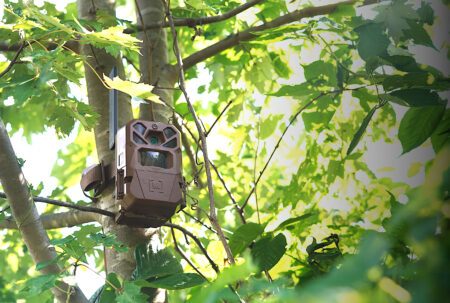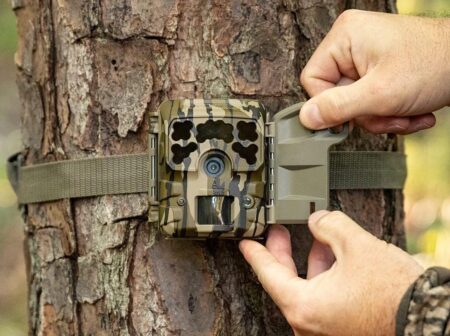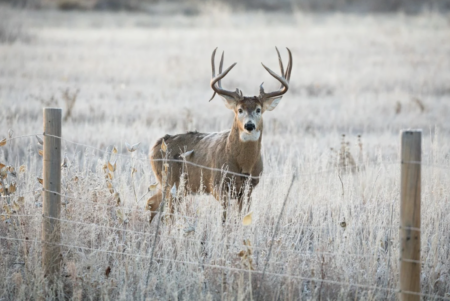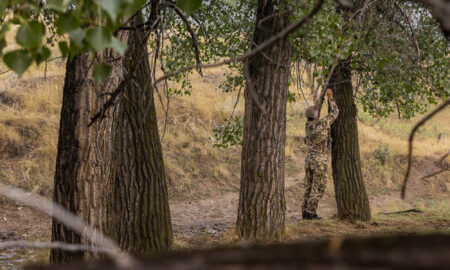
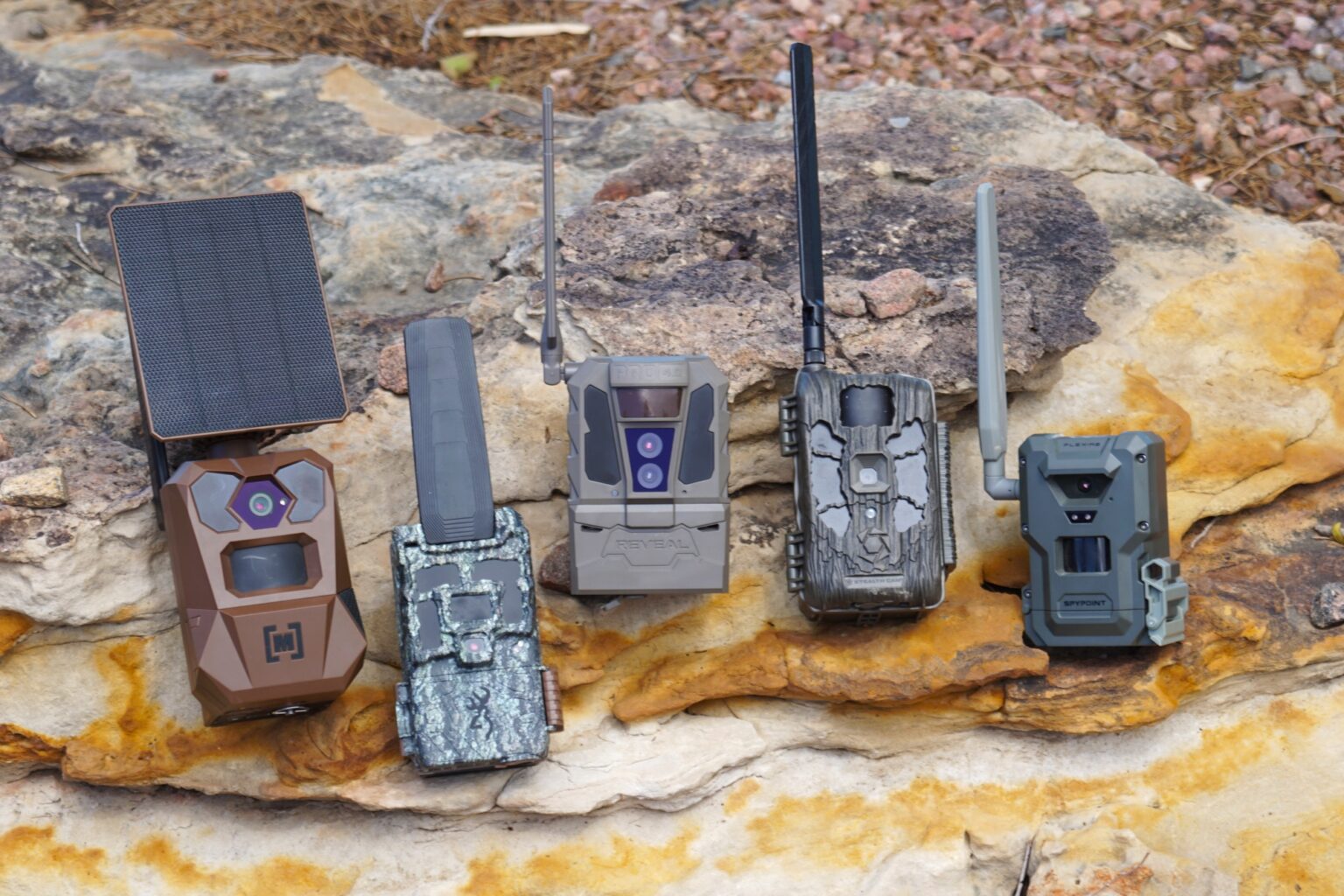
For the best overall performance, the Moultrie Edge 4 Solar and Browning Defender Pro Scout MAX HD DV share the top spot. For hunters on a budget, the SpyPoint Flex-M2 is the pick. Need maximum detection range, choose the Tactacam Reveal Pro 4.0. For the sharpest images, the Stealth Cam Deceptor Max 3.0 leads the field.
- Moultrie Edge 4 Solar ties for best overall, making it the top pick for hunters who want to reduce battery-change trips.
- Browning Defender Pro Scout MAX HD DV offers a rapid .25-second trigger, outstanding battery life, and a compact folding antenna that resists field damage.
- SpyPoint Flex-M2 earns best value, giving budget-conscious hunters a capable cellular option without compromising core functionality.
- Tactacam Reveal Pro 4.0 leads the category in detection range, an advantage on open terrain or wide food plots.
- Browning's Strike Force Wireless app underperforms relative to the camera hardware — a meaningful friction point for remote viewers.
We may earn revenue from the products available on this page and participate in affiliate programs. Learn more
I’ve been running trail cameras since film-based models were all the rage in the early 1990s. I remember walking laps around the local Walmart, waiting for the one-hour photo lab to process my prints. Most of the time, it was 24 images of a branch that the wind blew back and forth. Occasionally, I’d get a deer—sometimes even a good buck.
Trail cams have come a long way since, and, of course, cellular trail cameras dominate the scene today. If you want to learn all you can about the critters you hunt without setting foot in the woods other than to change batteries or move a camera or two, cellular trail cameras are the way to go. But which cell cams?
To help you figure out which models are right for you, I spent two months running and testing the latest new-for-2026 cell cams in my backyard and on a nearby 700-acre whitetail property in Colorado. Testing conditions were difficult. Every camera was exposed to heavy wind, a 60-day average high temperature of 95.7 degrees, rain, and hail that damaged roofs. The good news: There were no flops. I would have no reservations running any of the new cellular cams below anywhere in the country. That said, some proved better than others depending on what your value most. So, let’s dive in. Here are the best cellular trail cameras of 2026.
- Best Overall (Tie): Moultrie Edge 4 Solar
- Best Overall (Tie): Browning Defender Pro Scout MAX HD DV
- Best Value: SpyPoint Flex-M2
- Stealthiest Camera: Tactacam Reveal Pro 4.0
- Best Photo Quality: Stealth Cam Deceptor Max 3.0
The Rest of the Best
Best Overall (Tie): Browning Defender Pro Scout MAX HD DV
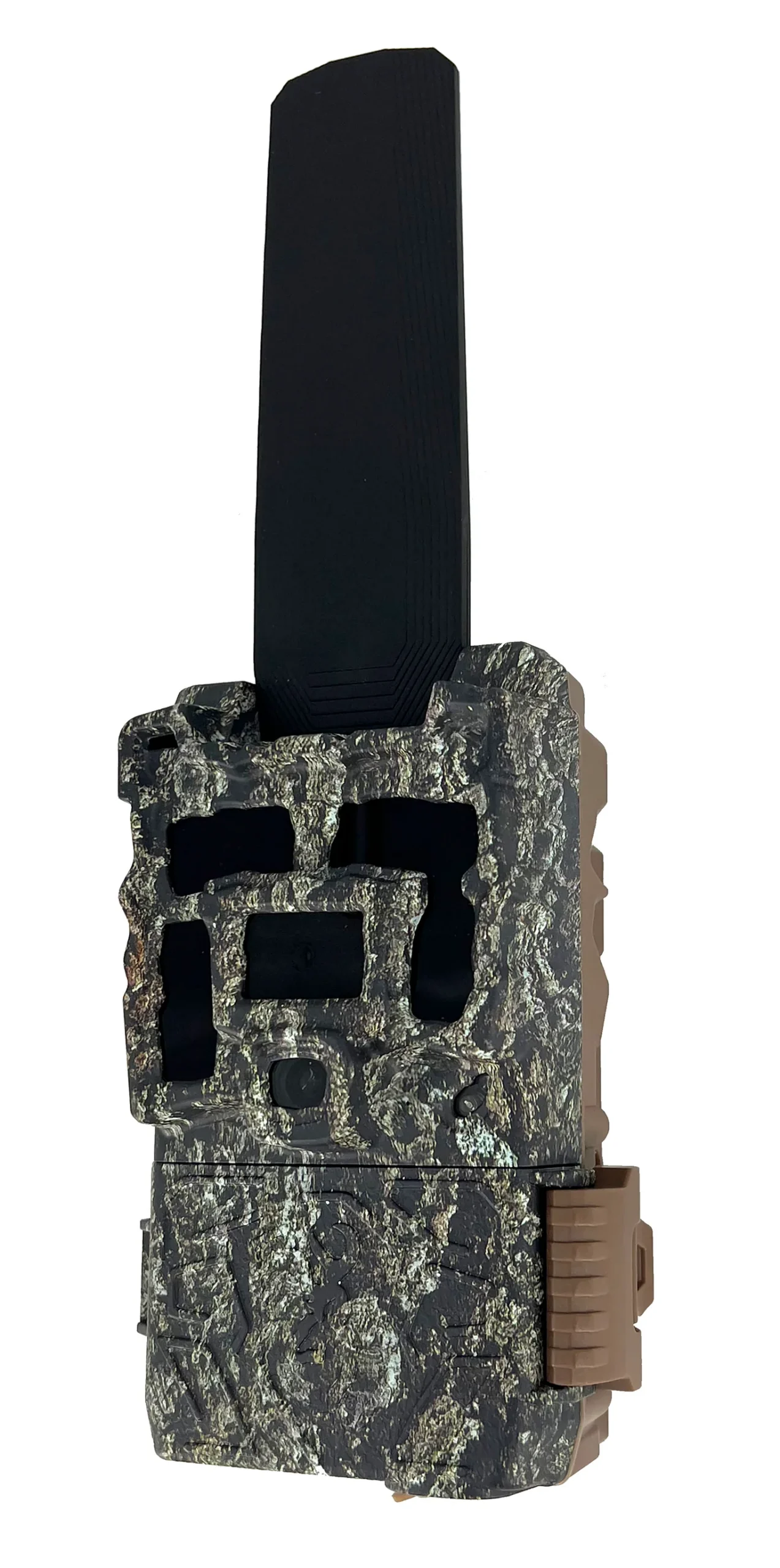
Browning Defender Pro Scout MAX HD DV Cellular Trail Camera
Pros
- Light and compact
- Foldable, centrally located antenna
- Rapid trigger speed
- Excellent photo and video quality
- Outstanding battery life
Cons
- Strike Fore Wireless app needs work
- A little pricey
Specs
- Trigger Speed: .25 seconds
- Detection Range: 100 feet
- Power: 8 AA batteries, 12-volt external power jack
- Cellular Network and Carrier: Automatically selects the strongest carrier in the area
- On-Board Screen: Yes
- Price: $179.99
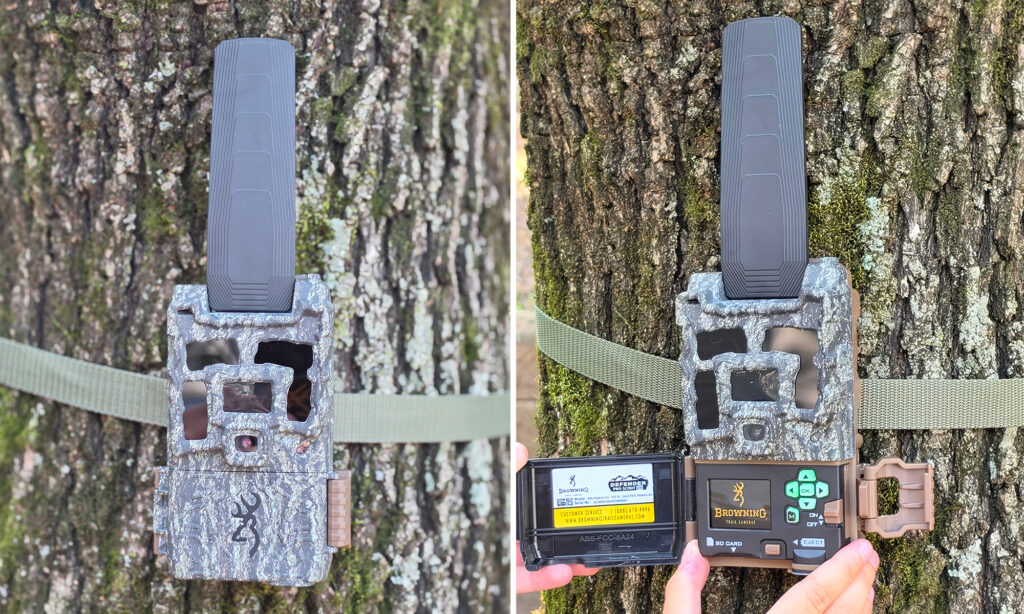
One complaint I’ve always had about cellular trail cameras is the antennas, as they are always breaking off in backpacks or the back seat of my truck. Mother Nature has her way with them, dropping dead branches and crushing skinny, side-mounted antennas. I’ve even broken a couple by catching the antenna in my pant leg while walking to a stand in the dark.
Browning’s Defender Pro Scout MAX HD DV features an innovative, wide, blade-style antenna located in the center of the trail camera. It’s extra-sturdy and folds back and locks into the back of the main camera housing for easy, secure transport. The high-gain antenna also grabbed the most available network more quickly than any other camera in this year’s test.
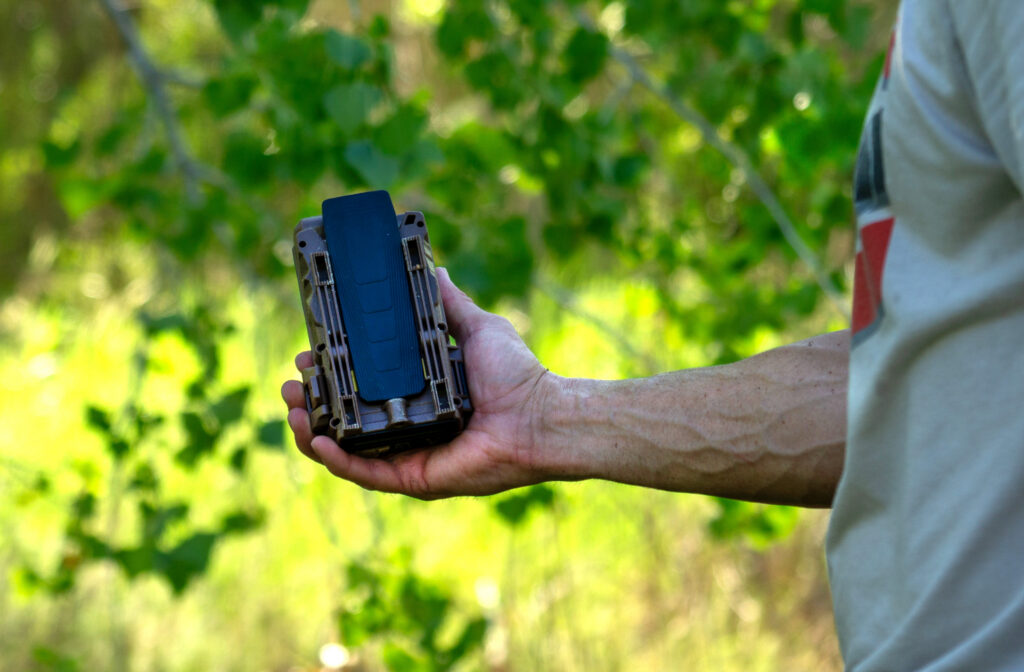
The MAX HD DV uses the same straightforward interface on the camera’s lower housing behind the lock-and-latch door that Browning users are used to and appreciate. The 1.5-inch LED screen is bright, and the soft-push buttons don’t stick. When you turn the camera on, the LED screen displays a 10-second countdown before you close the door.
You have plenty of options when setting up the camera via the Strike Fore Wireless app. I recommend running the camera on Medium photo quality with High video. Avoid the Ultra-quality setting for both photo and video to save battery life, as the quality is plenty good without it. All images are delivered in HD, so there are no grainy thumbnails or waiting for the camera to trigger again to view a high-resolution photo. Videos with audio are ultra-clean. The camera took very few false triggers, and I love the user-adjustable flash.
Over 60 days in the field, Browning’s Defender Pro Scout MAX HD DV captured deer, day and night, in the center of the frame from 10 feet to 120 feet. Browning lists a detection range of 100 feet, but this camera exceeds that distance.

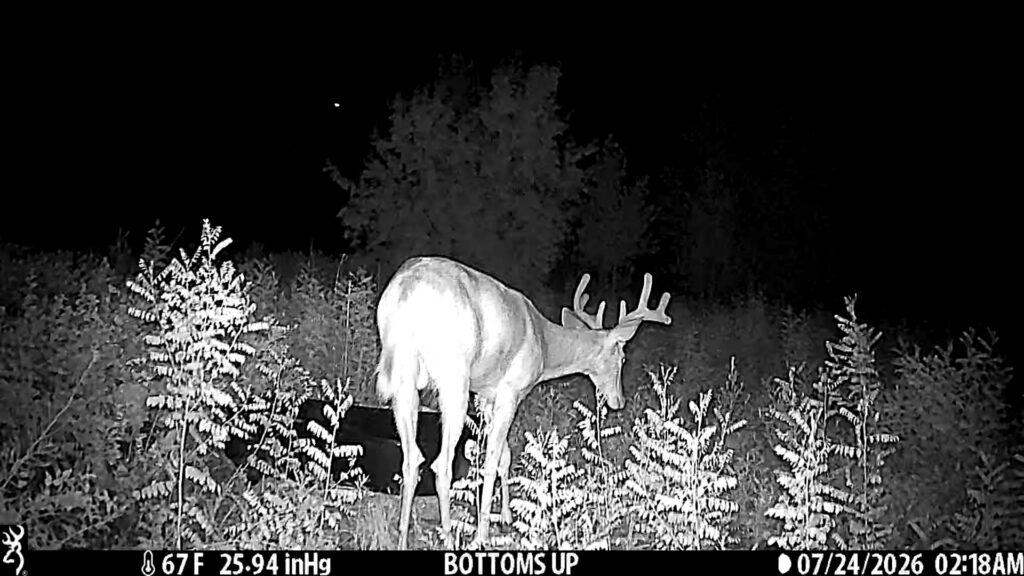
Using just 8 standard alkaline batteries, camera life was excellent, holding at around 90 percent after 60 days afield. At night, the MAX HD DV uses Illuma-Smart technology to adjust the flash for crisp, clear nighttime images, and its detection range remains over 100 feet after dark. This trail camera was built to handle extreme weather and keep delivering images.
The only area Browning Trail Cameras needs to improve upon is its Strike Force Wireless app. The app functions well but struggles to categorize photos in the main image Library when you’re running more than one camera.
Other than that, Browning’s new MAX HD DV is everything I want in a cellular trail camera. It captures HD photos and 1080p video with audio, doesn’t spook deer, and has given me zero hassles after 60 days afield. It’s a tad pricey, but you’ll more than make up for it in batteries.
Best Overall (Tie): Moultrie Edge 4 Solar
best overall
Moultrie Edge 4 Solar
Pros
- Excellent on-board solar panel
- Improved nighttime photos
- User-friendly interface
- Good detection range
Cons
- Poorly designed door latch
Specs
- Trigger Speed: .4 seconds
- Detection Range: 100 feet with IR LEDs
- Power: Moultrie Power Mag II with onboard solar
- Cellular: Network and Carrier: Connects to the strongest cellular network available
- On-Board Screen: No
- Price: $169.99
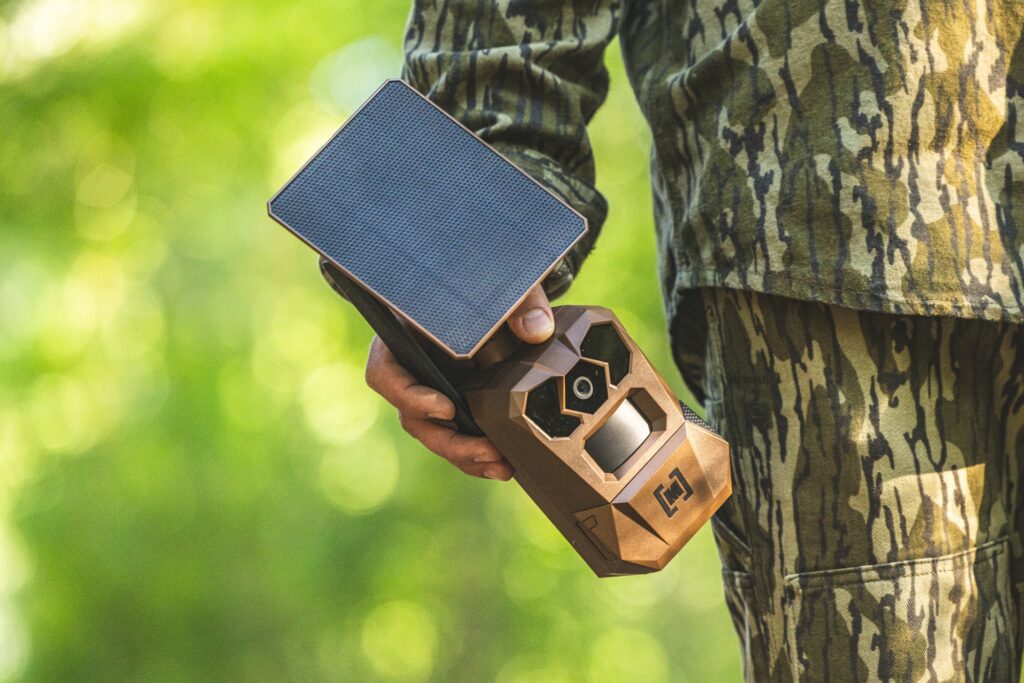
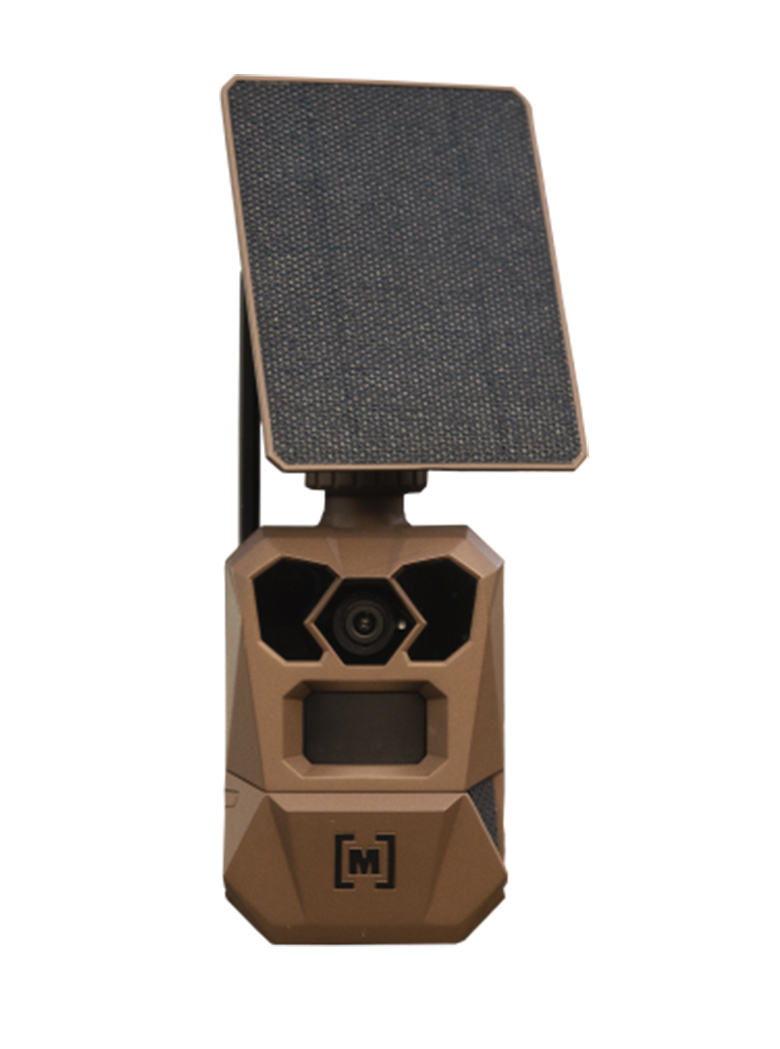
Moultrie’s Edge 4 Solar is the best solar-powered cellular trail camera I’ve ever used, and, at $169.99—including the solar panel—it is priced right. The panel itself is simple and effective; it slides and locks into the top of the camera, and you can angle the it to ensure it gathers as much sunlight as possible throughout the day.
I’ve had two Edge 4 Solar cameras in the field longer than any other cellular trail camera in this year’s test. They were the first cameras delivered to my doorstep, and when I get a new product, I like to start using it right away. Using Moultrie’s $50 (aftermarket) Power Mag II battery pack in tandem with the solar panel, my battery life has never dipped below 80 percent. This means you can stay out of the woods and reduce your human footprint, which is the main goal of cellular trail cameras.
Setup is super easy. Like all the trail cameras in this year’s test, the Edge 4 Solar connects to the strongest available cellular network. I like the new internal interface. The white push up/down, on/off button is gone. Moultrie added a twist-and-turn dial that doesn’t stick. The battery life indicator is back, and once powered on, all three lights (Not Connected-red, Connecting-yellow, Connected-green) turn solid. Then, the Connecting light flashes slowly, and after about one minute, the green Connected light turns solid green. At this point, the camera is fully operational. It pairs seamlessly with Moultrie’s app and is one of the most user-friendly cellular trail cameras in this year’s test.
Aside from the new interface, Moultrie made other changes that earned the new Edge 4 Solar our top honor. The most notable is better nighttime image quality and a reduction in false triggers. Moultrie’s new Night Clarity feature uses enhanced low-glow IR LEDs to help illuminate the backdrop and boost edge-to-edge sharpness. Nighttime images are excellent, and every image, day or night, is delivered in HD.
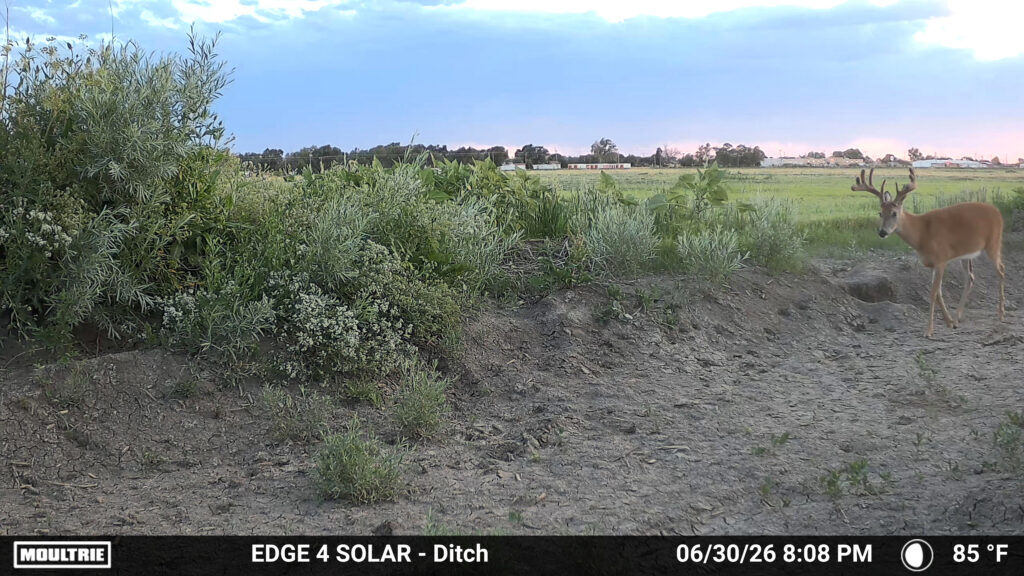
Last year, especially toward the end of my 60-day testing period, my Edge 3 started triggering when nothing was there. The Edge 4 Pro Solar has not followed suit.
Another new and purposeful feature is Buck Shot. Moultrie AI technology detects mature bucks and sends a zoomed-in, max-resolution image. I really enjoyed this feature. Typically, action on my lease doesn’t heat up until mid-October, as few bucks summer on the property. However, this year has been different. A pair of shooter bucks—bucks I passed last fall—are semi-regular on an oat field. The Edge 4 Solar sends me a zoomed-in picture every single time either buck trips the camera.
In a partnership with onX, Edge 4 cameras are instantly pinned the second they are placed. By the end of September, I will have multiple trail cameras—cellular and conventional—spread across the West and Midwest. Too often, I get in a hurry and forget to drop a camera pin when I’m using trail cameras. However, if I’m using Moultrie, I can forget, and the map-pinning technology saves me.
Other standout features of the Edge 4 Solar include a tough-as-nails housing with an IP67 waterproof rating. Both of my Edge 4 Solar cameras have been exposed to torrential downpours and hail. Not a drop of moisture has gotten inside, and after months in the field, the cameras and the panels look like they just came out of the box.
Best Value: SpyPoint Flex-M2
best value
SpyPoint Flex-M2
Pros
- Great value
- Compact and lightweight
- Reliable
Cons
- Comparatively poor battery life
Specs
- Trigger Speed: .4 second
- Detection Range: 90 feet
- Power: 8AA batteries; LIT-22 Power Pack
- Price: $79.99
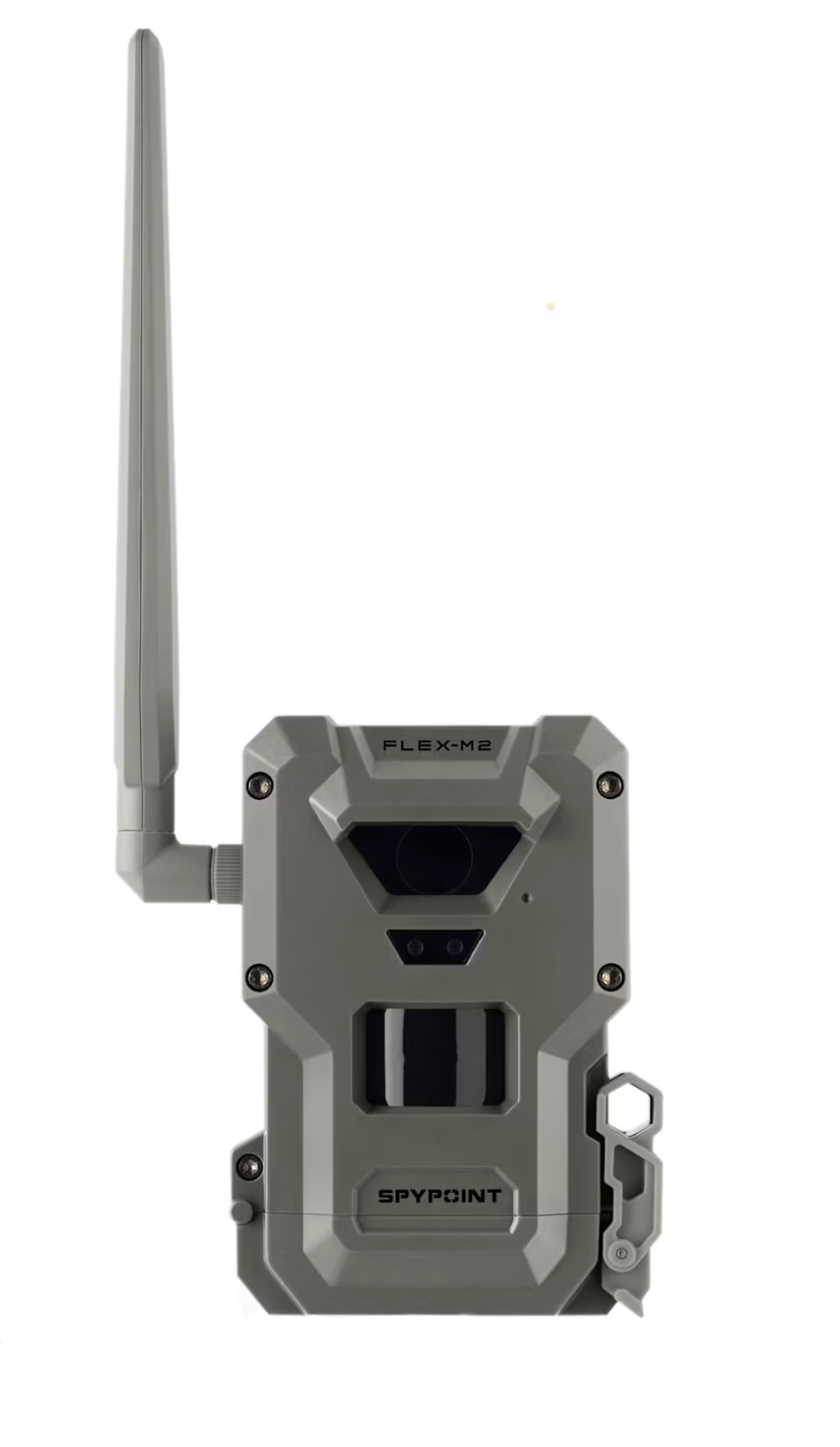
At under $80, SpyPoint’s Flex-M2 is a solid cellular trail camera. It comes with a two-year warranty, and SpyPoint offers a pair of M2s for just $129.99, which is an excellent deal.
My first experience with the Flex-M2 was in Montana while helping a buddy set up his whitetail property. The Flex-M2 is compact, lightweight, easy to set up, and connects to the strongest cellular network in the area. Its .4-second advertised trigger speed proved accurate and reliable in my testing, and the camera captured deer at distances beyond 90 feet.
When I returned from Montana, I added a pair of Flex-M2 cameras to my Colorado property. Both have been on the property for 60 days and send crisp images and 1080p video with solid audio to my phone daily. They have withstood torrid summer heat, rain and hail, and continue to impress me.
One issue I’ve had with both cameras is battery life. Using standard AA alkaline batteries, both Flex-M2 models drained relatively quickly. That said, when I swapped the battery trays for SpyPoint’s LIT-22 rechargeable power packs, battery life improved significantly. Set to Photo-only mode with medium photo resolution and a multi-shot setting of two images per trigger, my battery life has been holding steady above 80 percent.
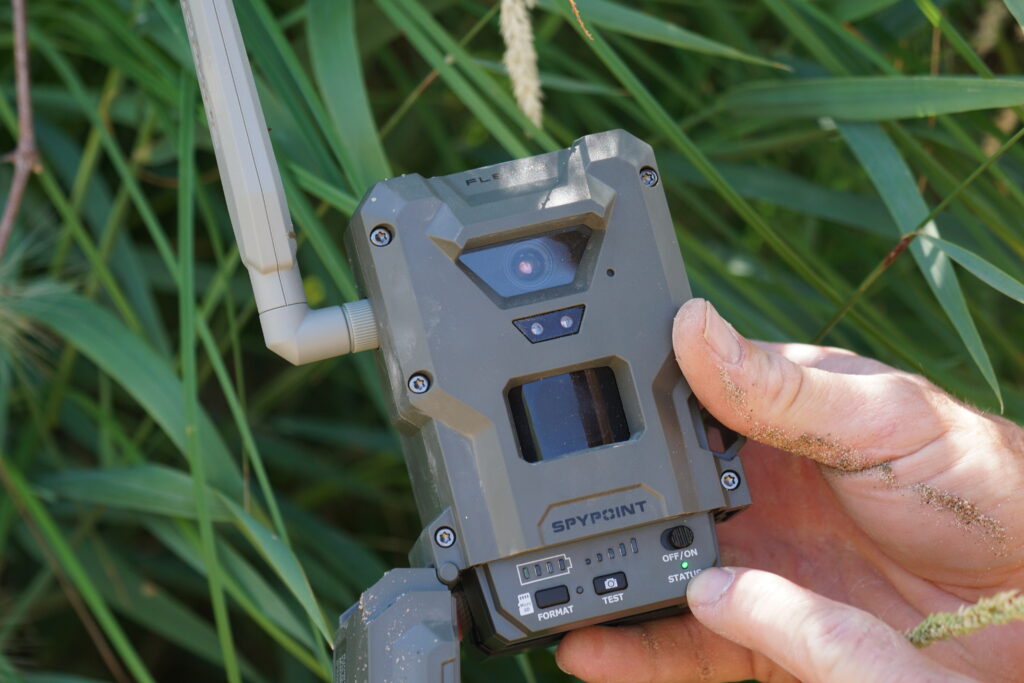
Setup and connection time was straightforward and quick. I like the positive bottom latch lock, and the raised, gridded on/off switch is easy to operate. Once clicked on, the cellular lights blink until the camera receives a signal. Next, the status light turns blue. Once connected, the blue LED extinguishes, and the green LED on the outside of the camera blinks for 10 seconds. Once the green light stops flashing, the camera is in transmission mode.
The Flex-M2 was the smallest cellular trail cam in this year’s test, and the long antenna is detachable for easy transport. Once you place your M2 in the field, it immediately shows up on the SpyPoint app map feature.
The camera occasionally produces false triggers, but I was able to reduce this by setting the sensitivity to Medium, and the camera still picks up deer-sized game beyond 90 feet. The BuckTracker feature has done its job. Buck pics are slugged correctly, and I’ve yet to have the technology slug a doe as a buck. BuckTracker even correctly identified and a 3-inch spick at 64 feet.
In the end, Spypoint’s Flex-M2 gets our 2026 Best Value award because while it might not have all the bells and whistles of other cell scouters, it does the job—and does it for about half the price of several others.
Stealthiest Camera: Tactacam Reveal Pro 4.0
Tactacam Reveal Pro 4.0
Pros
- Improved on-camera LED screen
- Exceptional battery life with aftermarket R5 and R10 battery packs
- High-definition image and video quality
- Durable design
Cons
- Power on/off button is finicky
- Takes a long time to start transmitting images to smartphone
Specs
- Trigger Speed: .35 seconds
- Detection Range: Low-Glo 96 feet; No-Glow 80 feet
- Power: 12 AA batteries, R5 and R10 rechargeable battery packs
- Cellular Network and Carrier: Automatically selects the strongest carrier in the area
- On-Board Screen: Yes
- Price: $159.99
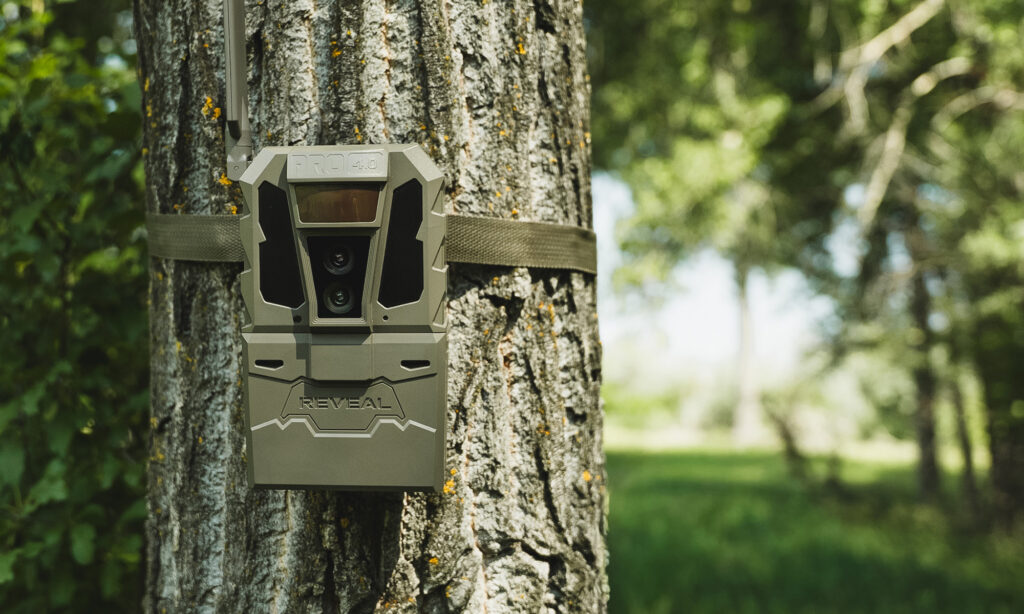
Last year, Tactacam’s Reveal Ultra took home top honors in our cellular trail camera test. Its predecessor, the Reveal Pro 4.0, nearly earned the cell-cam maker a repeat performance, but fell just a tad short. It is, however, a cell scouter that every hunter should take a close look at.
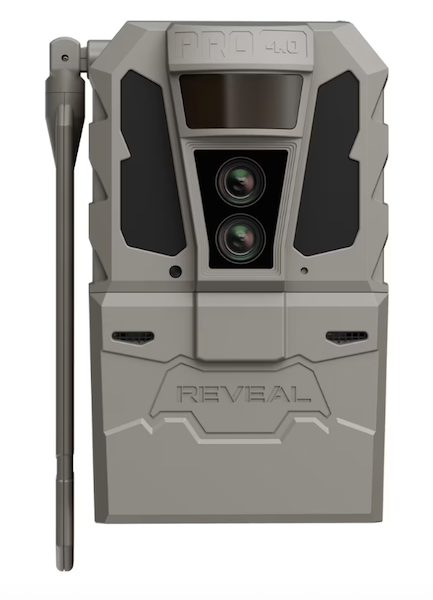
Like the Ultra, the Pro 4.0 features Low-Glow and No-Glow flash settings. I love this option. Low-Glow works great for fields, logging roads, or any camera location where detection range needs a bump. No-Glow is ideal for tight timber trail crossings, river crossings, scrapes, or any area where detection range matters less and stealth matters more. The Reveal Pro 4.0 doesn’t spook deer. When set in No-Glow, deer don’t even glance at the camera, and new Dual Image Sensors improve day and nighttime photos.
Another stealth boost is that the slight click that previous Reveal models produced when capturing a nighttime image is gone. According to Reveal, the Dual Sensors—one stacked on top of the other—produce cleaner nighttime images without the audible click associated with a low-light filter. Once you set the Reveal Pro 4.0 in the woods, it’s a ghost, which is just what you want.
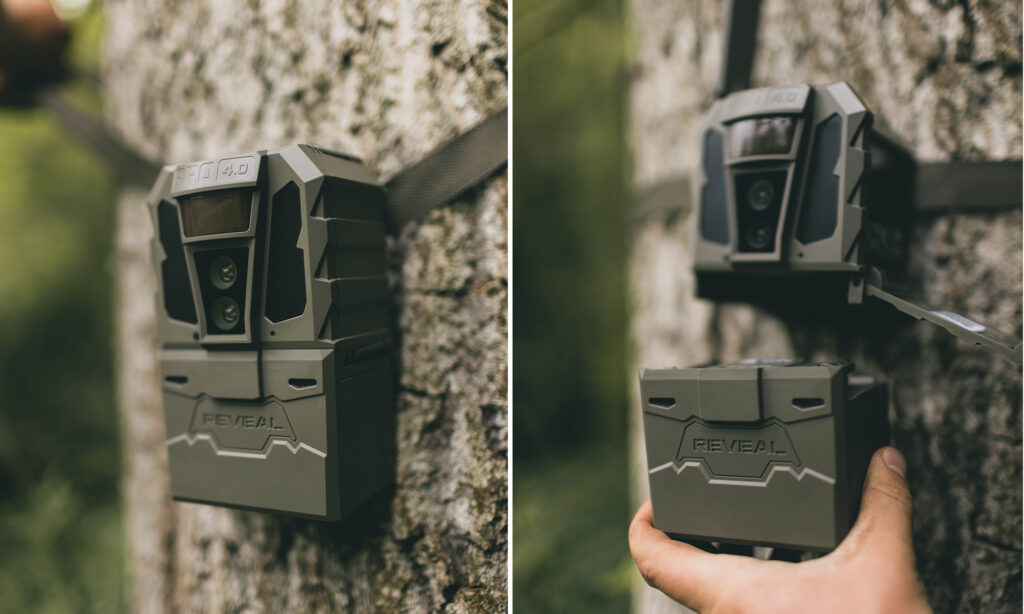
Battery life on last year’s Ultra model was solid and given that the Reveal app lets users select camera sensitivity levels between 0 and 9, false triggers have always been few and far between. However, Reveal wanted the Pro 4.0 to have a longer run time, especially when battery-draining features such as larger image sizes, longer video durations, and Live View Mode are used.
The battery-life boosting answer is Reveal’s FlexPack R5 and R10 Power Systems. The new interface location on the camera’s right side, in the upper-right corner, lets the bottom of the camera (the battery box) pull away. The design was well thought out and is an overlooked feature of the new Pro 4.0. With the battery box removed, aftermarket R5 (5,000 mAh) and R10 (10,000 mAh) Power Systems plug in much like rechargeable batteries found on power tools.
I ran the camera for 15 days using standard Alkaline AA batteries and for 15 days using the FlexPack R5. There is no question the Power Systems increase battery life and are worth the money. During its 15-day run time, the 4.0 with R5 triggered 332 times. I requested 28 videos and purposely activated Live View 10 times to further test battery life. At the end of the test, the camera still had 95 percent battery life remaining.
One small blip with this camera is that of all the cellular models I tested, the Pro 4.0 had the slowest connection time. I ran a pair of Pro 4.0s, and the average time from powering on the cameras to receiving my first test photo in an area with 4 bars of AT&T 5G LTE service was 12 minutes. I’m not sure what that was about, but both cameras struggled to get a signal and start transmitting images. Once the camera were fully connected, though, trigger speed was excellent, detection range was spot-on, and images and videos were clear and colorful.
Best Photo Quality: Stealth Cam Deceptor Max 3.0
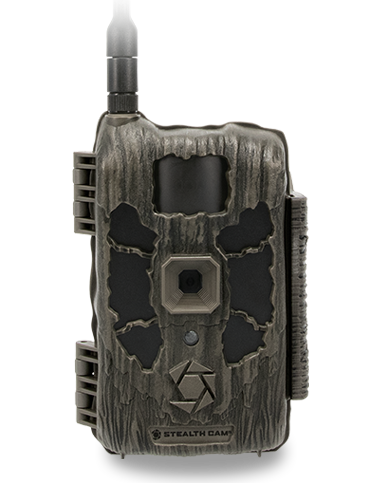
Stealth Cam Deceptor Max 3.0
Pros
- Excellent photo and video quality with audio
- Extended battery life
- Rapid trigger speed
- Very few false triggers
Cons
- Weak antenna
- Internal interface is hard to access
Specs
- Trigger Speed: <.3 seconds
- Detection Range: 100 feet
- Power: 16AA batteries
- Cellular Network and Carrier: Connects to the strongest available cellular network.
- On-Board Screen: No
- Price: $119.99
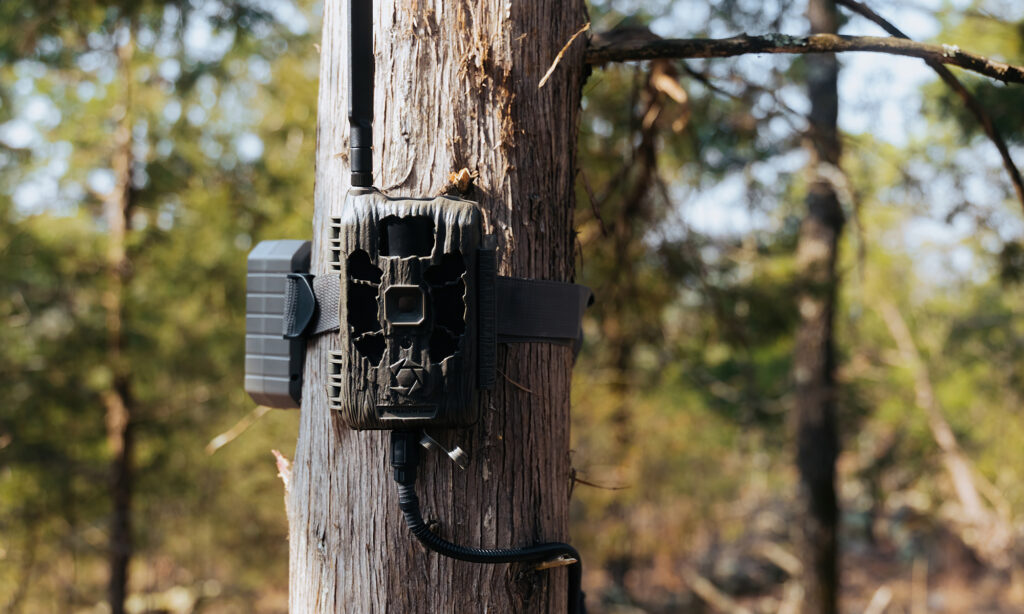
If it weren’t for the SpyPoint’s crazy-low price, Stealth Cam’s Deceptor Max 3.0 would have won our Best Photo Quality and Best Value awards. At just under $120, this cellular trail camera should be on every hunter’s radar. Past Stealth Cam cellular models I’ve test produced too many false triggers and had relatively poor battery life. Not so with this one. After 60 days in the field, the Deceptor Max 3.0 has sent only three images to my phone that didn’t show a deer, thanks to the camera’s new False Trigger Filter feature, and after 723 photos and 23 20-second videos, the battery is at 90 percent.
With its No Glow flash, the Max 3.0 has not spooked deer, near or far. Trigger speed is excellent, and with the Command app and the camera set to Standard blur reduction, images have been crisp and clean. The camera captured a doe blazing past at 1:30 a.m. in the center of the frame. The doe was in focus, and 15 seconds later, so were a pair of coyotes hot on her trail.
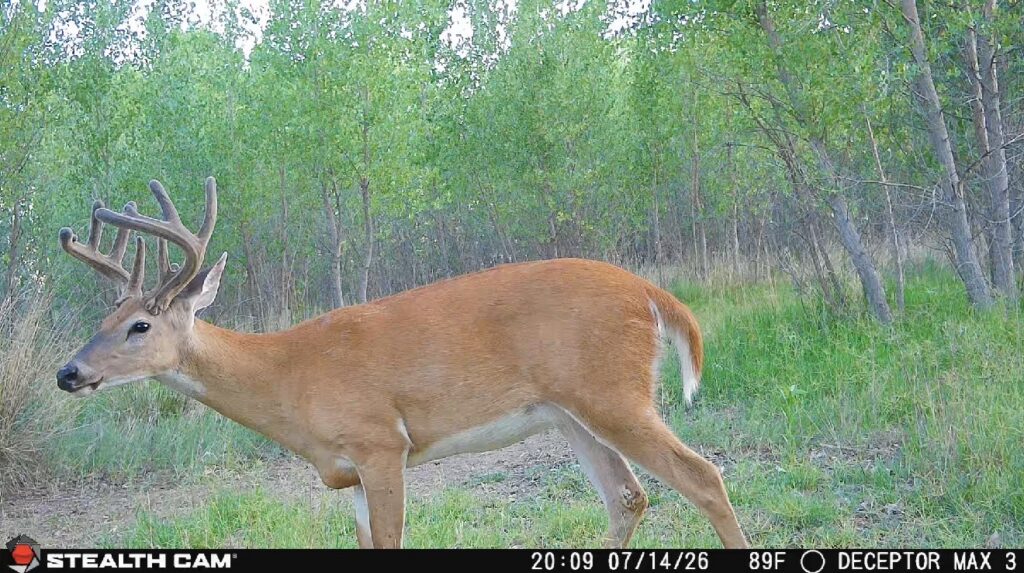
The Deceptor Max 3.0 lets users set photo quality to 50MP. That makes for really good pics, but it’s more than most folks need and eats up battery life. I tested the camera at 4MP and 8MP, and the Max 3.0 produced the clearest, brightest, and most colorful images in this year’s test.
A cool feature that Stealth Cam added is Rack Alert, which sends a message to your smartphone letting you know the exact moment a racked deer steps in front of your Max 3.0. This feature worked great on my Colorado lease, and my Oklahoma buddy purchased three Max 3.0 cameras and set them over feeders. He told me he never looks at his image library until Rack Alert informs him. He trusts the technology, and so do I.
Covert Interceptor Solar
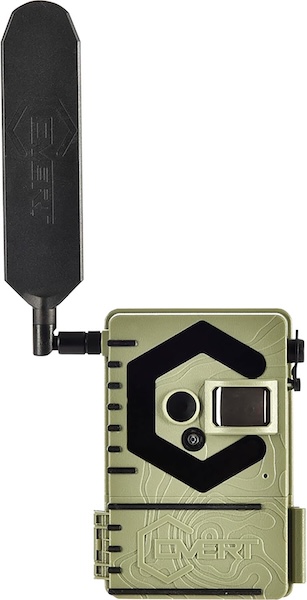
Covert Interceptor Solar
Pros
Rapid-fire trigger
Real-time video
Upgraded antenna pulls poor cell service
Cons
The solar cord is big, long, and clunky
Specs
- Trigger Speed: .4 seconds
- Detection Range: 90 feet
- Power: Solar backed up by 8 AA batteries
- Price: $219.99
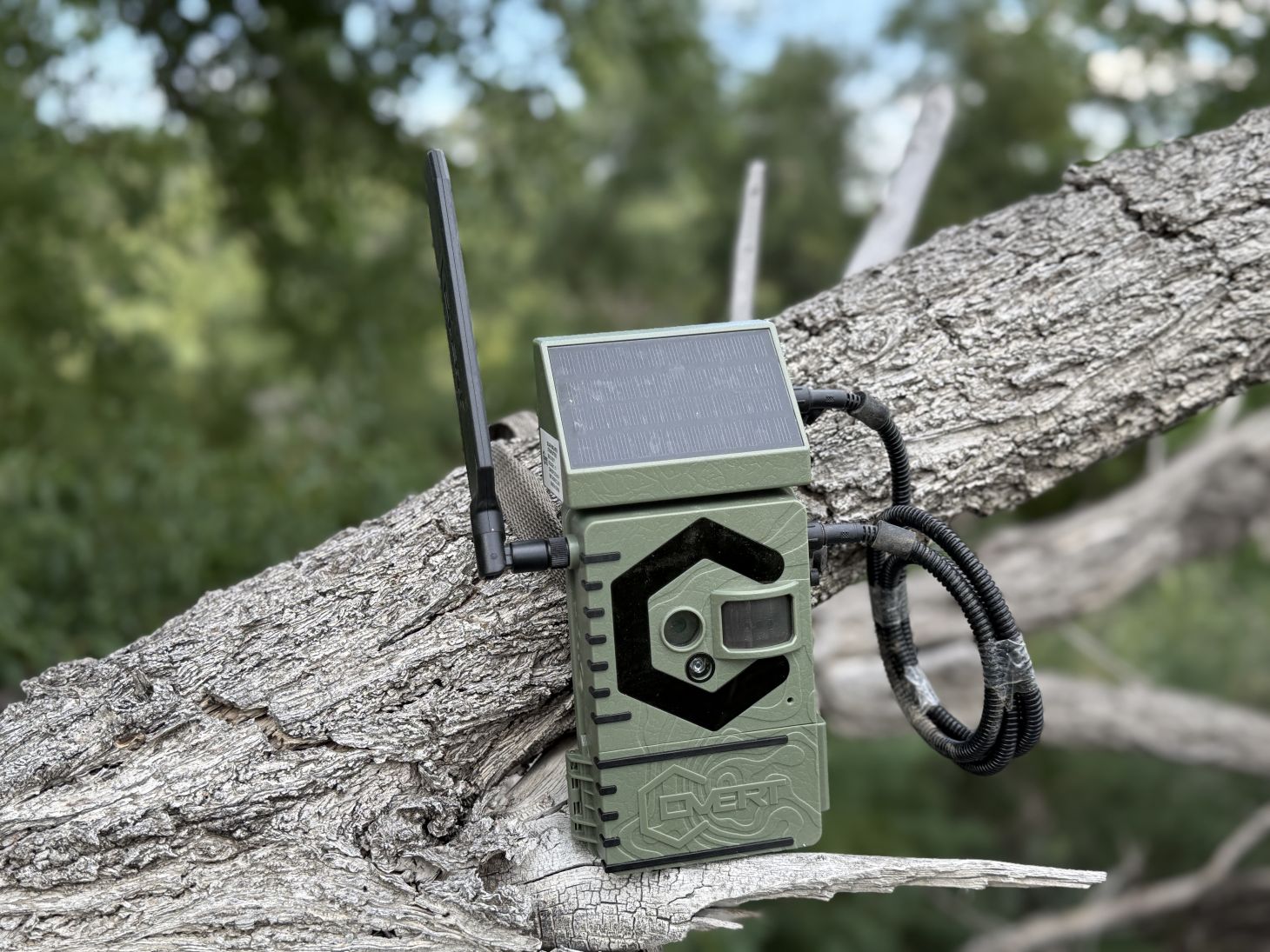
The Interceptor is not new for this year, but it one of our favorites from last year’s test, winning our Best Trigger Speed award. Covert upped its game 2025, producing a new solar cell cam scouter that’s lightning fast and offers tons of great features. The Interceptor Solar was easy to set up. Downloading the Covert app, building an account, and getting the cam operational took less than five minutes.
The camera’s paddle-style antenna proved rigid and robust, even in heavy winds. Covert lists the trigger speed at .4 seconds, but my testing showed an average of .24 seconds. That data was obtained using two different stopwatches, as well as a chip time card that runners use.
When charged to full, the camera’s on-board solar keeps the unit running, even in dense timber. Several times, the Interceptor got down to less than 30 percent battery life at night, but it would still center images in the frame, and deliver good-qualiy photos and real-time 2K video. During the day, even without direct sun exposure, battery life would rise to 80 percent. When set on a pond and alfalfa plot, the battery never dipped below 60 percent and would achieve a full charge during the day.
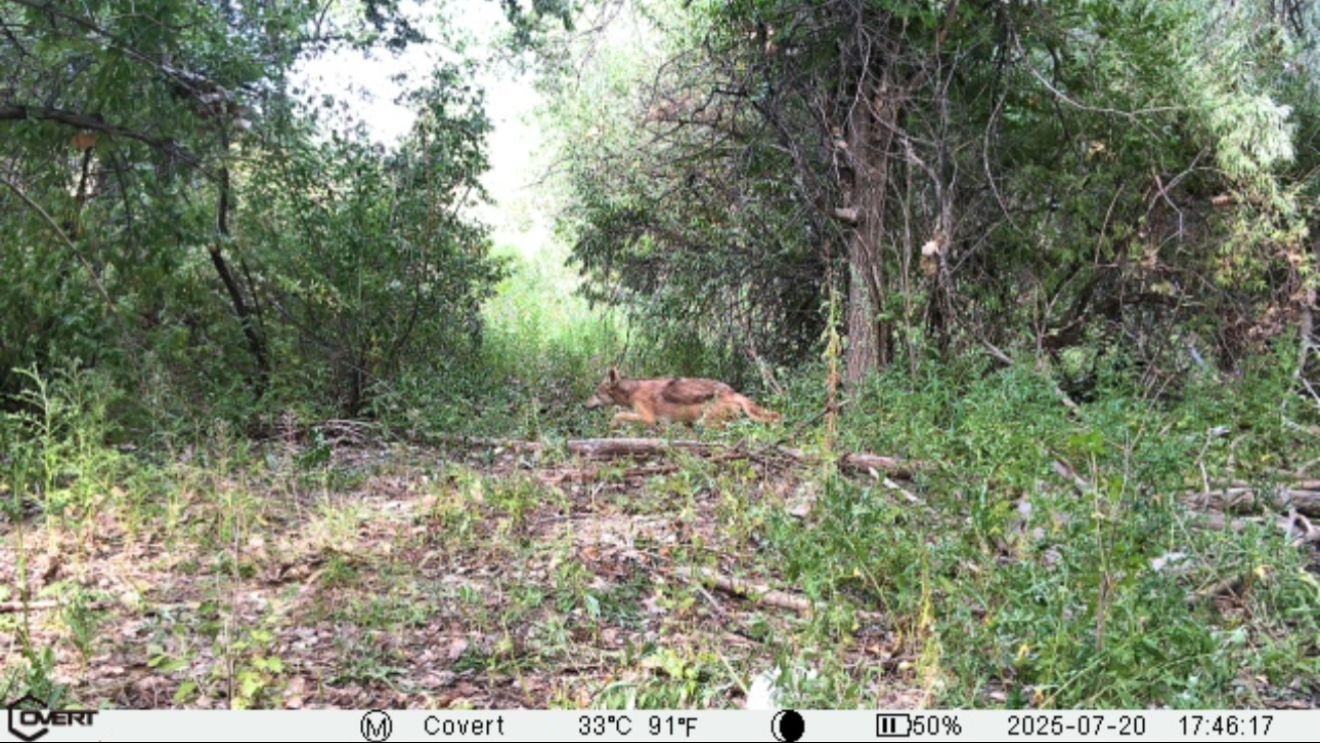
Covert lists the effective flash range at 90 feet, and my testing confirmed this. I appreciate the 2-inch screen, though very little of the actual setup work is accomplished using the camera. Everything is done in the Covert app. The Covert Interceptor Solar features on-board GPS, so you can’t lose your camera, uses 8 AA batteries as backup, and comes with a 2-year warranty.
My only complaint on this otherwise excellent camera is the long and bulky cord that connects the on-board solar unit to the camera. Be sure to take some Gorilla tape or some zip-ties to roll the cord up and tuck it out of the way. But that’s the end of my quibbling. The camera took only 11 false images during its 20-day testing period and captured a full-sprint coyote in the center of the frame, with no blur. The camera does have species recognition, which works well, but it is a service that costs extra, and I would deactivate it. Like most hunters, I know what a doe and buck deer look like.
Cuddeback CuddeLink L-Series
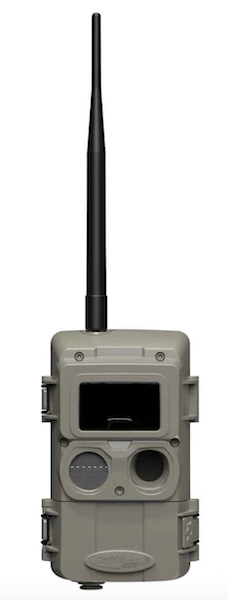
Cuddeback CuddeLink L-Series
Pros
Excellent trigger speed
Good image clarity
7 sensitivity settings
Cons
Requires a minimum of two cameras
Longer setup and deployment time
Specs
- Trigger Speed: .25 seconds
- Detection Range: 100 feet IR model
- Power: 4 D batteries Home and 4 D batteries Remote
- Price: $130 Home; $150 Remote
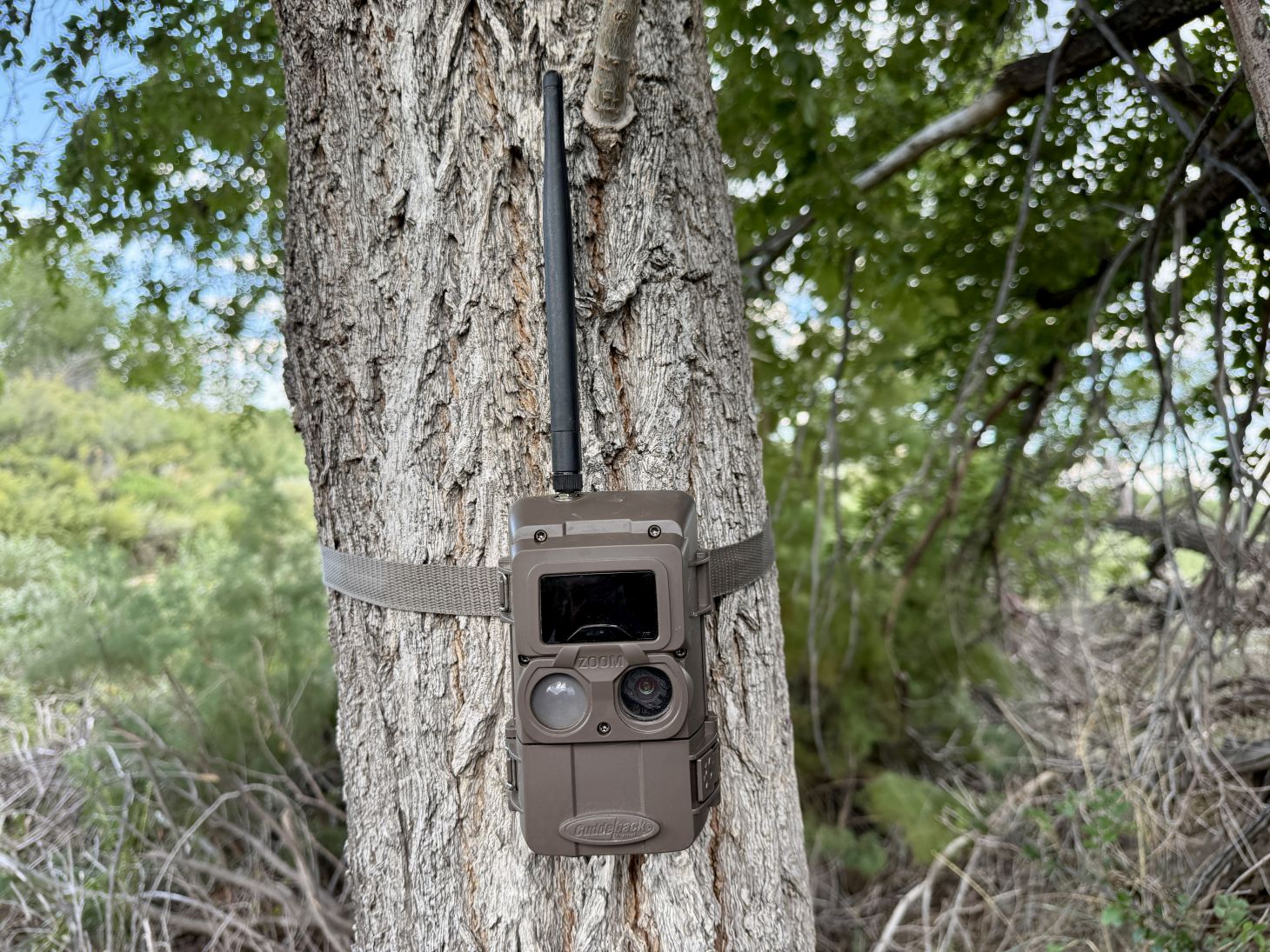
Cuddeback continues to offer it’s CuddeLink system. The nice thing about Cuddelink is that once you have the Home camera and a cellular plan, you can run as many as 24 cameras on that same plan, which sarts as low as $10 per month. I opted for the $40 plan to receive unlimited photos. I tested the CuddeLink L-Series Cell Home unit ($130) and CuddeLink L-Seires cell cam ($150), so my initial investment was more. Still, I could add additional CuddeLink-compatible cell cameras (up to 24) to my $40 per month plan.
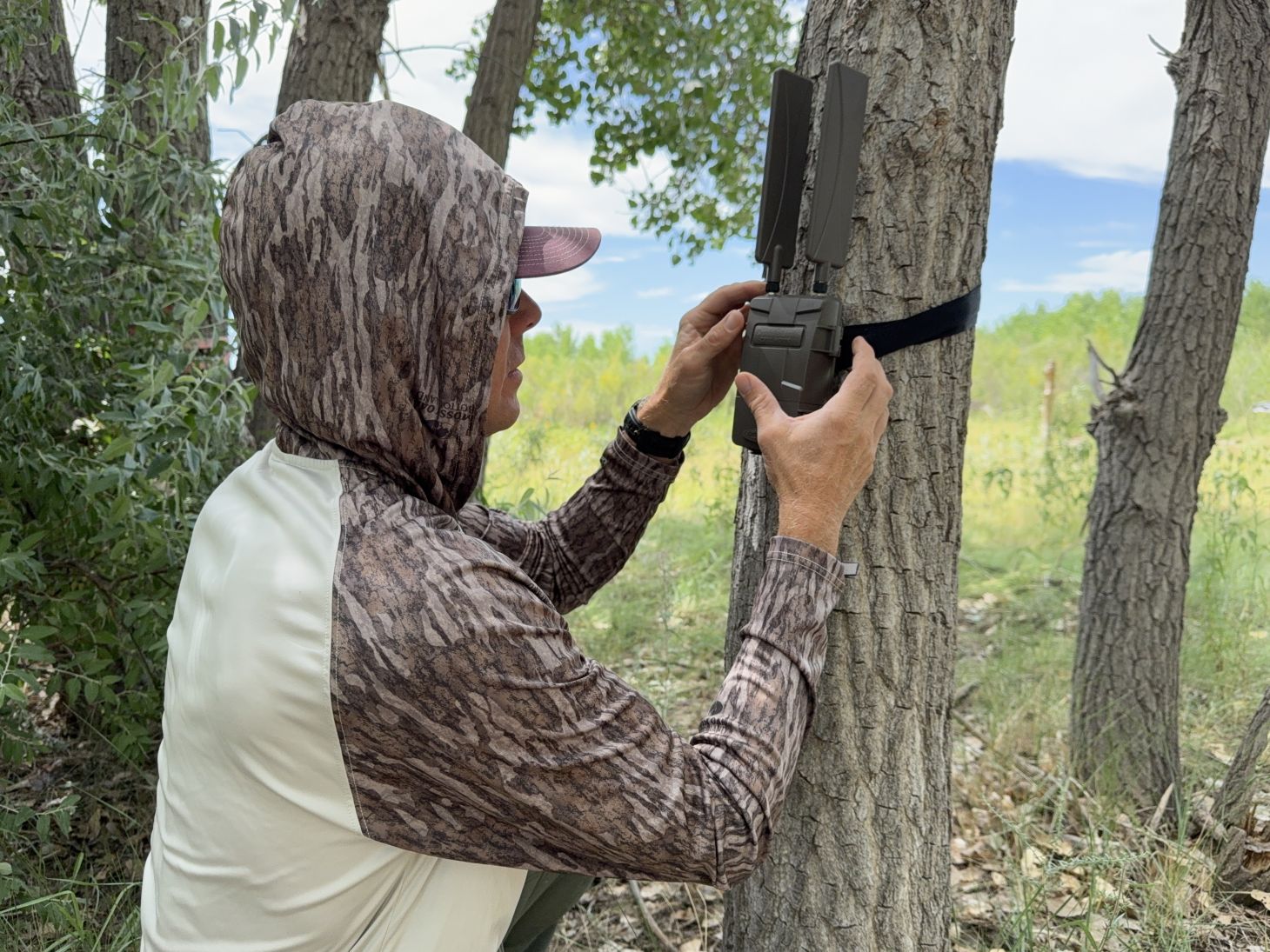
Operationally, the Home (CuddeLink) and Remote (L-Series) systems are sound. However, you’ll need to read heavy instruction manuals to get them linked to the same chain and go through the settings. It’s not a problem, and it’s not difficult. However, it will take you some time to learn the ins and outs of the system. This duo took much longer to learn about and get in the field than other cameras. That said, one the initial system is setup, it’s easy to add more cams and daisy chain them into the system.
The CuddeLink L-Series comes in multiple models. I tested the Zoom IR. The photo quality is only decent, but what I do like about the camera is that it uses a center-angle Fresnel lens that increases detection range and zooms the photo in. I’m not in love with having the Home camera and then linking cameras to it, especially cellular, but the system does work and does have the potential to save you money.
Bushnell CelluCore Live
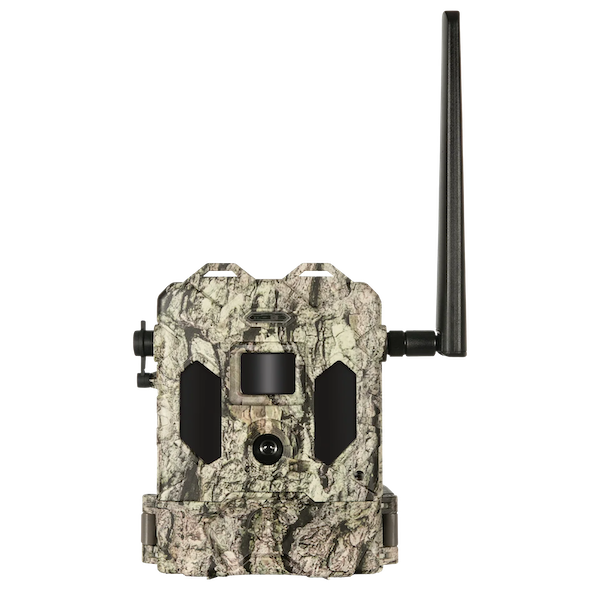
Bushnell CelluCore Live
Pros
Good trigger speed
Solid daytime pics
Internal screen viewer to aid setup
Among the most simple setups in the test
Cons
Fairly spendy in comparison
Night pics suffer a bit at longer ranges
Specs
- Trigger speed: 0.2 seconds
- Detection range: 80 feet
- Power: 12 AA batteries
- Price: $220
This camera is not new by any means, but don’t let that stop you. High-quality photos, a lightning-fast trigger, and easy setup are a big pluses with the CelluCore Live. The impressive 0.2-second trigger speed helps capture sharp images and can keep up with fast-moving deer. Plus, the fast image recovery time and subtle infrared flash elevate this cam to the next level. The only thing keeping this camera from the top models is a moderate detection range, and the data plans are, well, not much. It’s not cheap either, though you may be able to find deals.
How We Tested Cellular Trail Cameras
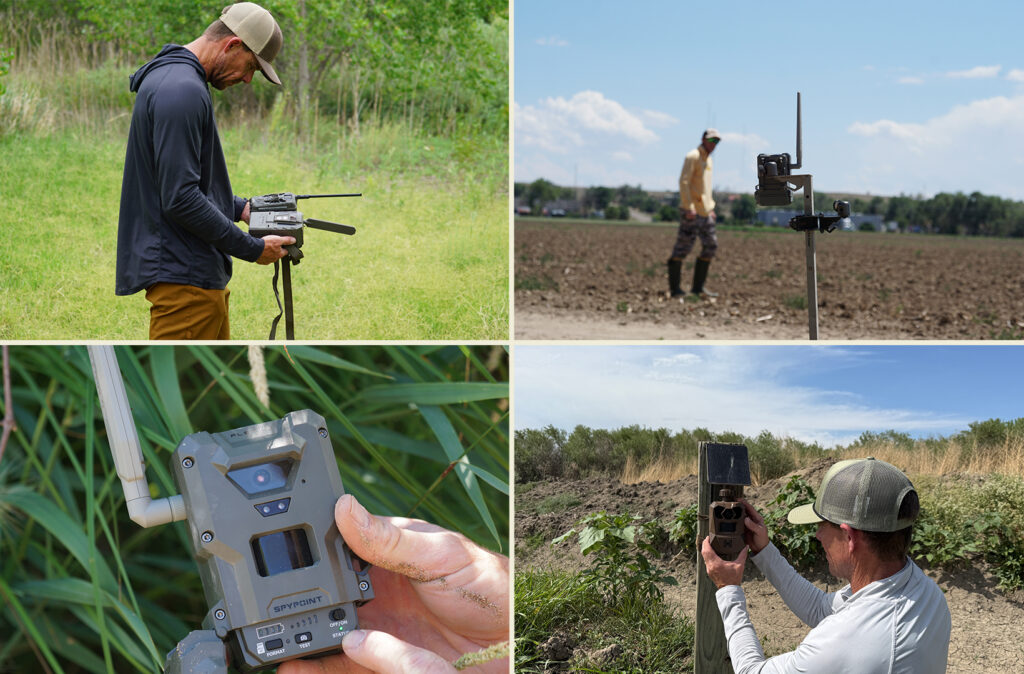
Thanks to some fantastic friends, I have access to over 700 acres of prime Colorado whitetail dirt, which has proven to be the perfect testing ground for our annual cellular trail camera test. There are plenty of deer to get pictures of and a combination of summer heat, thunderstorms, wind, and extreme temperature fluctuations tests the cameras’ durability.
Since I conducted last year’s cellular trail camera test, I had all the apps on my smartphone. All I did was add cameras, adjust sensitivity levels, check connectivity, and dial in the settings. For testing, I set all cameras to photo resolutions between 4 and 8MP, 1080p video, and two images per trigger.
Before field deployment, I tested all the cams in my backyard. I wanted to make sure they paired with their corresponding app and that photos were transmitting. I set cones at measured distances and walked, jogged, and sprinted past each camera at 10-foot intervals, from 20 to 120 feet. I repeated this process in the field as well. I tested trigger speed and detection zines during daylight and nighttime hours.
In the field, I rotated all the cameras between four areas: a three-way trail intersection, the lower end of an alfalfa plot, a pond, and a community scrape deer use year-round. Throughout the test—over the course of 60 days—I evaluated each camera’s durability, ease of setup, price, battery life, image and video quality, detection range, and trigger speed. Finally, when all the testing and evaluating is done, I picked our winners.
What to Look for When Choosing a Cellular Trail Camera
Ease of Setup
Ease of setup and quick connection to the camera’s corresponding app save time and frustration. Not every hunter is a tech wizard, and thanks to the simplicity of this year’s camera crop, you don’t have to be. The only camera I had to fight with in terms of connectivity and transmission was the Reveal Pro 4.0. However, that fight was minor.
Picture & Video Quality
Many cell-cam makers are skipping grainy thumbnails and going straight to all-HD all the time. I like this. Cell cams have made me very impatient. When I get a picture of a buck, I don’t want to download a grainy image to my computer and then study it for hours trying to determine whether the buck is a shooter while I wait for a high-resolution image to come through. Cams that automatically send hi-res pics get bonus points in my book. Choose a cellular trail camera that lets you adjust image and video quality and set both high enough to avoid compromising image quality but not so high that battery life suffers.
Trigger Speed
Trigger speed matters, especially during the rut. Many of today’s cellular trail cameras have rapid trigger speed, quicker recovery times, and some type of anti-blur technology. Summertime deer don’t often test a camera’s trigger speed, but during the rut, when a doe comes running past, you want that doe centered in the frame, and the camera needs to recover fast enough that the big buck hot on her heels gets his picture taken too. The cellular trail cameras I tested this year have fast triggers and quick recovery times.
Adjustable Flash
I prefer cellular trail cameras with an adjustable flash. Some come with adjustable flash settings, while others adjust the flash setting automatically based on the time of day. Stay away from high-glow LEDs and any cell camera that produces a flash that spooks deer. All the cameras I tested this year didn’t bother deer a bit.
Detection Range
Cellular trail-cam manufacturers embellish a lot of things. One thing they don’t embellish—or at least didn’t embellish this year, is detection range. If anything, they underplayed it. Detection range is the maximum distance at which a camera will detect an object. Typically, the farther an object is from the camera, the larger it needs to be to be detected by the camera. Anything at over 100 feet is impressive.
App Quality and Bonus Features
I like a very basic and straightforward app that allows me immediate access to the camera’s settings. I like to try all the technologies and features of every cell camera I test. The better the app, the easier it is to swap between settings, organize photos, etc. Many of today’s cellular trail cameras have fancy features. Take advantage of them and see if you find them beneficial. Some of them drain battery life; others don’t. Find out what works best for you and the area you hunt.
Why Trust Us
For more than 125 years, Field & Stream has been providing readers with honest and authentic coverage of outdoor gear. Our writers and editors eat, sleep, and breathe the outdoors, and that passion comes through in our product reviews. You can count on F&S to keep you up to date on the best new gear. And when we write about a product—whether it’s a bass lure or a backpack—we cover the good and the bad, so you know exactly what to expect before you decide to make a purchase.

All new! 1871 Club Field Trips