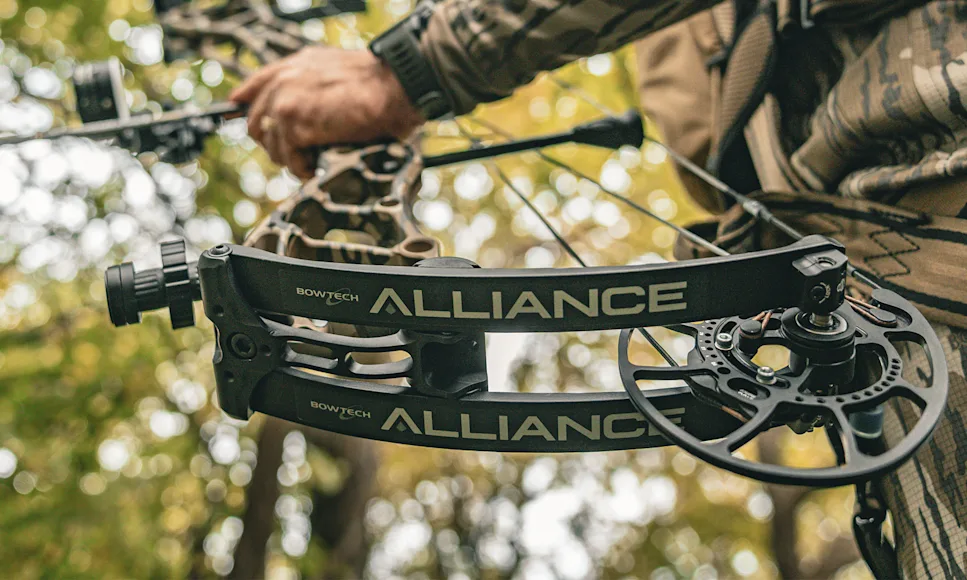
For 2026, Bowtech offers two versions of it's new flagship compound bow, the 30-1/2-inch-axle-to-axle Alliance and the 33-inch Alliance 33. Several companies are giving hunters a short-or-long option this year, and it makes sense. If you spend most or all of your season chasing whitetails and turkeys, a compact, maneuverable, and relatively lightweight bow, like the Alliance, should work well for you. If you roam the West, where shot distances are typically longer, a bow with more length between the axle pins is probably the way to go.
I've spent the last few weeks testing the shorter version of Bowtech's latest. Although I’m not typically a fan of bows with less than 32 inches between the axle pins, the 30-1/2-inch-axle-to-axle Alliance has a lot going for it. Bowtech's Proven 34 won our F&S Best Draw Cycle award last year. The DeadLock Cam System was a big reason why, and these cams are back on the Alliance, with a few positive modifications. When the wind is calm, and you know a big buck can hear a pin drop, or when cold weather has you wrapped up like a Gordita, a silky draw matters—and this bow delivers. Whas else does the new Alliance have under the hood? Here's a closer look.
Bowtech Alliance Specs
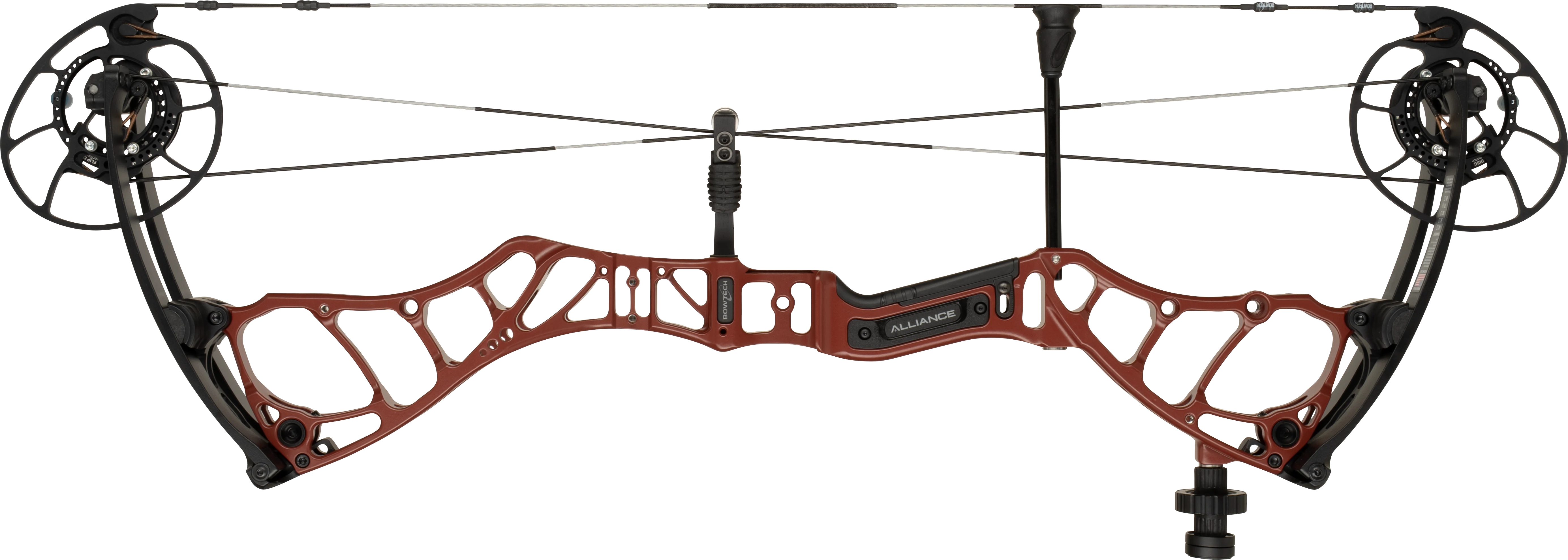
Axle-to-Axle: 30-1/2"
Weight: 4.09 lb.
Draw Lenght: 26-31
Max Draw Weight: 60, 65, 70, 75 lb.
Advertised Speed: 338 fps
MSRP: $1,499
Bowtech Alliance Overview
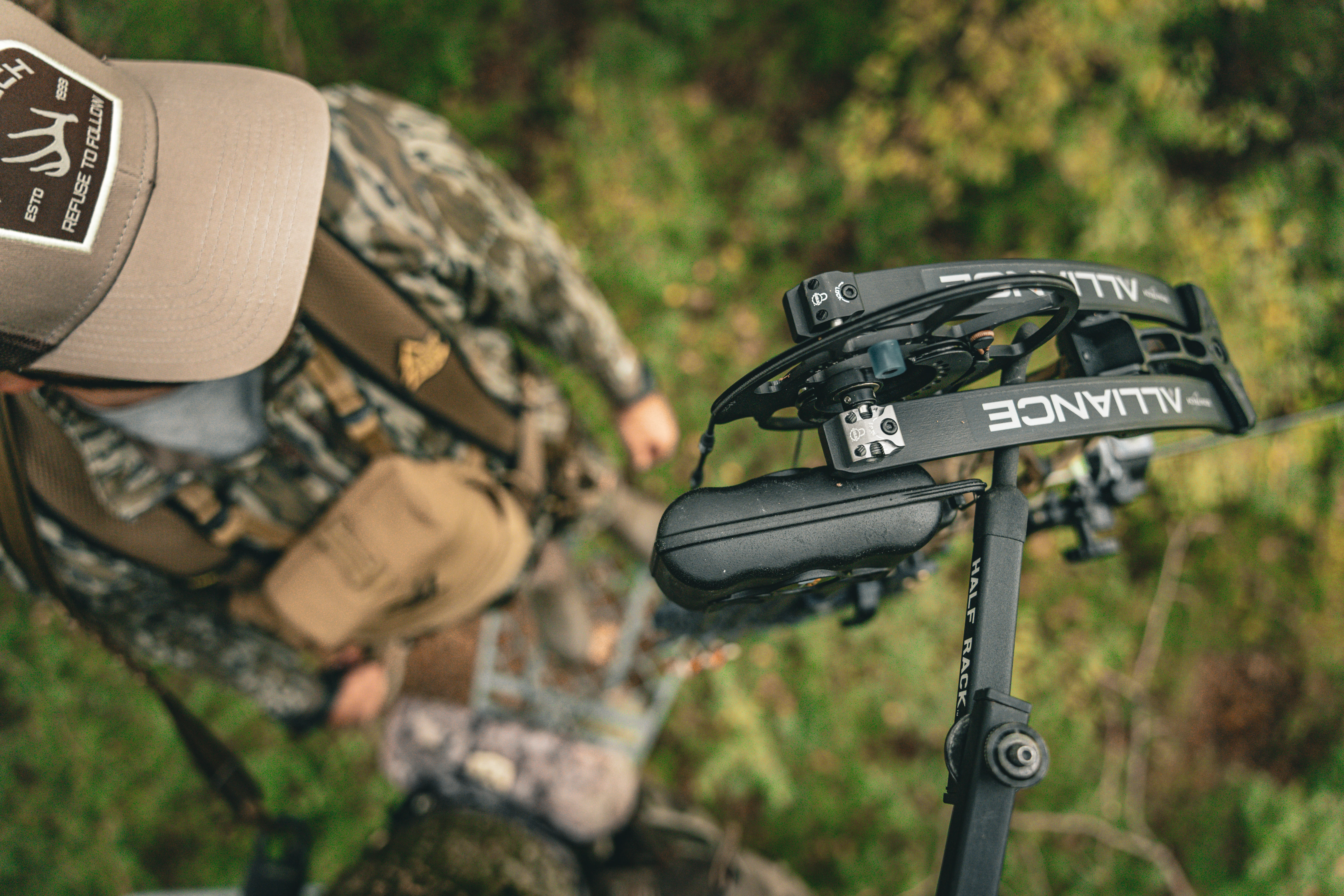
First thing I noticed when unboxing the Alliance was the fit and finish, which is, predictably, excellent. Bowtech offers multiple color options—camo and solid—including its new Red Dirt color. As mentioned, the bow is built around Bowthech's proven DeadLock Cam System, which includes FlipDisc technology. The cam system promotes a smooth, fluid draw and offers no-bow-press-needed tuning. If you can use an Allen wrench, you can tune Bowtech bows.
Bowtech, however, did upgrade the DeadLock System by repositioning the axle assembly, adding larger locking and tuning screws, boosting lockdown with a dual-locking system, and making the system easier to use with enhanced laser-etched reference marks. The riser also saw some changes. Bowtech has never been in the light-bow business, and though the 30-1/2-inch axle-to-axle Alliance isn't heavy and Bowtech noticeably shaved riser weight, it's still a tad over 4 pounds. I do like the upper and lower stabilizer mounts, and Bowtech brings back its CenterMass Sight System and IMS rest mounting.
I'm not a big fan Bowtech's GripLock grip, which is back on the Alliance. That said, two locking screws do let you adjust the grip angle, adding customization. Though the grip still feels thick to me, it narrows at the throat, and a rubberized pad gives it a good feel in the hand. Bowtech also added side-panel inserts to the grip, which allowed Bowtech engineers to get a little more weight out of the riser.
Bowtech Alliance Bow Build
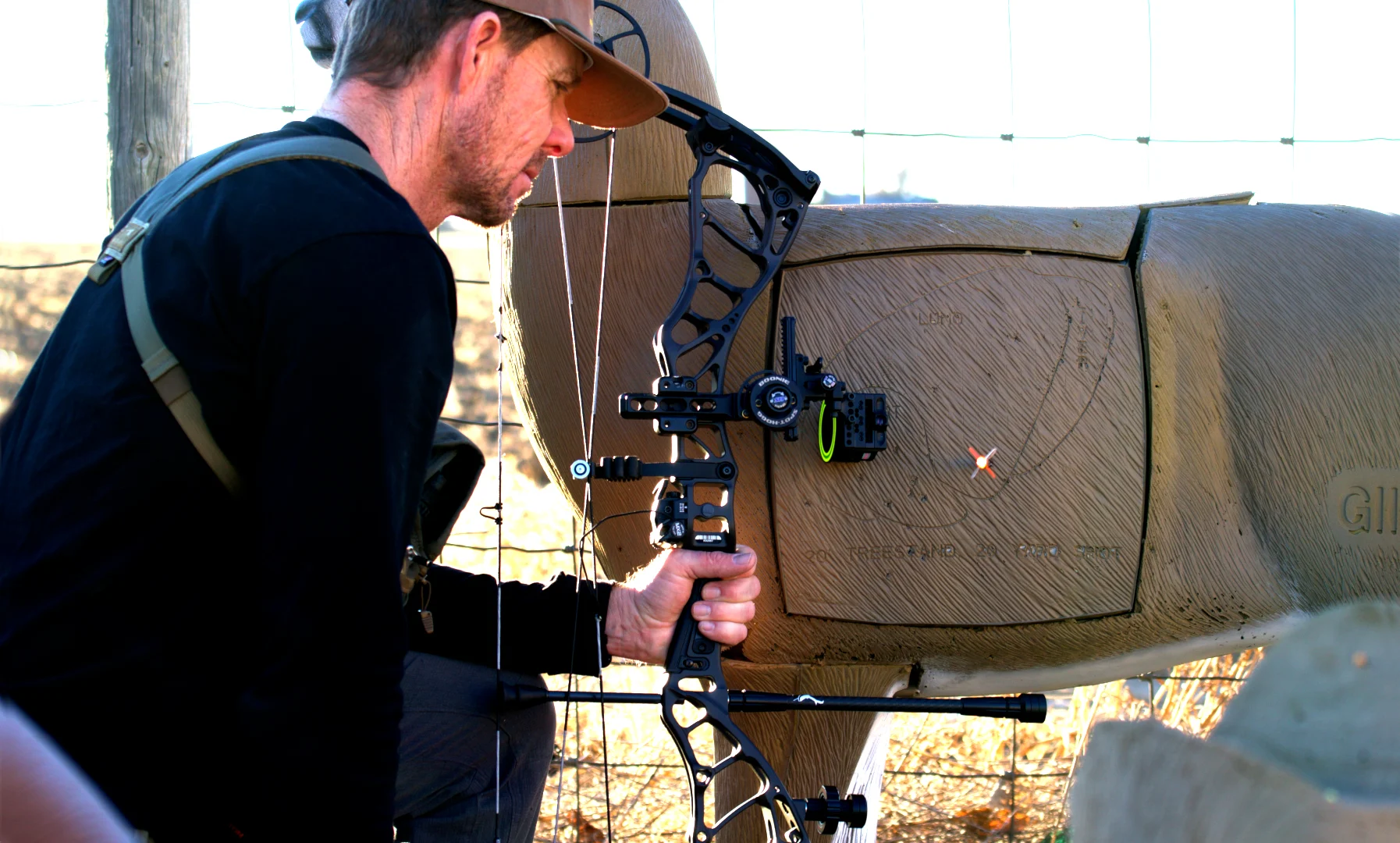
My Alliance test bow arrived set at a draw length of 30 inches and put in the Comfort mode. Bowtech's FlipDisc modules allow you to choose between Comfort and Performance modes. I'm not a speed freak and favor a smooth draw and comfortable shooting experience, so I was happy to test the bow in Comfort mode. I did need to adjust the draw length, which involved simply removing three set screws on the top and bottom modules and following Bowtech's easy number system to get it dialed in.
I used a draw board to measure the bow's draw weight, which came in at 72.38 pounds. I turned limb bolts to get the draw weight as close to 70 as possible. They turn easily with no chatter or popping.
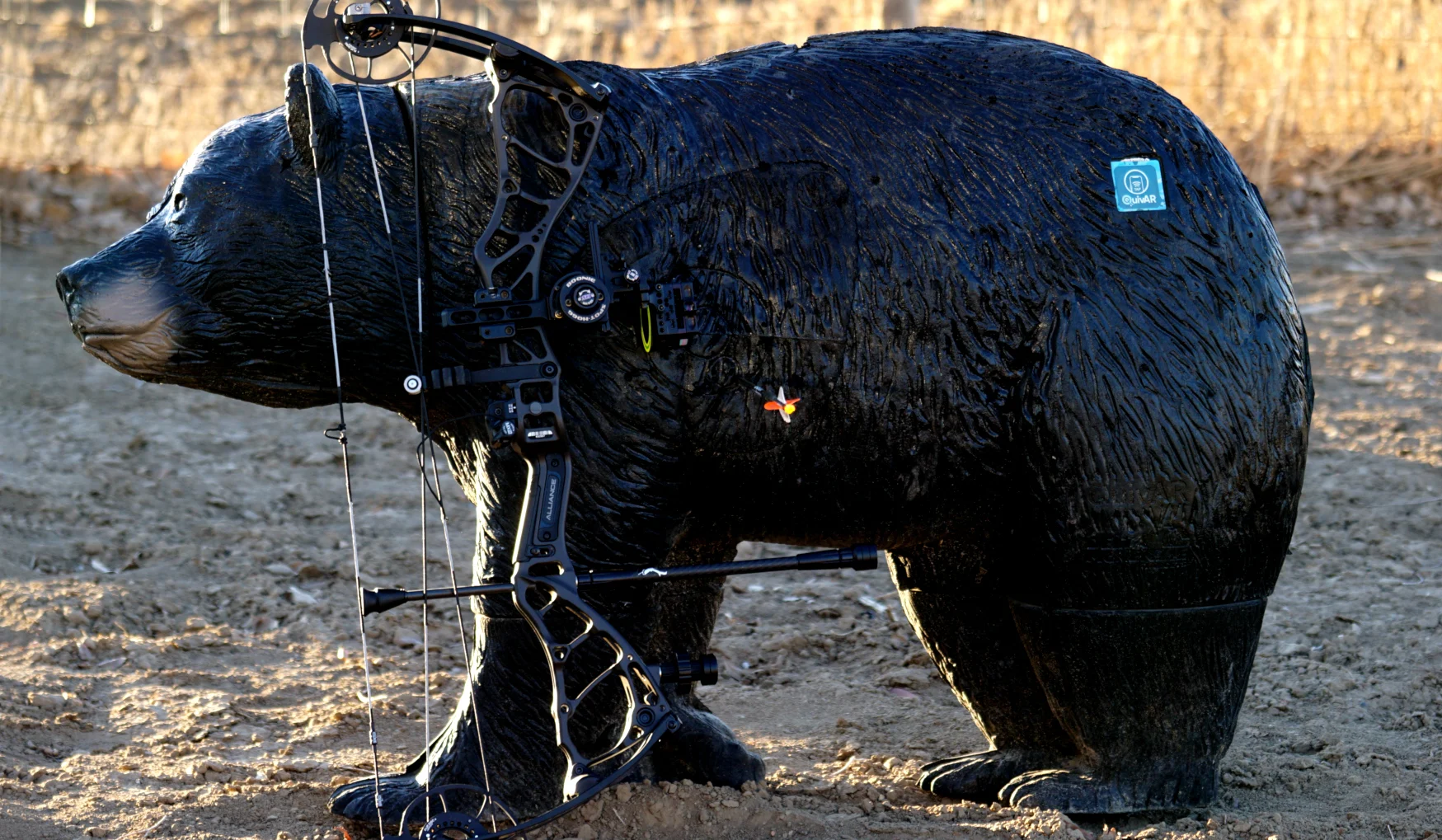
The Alliance, like most flagships these days, has IMS Technology, which allows rest attachment directly to the back, and not the side, of the riser. This made attaching my QAD Intagrate MX2 Rest straighforward. Bowtech’s CenterMass Technology features a slot cut on the inside of the riser that allows for inside-the-riser sight attachment. This feature, according to Bowtech, centers the weight of the sight. I've used it in the past, and it works as advertised. However, it's made to work with certain Black Gold bow sights, and I didn't have a working one handy, so I tested the Alliance with a Spot-Hogg Boonie.
Timing the cams was a breeze, and thanks to Bowtech's DeadLock Cam System, I could tell from my first few shots downrange that I was close to a perfect tune. More to come on this.
The Bowtech Alliance On The Range
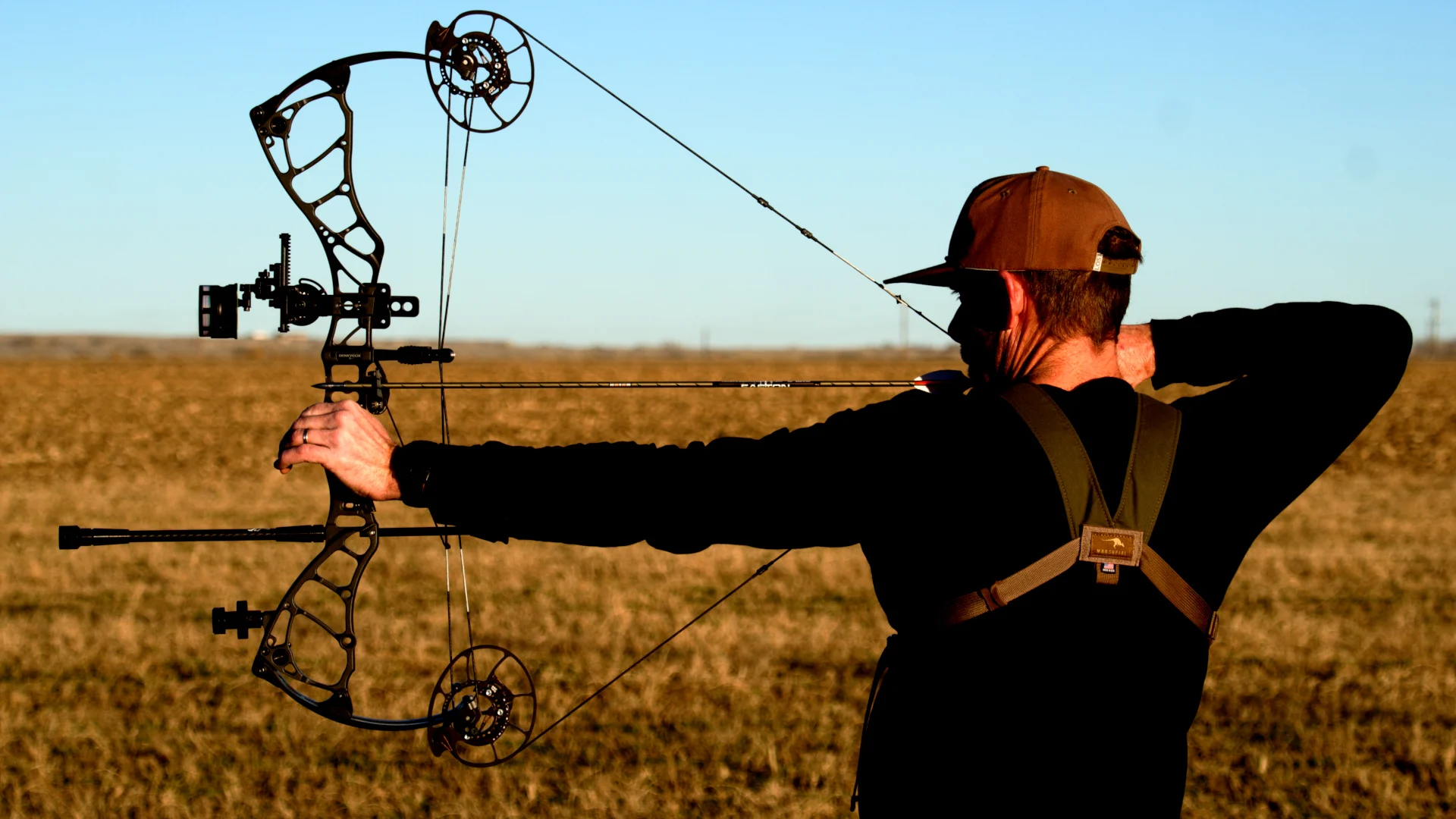
After adjusting the GripLock and pulling the grip plate back away from the riser five marks, I took a number of shots on the range, focusing on the draw cycle. Set in Comfort mode, which offers a let-off of 83 percent, the draw weight builds evenly and smoothly. Let-off comes gently, and the bow settles into a firm but not too firm back wall. All of this allowed me to find my anchor points, reducing pin-to-target time. In other words, the Alliance gets you on target in a hurry, which matters.
The draw cycle is smooth enough that it doesn't feel like 70 pounds, so you need to draw it smoothly. If you huck it back quickly, you'll notice a slight humpy feel before the let-off. For a short, maneuverable, and compact bow, the Alliance—with a 10-inch Cutter Stabilizers Utility Pro 10" in the top stab hole and Bowtech's included short, stubby stabilizer in the bottom stab hole—felt decently stable at full draw. Shot-to-shot consistency was good, and I really didn't notice the bows' short build until I started shooting beyond 60 yards. A back stabilizer bar would likely clean up the bows' long-range hold.
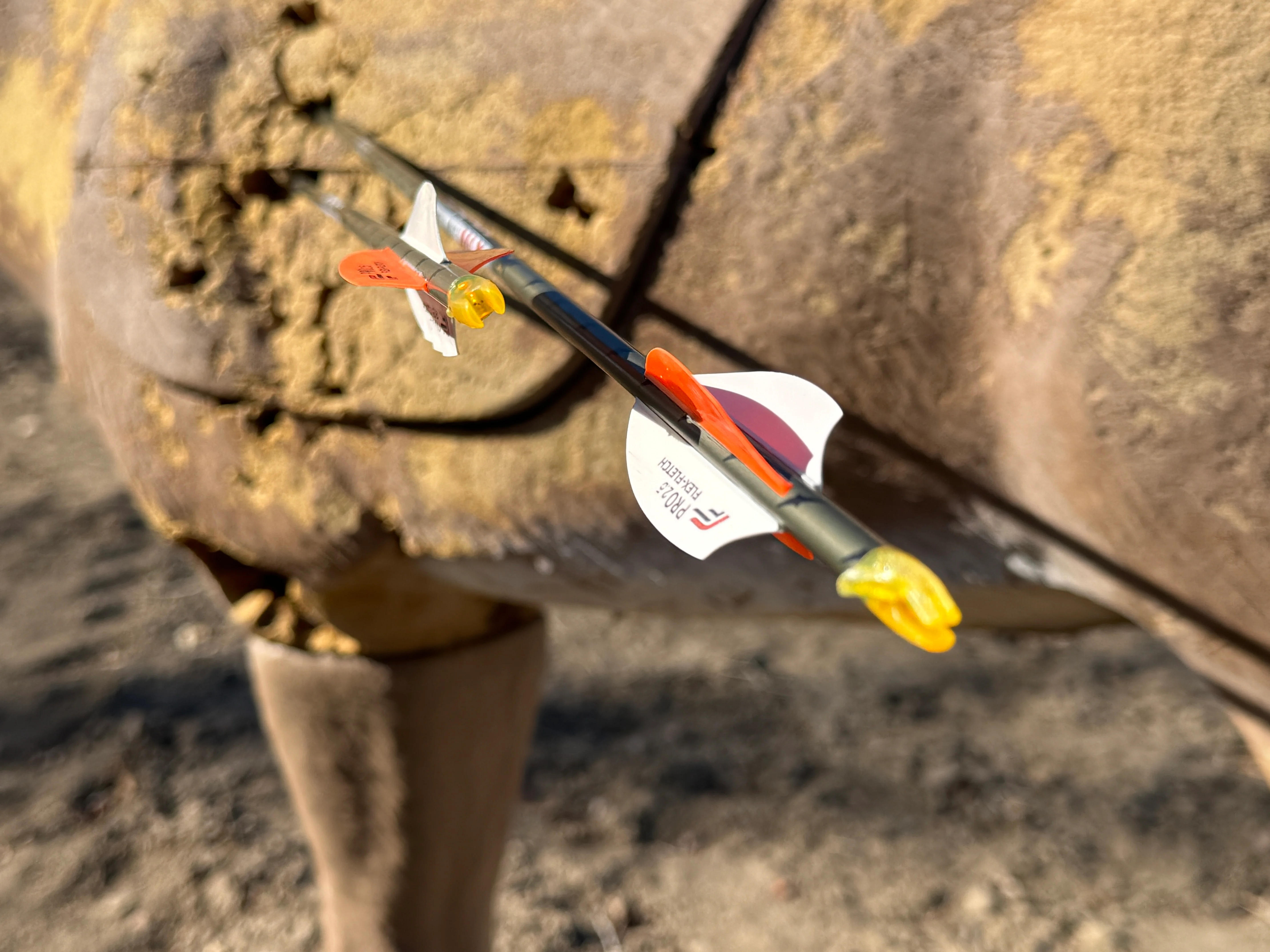
With the Alliance, from 45 yards, my second arrow on a 3D target, and only the 15th arrow fired through the bow, split a Lumenok. The bow is remarkably accurate and will make an excellent treestand and ground blind bow. Western spot-and-stalk goers should look to the Alliance 33 for increased long-range shootability.
One area I hoped Bowtech would improve on this year but fell short is noise dampening. No, the bow isn't loud. It's just a tad louder than the other 2026 compounds I've tested thus far. Last year's Proven 34 produced a three-shot dB reading of 70.01. The Alliance created a three-shot dB reading of 70.65.
Despite this, the bow is mainly dead-in-the-hand at the shot. I've shot five 5-Spot archery indoor rounds with it. Twice, I scored 300 with 30-plus Xs. The other three rounds were in the 280s, with fewer Xs, but that was due to my lack of execution. All in all, the bow is very accurate.
Bowtech Alliance Final Tune
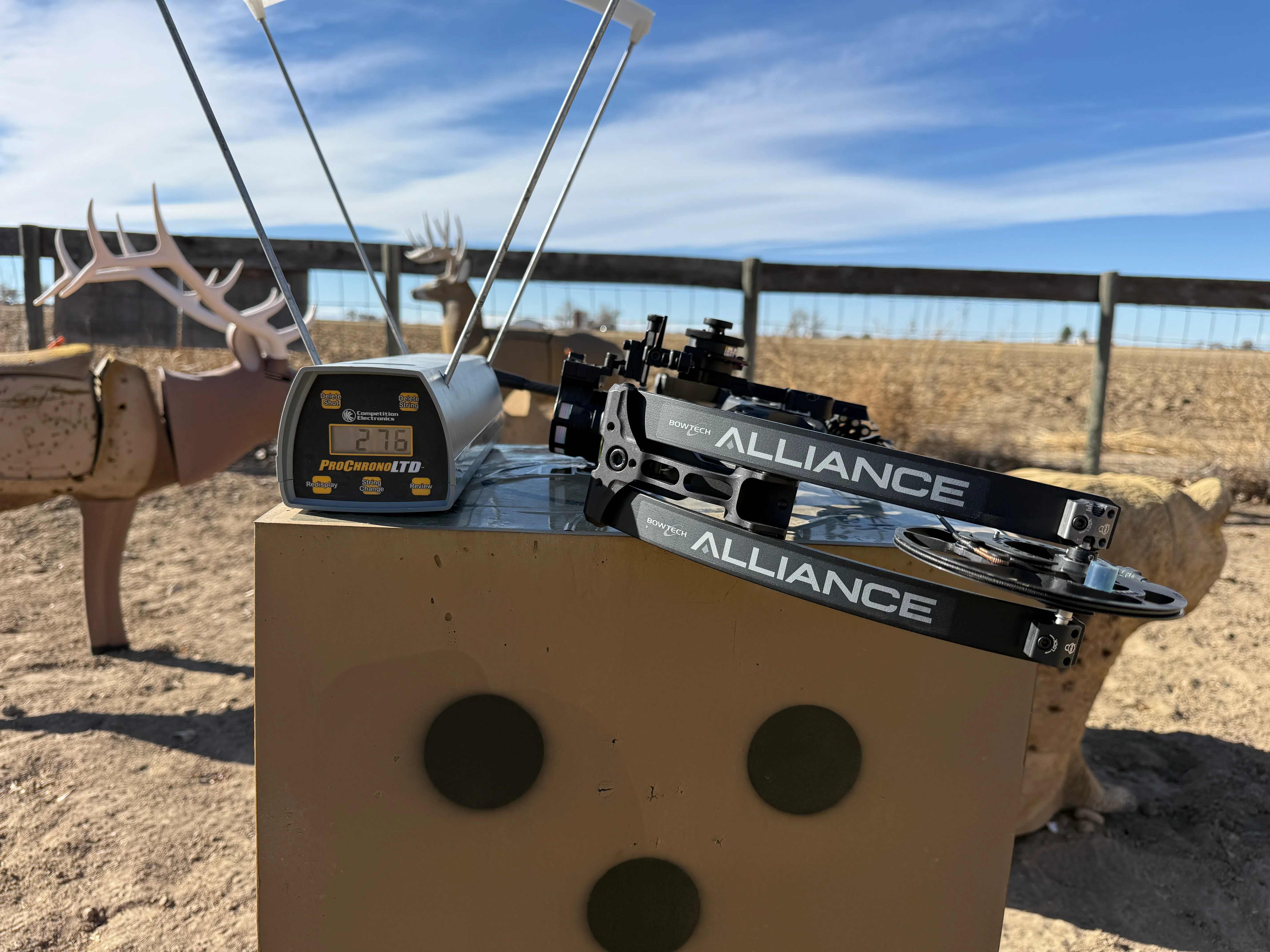
I'm not a speed junkie, but after getting the strings shot in and the bow adjusted to 70.06 pounds and a 29-inch draw length, the Alliance created a three-shot fps rating of 276 fps with a 467-grain FMJ Max, a 100-grain field point. The setup produces a kinetic energy rating of 79.01 pounds.
After 200-plus arrows, I sent a bare shaft and a fletched arrow through paper. The slight nock-left tear was quickly remedied by loosening the DeadLock locking screws and turning the "tune" screw clockwise on the top and bottom cams. I turned each screw about 1/4 turn before locking everything back down. My next shot through paper created a bullet hole, with the nock entering the same hole the field point created. My bare-shaft arrow followed suit. This is one of the most straightforward left-or-right-tear bow tuning systems available. After tuning the bow, I shot a 10-up score on my home-range 20-target 3-D course. Maximum shot distance was 50 yards.
Final Thoughts On The Bowtech Alliance
Pros
Accurate
Excellent draw-cycle
Amazing back-wall feel
Easy to tune
Cons
Over 4 pounds
Post-shot noise
Bowtech's Alliance—despite the slight post-shot twang—is a short, compact, and decently light bow that will serve bowhunters well in 2026, especially if you hunt whitetails and turkeys from a tree stand or blind. My arrows consistently hit where I aimed, and the cable stops created a just-right valley I could pull into without feeling any slop. I will take the Alliance on a couple turkey hunts this spring and report back on its in-the-field performance.