We may earn revenue from the products available on this page and participate in affiliate programs. Learn more
After a two-year run with the Lift series (Lift and Lift X), Mathews has an all-new flagship compound bow for 2026 in the ARC, which comes in two models, the ARC 30 and ARC 34. The differences between the two are the axle pin spacing, max speed, and physical weight. If you want maximum speed in an under-4-pound aluminum bow that's maneuverable, the 30-inch ARC 30 is the way to go. If you punch paper in indoor leagues, send carbon at 3-D tournaments, are a western hunter, or you prefer a longer, more stable and forgiving hunting compound, the ARC 34 is the one you want to look at.
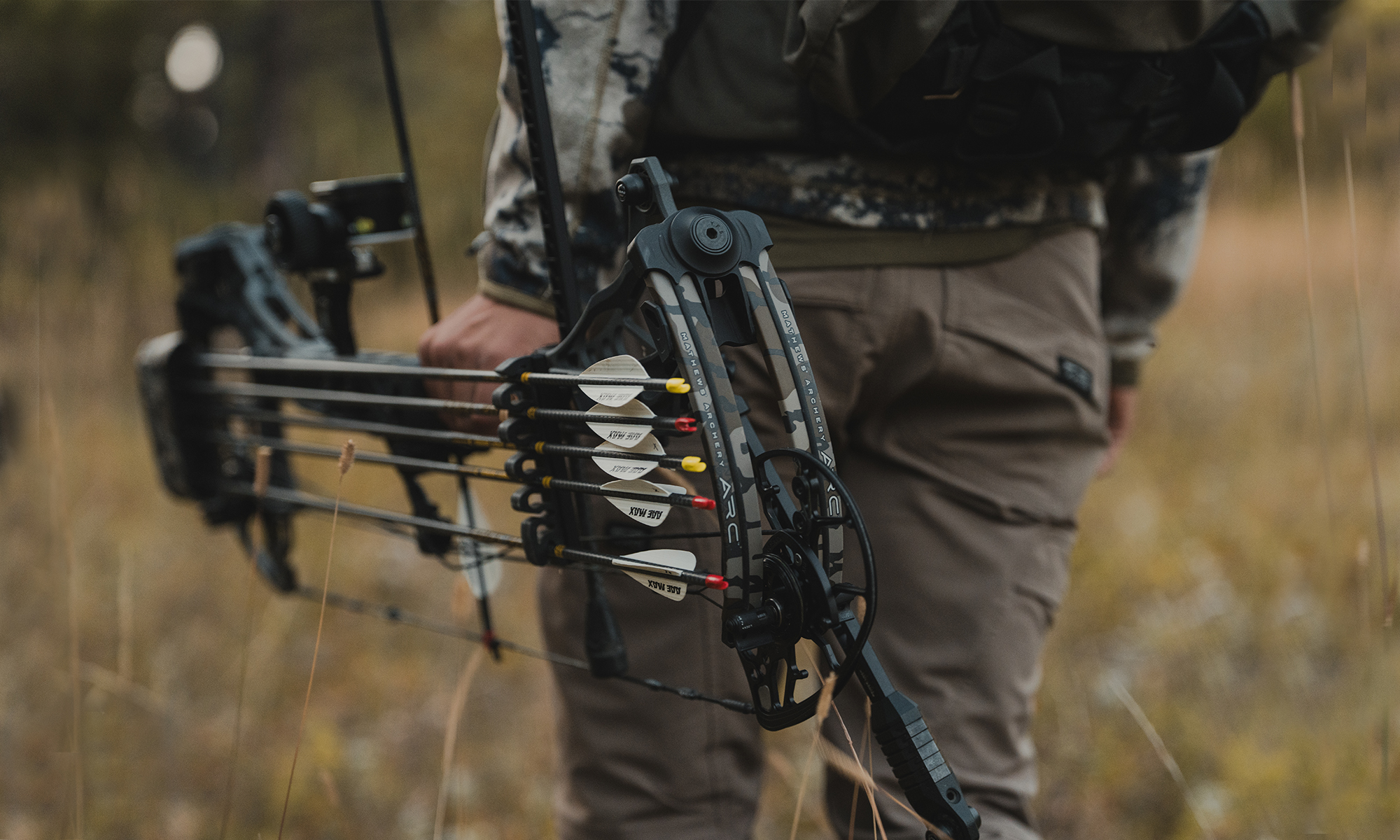
Though remnants of Lift technology remain, the ARC sports a redesigned SWX-2 Cam system with perimeter weight and two module options, as well as updated limb geometry and a riser that Mathews hails as its most rigid to date.
The Mathews bow they sent me for testing is an ARC 30 in their knew color, Kodiak Brown, which looks sharp to my eye. The first thing I noticed when I picked the bow up was how lightweight it feels in the hand. Mathews has found a way, starting with the Lift series, to create aluminum bows with carbon-riser-like weight ratings without compromising strength. But is the ARC better than the Lift? Let's find out.
Mathews ARC 30 Specs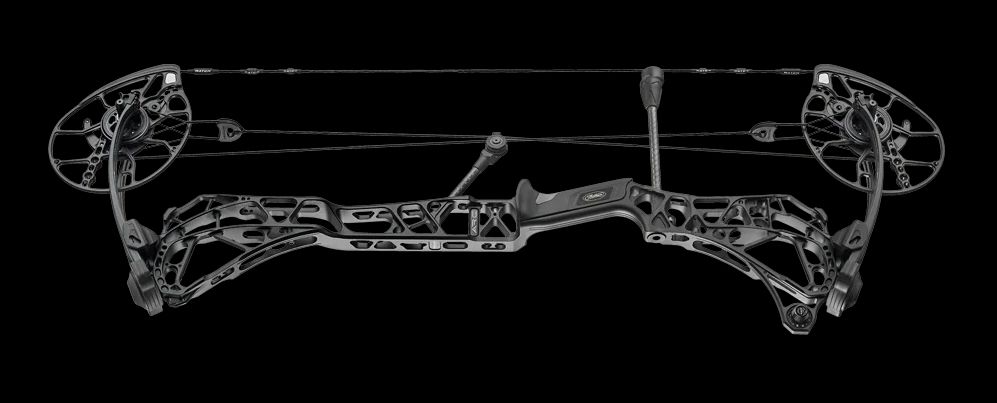
Axle-to-Axle: 30”
Weight: 3.99 lb.
Draw Length: 25-30.5”
Max Draw Weights: 55, 60, 65, 70, 75, 80 lb.
Advertised IBO Speed: 348 fps
MSRP: $1,459
Mathews ARC 30 Overview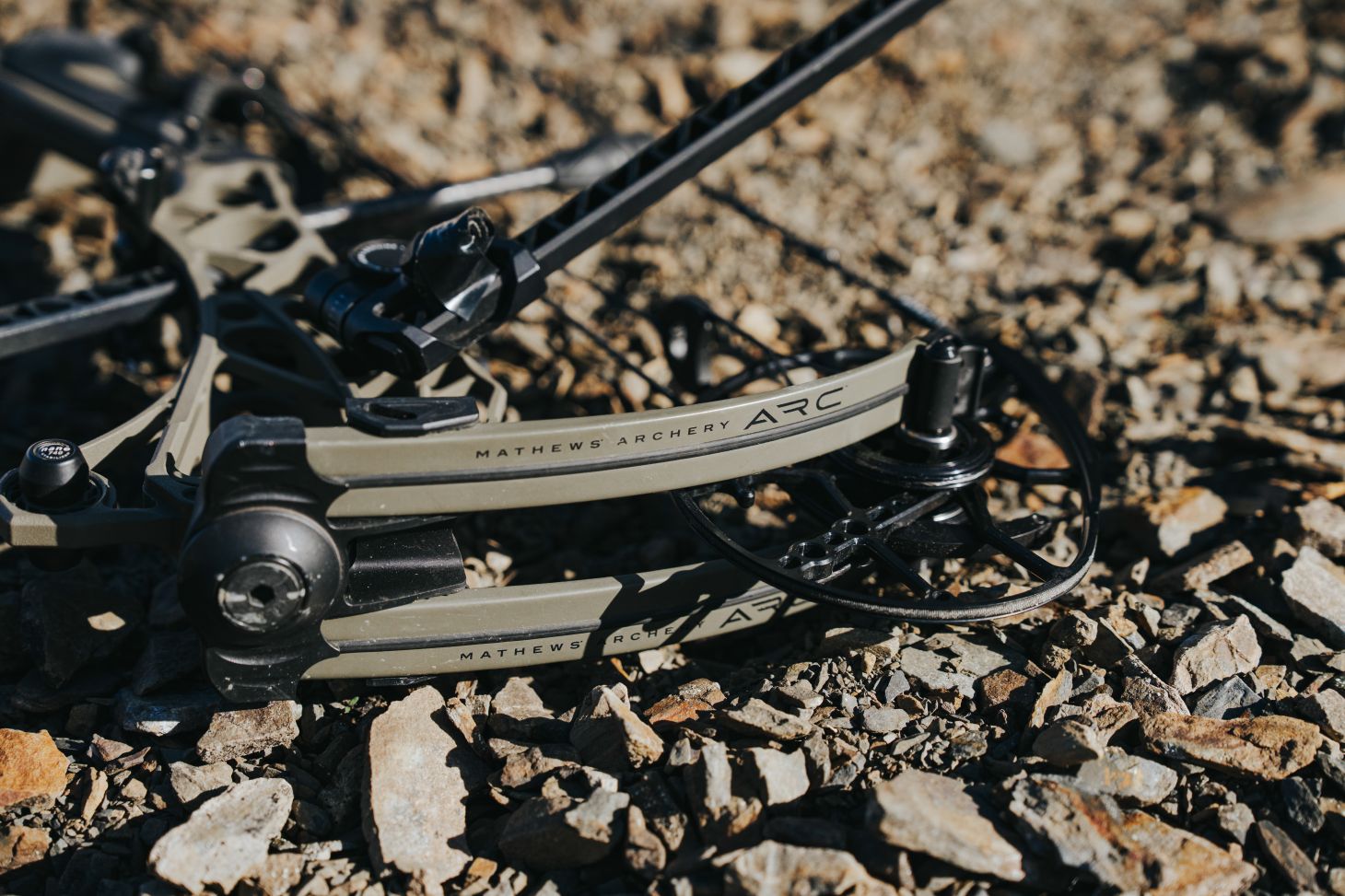
Days before the launch of Mathews’ new 2026 ARC series, I found myself wondering if the company would continue down its current flamethrower bow-building path or return to smoother-drawing and better-holding models like the V3 and V3X. Well, al I had to do was read the specs and pull the bow back once to get my answer: The ARC 30 is an lightweight, compact, speed bow, with aggressive cams and a 6-inch brace height.
The new SWX-2 cams with Perimeter Weight Technology are designed to be fast and powerful, while providing a forgiving post-shot feel. Mathews claims that with the SWX-2 cams, adding aftermarket accessories like a peep and D-loop doesn't cost you any speed—as is the case with most bows. However, there was no way for me to test that claim, but I can say this: either way, this bow proved to be plenty fast, which we'll get to.
The ARC’s riser features a reinforced chassis that boosts strength and rigidity and incorporates a fully integrated V-Bar mounting port for easy back-bar addition. The riser is noticeably more skeletonized than the Lift models. Mathews also offers a pair of stabilizer ports—standard and 7-degree downward Bridge-Lock. The Silent Connect System, which allows you to connect a bow sling and rope, is back but is integrated into the riser for increased weight savings.
The tacky, thin-backed, perfectly angled Shot Sense Compatible Grip is also back, and though I’m a fan of the grip's feel, it’s important to note that Mathews’ 6-inch brace height rating is only achieved when the grip is removed, which I find a little disingenuous, as brace height should be measure from the grip to the string.
Though there are similarities between ARC and Lift limbs, the ARC limbs feature a parallel limb path designed to improve better shot-to-shot efficiency and reduce post-shot noise and oscillation. The limb cups are slimmer, but limb-to-pocket engagement is tighter. The newly designed pockets and limbs mean Engage EXO Limb Legs will no longer fit. If you’re a limb leg lover like me, you’ll need the new Engage ARC Limb Legs.
Mathews built the ARC 30 to be fast. If you don’t want a speed bow but do want a compact, light, maneuverable one, opt for the SWX-Z Mod. This module provides a more generous draw-force curve, resulting in a smooth draw but at the expense of speed. I shot the ARC 30 with SWX-Z Mod at a buddy’s pro shop, and it was notably smoother.
ARC 30 Bow Build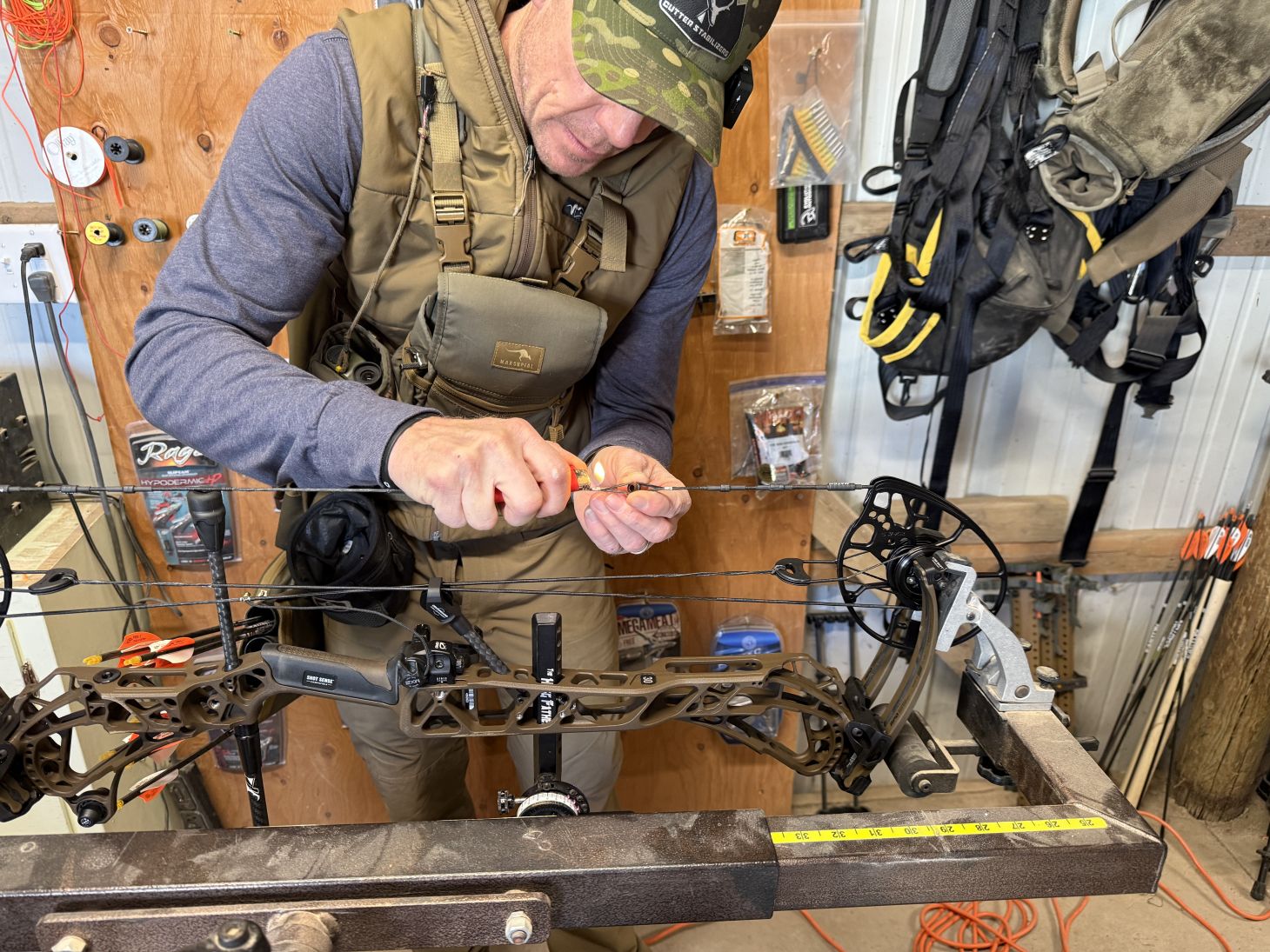
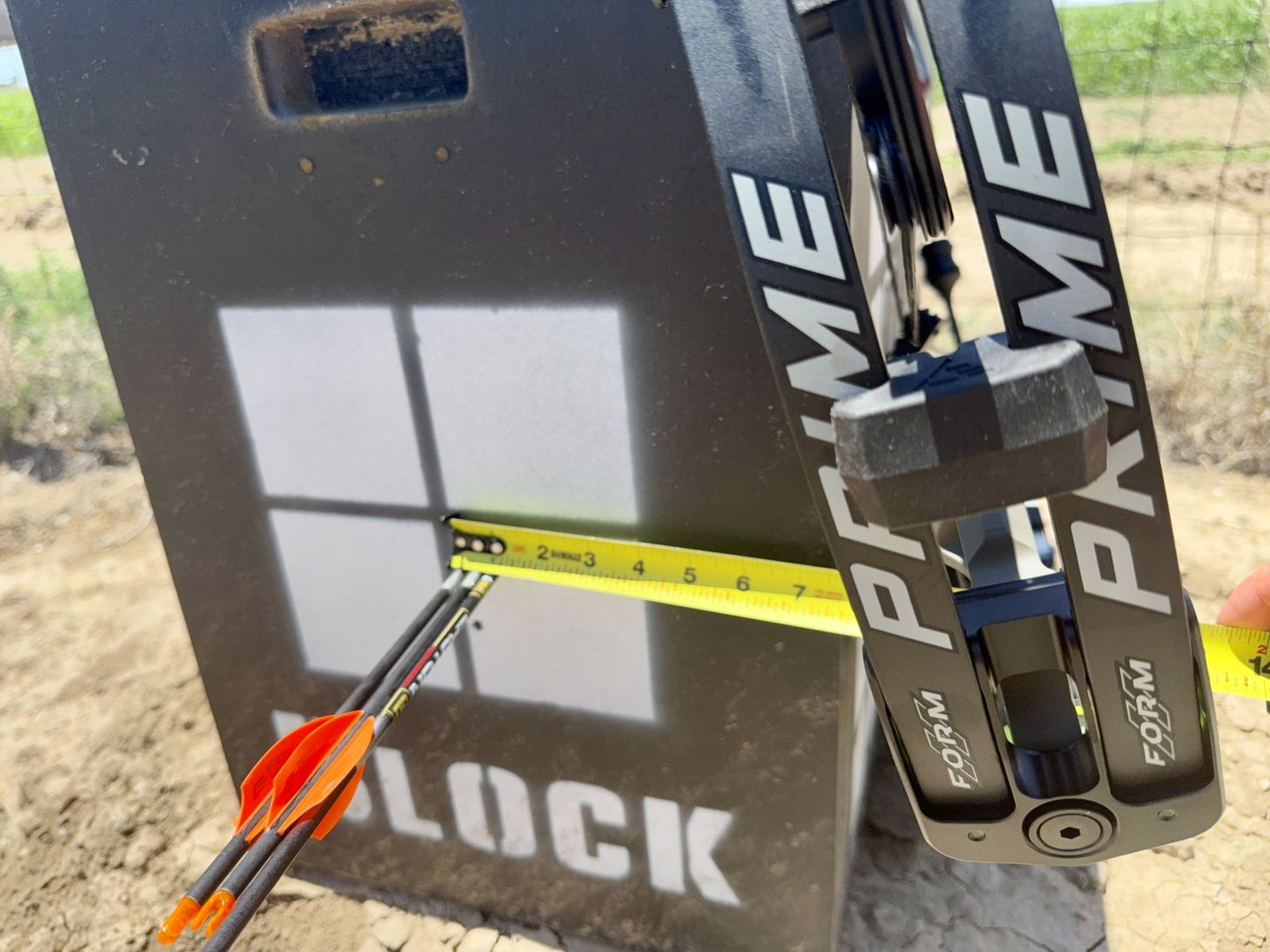
Before adding a peep, rest, etc., I double-checked Mathews’ specs. The bow measures exactly 30 inches between the axle pins, the riser is 28 inches, and the brace height is 6 inches—but only with the grip removed. A pair of digital bow scales measured the ARC 30’s draw weight at 70.0 pounds and 70.01 pounds. These two measurements are by far the closest to the manufacturer’s listed peak weight of any bows tested so far.
The SWX-2 Cam is not draw-length adjustable, so if you buy this bow, make sure you get your draw length right when ordering. Limb Shift Technology is back. This is one of the most straightforward on-bow tuning systems on the market today and allows you to tune the adjust the cams on the spot with nothing more than a pair of Allen wrenches. No press needed. That said, if you do need to press the bow, it’s important to remember that you have to set the tips of your bow press into the Limb Shift pockets. The ARC 30 presses easily. Adding a peep sight was a breeze. Thanks to the ARC 30’s IMS (Integrate Mounting System) I attached a QAD Integrate MX2 rest quickly and then served the cord into the bow’s down cable and timed the rest on a draw board.
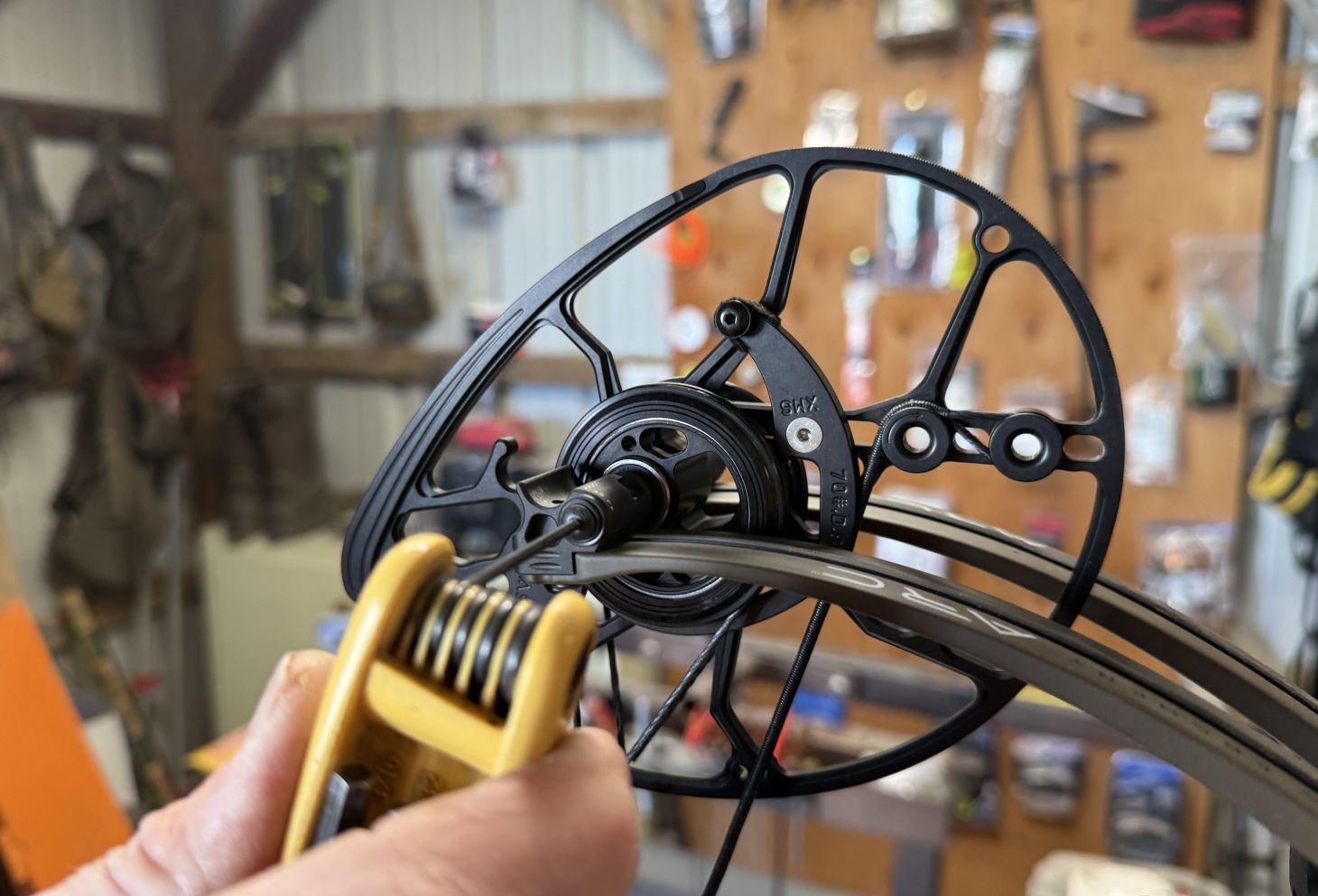
I attached a Spot-Hogg Hogg Father sight into the riser's middle with Bridge-Lock connection. I opted to use Cutter’s 12-inch Altitude Pro Stabilizer with a trio of one-ounce weights. (Mathews sells the Integrated Bridge-Lock V-Bar mount and Angled Bridge-Lock Stabilizer separately.) Finally, I added the Engage ARC Limb Legs, which keep the bottom of the cam off the ground. ARC bows can be shot with the Engage ARC Limb Legs attached.
ARC 30 Range Results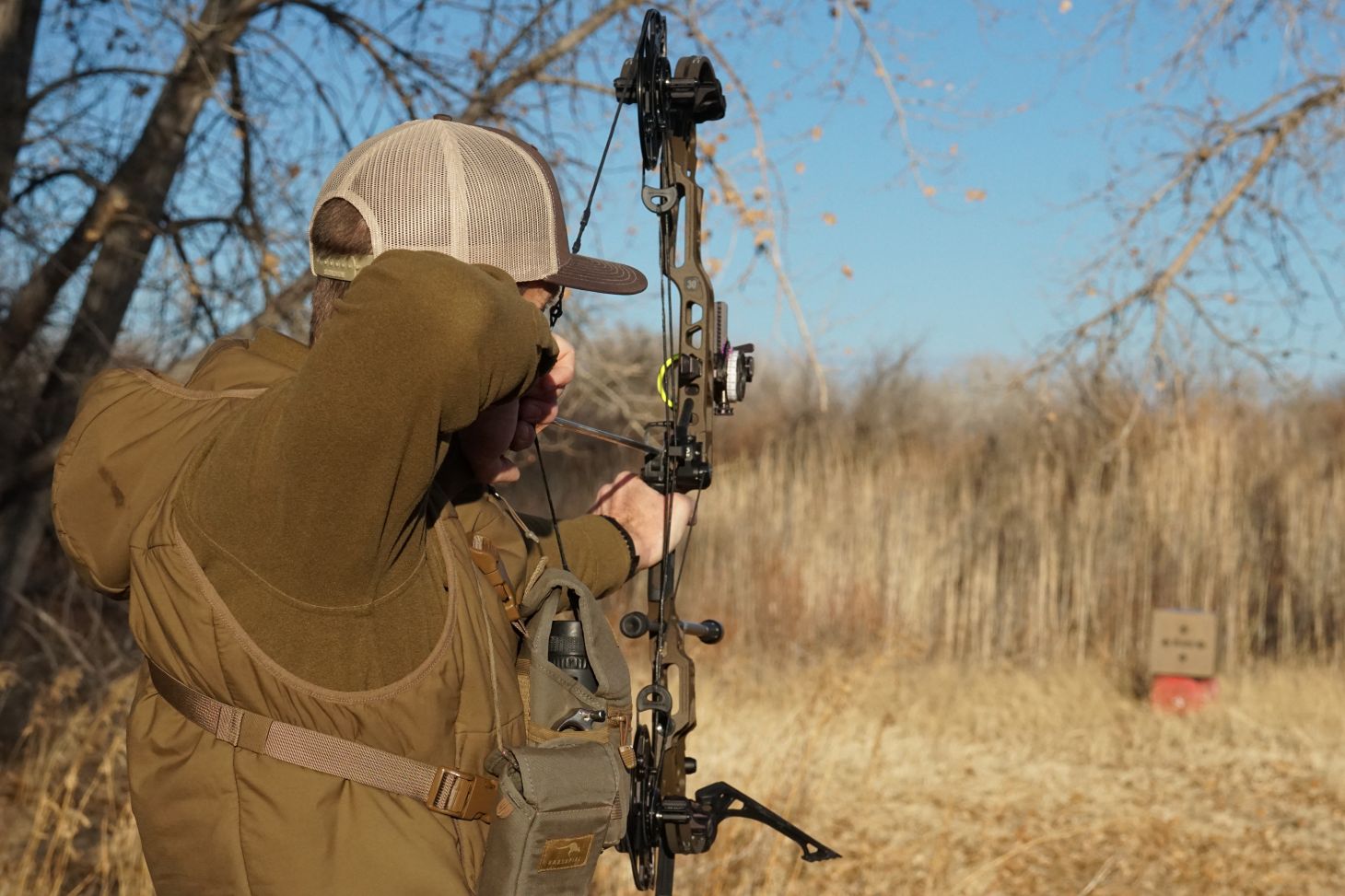
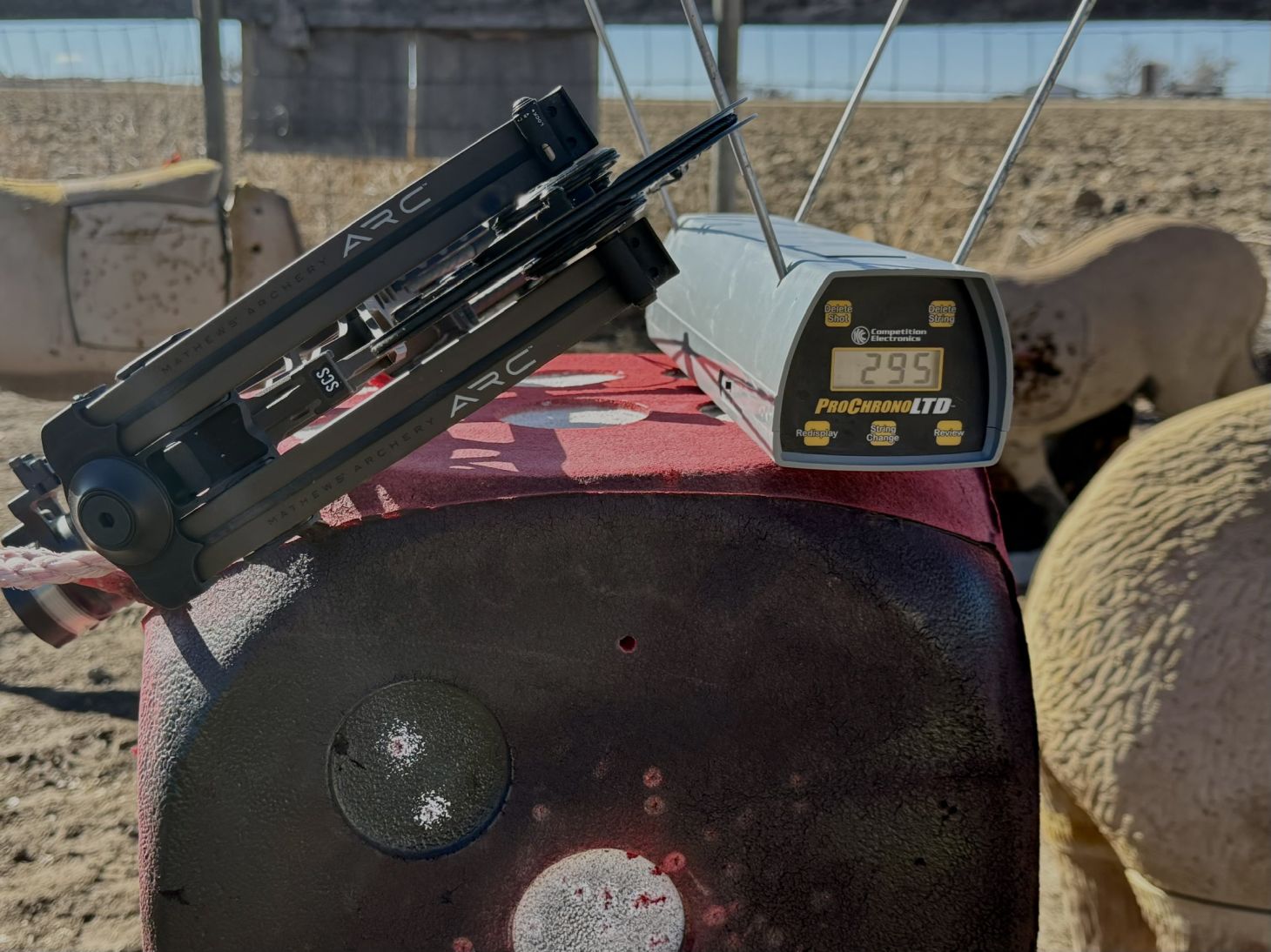
The first thing I tested on the range was speed. As a reminder, I don't test with IBO specs; instead, using my usual 29-inch draw length and a draw weight of 70 pounds, I fire three 467-grain 5MM FMJ Max hunting arrows though the chronograph. With this setup, the ARC 30 produced a impressive three-shot average speed of 295 fps, with an even more impressive 90.26-pounds of kinetic energy. Several times, my 5MM FMJ Max shafts buried so deep into foam targets I had to have help removing them or pull them through the target. The bow is a dragon breather.
As always, however, speed comes with some sacrifice. The draw-force curve is stiff; you feel a lot of weight through the draw cycle, and transition to the 80 percent let-off is less than smooth. Any creep in your shot, and the SWX-2 cams want to go before you’re ready. I don’t mind arrow speed, but only if it doesn’t sacrifice feel and shooting confidence. After 10 arrows, I wanted to call Mathews and request the SWX-Z Mod. I just couldn't seem to shoot this bow well initially. Pulling hard enough into the bow’s cable-stop backwall felt difficult, and this allowed the cams to creep forward and propel me into the shot.
Aside from the stiff draw and fiery cams, the ARC 30 felt well-balanced. Unlike other short axle-to-axle bows I’ve tested this year, and despite its sub-4-pound weight, the ARC 30 held like a rock. When the string drops, the bow feels fast, but noise is nil, and the compound is dead in the hand.
After a day of testing, I called my editor, Dave Hurteau, and expressed my dislike of the bow’s draw cycle and back-wall feel. But by day three, I was eating crow. After switching from a hinge release to a thumb-button, which allowed me to pull harder into the back wall, I shot a 300 5-Spot round with 29 Xs and a 12 3-D target round of 128, which is my best score so far this winter. The more I shot the bow, the more I got used to the draw cycle and back-wall feel. The ARC 30 produced an average 3-shot decibel rating of 64.4. Last year’s Lift X produced a three-shot average dB reading of 67.5. While I will never be a fan of this bows draw cycle or backwall feel, my testing proved that you can get used to it, and that when you do, the ARC 30 blends speed with accuracy and provides a very quiet shot.
Mathews ARC 30 Final Tune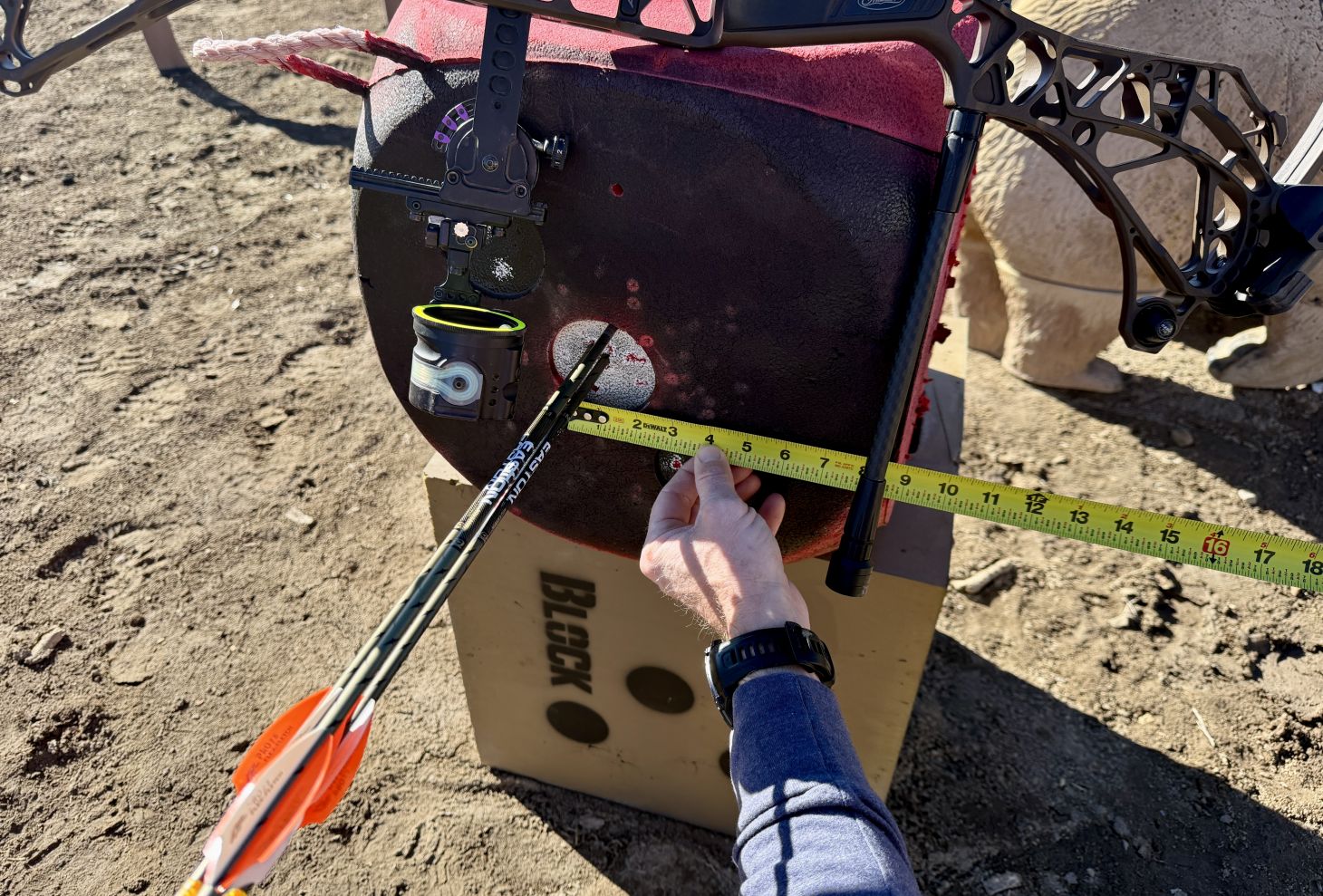
There was no final tune. Why? Because none was needed. After 250 arrows, my four 467-grain Easton 5MM FJM Max arrows tore perfect holes—fletched and bare shaft—through paper. From 50 yards, the ARC 30 put three broadhead-tipped arrows, one with a three-blade QAD Exodus fixed-blade, an expandable SEVR Ti 1.75 4-Blade Hybrid, and a Speed Titanium 100 expandable, into a 3-inch white dot on Morell’s Big High Roller Archery Target.
Final Thoughts On The Mathews ARC 30 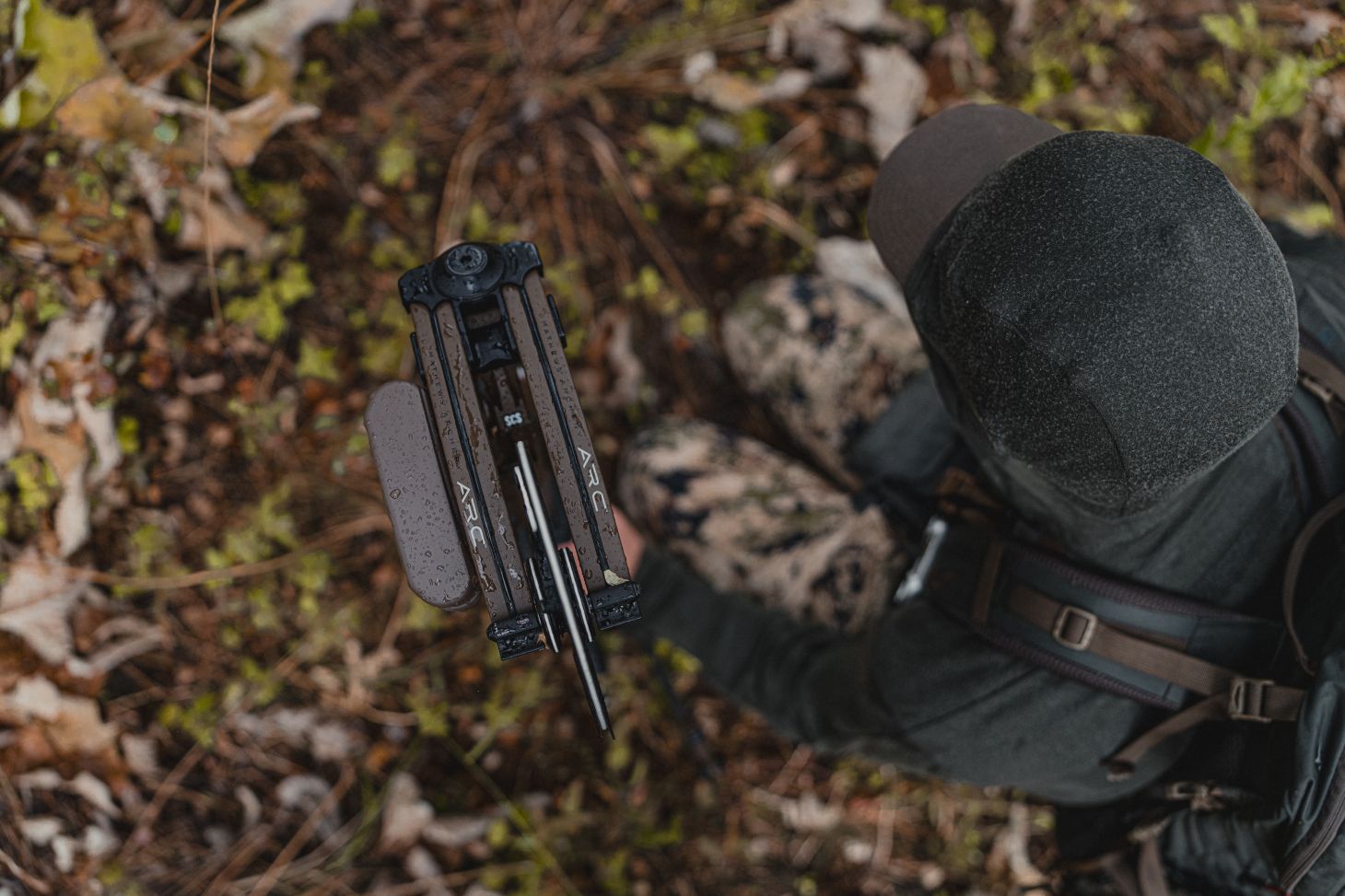
Pros
Fast
Accurate
Dead in hand
Cons
Twitchy cams
Rigid draw cycle
After 50 arrows, I was ready to drop this bow to the bottom of this year’s annual F&S Bow Test. Which is why I shoot a whole lot more than 50 arrows for these bow test. In the end, you need know that if you opt for the fiery ARC 30, you get a light and compact compound, but one with a draw cycle that reminds me of bows like the PSE Omen Pro and Drive. The bow takes some getting used to, but once you do, the ARC 30 provides high speeds, precision accuracy, and a tranquil shot. I never could get used to PSE’s high-speed bows. I never shot them well, even after hundreds of arrows. But the more I shoot the ARC 30, the better I shoot it, and strangely, the better it felt. I appreciate that Mathews offers a gentler mod, and I also love that this short bow produced sub-3-inch expandable broadhead groups to 90 yards with the standard mod. As someone who much prefers a long axle-to-axle bow, the ARC 30 surprised me, in a good way. If you primarily hunt whitetails from a stand or blind, you'd be hard pressed to find a better bow to take with you.
Why Trust Us
For more than 125 years, Field & Stream has been providing readers with honest and authentic coverage of outdoor gear. Our writers and editors eat, sleep, and breathe the outdoors, and that passion comes through in our product reviews. You can count on F&S to keep you up to date on the best new gear. And when we write about a product—whether it’s a bass lure or a backpack—we cover the good and the bad, so you know exactly what to expect before you decide to make a purchase.

THE 1871 CLUB