“INOIJOT”
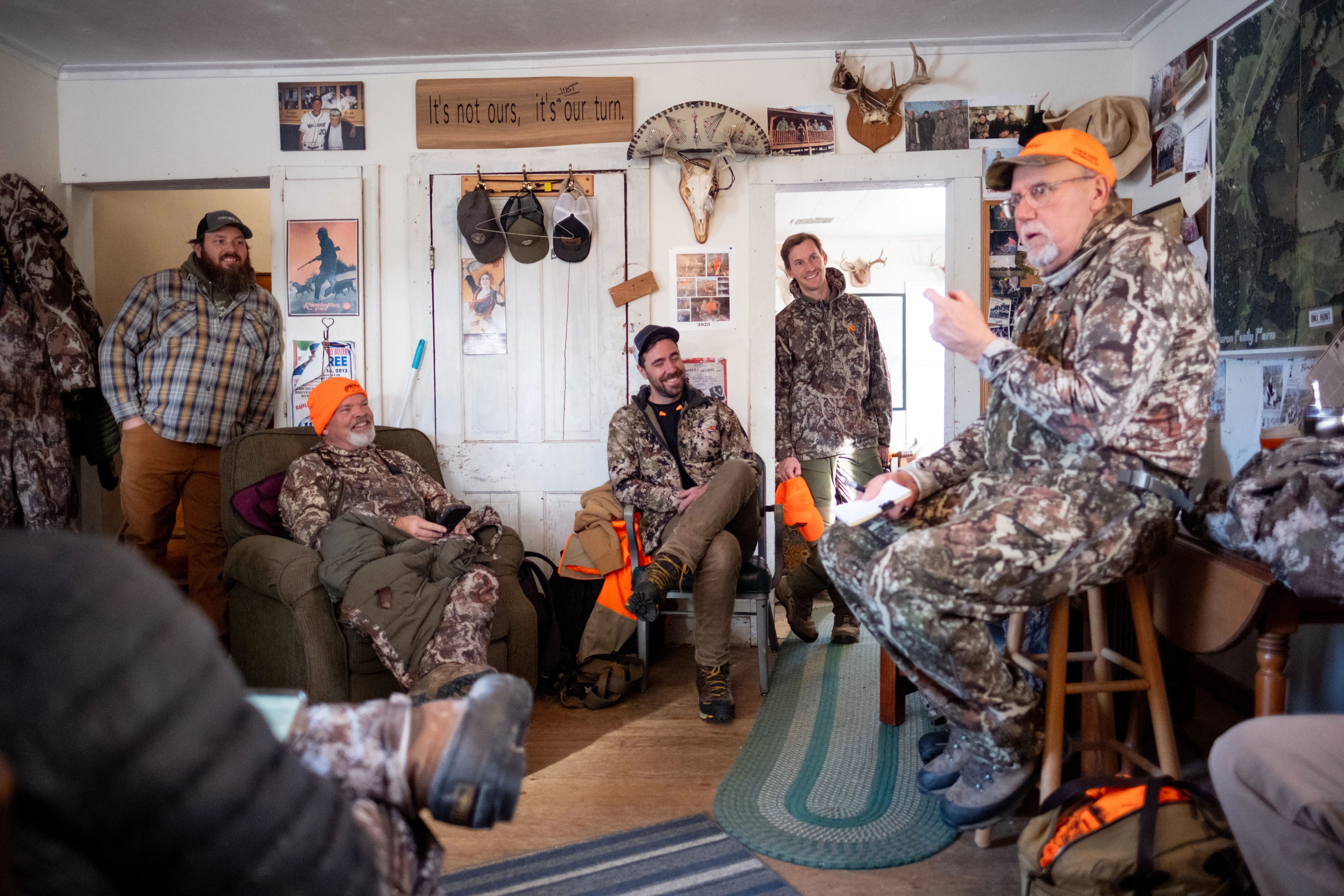
It took me a second to register what the acronym on Doug Duren’s Wisconsin license plate stood for. Then I glanced around—at his bumper stickers, at his sweatshirt, at the formidable collection of memorabilia hanging from the walls of his farm house—and put it together in my head: “It’s not ours, it’s just our turn.”
The seven-word phrase could have best been described as Duren’s conservation ethic. It’s also an approach to land management on his farm, an outdoor media movement, and a slogan for Sharing the Land, Duren’s nonprofit land access cooperative, which he modeled after the work of fellow Wisconsinite Aldo Leopold. (We’ll get to all that in a minute.)
Through this smorgasbord of efforts, Duren has climbed the ranks as something of a reluctant celebrity in the conservation world. He’s become a mainstay in Steven Rinella’s MeatEater universe and a close personal friend of Trampled by Turtles lead singer Dave Simonett.
He’s also a thorn in the side of any deer enthusiast who feels either skeptical about or apathetic toward the topic of chronic wasting disease. It’s hard to imagine anyone would feel that way in a place where mature bucks lay emaciated and decomposing in the middle of food plots. But even with the visible toll the disease has taken on the neighboring deer herds, Duren wakes up every morning to a lonely uphill battle that he accuses of taking some of the joy out of deer hunting on his family’s farm.
Except for one half-week in mid-December, that is—Wisconsin’s four-day, antlerless-only deer season, during which Duren offers other hunters access and opportunity to fill as many doe tags as legally possible. Enter the Cazenovia Doe Derby.
Chronic wasting disease has given wildlife biologists reason to conclude that spread is, in part, linked to deer density. Few parts of the country have become as crowded as southern Wisconsin, where predators remain scarce, cultivated food is plentiful, and hunter harvest has tanked since its peak in the early 2000s.
This is due in part to the repeal of the state’s Earn-a-Buck program in 2011, which required deer hunters to harvest a doe before they could lawfully harvest a buck. In other words, Cazenovia would be deer paradise, if it weren’t for the fact that an overwhelming percentage of mature bucks are walking prion bombs, whether they look sick or not.
Doe harvest remains an incredibly effective way to reduce deer numbers in places where overcrowding is an issue. For hunters who don’t believe they see enough deer on the landscape to begin with, doe harvest tends to be a nonstarter. As for hunters who normally value big antlers over pretty much everything else, the juice often isn’t worth the squeeze.
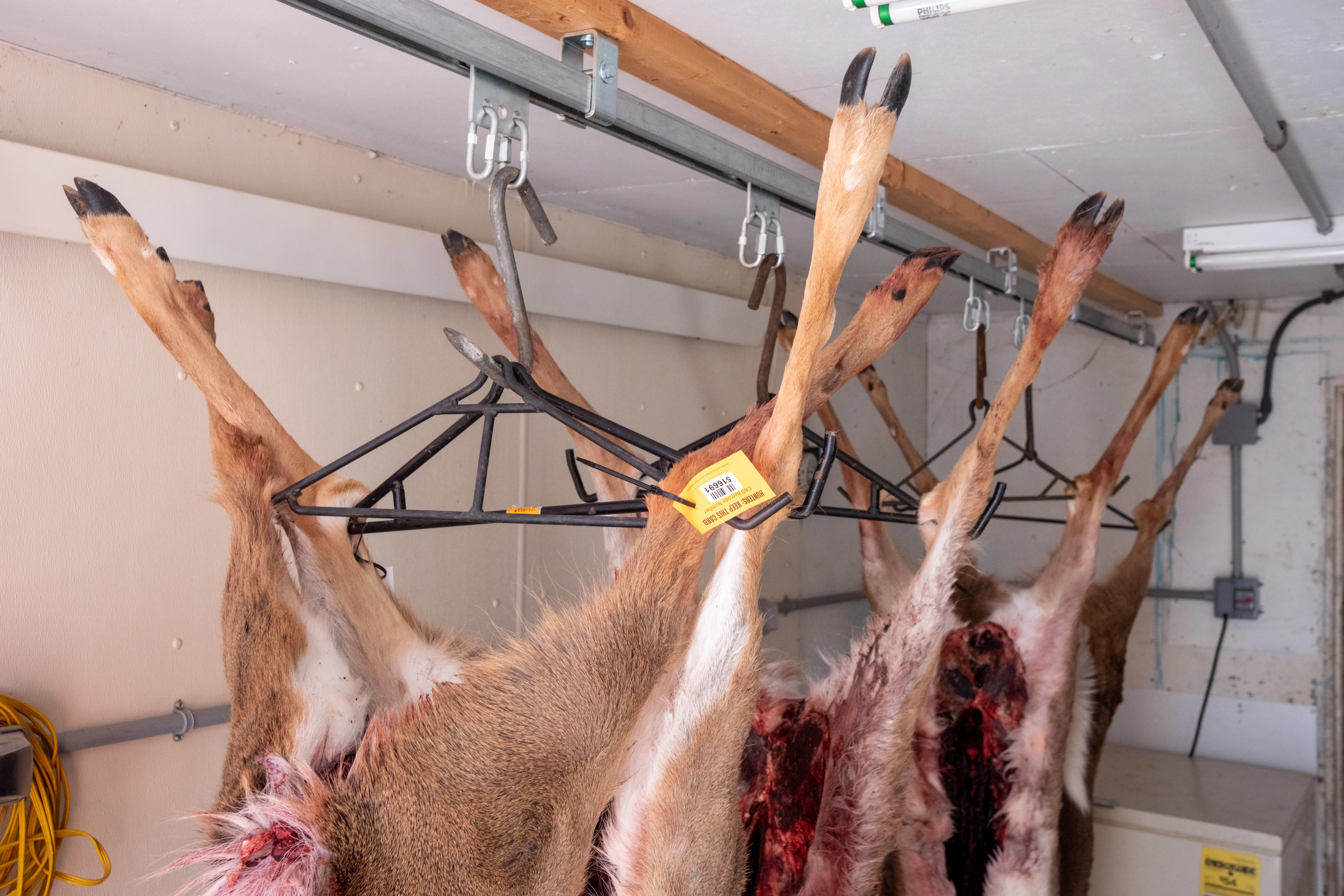
That’s where the Caz Doe Derby’s assortment of raffle prizes and community camaraderie come in. For every antlerless CWD sample that hunters submit at participating kiosks in Richland and Sauk counties, they receive two raffle tickets. Duren encourages them to keep one for themselves and fill one out for a mentor or landowner who allowed them access. Then, at the end of the December antlerless-only weekend, Duren hosts a bonfire at his farm and draws some winners. A second drawing happens after the conclusion of the holiday hunt, an additional antlerless-only gun season that takes place in most counties throughout southern Wisconsin.
“The point of the Doe Derby is to encourage harvest and CWD testing,” Duren says, noting that participation has increased each year since the derby began in 2020. “Then, the party is meant to bring back some of the camaraderie we’ve lost with in-person game check stations.”
All of this is made possible through the Sharing the Land initiative, which is modeled after a private land conservation cooperative that Aldo Leopold founded in 1931 in the town of Riley, just west of Madison. During his time as a professor at the University of Wisconsin, Leopold spent a lot of time looking for bird hunting access. He stumbled across a farm in Riley and struck up a conversation with the farmer, hoping to eventually ask to hunt the place. When the farmer told Leopold the land didn’t hold many birds due to poachers and railroad tracks, Leopold offered a different diagnosis.
“He said to the farmer, ‘Well, you don’t have very good bird habitat,’” Duren explains, laughing. “What a thing to say to someone you’re asking for hunting permission.”
Rather than leaving it at that, Leopold offered a trade; he and his friends would do some habitat work and help the farmer put up no trespassing signs in exchange for hunting access. What worked for that first farmer worked for a handful of others nearby.
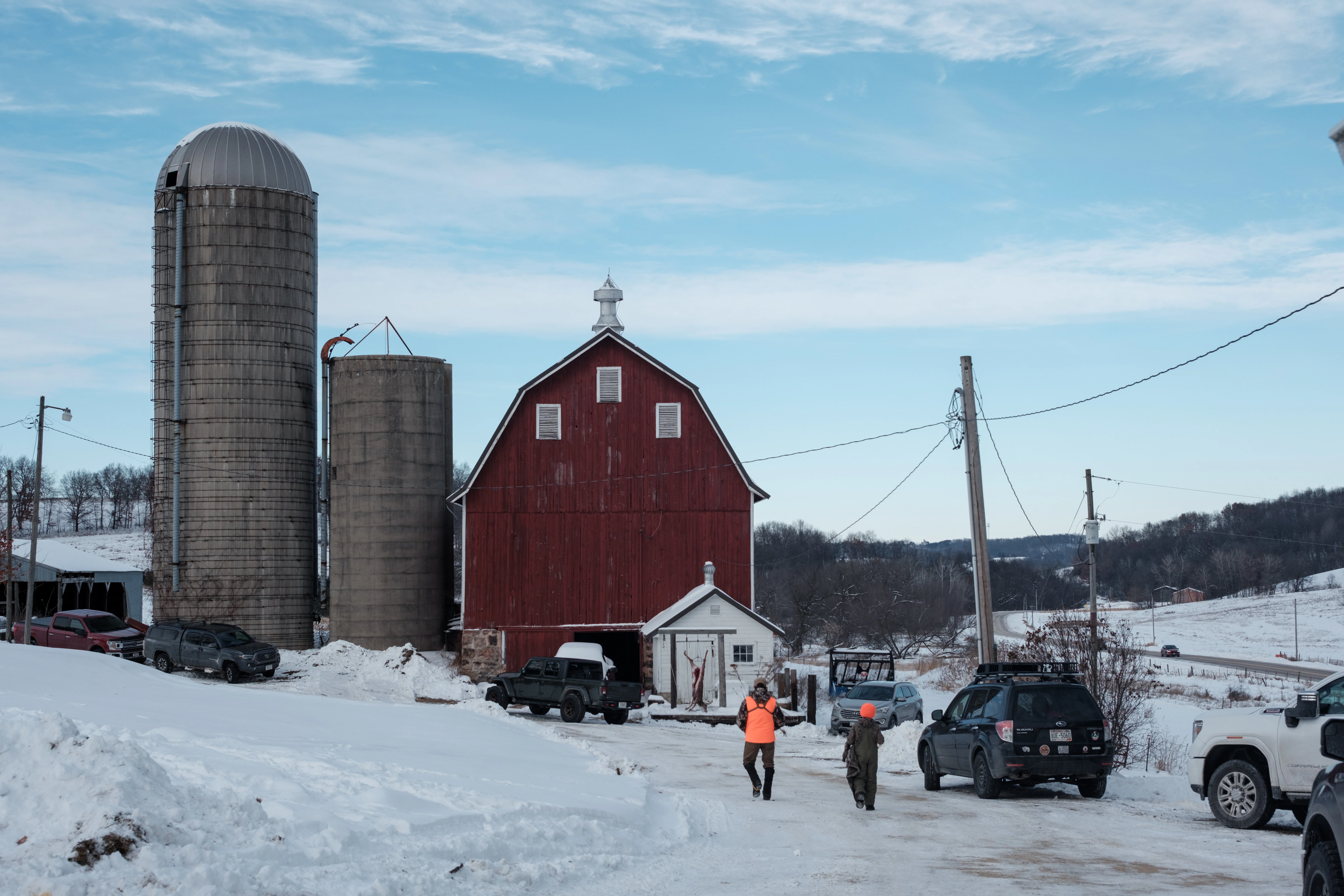
“It ended up being a community of about eleven different farms in the Riley area, built on conservation and community,” Duren says. “So I thought maybe it’s time to reinvigorate that idea, but instead of baling hay or fixing fence, it’s conservation-based. This network pairs landowners with access-seekers who are willing to make a contribution to conservation in exchange for access of all kinds.”
So far, Duren has counted 205 sampling submissions, and is expecting another 50 or so after the holiday hunt. This puts this year’s participation roughly in line, if not slightly increased, from last year. His goals for next year? Boost participation—and harvest—even more.
Read Next: Secretarial Order Threatens Land and Water Conservation Fund
“The disease is going to continue to grow in prevalence, and I’m resigned to that. But I am going to continue to do what I can, with what I have, where I’m at,” Duren says, borrowing a phrase often attributed to Theodore Roosevelt. “We’re throwing buckets of water on a big fire when what we need are trucks with hoses,” he continues. “But the Doe Derby will continue, and if it wasn’t fun, I wouldn’t do it. I can have concerns and be trying to alleviate those concerns and still have fun with my friends and family.”