
We may earn revenue from the products available on this page and participate in affiliate programs. Learn more
The world of marine electronics has gone haywire. Bass boats are now outfitted with 22-inch display screens that can transmit live images of what's swimming underneath. On the pro tour, it is common for a “fully-rigged” bass boat to have five graphs onboard at a price tag of $30,000-plus for the units, wiring, and installation. Obviously, that is completely unrealistic for the everyday angler. However, there are plenty of great fish finders that come in below the $1000 and have all the features you need to help you find and land more fish. Here are three options to consider.
-
Best Live Sonar: Lowrance Eagle Eye 9
-
Best Mapping: Garmin EchoMap UHD2 73SV w/ GT-54 Transducer
-
Best Budget: Garmin Striker Vivid Series 7CV w/ GT20-TM Transducer
How We Tested the Best Graphs Under $1,000
A couple months ago, we reached out to the big three in freshwater marine electronics—Garmin, Lowrance, and Humminbird—and asked if they would be interested in sending out some options under $1,000 to test. Garmin sent a couple of units, and Lowrance sent their latest. I mounted the least expensive Garmin Stryker Vivid 7CV unit on my Old Town 120 PDL Pro and put the Live sonar capable Lowrance Eagle Eye 9 at the bow of my bass boat, with the Garmin 73SV with GT-54 transducer at the console. I installed all of these graphs myself with almost no issue and took them out on the water to see how they would perform. Here are the results
Best Live Sonar: Lowrance Eagle Eye 9
Specs
-
Screen size: 9 inches
-
Price: $999
Pros
-
Live sonar
-
Screen size
-
Mapping capabilities
-
C-Map charts
Cons
-
Live sonar has limitations
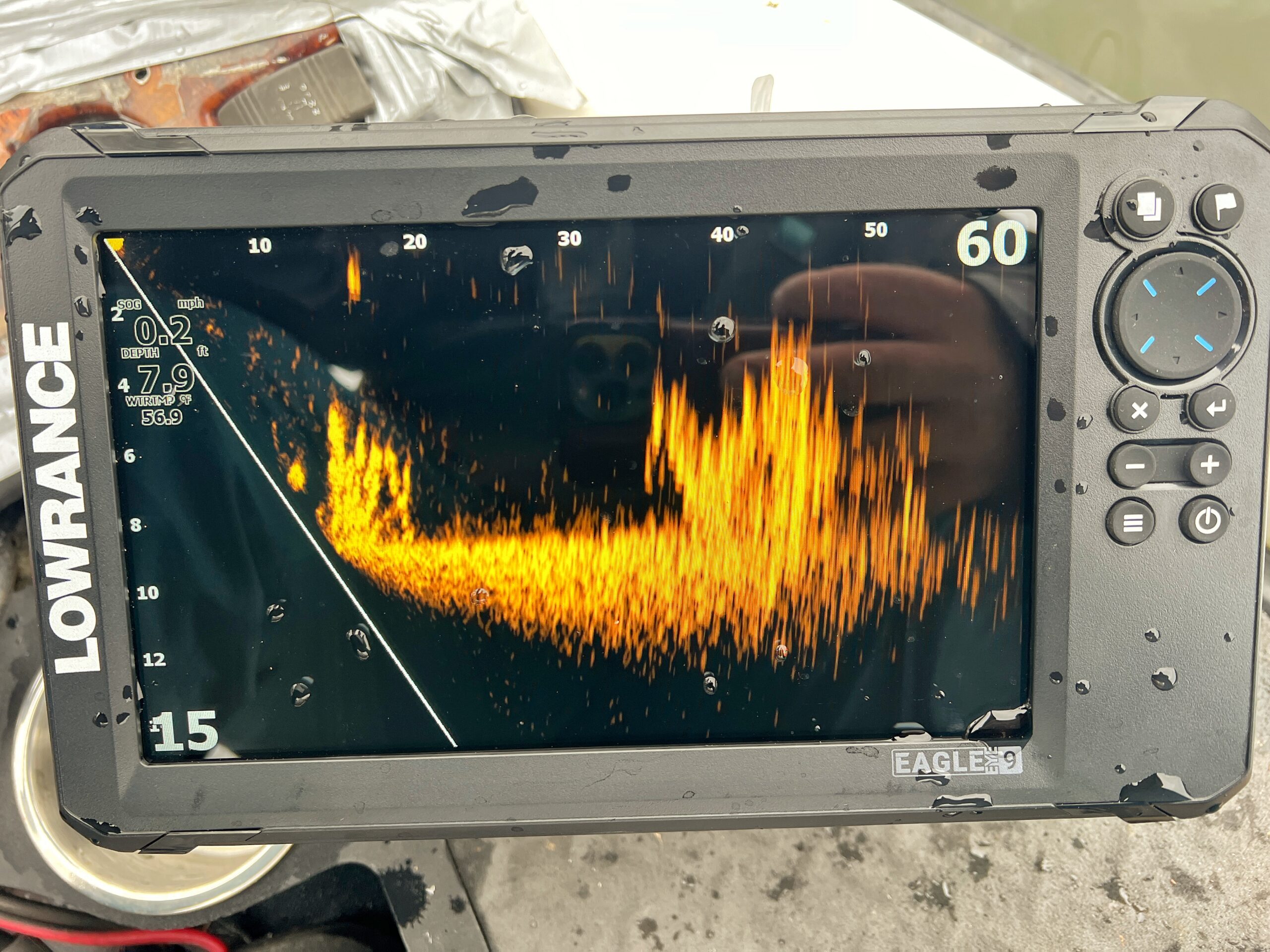
Lowrance is the only company currently offering a Live sonar unit for under $1,000. I was able to track my bait out at 50 feet, and the picture is surprisingly clear for the price. I was even able to watch a 3-pound bass come up off a stump and eat my bait on my first trip out with it. However, the Live feature on the Eagle is a bit limited compared to other high-end Live sonar units. For starters, the bottom left of the screen is blacked out. This is where you would typically see what’s happening right in front of and underneath the transducer. You can swap to a "Live Down” mode to see this area, but it requires toggling between screens. I also noticed that there’s an area on the screen that sometimes blackens along the surface, especially when panning back and forth quickly. This typically affected only the top 5 feet or so of the water column. But all things considered, this is a fantastic starter unit for someone wanting to try forward-facing/live sonar.
In addition to the Live sonar, the Eagle has built-in C-Maps and the ability to make your own maps using Genesis Live. There’s DownScan and Side Scan, too, making this a great all-around graph. So if you’re interested in trying out Live Sonar but don't want to make a huge investment just yet, this is a great entry-level fish finder.
Best for Mapping: Garmin EchoMap UHD2 73SV w/ GT-54 Transducer
Specs
-
Screen size: 7 inches
-
Price: $999
Pros
-
Detailed maps
-
Touch screen
-
Easy to take on and off boat
Cons
-
No live sonar
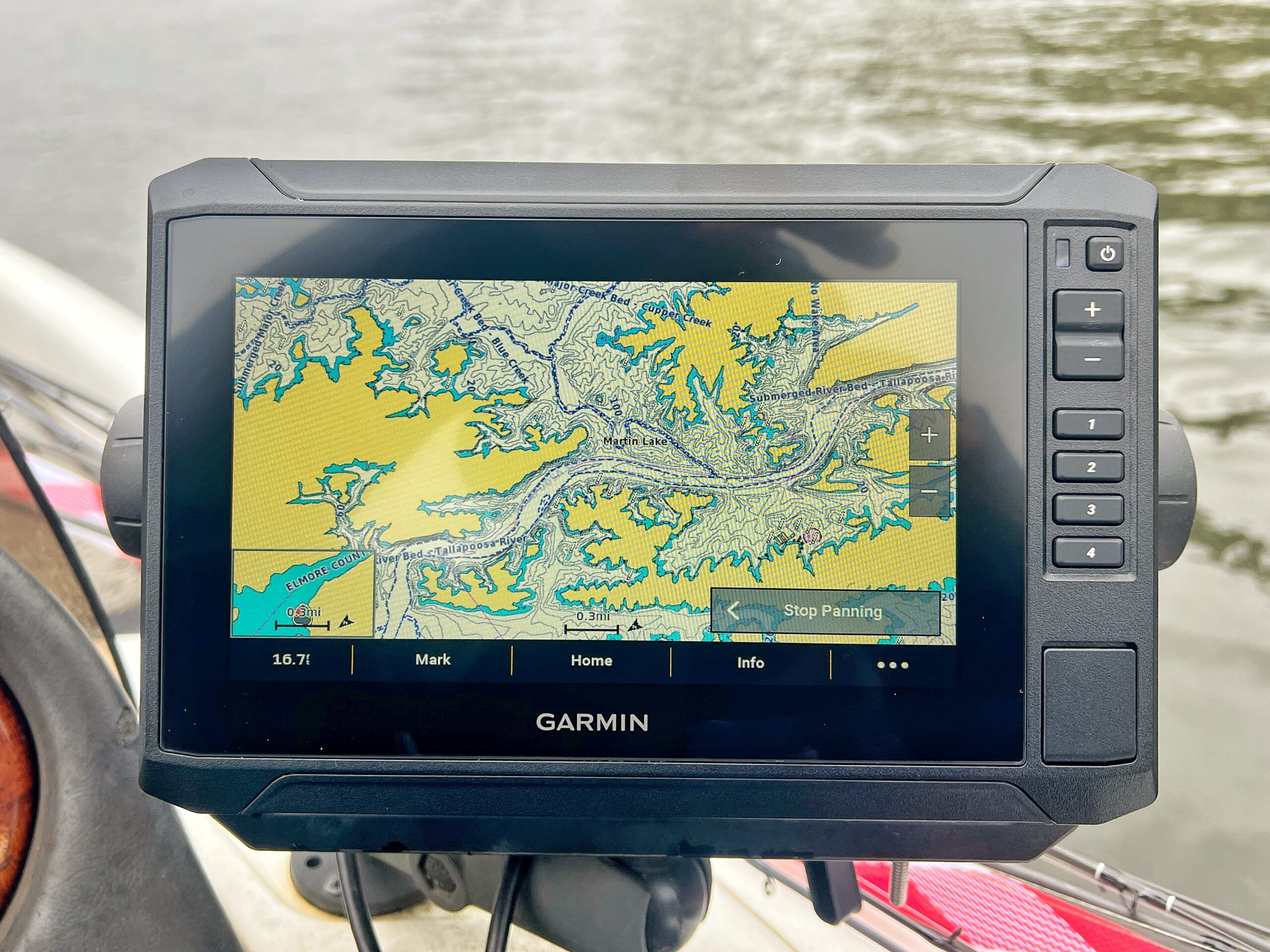
A few years ago, Garmin acquired Navionics, a premier topographical mapping company. Now, the UHD2 units and several of Garmin’s other graphs come preloaded with the Navionics maps. These are great maps that I’ve used for decades to find underwater points, humps, drops, and other contours and structures. The maps are detailed and accurate, and this graph covers the entire nation, rather than requiring separate cards for different regions, as in the past.
In addition to its mapping capabilities, the EchoMap UHD2 73SV includes traditional sonar, as well as ClearVu and SideVu, which create detailed images of what lies beneath the boat and to its sides. The ClearVu is crisp and clean. I’m still trying to dial in the SideVu—it’s a bit noisy, but that may be due to where I have the transducer mounted. For $1,000, this is one of the most well-rounded units available. This is an especially great graph, especially if you want your fish finder mounted at the console, where Live Sonar is unnecessary and great mapping is essential.
The EchoMap UHD2 was also the only one of the three I tested with a touchscreen, which is nice for dropping waypoints and dragging the map around. And the Quick Release Cradle is fantastic. With the Quick Release Cradle, just flip one latch and the unit detaches from the base, leaving the cables and bracket intact and ready for the next time you want to pop your graph on and go fishing.
Best Budget: Garmin Striker Vivid Series 7CV w/ GT20-TM Transducer
Specs
-
Screen size: 7 inches
-
Price: $420
Pros
-
Excellent value
-
Can create your own maps
-
ClearVu and chrip sonar
Cons
-
No live sonar
-
No SideVu
I mounted the Striker Vivid 7CV on my kayak, where I’m not concerned with Live sonar or in-depth topographical charts. So the EchoMap with its Navionics isn’t really necessary, and the Live sonar of the Eagle 9 isn’t useful either. But the Striker Vivid Series 7CV is just right. This 7-inch graph comes with traditional sonar and ClearVu to help you see what’s beneath the boat, and it has the ability to make its own charts.
Using the built-in QuickDraw Contours feature, you can create your own topographical charts with the Striker Vivid 7CV. I tested this feature on the water by trolling back and forth across a rocky point. The unit produced a very detailed map with topo lines and color coding for shallow, mid-depth, and deep water. This is a fantastic feature for a kayak if you have access to a pond or lake where no other topo is available. I also like 7 inch screen size. Plus, all of this comes in at a very affordable $420.

Why Trust Us
For more than 125 years, Field & Stream has been providing readers with honest and authentic coverage of outdoor gear. Our writers and editors eat, sleep, and breathe the outdoors, and that passion comes through in our product reviews. You can count on F&S to keep you up to date on the best new gear. And when we write about a product—whether it’s a bass lure or a backpack—we cover the good and the bad, so you know exactly what to expect before you decide to make a purchase.

THE 1871 CLUB