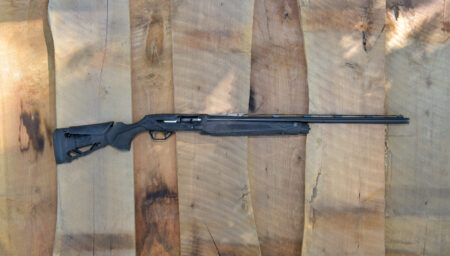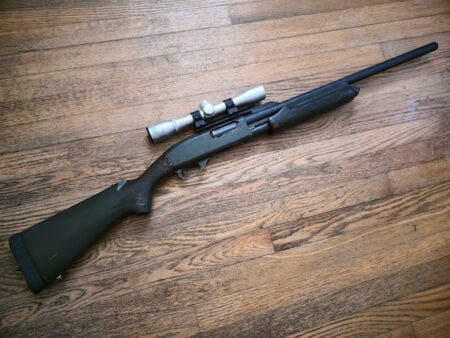
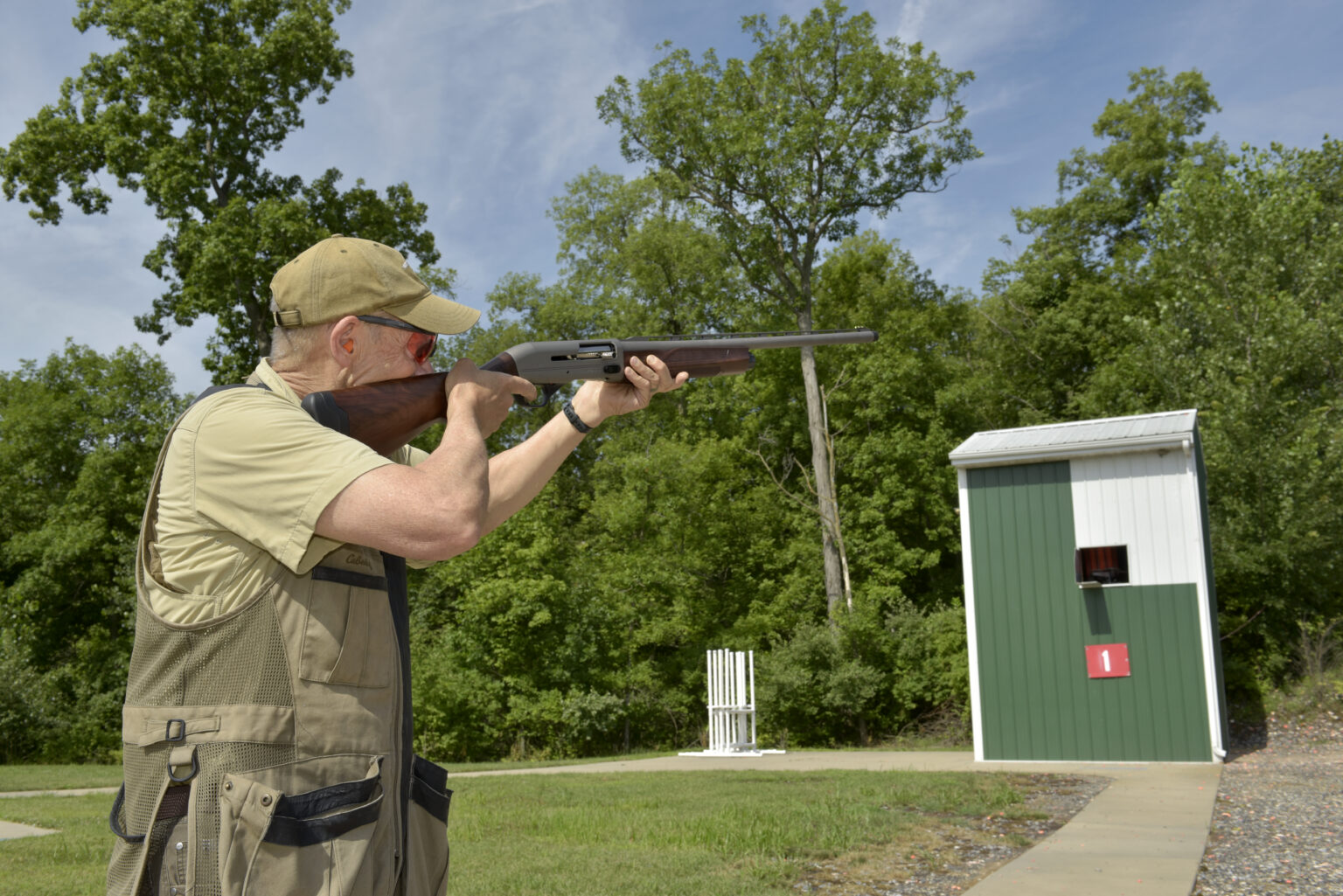
For an all-around performer, the Browning Maxus II leads the field with soft recoil and strong ergonomics. For waterfowl, the Beretta AX800 is the top pick. Upland hunters should look at the Browning A5 Sweet 16, while competitive shooters will favor the Beretta A400 Xcel. Budget-conscious buyers have a capable option in the Redfield Vector.
- Browning Maxus II: best overall pick for soft recoil, ergonomics, and 3.5-inch 12-gauge versatility.
- Beretta A400 Xcel is the standout choice for sporting clays and competitive target shooters.
- Browning A5 Sweet 16 serves upland hunters who want a lighter, smaller-gauge option.
- Redfield Vector offers budget value, but editor should verify current availability and pricing.
- Maxus II is 12-gauge only. Hunters needing other gauges must look elsewhere in the roundup.
We may earn revenue from the products available on this page and participate in affiliate programs. Learn more ›
Semi-automatic shotguns shoot more reliably than ever before. They aren’t finicky about ammunition, and they will shoot for a long time in between cleanings. The fact that semi-autos have become the primary gun among waterfowlers tells you all you need to know about the semi-auto’s reliability in tough conditions. That doesn’t mean semi-autos are made only for duck hunting. They also fit right into upland hunting, target shooting, and turkey hunting. You have plenty of choices, and a 12-gauge semi-automatic shotgun can handle almost any shooting chore.
There are also two main types of semi-automatic shotguns to choose between: gas-operated guns, which have the advantage of reduced recoil at the cost of a little more maintenance, and inertia guns, which stay cleaner longer. But what semi-automatic shotgun is right for you? I’ve compiled a list of the best semi-auto shotguns to help you choose.
- Best Overall: Browning Maxus II
- Best Waterfowl Gun: Beretta AX800
- Best Upland Shotgun: Browning A5 Sweet 16
- Best for Sporting Clays: Beretta A400 Xcel
- Best Value: Redfield Vector
- Mossberg Maverick International SA
- Beretta A400 Solo
- Retay ACE-R Synthetic
- Stoeger M3000
- CZ 712 G3
- Benelli SBE3 BE S.T.
- Winchester SX4
- TriStar Viper G2 Pro
Best Overall: Browning Maxus II
best overall

Browning Maxus II
Pros
- Soft cheek- and butt-pads plus gas system produce soft recoil
- Stock made to be easily shortened
- Browning Speed-Load feature for fast reloads
Cons
- 12 gauge only
Specs
- Weight: 7 pounds, 2 ounces
- Gauge: 3- and 3 ½-inch 12 gauge
- Operation: Gas
The Maxus II represents the next generation of Browning gas guns, building on the success of the Gold and the original Maxus. The result is a very reliable, soft-kicking gun with several good ergonomic features. The addition of a soft rubber insert in the gun’s comb does a remarkable job of reducing the gun’s already mild recoil. The redesigned stock features a parallel section at the butt so that the stock can be shortened without the need to regrind or replace the original recoil pad. The stock comes with a shim kit to fine-tune fit, and the safety can be switched from right- to left-handed in a couple of minutes.
The gun also has an enlarged bolt handle and bolt release button found on many new semi-autos. Combined with Browning’s unique Speed Load, which grabs a shell thumbed halfway into the magazine and whisks it into the chamber, and a magazine plug that is easily removed and replaced with no tool other than a key, the Maxus II is one of the most user-friendly shotguns around. And it shoots flat to the point of aim and has an overbored barrel and long choke tubes to improve patterning. It’s a gun you can take from the goose pit to the dove field to the sporting clays course with total confidence.
Best Waterfowl Gun: Beretta AX800
best waterfowl gun
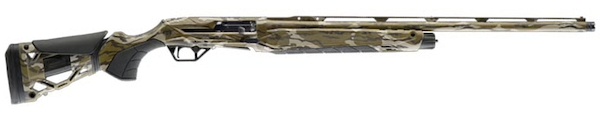
Beretta AX800
Pros
- In-stock recoil reducer and gas system cut the kick
- All-polymer receiver/grip requires minimal care and lube
- Flat-shooting
Cons
- Expensive
- Its looks aren’t for everyone
Specs
- Weight: 7.75 pounds with 28-inch barrel
- Gauge: 3 ½-inch 12 gauge
- Operation: Gas
With its distinctly tactical styling and a one-piece all-polymer receiver and grip, the AX800 looks like no semiauto that has come before it. Inside, it should look very familiar to anyone who has spent much time shooting Beretta gas guns, and that’s a good thing, as they are proven, reliable shooters. The one-piece polymer design grew out of work Beretta did with the very successful ARX160 military rifle. Polymer is weather-resistant, stable in any temperature, and doesn’t take much lube, so it stays cleaner longer. The stock is modular, with a grip that pops out with one screw and a cheek pad that swaps out easily. The dual shock-absorber in the stock effectively cuts magnum recoil.
The controls are oversized for cold, wet weather, and the gun loads smoothly. I could do without the slammer button, which snaps the bolt shut at the lightest touch, but many prefer them. The flat trigger, on the other hand, is a plus, giving the gun a clean, light pull. At 7 ¾ pounds, this gun is too heavy—and, in my opinion, too ugly—for upland hunting. Beretta intends it as a dedicated waterfowl gun, and that’s how I used it on several hunts last fall. If it weren’t for the $2500 price tag, an AX800 would be my bad-weather duck gun right now. If, though, you live for waterfowl hunting, do it in the worst weather, and care less about money than a full strap of ducks, this gun is for you.
Best Upland Shotgun: Browning A5 Sweet 16
best upland shotgun

Browning A5 Sweet 16
Pros
- Lightweight
- Classic lines
- Good recoil pad
Cons
- 16 gauge ammo selection is limited
Specs
- Weight: 5 ¾ pounds
- Gauge: 16
- Operation: Inertia
With its squared-off receiver, the new A5 Sweet 16 evokes the classic Auto 5 Sweet 16, but this is an entirely new gun on the inside. It might even be better than the original Auto 5, which used a long-recoil system and a moving barrel; the new A5 Sweet 16 is an inertia gun. It’s much lighter than the original at under 6 pounds, and it’s a joy to carry on long days in the field. At the same time, it’s long enough and well-balanced enough to swing with some discipline.
The gun shares all the features of other Browning semi-autos that make them popular. The barrel is over-bored and has lengthened forcing cones for improved patterns, and it features Browning’s Invector DS choke system that seals potential residue build-up out of the threads. It also shoots a very flat 50/50 pattern, so once you have adjusted the stock shims, this gun shoots right where you look. The Sweet 16 comes in a number of styles, including synthetic-stocked models, but the one you want to have as an upland hunter is either the walnut version or, better yet, the Lightning version featuring the “round knob” grip that helped make the original Sweet 16 so distinctive-looking.
Best for Sporting Clays: Beretta A400 Xcel
best for sporting clays

Beretta A400 Xcel
Pros
- Kick-off recoil reducer works very well
- Ultra-reliable
- Easy to clean
- Comes in a model stocked for women, too
Cons
- Only comes in 12-gauge
Specs
- Weight: 7 ¾ pounds
- Gauge: 3-inch 12-gauge
- Operation: Gas
Look around at any major sporting clays shoot. If a competitor is shooting a semi-auto, it’s a Beretta. No one makes target semi-autos like Beretta does, and the redesigned A400 Xcel removes the one feature that turned off some shooters: the bright blue receiver. Now it’s finished in more discreet silver, with a blue bolt. More importantly, the gun features an improved version of the already very effective Kick-Off recoil-reducing system. The Kick-Off, combined with the A400 Xcel’s gas system, makes this the gun with the least recoil on the market. Beretta also bills the A400 Xcel as the fastest semi-auto shotgun thanks to its “Blink” gas system. It can shoot five shells before the first empty hits the ground.
Berettas are legendary for their ability to run forever between cleanings, and when you do have to clean this gun, there’s not much to it by gas-gun standards. The piston is simpler than previous Beretta semi-auto pistons, with fewer nooks and crannies to hold carbon; the action spring sits on the magazine tube where it is easy to reach; and the gas valve no longer needs to be taken apart and cleaned.
The A400 Xcel cycles any target load, even very light reloads, with unfailing reliability, and while the stock comes with shims to permit some adjustment, there is also a “Vittoria” version stocked for women. The gun is also available in a limited-edition black receiver.
Best Value: Redfield Vector
best value

Redfield Vector
Pros
- Great value
- Oversize safety is easy to use and reverses for LH use
- Drilled and tapped
Cons
- Proprietary pad makes length adjustment difficult
Specs
- Weight: 7 pounds in 12-gauge with 28-inch barrel, 6.5 pounds in 20-gauge
- Gauge: 3-inch 12-gauge (tested), 3-inch 20-gauge, and 3 ½-inch 12-gauge also available
- Operation: Inertia
Sold only through Academy Sports, the Redfield Vector is an outstanding $449 shotgun. An inertia semi-auto made by Retay in Turkey, the Vector is a bare-bones shotgun but, from what I have seen so far, highly shootable. It has a synthetic stock with Mossy Oak camo and a recoil pad that is both effective (good) and a proprietary shape (not so good), which makes length adjustment difficult. The metal is matte-finished, and the 28-inch barrel has a stepped rib, a tiny mid-bead, and a small orange front bead, which is a great setup. The trigger pull on my test 12-gauge was 6 ½-pounds, but I measured heavier pulls on more expensive guns. Takedown is straightforward, except that the charging handle is held in place by a set screw that stands between you and complete disassembly, but it’s not a problem.
The 12-gauge I received to test weighed 7 pounds and handled and swung well for me. I had a couple of out-of-battery misfires early on, but after I shot the gun a little, those clicks disappeared. Like many inertia guns, you have to be aware and not knock the bolt out of battery. I got to shoot a 20-gauge Vector at an Academy event in Texas. While I did see one of the 12s click a time or two at the clays range, the 20-gauge I hunted doves and teal with worked perfectly through what I will confess was way too many shells in the dove field. There are reasons for this, none of which have anything to do with how the Vector shoots. This gun is an insane value, and either the 12- or the 20-gauge makes a good choice in a hunting gun.
Mossberg Maverick International SA

Mossberg Maverick International SA
Pros
- Soft-shooting
- Stock spacers and shims help it fit most shooters
Cons
- User has to swap gas pistons for shooting light or heavy loads
Specs
- Weight: 6 pounds, 12 ounces
- Gauge: 3-inch 12 gauge
- Operation: Gas
This new Turkish-made 3-inch 12-gauge Maverick gas gun stays true to Mossberg’s value-priced Maverick brand. Built on a proven design, this Maverick gun starts at $623 even as the price of Mossberg’s 940 semiautos climbs to $1000 and more. The SA requires interchangeable gas pistons to cycle its full range of loads, from heavy target loads to the heaviest 3-inch magnums. This gun also features the same spacer-adjustable length of pull seen on the 940s.
The gun shot to a 50/50 point of impact, patterned well, and was soft-shooting. I experienced several failures until I broke the gun in with a box of heavy duck loads, which rattled me but smoothed the gun right out. After that, I experienced just one light primer strike during the rest of the testing. My test gun would not cycle one-ounce loads even after break-in.
As long as I used the heavier target loads the gun preferred, the gun functioned well, although I don’t think it’s too much to ask a gas gun with a dedicated light-load piston to shoot a one-ounce load. Also, the trigger is very heavy at 7 pounds, 12 ounces, which bothers some people. Those shortcomings aside, the SA All-Purpose semiauto is well worth a look if you want a gas gun at a very low price, with a stock that adjusts to fit a wide variety of people.
Beretta A400 Solo

Beretta A400 Solo
Pros
- Kick-off recoil reducer plus gas operation equals soft shooting
- Flat trigger and enlarged controls
- Hits a price-point below 3 ½-inch “flagship” guns
Cons
- 12-gauge only
Specs
- Weight: 7 pounds, 12 ounces
- Gauge: 3-inch 12 gauge
- Operation: Gas
Priced to fill the niche below $2000 3 ½-inch guns, the A400 is basically the same gun as the A400 Xtreme but with a 3-inch chamber. The A400 has been Beretta’s main semiauto for about 15 years, and it has an excellent track record of reliability in hunting and competition. Although it is a 3-inch gun, not a 3 ½-, the A400 Solo has the same bulky, heavy feel that I think makes the A400 Xtreme an easy gun to shoot at ducks and geese, especially when you combine that heft with a recoil-eating gas system and Kick-Off system in the synthetic stock. It has a stepped rib that I like because it gives a good view of whatever I’m shooting at, and the barrel is bored to Beretta’s Steelium bore dimensions, and it comes with a set of extended choke tubes.
The A400 Solo features the same flat trigger as the new AX800, which is a nice feature and gives a clean pull that even I can notice. My test gun patterned well and cycled target loads down to 1180 fps, 1 ounce, which I hardly felt when I fired them. This is a great all-around semiauto that you could take to the dove field, the clays course, or the blind. You could carry it for pheasants if you were in shape for it, because it is heavy, in a good and useful way.
Retay ACE-R Synthetic

Retay ACE-R Synthetic
Pros
- “Airy” recoil pad really works
- “Inertia Plus” bolt stays in battery
- Good value
Cons
- Overly huge bolt handle
Specs
- Weight: 7 pounds, 5 ounces
- Gauge: 3- and 3 ½-inch 12 gauge
- Operation: Inertia
The ACE-R now comes in a variety of gauges (12-, 20-, and 28-gauge) and in several models. The basic ACE-R in walnut or synthetic is a great value inertia gun with several worthwhile features. My test gun is a synthetic-stocked 12-gauge with a 28-inch barrel. The ACE-R (there is also an ACE with a rounded receiver in place of the humpback) has a trigger group that removes with the push of a button and a bolt that remains in battery, removing the largest headache of inertia-gun ownership. And, speaking of headaches, this gun won’t give you one. The Airy recoil pad looks like the sole of a running shoe and absorbs shocks the same way. Add a soft cheekpiece and, as inertia guns go, the ACE-R doesn’t kick badly.
The deep-drilled barrel is threaded for Crio-chokes, and this gun shoots flat and delivers excellent patterns on target. I did have a couple of hangups with it early on, one tragic (pintail drake got away), the other inconsequential. Since then, the gun seems to have broken in and has been working reliably through additional duck hunts, including a frantic few seconds earlier this fall when I shot three teal and my spinner with three shots.
The trigger pull is a bit over 6 pounds. By Turkish semiauto standards, that is very good. The gun has a reversible safety, a slammer button, and an absurdly long charging handle. It actually works well in the field, but it looks terrible and makes the gun a hazard to whatever you set next to it in the gun cabinet. I replaced it with a Grumpy Duck handle and now can’t find any fault with this gun, including its value, as it is priced at a little over $1000.
Stoeger M3000

Stoeger M3000
Pros
- Lightweight
- Enlarged bolt handle and release
- Action spring on magazine tube instead of in stock simplifies cleaning
Cons
- Fit and finish only fair
- Recoil
Specs
- Weight: 7 pounds, 2 ounces (12 gauge)
- Gauge: 3-inch 12 gauge (20 gauge M3020 and 3 ½-inch 12 gauge M3500 also available)
- Operation: Inertia
Made to an entry-level standard of fit and finish, the M3000 is priced so almost anyone can afford it. In production since 2001, it has a long track record and is durable and affordably priced. The main difference in action between the Stoeger and a Benelli is that the M3000 has the action spring that returns the bolt to the battery around the magazine tube, not in the stock, so it is easy to inspect and clean. The spring up front does make the gun’s forend bulkier and gives it a weight-forward balance that feels awkward, but swings well. It also has a semi-humpback receiver profile that sets it apart from a Benelli.
A few years ago, Stoeger’s inertia lineup got a makeover with a larger bolt handle, closer button, and bigger, triangular safety, plus a milled-out loading port, all to make reloading easier. The new additions make the gun an even better value. The M3000 cycles target loads down to 1 ⅛ ounces well. The bottom line is, if you want an inertia gun that may not be a Benelli but costs a third as much, the M3000 is for you.
CZ 712 G3

CZ 712 G3
Pros
- Turkish walnut stock
- Shoots a wide variety of ammunition
- Comes with extras like shims and extended chokes
Cons
- User must switch gas pistons for shooting light and heavy loads
Specs
- Weight: 7.3 pounds
- Gauge: 3-inch 12-gauge
- Operation: Gas
CZ brings back its 712 gas semi-auto with a new, sleeker receiver profile and the enlarged safety, bolt handle, bolt release, and bolt lock buttons that shooters now demand. The Turkish-made gas gun has a matte-finished alloy frame and barrel and a satin-finished Turkish walnut stock and forend. This makes it a gun you can take to the range, the uplands, and to a duck blind or turkey woods, where the matte finish won’t shine and spook game. With both stock shims to adjust fit and extended tubes, the gun does come with a lot of extras for such a low price. The trade-off for this excellent value in a gas gun is that, unlike other designs, this one doesn’t shoot all loads without adjustment. It comes with two different gas pistons, one for light loads and one for heavy loads. Switching pistons is only a matter of unscrewing the magazine cap, pulling off the barrel, sliding off the old piston, and putting the new one on. Nevertheless, it’s outdated technology, but it makes terrific savings possible.
Benelli BE.S.T.

Benelli BE.S.T.
Pros
- Reliable
- Lightweight
- Great ergonomics
- Weatherproof coating
Cons
- Most expensive waterfowl gun on the market
Specs
- Weight: 5.6 pounds (28-gauge) to 7 pounds (12-gauge)
- Gauges: 3 ½-inch 12-gauge, 3-inch 20-gauge, 3-inch 28-gauge
- Operation: Inertia
Benelli made its name with the Super Black Eagle, the very first 3 ½-inch 12-gauge semi-auto. Their inertia guns earned a reputation for staying cleaner longer than gas guns, and for being reliable in the worst waterfowling weather. As the latest iteration of the famous Super Black Eagle line, the SBE3 with BE S.T. carries on with the company’s reputation for innovation. The BE S.T. stands for “Benelli Surface Treatment,” which is a very high-tech method of coating the guns in rustproof graphite.
The BE S.T. lineup comprises a 3 ½-inch 12, a 20-gauge, and one of the first 3-inch 28-gauges on the market. All the guns feature Benelli’s vibration-dampening ComforTech stock to reduce recoil, and the SBE3 is the first of the line to feature the Easy Locking bolt that eliminates the out-of-battery misfires you can experience with inertia guns. Each successive generation of SBE has been slimmer and lighter than the previous model, too, and they are a delightful gun to carry and shoot, even in 12-gauge.
Winchester SX4

Winchester SX4
Pros
- Soft recoil
- Proven gas system
- Enlarged controls
Cons
- Feels cheaper than SX3
Specs
- Weight: 6 lbs 8 oz (20-gauge) to 7 lbs 2 oz (12-gauge)
- Gauges: 3 ½-inch 12, 3-inch 12, 3-inch 20
- Operation: Gas
Winchester’s Super X line really started with SX2 in the 1990s as a gas gun based on the successful Gold made by sister company Browning. It used the same gas system, resulting in a soft-recoiling gun that was both simple to clean and quite reliable. The Super X3 followed. It was lighter, with modern lines replacing the X2’s retro look. With the X4, Winchester cut costs on the X3 with some plastic parts and lowered the price. It’s still the same excellent gun on the inside, but now priced at (for the 3 ½-inch gun) or below (3-inch 12- and 20-gauges) $1000. While you can spend less on a gas gun, you can also spend a lot more and not get anything extra for your money compared with what the SX4 delivers.
The SX4 comes in black, camo, and walnut versions, all with spacers and shims to fit a variety of shooters. Compact models are also available, along with a true mirror-image left-handed model and a dedicated turkey gun. All the guns feature enlarged bolt handles and release buttons, plus a big safety that’s easy to reverse for left-handed use. The guns also have overbored barrels and lengthened forcing cones for better patterning.
TriStar Viper G2 Pro

TriStar Viper G2 Pro
Pros
- Lightweight
- Reliable operation
- Bottom port milled to make loading little shells easier
Cons
- Safety does not reverse for left-handed use
Specs
- Weight: 5.0-5.8 pounds
- Gauge: .410 (12, 20, and 28 also available)
- Operation: Gas
Tristar semi-autos have won shooters over with their combination of reliability and value. These Turkish-made gas guns work well and are supported by good customer service out of Kansas City. Tristar introduced the Viper G2 back in 2007, and it has proven itself over the years to be a solid performer. It’s an easy-to-disassemble gas gun with a recoil spring on the magazine tube, not in the stock, so cleaning and inspecting the spring is easy.
For 2023, the G2 received a facelift, becoming the Viper G2 Pro. The new models have the larger bolt handle and bolt release the shooters now want, and the stock and receiver have been restyled, too. The new lines of the receiver are more than just cosmetic. The bottom port has been milled out (a modification first seen on 3-gun shotguns that have become standard), and that feature comes in especially handy for .410 shooters, who have to contend with thumb-tiny shells in the small frame of the Viper G2. People like .410s because they are light and recoilless, and the Viper G2 is built on a small-scale frame that keeps its weight well under 6 pounds.
How We Picked the Best Semi-Automatic Shotguns

When evaluating the current crop of semi-automatics, I brought a lifetime of shooting autoloaders at birds and targets to the task. Since the first question people always ask about a semi-auto is, “Have you had any problems with it?” reliability and the ability to shoot a range of ammunition were among the top criteria. After that, we looked at ergonomics, which manufacturers have paid extra attention to lately, along with weight, balance, and handling.
What to Look for When Choosing a Semi-Automatic Shotgun
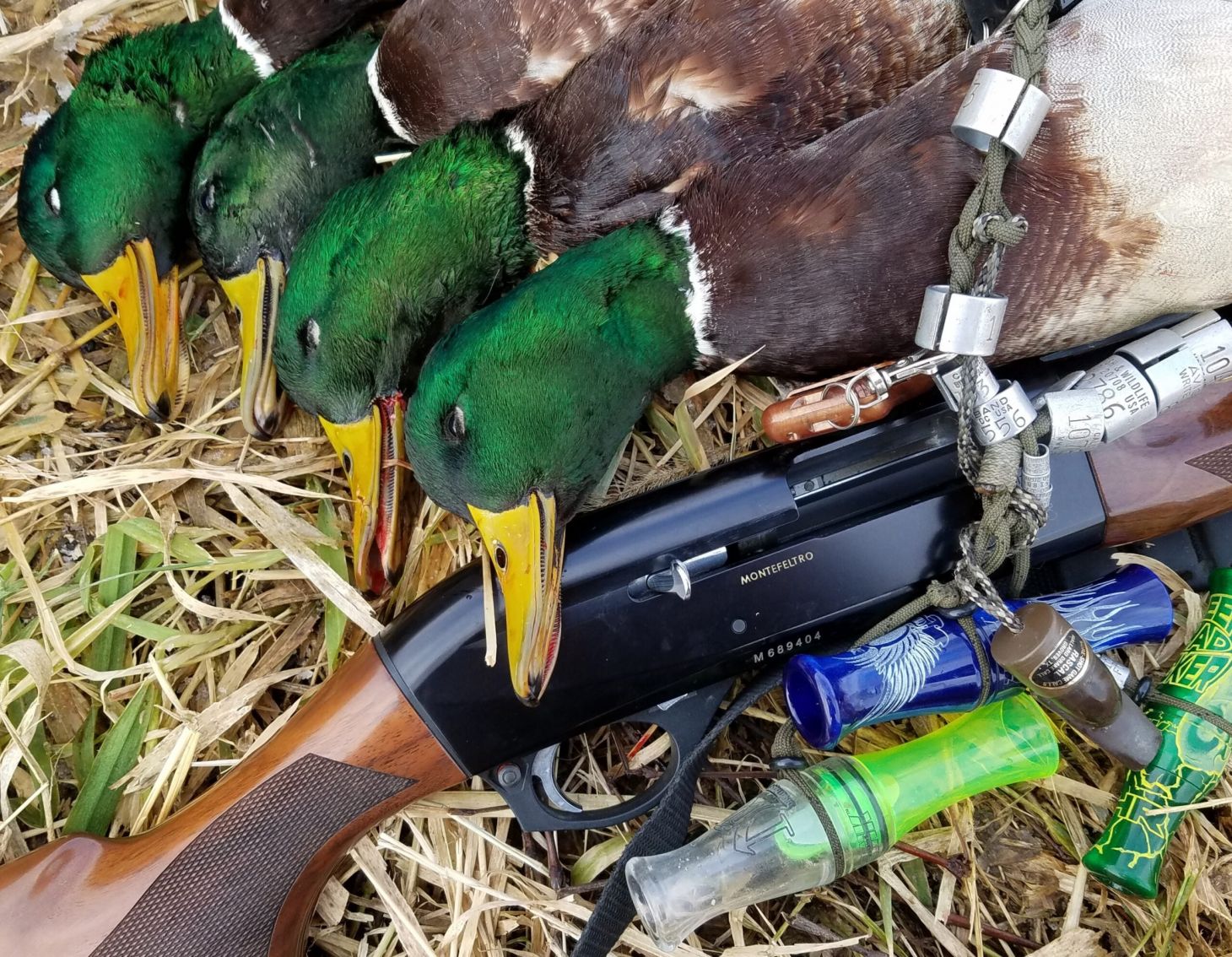
A semi-auto shotgun is absolutely the most versatile of all shotguns, but you should still choose your new gun with its main use in mind. Aside from the choices you make based on weight, barrel length, and so on, when you buy any shotgun, there are a couple of additional factors to consider when choosing asemi-auto:
- Gas guns have noticeably less felt recoil
- Inertia guns work well in bad weather
- Inertia guns stay cleaner longer than gas guns
- Typically, gas guns are more complicated to take apart and clean
Some 3 ½-inch 12-gauge semi-autos won’t cycle very light loads well. Many 3-inch guns will cycle light loads reliably. If you want to shoot targets and hunt with a gun, a 3-inch semi-auto may be a better choice.
FAQs
There is no more versatile shotgun made than a 12- or 20-gauge semi-automatic. It can shoot any load and acquit itself well in any type of shooting situation. They are light enough to carry, long and steady enough to shoot at targets, and gas guns especially reduce felt recoil. If you’re only going to own one shotgun and want to use it for a variety of purposes, it should be a semi-automatic. Even a top-of-the-line gun is worth it if you can use it for everything.
Semi-auto reliability has improved a great deal. Most good semi-automatic shotguns can run for many hundreds of rounds without cleaning and without malfunction. Inertia guns are especially known for working well in wet, nasty conditions of waterfowl hunting. Semi-autos are also much less picky about ammunition than they used to be. You have to do your part to maintain the gun, and if you do, it will serve you very reliably.
Semi-autos used to have the nickname “jam-a-matics” in the 60s and 70s. The development of the inertia action, first sold by Italian makers Benelli and Breda in the 1960s, and improvements in gas-gun design have made semi-automatic shotguns extremely reliable. They can still jam, especially if they aren’t maintained by their owners. But many hunters and target shooters go through entire seasons without a problem with their semi-auto.
A semi-auto offers more firepower than a break-action double without the need to manually cycle the action, as you do with a pump gun. Semi-autos can be made very light, with the use of alloy and plastic parts that don’t compromise performance. Gas-operated semi-autos have the huge advantage of reducing felt recoil. The moving parts of the gun essentially store, then release, recoil energy over a longer period, changing the feel of recoil from a kick to a shove.
Final Thoughts
Semi-automatic shotguns have achieved a level of versatility and reliability unknown to previous generations of shooters. There’s a gun for any purpose, plus plenty of all-purpose guns, as the list we’ve highlighted here shows. The Browning Maxus II, our best overall gun, is a good example of what a semi-auto can be: light, soft-recoiling, versatile, and adjustable to fit a range of shooters. On the target gun side, the Beretta A400 Xcel can go toe-to-toe with $10,000 O/Us in sporting clays competition, while a field gun like the Benelli SBE3 will shoot in any weather. There has never been a better time to buy a semi-automatic shotgun.
Why Trust Us
For more than 125 years, Field & Stream has been providing readers with honest and authentic coverage of outdoor gear. Our writers and editors eat, sleep, and breathe the outdoors, and that passion comes through in our product reviews. You can count on F&S to keep you up to date on the best new gear. And when we write about a product—whether it’s a bass lure or a backpack—we cover the good and the bad, so you know exactly what to expect before you decide to make a purchase.

All new! 1871 Club Field Trips