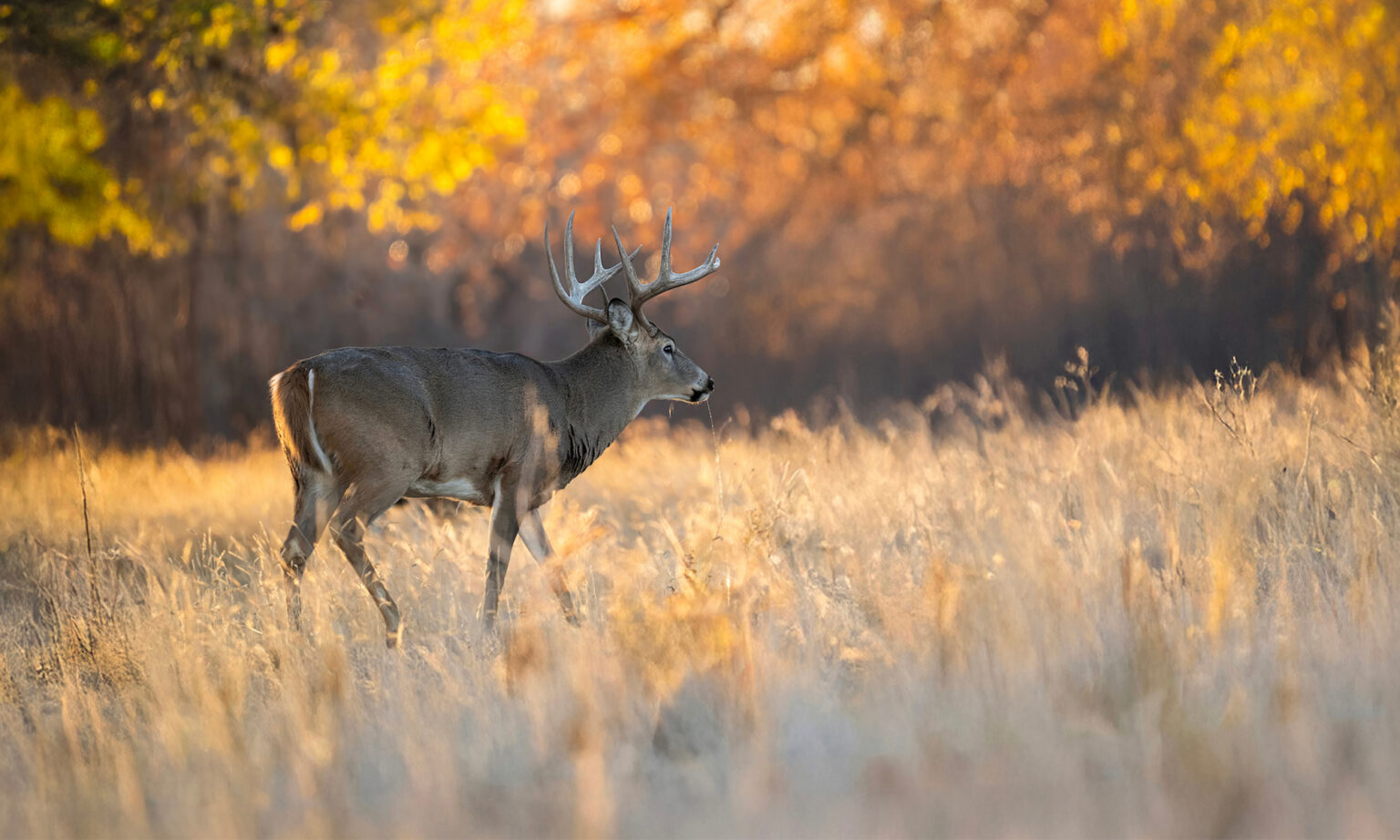
October 22 is Field & Stream's first-ranked best day of the 2026 whitetail rut because early-estrous does can trigger daytime buck movement weeks before peak rut, and Thursday hunting pressure is statistically lowest on public land. This hunt plan suits aggressive hunters ready to move cameras to scrapes mid-week. Hunters who wait for mid-November peak rut will miss this window entirely.
- Early-estrous does can push mature bucks into daylight movement well before the mid-November peak rut period.
- A University of Auburn study found deer daylight movement peaks on Thursdays after weekend hunting pressure subsides.
- Moving trail cameras from food sources to active scrapes now is the key pre-hunt scouting step.
- Hunters without flexible weekday schedules will struggle to capitalize on this specific Thursday window.
- A mature doe lingering near a scrape is the primary on-the-ground signal that a shooter buck is close.
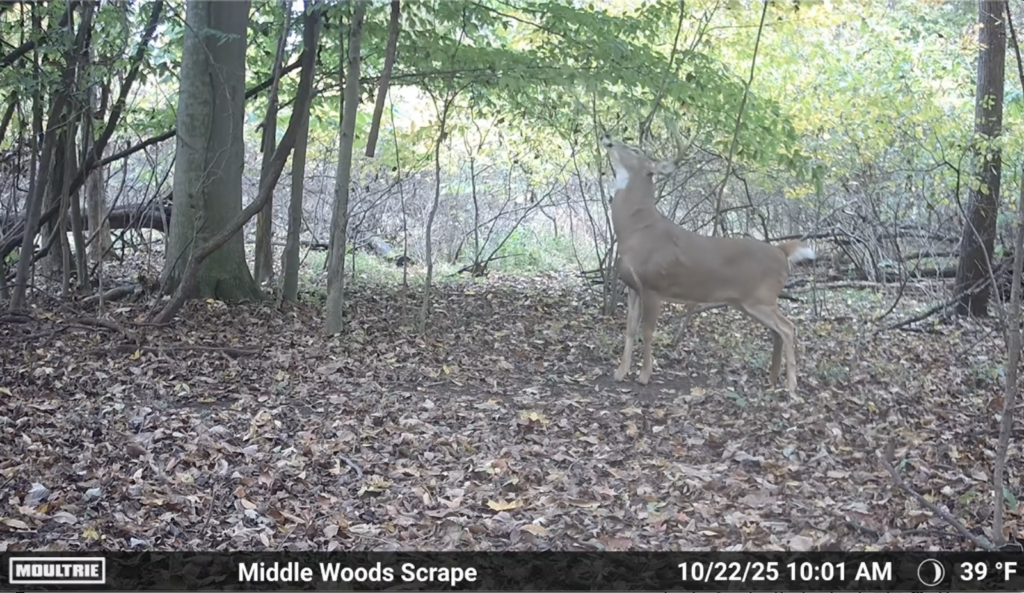
It was late October of 2025, and by the time I realized I’d missed my window, it was already too late. A week-old trail-camera picture showed my best Ohio buck eyeing a doe over a scrape an hour after sunup, as if to say “We don’t care what the calendar says, the rut is on.” I hunted that scrape several times the following week, hoping for an encounter, but that October 22nd flaunting was the buck’s final appearance there.
Last month, we revealed Field & Stream’s 2026 Best Days of the Whitetail Rut, with our first day, October 22, being a bit earlier than many hunters think of the classic whitetail rut beginning. The anecdote above illustrates why. This year, I’ll be ready, and there are several good reasons why you should expect some early and exciting rut action this coming Thursday, well before many “rutcations” begin. Below is a breakdown of why you need to hit the whitetail woods later this week, plus two hunt plans to follow to fill a buck tag early.
Rut Phase: Pre-Rut

When you look at studies showing when does come into their breeding cycle, causing the phenomenon known as the whitetail rut, you’ll see that the largest volume of does hit peak estrus every year in mid-November throughout much of whitetail range. But you’ll also notice that the progression of the rut follows a familiar bell-shaped curve—which means that some does come into heat well before that peak rut period, and some well after. As I found out last year in Ohio, those early bloomers can turn a night-walking buck into a daytime mover quickly—which is exactly why you should be ready to capitalize on during this prime window of opportunity.
For the public-land hunters, there’s another factor that stacks the odds in your favor now. A University of Auburn study showed that deer movement decreases after the weekend swell of hunters, recovering to the maximum daylight movement on, you guessed it, Thursday.
So, now that you’re thoroughly convinced the 22nd may be a great day to hit the woods, here’s a game plan to possibly turn this early rut pick into a day afield you won’t soon forget.
Related: The 7 Best Days of the 2026 Whitetail Rut
Overall Game Plan for Hunting October 22nd
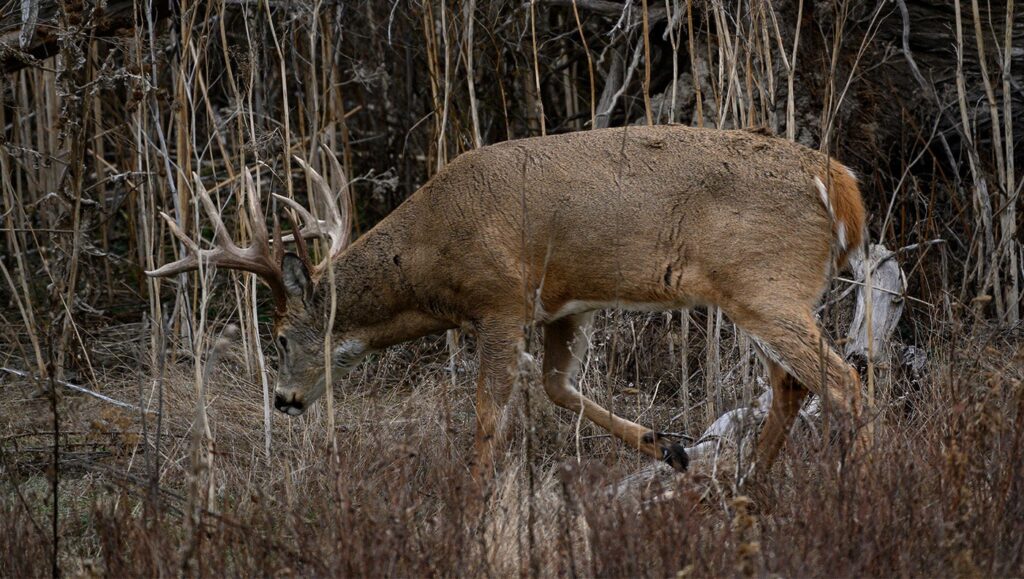
If you haven’t moved trail cameras from early-fall food sources to scrapes yet, now’s the time to do it, so you can start getting realtime intel on active bucks. Finding a hot scrape you can easily hunt is the gold you’re digging for, and seeing a mature doe hanging around one is a clue that a big boy may show soon. Start scouting for this telltale sign a few days before the 22nd at midday, when most deer are still bedded and you’re least likely to bump them. Be sure to pay attention to your favorite weather app, because choreographing your boots-on-the-ground intrusion with a weather event of wind and rain is a perfect way to gather vital scouting data while disguising your movements.
This is exactly what happened for me a few years ago on some pressured public land in Michigan. With winds high and fresh buck sign at an abysmal low, my father and I headed to a new area off the beaten path toward a low swampy area that historically holds good deer. And while some scouting missions are a strikeout, this was a home run; we found a massive rub- and scrape-line in a transition zone between ag fields and the swamp. The gales calmed that night, and the next morning found me 20 feet up an oak overlooking that scrape line as the rut-ready buck trotted by at just 12 yards.
So, what you’re looking for now is a daylight-active, shooter buck in an area you can hunt him without excess intrusion. Big field edges, large food plots, or wide-open timber may not be in play now, especially in high-pressure states where bucks aren’t rut-crazed enough to completely expose themselves yet. Transition areas or small kill plots with nearby cover are a better bet. For these early hunts, a big key is being able to enter and exit without spooking deer, because these areas will continue to be good as October draws to a close.
In timber, look for edges or open pockets where thick security cover meets a hub of trails to catch bucks coming and going in the early morning or late evening hours. If a preferred food source like acorns is still viable, this may be a place mature bucks will start to flirt with daylight. Big, fresh rubs the size of your forearm or bigger, tracks no more than a day or two old, and freshly pawed scrapes are your signal to immediately prep your ambush. And if you’re not totally sure about the sign you’re seeing, consider hanging a trail camera to confirm so you don’t waste time hunting a still-nocturnal buck.
So, what if your scouting mission turns up no fresh sign? A trick I’ve used to help prod bucks into daylight activity is creating a little competition with mock scrapes. Doug Roberts, owner of Conquest Scents, says his favorite time to use estrus scents is actually before a majority of does are ready to breed. Why? In his words: “Earlier in the rut or pre-rut, bucks are ready to breed, but not many does are. By introducing an estrus scent, you have less competition with real does, which can put the odds in your favor that a buck will take notice.” Just be sure to mind your scent while touching licking branches and exposing the dirt, as leaving human odors will produce the opposite effect of what you’re after.
Okay, now lets get to your specific hunt plans.
Related: The Best Cellular Trail Cameras of 2026, Expert Tested
October 22 Morning Hunt Plan: Try a Transition-Area Ambush
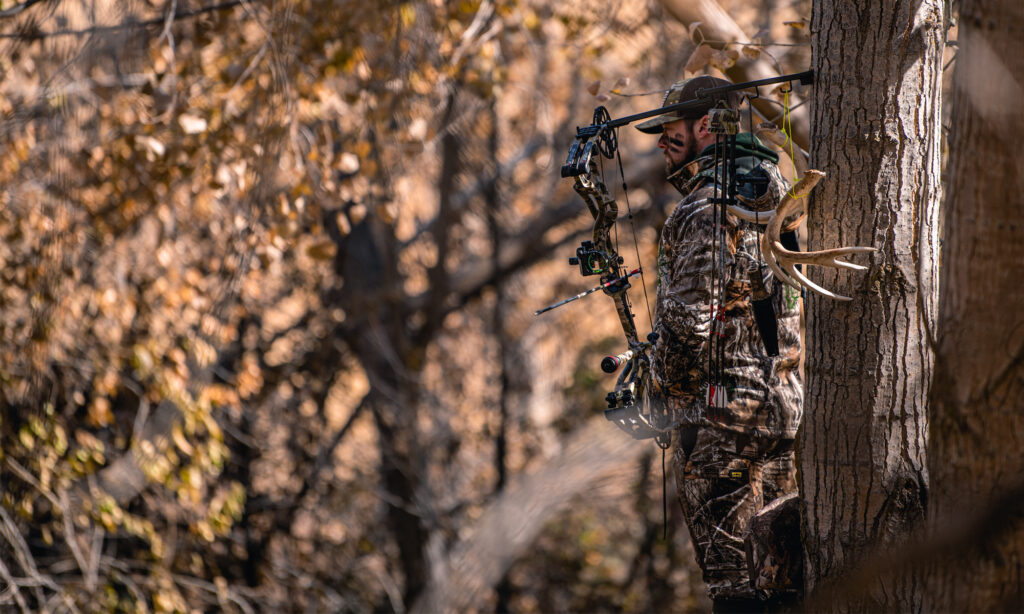
So you have an active scrape, food source, or combination of the two that’s heating up. But throwing caution to the wind and just diving in is not a good plan, especially in the morning. Bumping deer at these locations is like dousing a rising flame with a firehose. So, only hunt the morning now if you have a rock-solid entry and exit that won’t spook deer. Otherwise, stick to the eventing hunt for now.
If you do decide to make a strategic morning ambush, a killer setup to catch a rut-antsy buck is that transition area in the timber discussed earlier or a small kill plot that you’ve confirmed has daylight buck activity. You’re looking for bucks lingering a bit longer as they return to their bedding areas, so a transition or staging area close to bedding allows you to slip in well before daylight and before any deer ambles within range. Being set at least an hour or more before daylight is my rule of thumb, decreasing the likelihood you’ll alert deer still at primary food sources like fields or large food plots.
If a shooter happens to hang up in fringe cover, try a few non-aggressive grunts, or maybe tickling rattling antlers together to spark curiosity and coax him into closing the distance. Just remember bucks aren’t fully amped up like they will be in a few weeks, so err on the side of caution when it comes to aggressive calling and rattling. And be sure to stay late into the morning, allowing all deer to pass and return to bedding as you slip out the back door and plan the evening sit with deer being none the wiser.
Related: Buck Scrapes: Pay Dirt of Fool’s Gold?
October 22 Evening Hunt Plan: Bed-to-Feed Ambush
If you hunted the morning and saw a good buck move through unspooked, but not offer a shot, head back to that same area as long as the wind is right and adjust your setup to get on him. If not, spend some time at midday trying to mine the very latest intel. Some of the best information I’ve ever received are sightings—via trail camera or eyeballs—of shooter bucks entering a bedding area in the morning. These bucks will often use the same route that evening to reach nearest and best food source or scrape line, tipping you off to exactly where you should be waiting.
If a morning woods transition area was flat, for example, an evening kill plot with an active scrape may be the winning play. And as the sun dips, if deer seem to be lagging back in bedding areas, a few short hits of the bleat can may be enough to pull him right in front of your sights. On this very date three years ago, I snort-wheezed a nice 8-pointer to within steps of a subdominant buck decoy. He’d been working a field-edge scrape when I called to him. He lifted his head, stared for a bit, and then stomped clear across a clover field to face off with my fake. He was bristled up and ready to fight when my arrow hit home. I texted my buddy to tell him, and he said, “Well, I guess the rut has started.”

All new! 1871 Club Field Trips