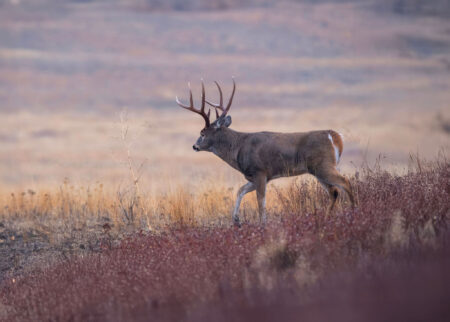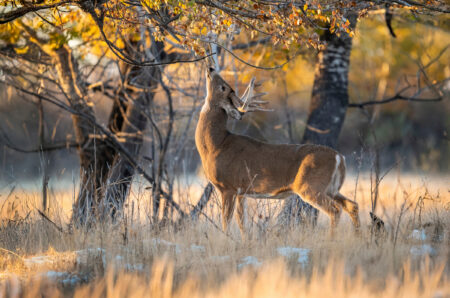
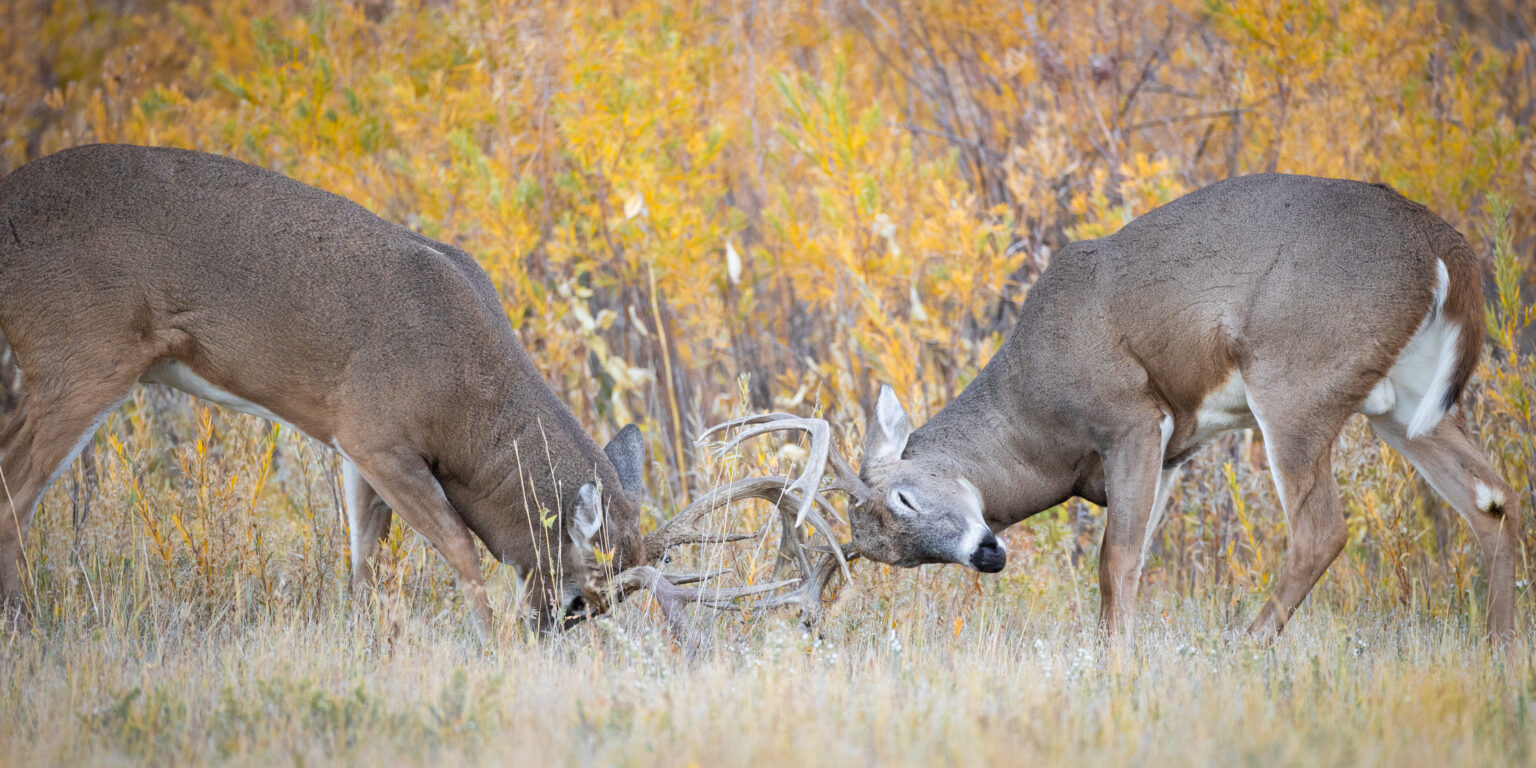
What better time than Halloween to cross paths with, er, a monster? On October 31st, 2020, I had a run in with my largest buck ever, a 16-point giant with pronged eye-guards nosing a doe in a thick timber bottom. And although I didn’t get off a shot that evening, the information I gained led to a bloody arrow on a nearby ridge-top the next morning.
Our second Best Day of the Rut is a historic favorite with deer hunters, and for good reason. If you missed our first pick on the 22nd, or struck out, don’t worry. This Saturday should be a perfect time to get in on some whitetail-woods magic if you can be in the right spot. Here’s your playbook for turning the leaves red on this spooky day, and dragging more than just a bag of candy home.
Rut Phase: Immediate Pre-Rut
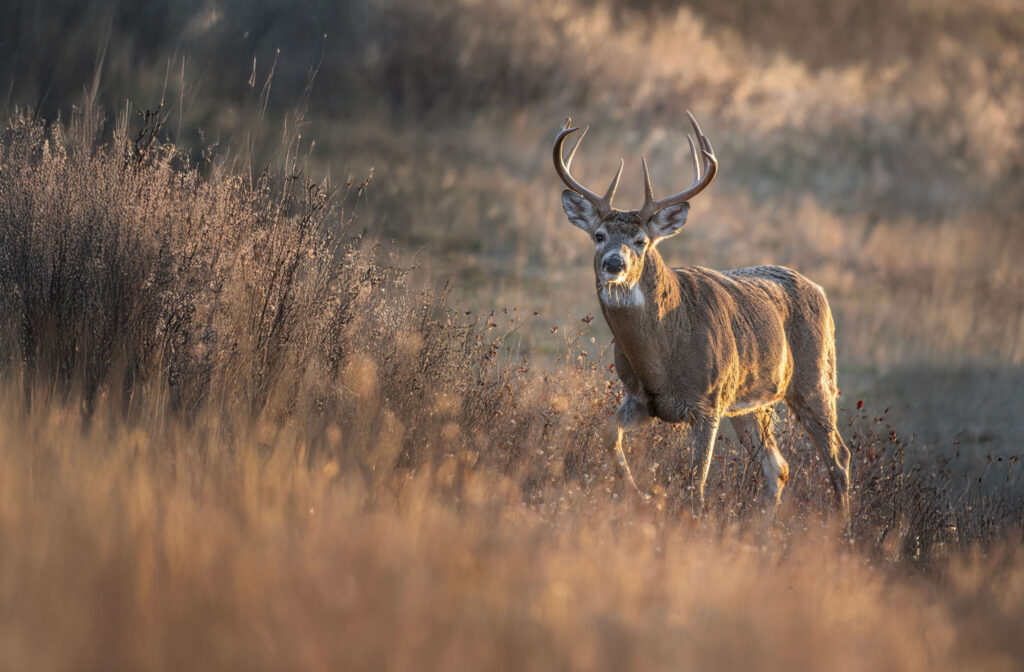
Buck testosterone levels are close to their peak in much of the whitetail’s range by the end of October, and that pushes many night-lurking bucks into making daylight appearances for the first time, seeking the growing number of does nearing estrus.
The majority of does are still not ready to breed yet during this part of the pre-rut, but many are getting close and bucks are well aware. Keep in mind that weather events can greatly influence the intensity of action you see. Warm weather can throw a wet blanket on things for sure, but a few chilly mornings, or better yet, a full blown cold front can trigger a seeming explosion in daylight buck activity.
Mature bucks that have largely sat on the sidelines watching their younger counterparts awkwardly make passes at the local does often decide to enter the game in this late October time frame. What’s more, bucks are still largely sticking to routines in their core areas right now, allowing you to set up on the patterns you’ve been observing all fall. And the cherry on top ? Our pick falls on Saturday, a day most hunters don’t have to answer to the bossman and can carefully plan a precise hunt, both morning and evening, that could pay off big. So, let’s look at your best approaches for Halloween’s morning and evening sits.
Related: The Best Days of the 2025 Whitetail Rut
October 31 Morning Hunt Plan: Stake Out a Scrape Line

Mississippi State University collared-buck research reveals buck activity trends later into daylight in the morning hours, allowing savvy hunters opportunity that evenings do not offer. Once in security cover and bedding areas, bucks do not immediately bed down, especially now. Falling temperatures and rising testosterone extends this activity window as bucks continue their nighttime pre-rut activities of scrape-making, rubbing, and checking local does well into daylight.
Your play on this late October morning is to use your scouting intel to set up on a hot scrape or scrape line in transition cover near a known bedding area. And by “hot” I mean a location where a buck has proven he is willing to visit scrapes repeatedly at or near daylight. If you do not have this information, there’s still time before the weekend for some midday speed-scouting, as long as you’re confident that you can scout specific transition areas without alerting bedding bucks. Although white acorns may be scarce by now, finding a hot food source like a few late droppers near these transition scrapes could be a lethal combination.
Entry and exit are key on your morning hunt. I try to plan approaches away from destination food sources and at a 90-degree angle to the buck’s known travel pattern or scrape line to minimize the chance of bumping him or any other deer, because if this play doesn’t work, it could be a great setup for your evening sit or our next best day of the rut as long as deer don’t catch on.
An alternate setup in hilly terrain that’s a favorite of mine is a ridge-top lookout. The earlier mentioned 16-point fell prey to this setup, because it combined a scrape line to my left along a travel corridor, a well-worn trail in front of me connecting two doe bedding areas, and a wide field of view to call to any wandering bucks I happened to see. At around 8 am, I caught a glimpse of the big 16 wandering away from me about 80 yards out and heading towards a neighboring bedding area. A couple loud grunts stopped him in his tracks, and another brought him marching to 25 yards for the shot. Curiosity is the killer for this pre-rut trap. A buck has to commit in an attempt to see the mystery buck that’s somewhere over the ridge and out of sight, and if you have similar terrain or thick walls of cover bucks can’t see through, it can be a killer setup.
And don’t be afraid to cold call with a few grunts every 30 minutes or so. At this time of year, I’ve seen it bring unseen bucks on a string that are cruising through just looking for love or a fight. If you get a visual on a buck that’s holding up, add a snort wheeze to get his attention. He’s obviously serious enough to be active in daylight—and is likely aggressive enough to respond.
Related: 50 Rut Hunting Tips from the Pros
October 31 Evening Hunt Plan: Stay Put or Meet the Does for Dinner
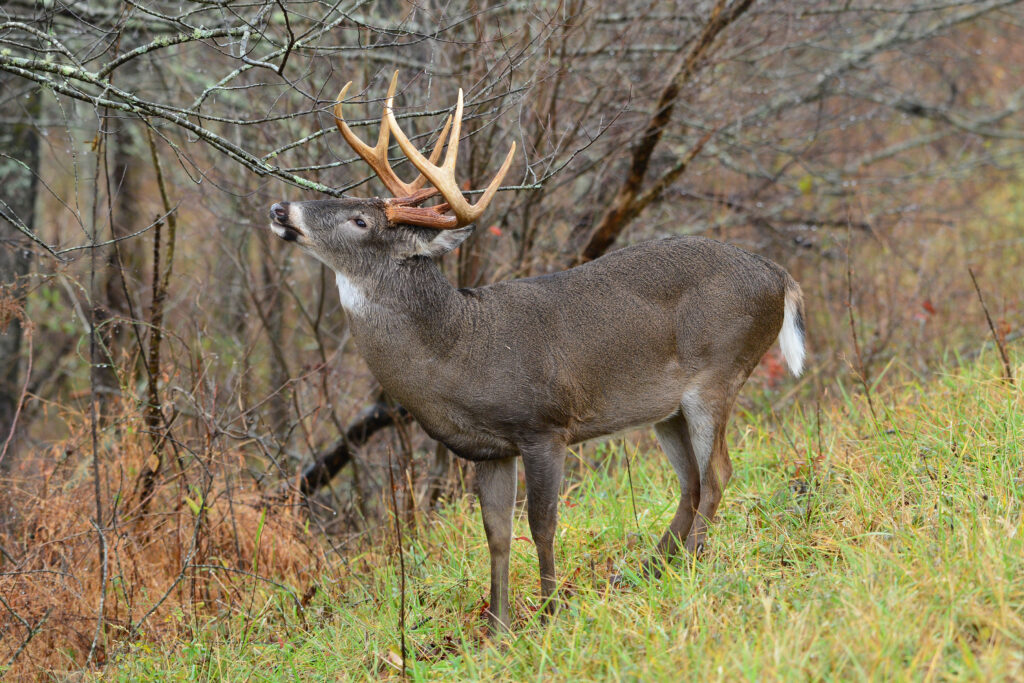
If you didn’t seal the deal Halloween morning and aren’t stuck with candy duty for the evening, a good play could be repeating the morning setup for your evening hunt. One of the strengths of hunting these transition areas is that you can get in and out undetected and potentially catch bucks lingering both morning and evening. This is where your visual observations from the A.M., and fresh scouting or trail camera data secured on the way out from your hunt can help your decision. If you do decide to hunt the same location as the morning, get set plenty early. This time of year is when hunters occasionally get those early afternoon trail camera photos which leave them sputtering, “If I’d only been there 15 minutes earlier.”
If you want to change it up for your evening sit, try slipping into an evening food source you’ve been saving for such a time as this. Difficult to hunt in the morning due to the potential for spooking deer, these doe hangouts now become more attractive to bucks than that house on the block giving out full-sized candy bars is to trick-or-treaters. New scrapes have probably shown up along these plot edges, and if a target buck has only been hitting them in night hours, this could be the day his script flips. Take extra time to make a slow, silent approach, and if you think there’ll be deer lingering after dark, arrange for someone in a vehicle to pick you up and clear the field before you leave. This will keep the plot fresh, allow you to check or put up a camera on any new active scrapes for monitoring, and set you up nicely for our next day of the rut just days away.
Bonus Tip: Read a Buck Like a Book

So how aggressively should you be using decoys, rattling, or calling during your pre-rut hunts? It’s a good question, and from my experience it depends on deer in your area, the hunting pressure there, and specific buck personalities. The goal is to incite a reaction, not intimidate. In high-pressure areas, where deer may be call-shy from run-ins with hunters, or in areas with subordinate age classes of bucks, consider a softer approach.
In areas with less pressure and a more mature age class of deer, more aggressive approaches can be used successfully. By far the best way to fire up a buck is to play off his personality. Jared Scheffler of Whitetail Adrenaline has spent decades reading bucks and judging their temperament, allowing this to dictate his approach. And getting a visual is the key. If he sees a buck pushing others around, he knows he can likely antagonize him by mirroring this with aggressive calling, rattling, or even a buck decoy. You can do the same. Rely on what trail cameras tell you, historic data, and visual sightings in the field to tailor your exact tactics to lure in a true monster—the ultimate Halloween treat.
Related: The Best Decoys for Deer Hutners

All new! 1871 Club Field Trips