This story was produced in partnership with Montana Department of Commerce.
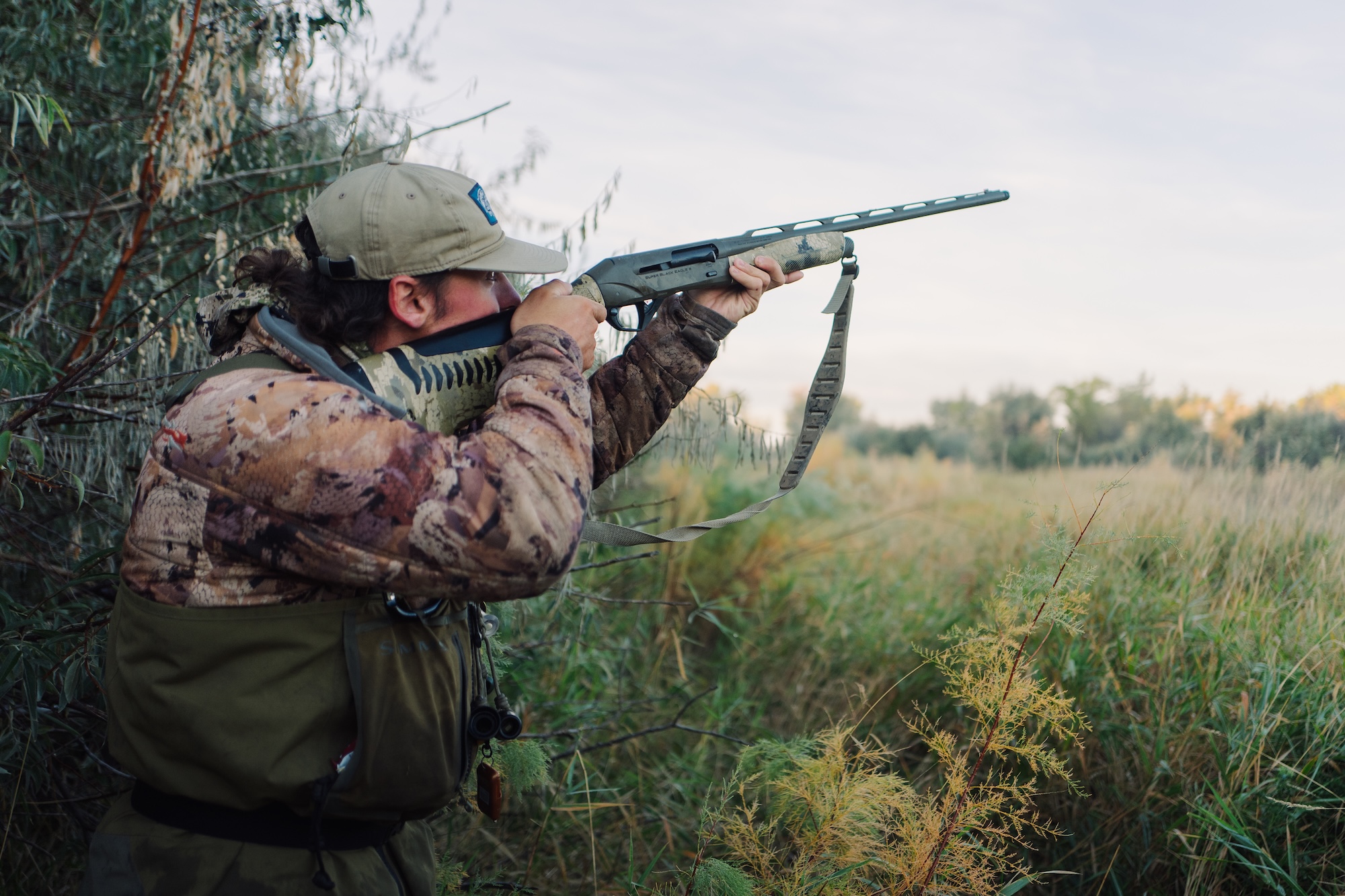
While Montana is a bucket-list destination for many anglers—for good reason—it’s also home to some of the best hunting in the country. Big-game species like elk and mule deer get a lot of the attention, but outdoorsmen shouldn’t ignore the amazing waterfowl hunting Montana has to offer, especially on the Bighorn River in Southeast Montana.
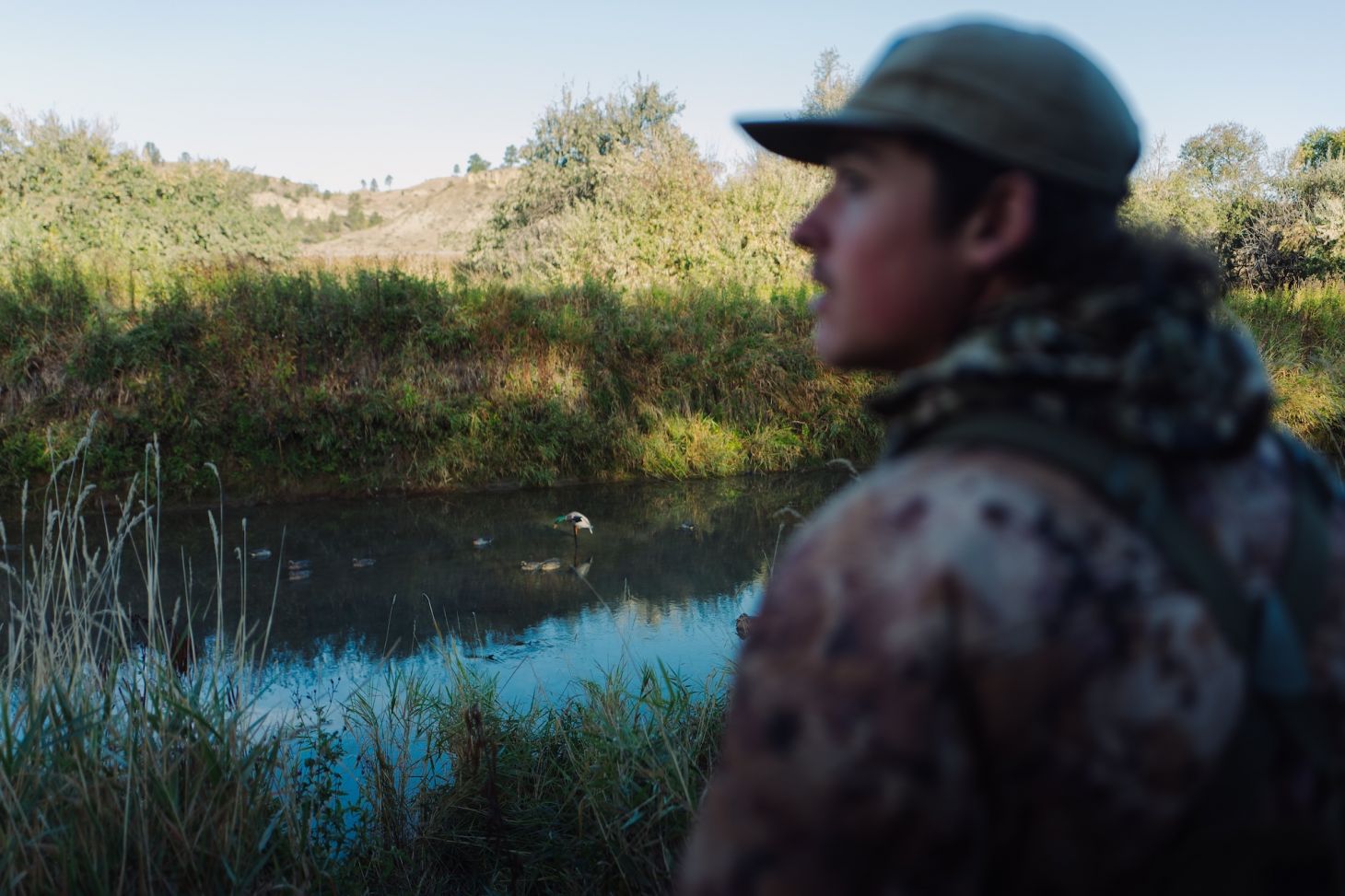
As featured in our movie “Trading Trout for Feathers,” the Bighorn is a place where greenheads drop through the limbs of cottonwood trees, Canada geese ride morning thermals, and open water remains long after northern ponds have sealed in ice. This article is your guide to experiencing that magic. Here’s a full travel plan for waterfowl hunting Montana’s legendary Bighorn River.
When to Go
The Bighorn Valley is a hotspot in the Central Flyway. The area benefits from temperature-controlled tailwater flows, which keep water open when freestone rivers aren’t. There is also abundant agriculture for birds to feed on and predictable migration pulses. Here’s a breakdown of when to plan a hunt.
Early Season
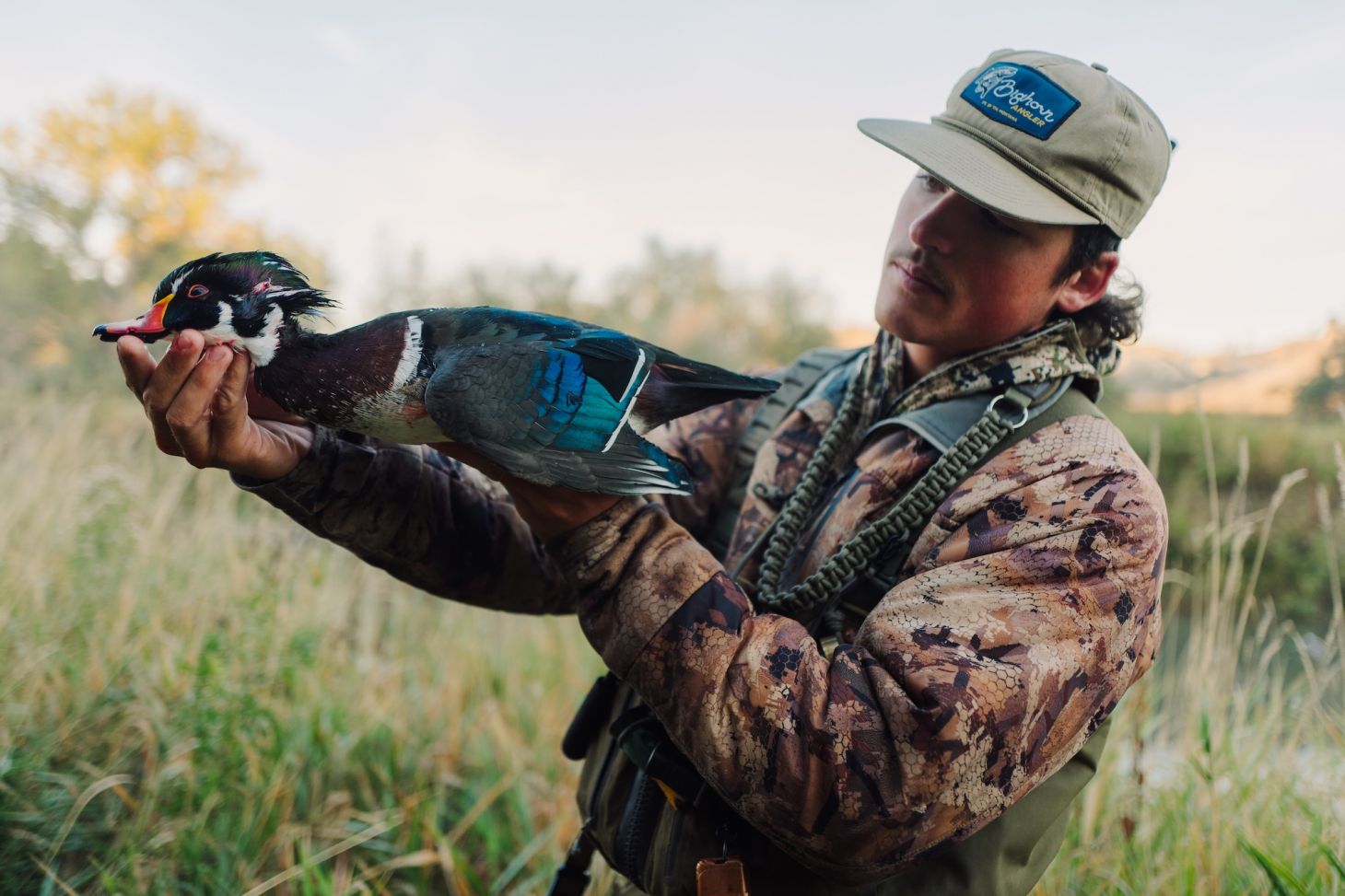
From late October to early November, local ducks (mallards, gadwalls, wigeon, teal, and wood ducks) dominate the bulk of the harvest. Early morning temps typically hover in the 30s and 40s. Ducks move in small, fast groups—and calling can be successful.
Peak Migration
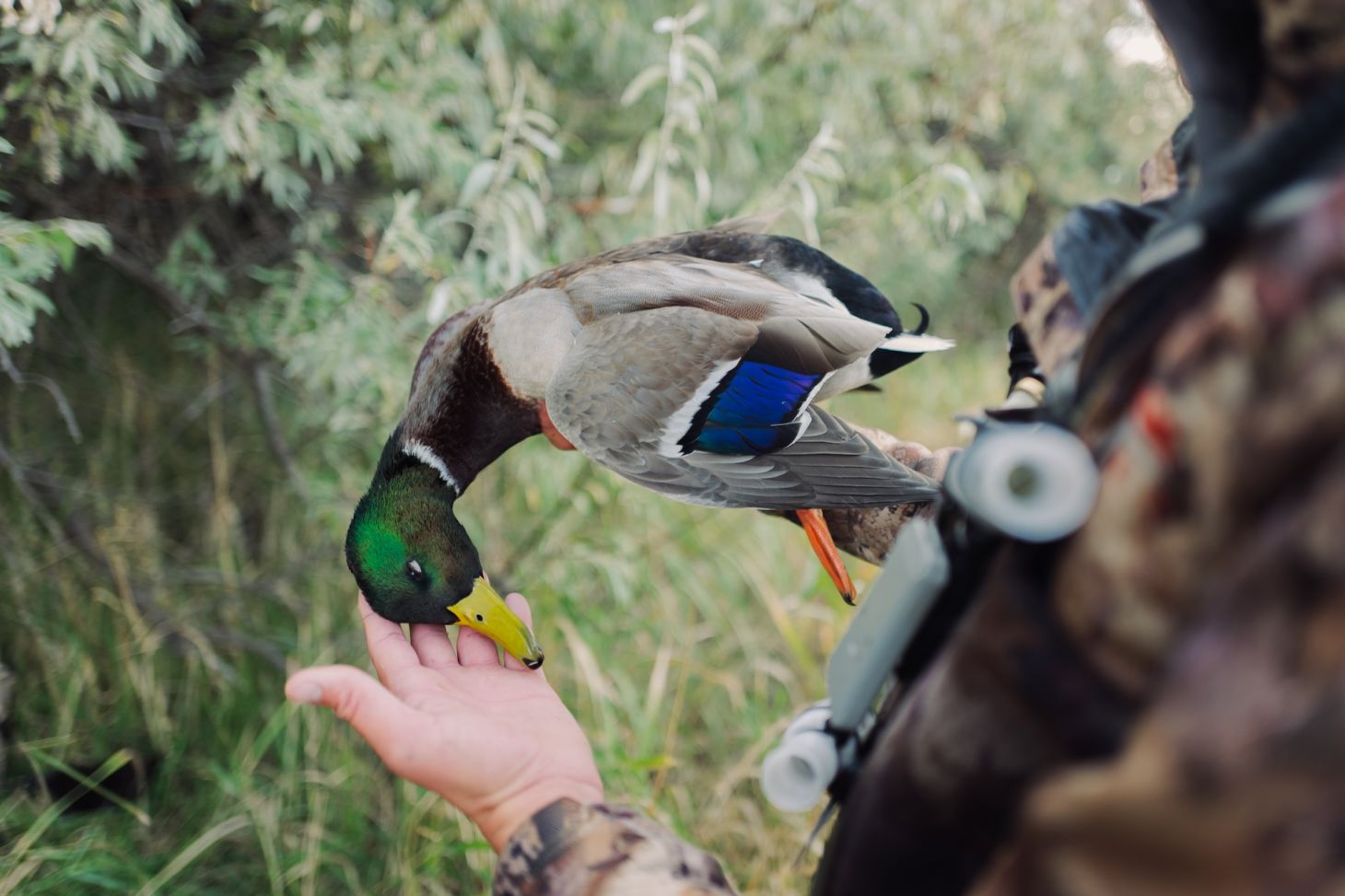
Mid to late November is typically primetime for duck hunting in Montana. This is when big northern mallards arrive in force, and Canada geese stack into grain fields near the Bighorn River. Cold fronts often push fresh birds into the Bighorn Valley, and they concentrate in tailwater sections of the Bighorn River when the surrounding slack water freezes up.
Late Season
From December through early January, mallards linger along warm, slow edges and in back channels along the Bighorn, while big flocks of geese use the main river. During this time of the year, the weather can be severe, with single-digit mornings and ice shelves, but these conditions can make for exceptional hunting.
 Hunting Tips for the Bighorn
Moving water, tight cover, and savvy birds all combine to make hunting on the Bighorn a challenging—but rewarding—experience. Here’s how to find success.
Hunt the Edges of Open Water: Controlled flows from Bighorn Lake keep pockets of the tailwater open later than other waterways in the region—and ducks pack into these zones. Look for slow side channels, gravel bars, backwater eddies, and cottonwood-lined cuts with soft current.
Keep Spreads Modest: Unlike for big-water hunts, river spreads should be compact. Stick to 1- to 2- dozen mallard floaters, with 2-4 goose floaters positioned upstream. Go easy with motion decoys as birds on rivers tend to be wary of spinners. For motion, you can rely on the natural flow of the river to give your decoys life, and jerk rigs.
Use Calling to Pull Birds into Tight Slots: When hunting small-water, calling is especially important for getting birds to pay attention to your spread. Incorporate these into your calling strategy to find success:
Soft quacks and feeding chuckles on calm mornings
Aggressive hail calls when ducks are trading high along the corridor
Loud honks to pull midday Canada geese working fields
DIY-Friendly Hotspots
For the do-it-yourself hunter, several public access points offer excellent opportunities to launch a boat or walk-in hunt. Many waterfowl hunters use jet boats on the Bighorn, but you can also find success walking in and with john boats and rafts.
Bighorn Access Site (downstream of Fort Smith)
Three Mile Fishing Access in Bighorn Canyon National Recreation Area
Mallards Landing Fishing Access Site
 Gearing Up
Waterfowl hunting the Bighorn River requires different gear depending on the season. Early on, the weather can be quite mild, but once you get into November and December, be ready for the bitter cold and wary birds. Here’s the gear you’ll need.
Shotguns
A 12-gauge is most common choice and handles geese and late-season mallards well.
20-gauge guns work just fine, too, and are great for lighter loads and walk-in hunts.
Ammunition
Steel #2 or #3 for ducks
BB or #1 for geese
3-inch shells are recommended for late-season birds.
Decoys
12 to 18 mallard floaters
2 to 6 goose floaters
fA jerk cord rig helps add natural movement.
Calls
Single- or double-reed mallard call
Short-reed or flute-style goose call
A whistle for wigeon and teal is especially useful for the early season.
Camouflage & Clothing
Insulated waders
Waterfowl parka with layering system
River-friendly camo patterns like Optifade Marsh, Bottomland, or Realtree Timber
Water-resistant gloves and hand warmer packets
Safety rope
 Where to Stay and Eat
If you’re looking for lodges, motels, and restaurants near the Bighorn River, here are some good options:
Lodging
Bighorn Angler Lodging has a wide variety of lodging types that suit all kinds of group sizes.
Three Mile Lodge is a scenic property within spitting distance of Three Mile Fishing Access.
Bighorn Fly & Tackle Shop Lodging offers rental options that come with their own kitchens during waterfowl season.
Motels in Hardin are also available during duck and goose season—and are closer to dining options than places in and near Fort Smith.
Local Restaurants & Diners
Dining options are extremely limited in Fort Smith, but there are several good options in Hardin.
Outlaws Cafe & Casino in Hardin serves classic American food, has an exhibit on famous Western outlaws, a casino, and a movie theater that shows classic films on the weekend.
Four Aces Bar & Lounge is another Hardin staple that serves fried food and cold beverages.
Lariat Country Kitchen is a down-home diner in Hardin.
Yellowtail Market is a small grocery store with a microwave and coffee bar in Fort Smith.
Hired Help
Out-of-town hunters who are new to the Bighorn and want to maximize their limited time in the area will benefit from local guides.
River Rock Outfitters is a rare operation in the area that focuses mainly on waterfowl hunting—and not fly fishing.
Bighorn Angler is a local fly shop that also organizes top-notch guided waterfowl hunts, all of which are done from riverside blinds over decoys with U.S. Coast Guard-licensed guides.
Forrester’s Bighorn River Resort specializes in upland hunting but does have a cast and blast option that combines waterfowl hunting with fly fishing.
Big Horn Valley Ranch runs all-inclusive trips with luxury cabins, an in-house chef, and experienced waterfowl guides.
The Final Word on Waterfowl Hunting the Bighorn River
The Bighorn Valley between Fort Smith and Hardin is one of the best places to duck and goose hunt in the Western U.S., particularly late in the season when tailwater flows, and nearby agriculture, concentrate birds in the area. The river runs through the Crow Reservation, here, but hunting along the Bighorn River and on private land is managed by Montana Fish Wildlife & Parks. Purchase your hunting license here and use this guide to make the most of a waterfowl trip to the Bighorn River.
THE 1871 CLUB