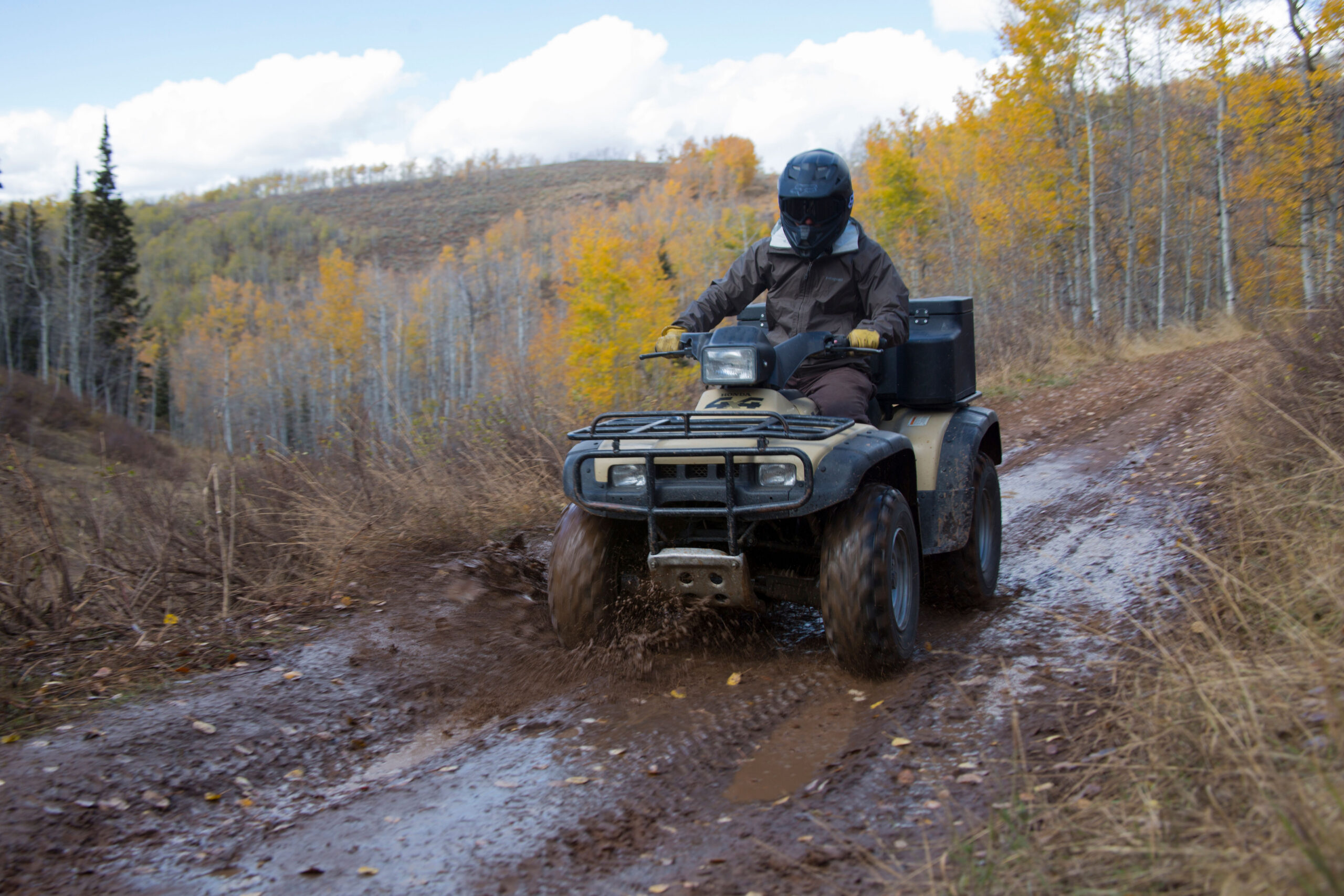
Late on the evening of Friday, May 29, President Trump issued an executive order that could reshape 50 years of off-highway vehicle (OHV) limitations on federally managed public lands. Trump’s latest order rescinds two previous EO’s that limited motorized use in certain public land areas. President Richard Nixon issued the first in 1972, and President Jimmy Carter issued the other in 1977.
Titled “Removing Unnecessary and Counterproductive Restrictions on Access to Federal Lands,” the EO calls both the Carter- and Nixon-era rules “unnecessary examples of excessive regulations.” It goes on to say that the 50-year-old EO’s have created barriers to timber and energy companies, as well as permit delays within the extraction process.
Immediate Pushback
According to a public statement from Backcountry Hunters and Anglers (BHA), the EO has the potential to fundamentally change public lands as we know them. Ryan Callaghan, BHA’s President and CEO, says he saw the move coming.
“We’ve been talking about this on the Hill since December,” Callaghan told Field & Stream in a statement shared via text message. “We have to take caution when everybody uses the term ‘access’ in a positive light. Our public lands are lands of many uses and balance is possible. But one thing that does not work is everything allowed everywhere, all at once. That’s how wildlife habitat and recreation of all stripes loses.”
The EO appears to recommend expanded off-road vehicle use on all federally managed public lands, from the National Park Service to the Bureau of Land Management. “This move doesn’t automatically open the flood gates to ATVs or e-bikes in your favorite backcountry spot,” Callaghan said. “But it will insert them into travel management plans where once they could not be considered.”
Implications for Big Game Herds
Biologist Chris Servheen worked for the US Fish & Wildlife Service for 35 years before retiring in 2016. He told F&S that removing motorized regulations from public lands will have devastating impacts on wildlife, particularly migratory big game herds in the West. “Elk seek out areas away from motorized use because that’s where they can relax, find the best food, and have less stress,” he said. “If those areas are invaded by motorized activity, the elk will have to move. They’ll be pushed off public and onto private land where hunters can’t access them.”
Servheen said that, if implemented, the EO will bring new motorized trails to places that have long been used as havens for wintering wildlife. “As snowmobiles and snowbikes invade winter ranges, winter survival rate are going to decrease,” he added. “There will be no habitat security for elk, moose, and mule deer that are already weathering severe winter conditions.”
Servheen said he expects the quality of his own elk hunting activities in Montana to decline if the EO goes through. “If you want to find big bulls [on public land], you’ve got to these places where there’s no motorized access. You go in and you find them and you pack them out,” he said. “Those elk are going to be gone. It’s going to be a real disastrous thing and of huge consequence for those of us who elk hunt.”
Dismantling a Framework
The rescinded orders worked as frameworks that guided the Forest Service’s travel management plans and the BLM’s Off Road Vehicle Use Regulations. “These plans seek to balance public access with conservation by identifying which roads, trails and areas can be open to vehicles and which are closed to protect natural resources, wildlife habitats, and cultural sites,” the Missoula Current reports. “Now, Trump’s executive order makes it so that agencies don’t have to use a minimization criteria to evaluate off-road use.”
It’s the latest in a series of moves from the White House with controversial ramifications for public lands. Back in March 2024, for example, the President signed an EO that expedited mining in or near highly protected public-land areas. Another EO allowed Elon Musk’s Department of Government Efficiency (DOGE) to eliminate essential public-lands employees with the declared aim of reducing government waste. Then, in June 2025, the Interior Department reportedly coached Utah Sen. Mike Lee during his attempted sell-off of millions of acres of BLM and USFS lands.
More recently, the administration transferred ownership of 1.4 million acres of BLM land along the Dalton Highway—a popular destination for DIY, public-land caribou hunting—to the state of Alaska. The Department of Interior has also made clear its intention to push through an industrial mining road on pristine public lands in Alaska’s Brooks Range, despite widespread opposition from the hunting and angling community. Trump also supported and signed a filibuster-proof bill that overturned a mining moratorium upstream of the Boundary Waters Canoe Area Wilderness.
Read Next: Utah Data Center Could Be the Death Knell for a Struggling Waterfowl Refuge
According to Callaghan, hunters and anglers who want a say in whether or not unrestricted motorized vehicle use should be the order of the day on their public lands should speak up now. “This should be a call for all user groups to get to the table,” he said. “Especially if you agree with BHA that there should be ample wild places set aside, free from wheeled travel.”
THE 1871 CLUB