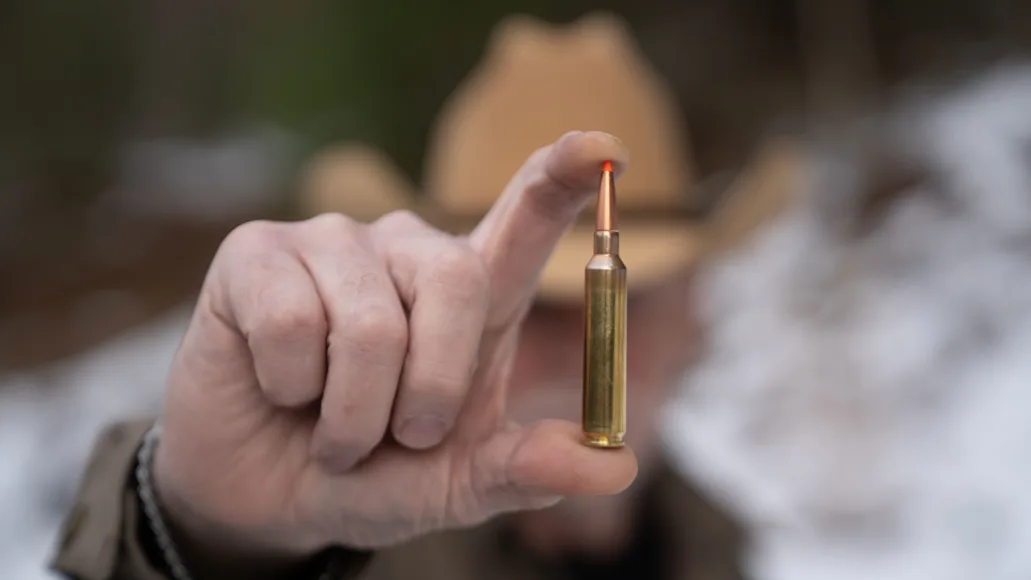
If there is a rifle cartridge that everyone is tired of hearing about it’s the 6.5 Creedmoor. However, it’s hard to discuss any of the new cartridges introduced since the Creed hit the scene without mentioning it. This is partly because the 6.5 Creedmoor started the fast-twist rifling craze that has driven the development of almost every modern rifle cartridge since. Pre-6.5 Creedmoor ballisticians found better down-range performance with more velocity. After the Creed, faster twist rates and higher BC bullets sort of flipped the script. But with the introduction of Federal’s 7mm Backcountry, we are now seeing cartridges with faster twist rates and more velocity. Enter Weatherby’s new 25 RPM cartridge.
New School + Old School
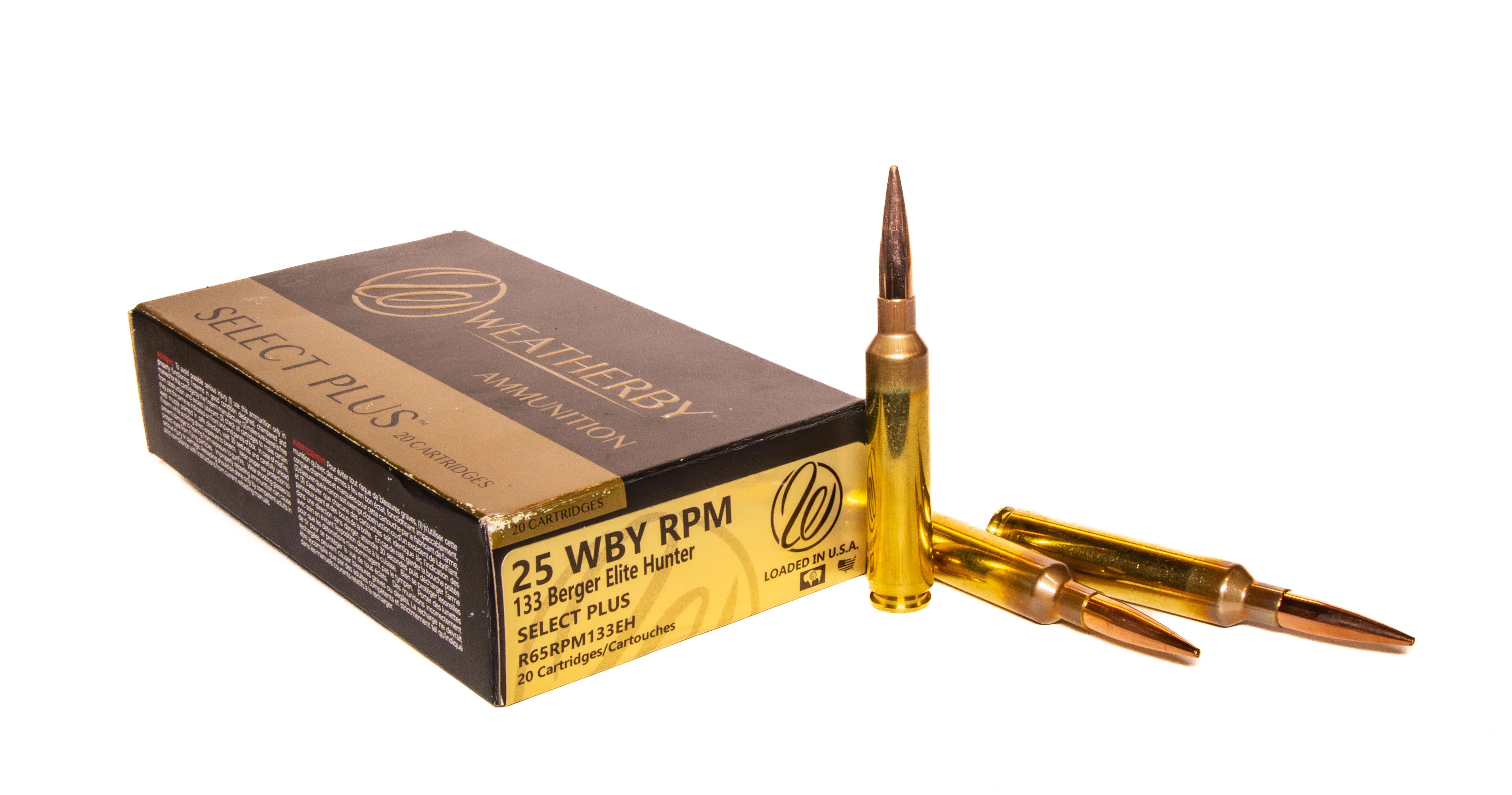
With the 7mm Backcountry, Federal went with a steel-alloy case so they could increase the chamber pressure/velocity, and they used a 1-in-8 twist rate. With the 25 RPM, Weatherby took the older approach to find more velocity, which was a brass cartridge case that could hold more gun powder. They took the cartridge case for the 284 Winchester, kept its sharp 35° shoulder, lengthened it, and then necked it down to 0.257 caliber. Essentially, this is the same thing Weatherby did to create their 6.5 and 338 RPM (Rebated Precision Magnum) cartridges a few years ago. The old 284 Winchester case has been widely wildcatted because it has the same rim diameter as the 308 Winchester and the 25-06 Remington, but it has a larger-diameter body that lets it hold more gun powder. Combined with its 1-in-7.5 twist rate, the Wetherby 25 RPM cartridge is arguably the best-performing 0.25-caliber rifle cartridge available. It will push a high-BC 133-grain bullet to 3000 fps.
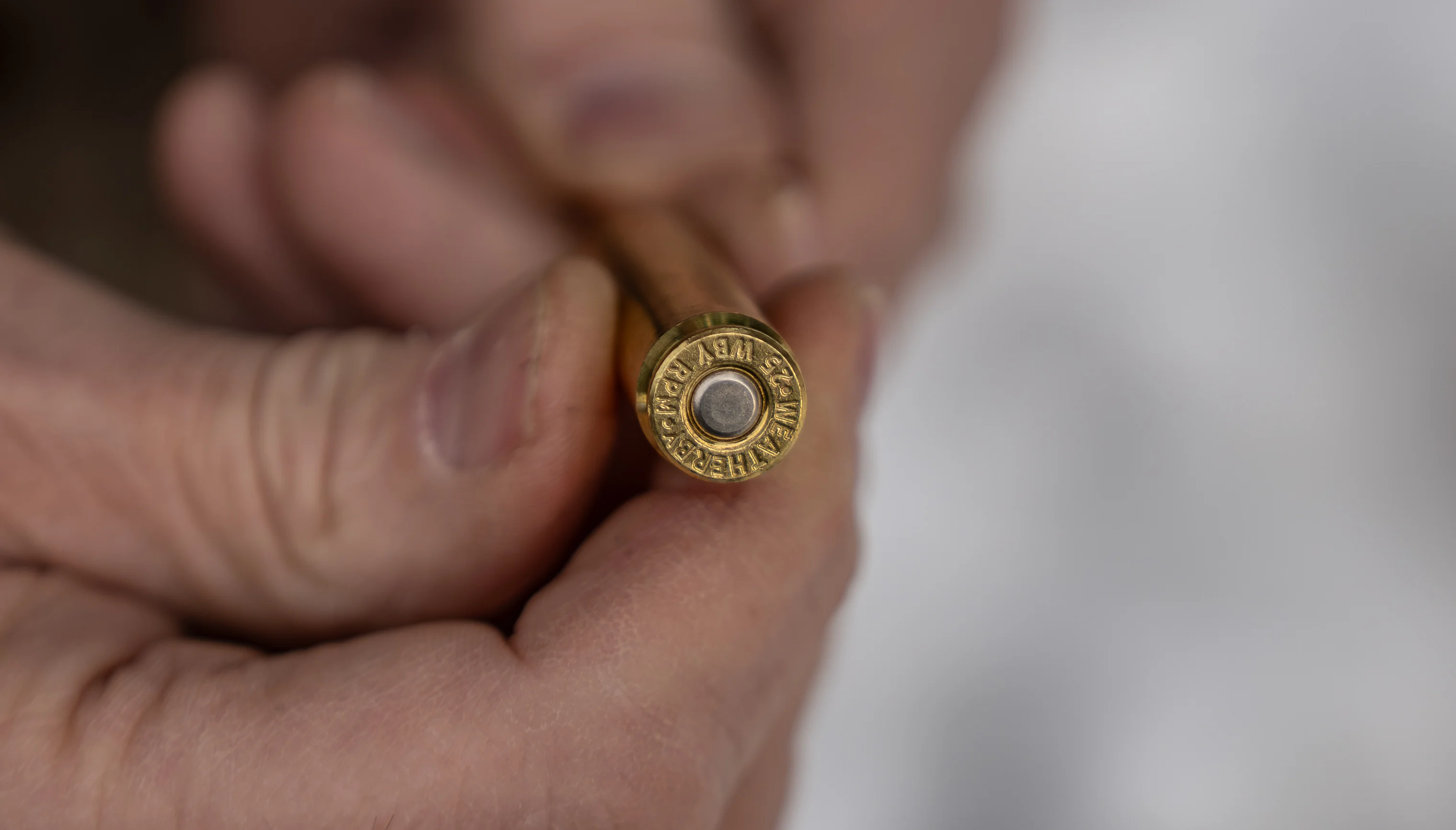
But what about the 257 Weatherby Magnum cartridge? Since it was introduced in 1948, it has been the undisputed velocity king of the quarter bores, and it can push the same bullet about 200 fps faster. However, the 257 Weatherby Magnum has a SAAMI specified rifling twist rate of 1 in 10—it can shoot heavy bullets, but not heavy bullets with a high-ballistic coefficient like the 25 RPM. Out to about 500 yards the 257 Weatherby can shoot a bit flatter, but with the higher-BC bullets, Weatherby’s 25 RPM will buck wind better, and it recoils about 20 percent less.
Lighter Rifles
But there’s another advantage that Weatherby’s 25 RPM cartridge has over the 257 Weatherby Magnum, and it involves the rifle instead of the cartridge. Weatherby makes two Mark V actions. Their six-lug action is designed to work with 30-06-class rifle cartridges with an 0.473 rim diameter, just like the 25-06 Remington and Weatherby’s other two RPM cartridges. The 257 Weatherby requires the nine-lug Mark V action to support its larger case and rim diameter. This means that a Weatherby rifle in 25 RPM will be slimmer, and it will weigh less than a Weatherby rifle in 257 Weatherby Magnum.
The Other 25s
Of course, the 257 Weatherby is not the only 0.25-caliber rifle cartridge the 25 RPM must compete with. Early last year, Hornady legitimized a wildcat cartridge I’d been working with for a decade, and they called it the 25 Creedmoor. It’s nothing but a 6.5 Creedmoor necked down to 0.25-caliber, and it has a 1-in-7.5 rifling twist just like the 25 RPM. Because the 25 RPM holds around 35 percent more gun powder than the 25 Creed, with the same 133-grain bullet—and every other bullet weight—the 25 RPM has a velocity advantage of around 200 fps or more.
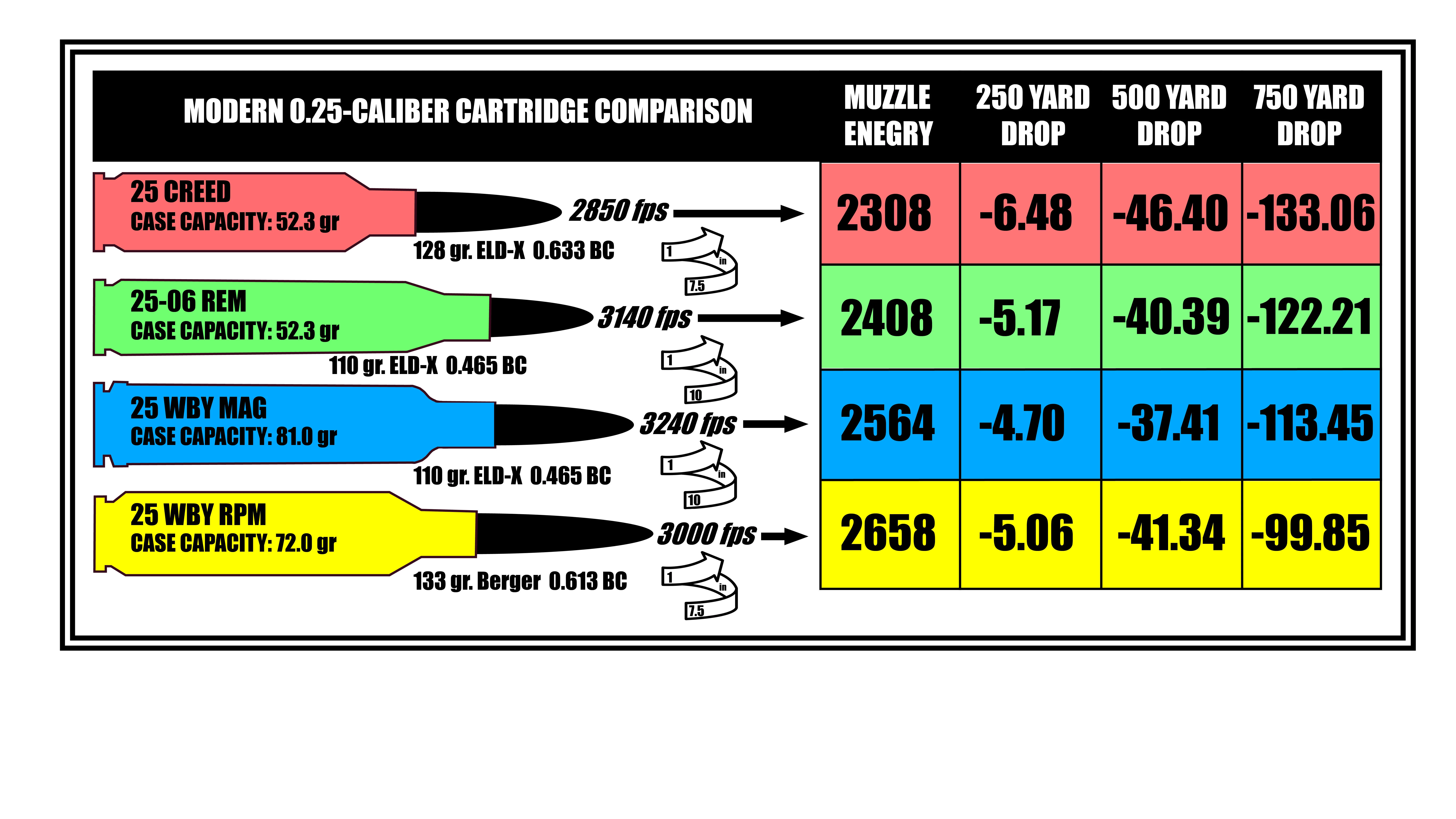
Then of course there is the 25-06 Remington, which is arguably the most successful of all the 0.25-caliber rifle cartridges. Ballistically, it’s superior to all the legacy 0.25-caliber cartridges like the 250 Savage and 257 Roberts, and it’s even faster than the 25 Creedmoor. The 25-06 can push a 120-grain bullet to around 3000 fps, but because of its slower 1-in-10 twist rate, it cannot handle the same high-BC bullets as Weatherby’s 25 RPM, or the 25 Creed. And, with any bullet weight, the 25 RPM still has a velocity advantage.
Read Next: The Best 22 LR Rifles Worth Your Money
Factory Ammo & Handloads
Initially, Weatherby will be offering four factory loads for their new 25 RPM cartridge that include a 107-grain Hammer bullet at 3350 fps, a 117-grain Hornady SST and Barnes LRX bullet at about 3150 fps, and a 133-grain Berger bullet at around 3000 fps. These advertised velocities are with a 24-inch barrel, but early last fall, Weatherby sent me one of their extremely lightweight Backcountry Guide Ti rifles chambered for the new 25 RPM, and it had a 22-inch barrel. I used it to test pre-production samples of three of those factory loads. Based on that test, the advertised velocities from a 24-inch barrel look to be spot on.
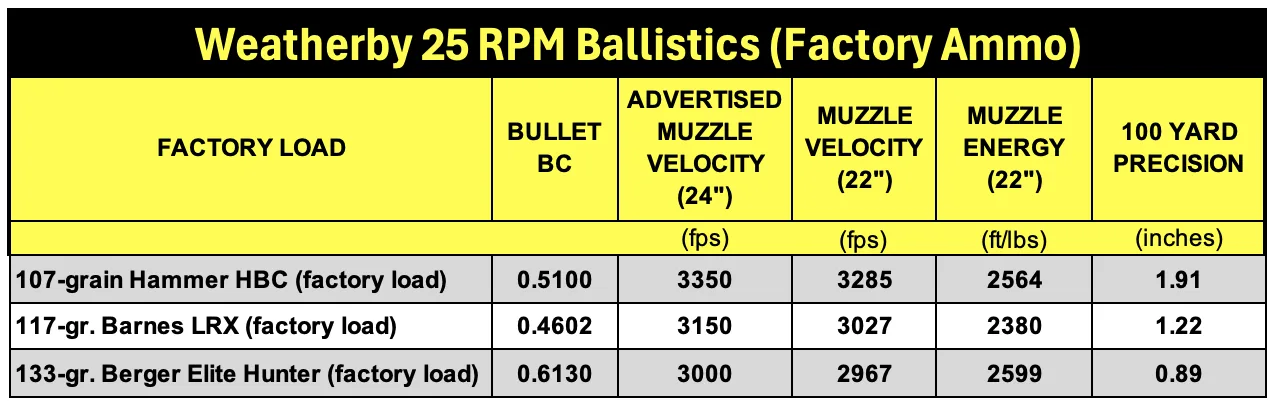
Weatherby also provided reloading dies and reloading data for the 25 RPM, and I did some experimenting with two 0.25-caliber hunting bullets I’ve had great success with on big-game animals when fired from other 0.25-caliber cartridges. I found that, generally, the bullet shoots very well. I worked up to what was a reasonably expected velocity out of the rifle’s 22-inch barrel, and both handloads delivered sub-MOA three-shot groups. All this testing culminated about a week before buck season in West Virginia, so I decided I’d take the Weatherby rifle and the new cartridge hunting.

Field Results
From an antler standpoint, my West Virginia buck season was nothing to brag about, but I did get a chance to do the right thing. At the beginning of the second week, I spotted a young buck across a clear-cut. He was moving oddly, and after a look through a spotting scope, I could tell he was gravely injured. I was afraid to close the distance for fear he might get away, so since I had the reach of the Weatherby 25 RPM, I decided to end his troubles. At 419 yards, a 102-grain Controlled Chaos bullet smacked him square in the shoulder and exited the far side. The buck dropped at the shot, kicked a few times, and his suffering was over. Another hunter had broken his front leg, and that bullet had also gone on to open his chest at the brisket.
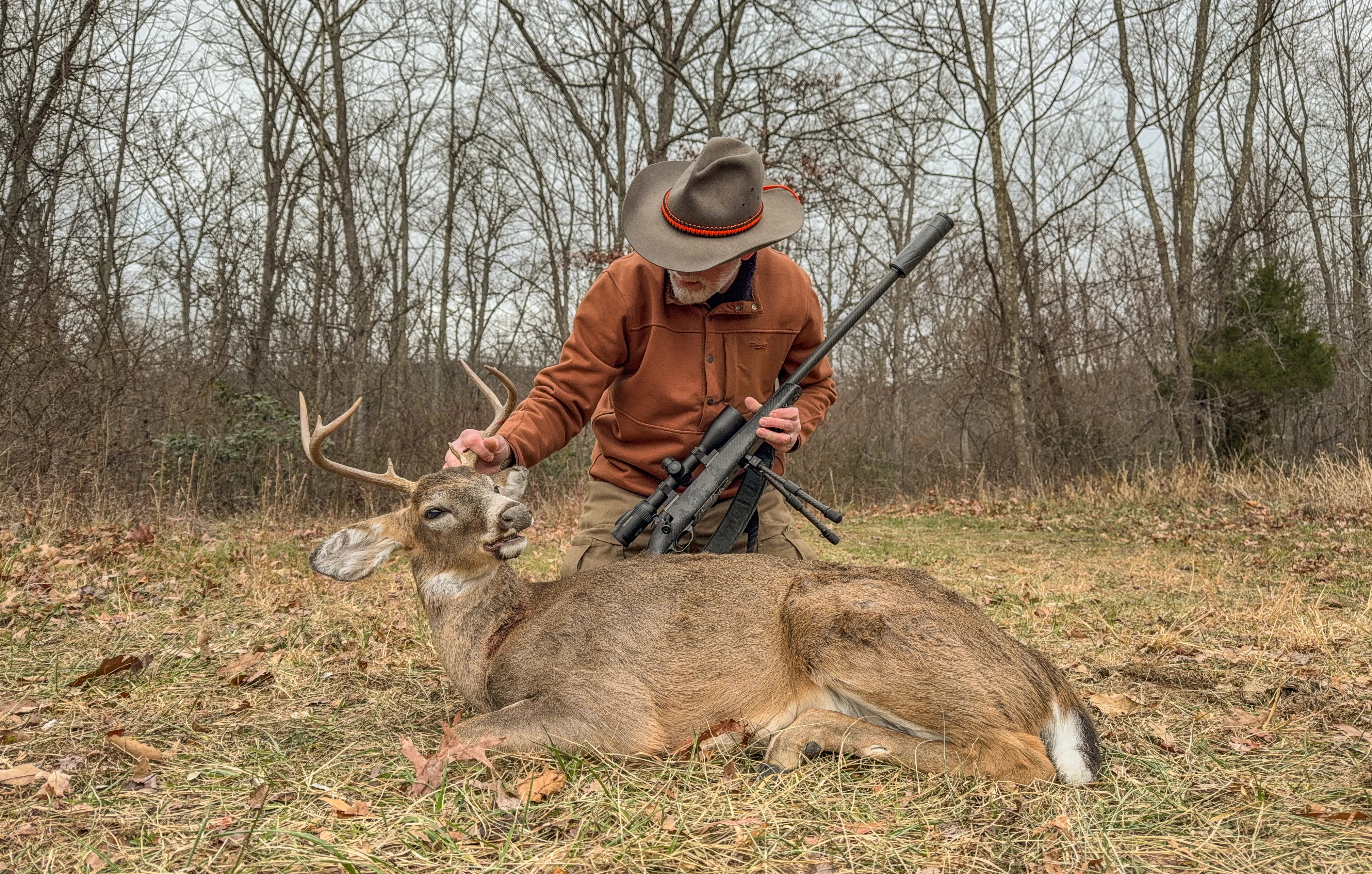
A few days later, another 102-grain Controlled Chaos bullet found a healthy doe that could fill my freezer. She was moving across the same clear-cut but at a much closer 298 yards. The bullet hit her mid-lung, sheared its four petals creating massive internal damage, and the bullet’s base exited her other side. That doe ran about 20 yards and piled up. Could I have made both shots and killed both deer with my 25 Creedmoor? Sure, but I would have probably passed on the longer 419-yard shot and worked to get closer with the lesser cartridge.
Related: The Best Budget Rifles of 2026, Tested and Reviewed
Worth the Trouble?
The true appeal of 0.25-caliber rifle cartridges has always been their dual suitability for varmints/predators and big game. They can work with heavier bullets than the 6mm and with lighter bullets than the 6.5s. If that appeals to you, the 25-06 Remington is a fantastic choice—which is why it's found the acceptance with hunters that it has. However, modern hunters—just like hunters all throughout history—want more power and more reach, and that’s where the 25 RPM comes in. The soft-shooting 25 Creed cannot touch the 25 RPM, which ballistically fills the gap between the 25-06 and the 257 Weatherby, but at extreme distance outperforms both.
Since I generally hunt with my feet as opposed to fps, the 25 Creedmoor suits me very well. But if a hunt looked to potentially put me in a situation like I had with that wounded whitetail buck, I’d appreciate the flatter trajectory and more umph the 25 RPM can deliver at distance. When hunting in country and for animals where long shots are common, Weatherby’s new 25 RPM is just a better option. And for 0.25-caliber devotees like me, the simple answer is to just own both. That's way I can argue with myself each morning about which one of the two best 0.25-caliber cartridges ever created I’ll take hunting.