We may earn revenue from the products available on this page and participate in affiliate programs. Learn more ›
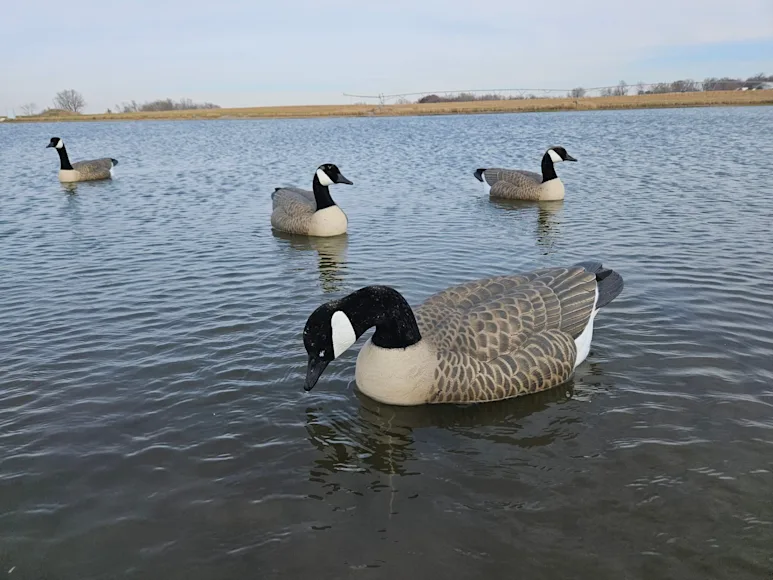
In late October, we got our annual Halloween push of ducks here in the Midwest, and a friend and I timed it just right. We set up on a big agricultural retention pond with winds gusting to 30 mph. I threw out three dozen goose floaters, and we set another dozen full bodies in the shallows. We added a few mallard blocks right at the water’s edge in the landing hole in front of the blind. It’s best to put ducks upwind of geese, as geese don’t like flying over ducks, while ducks will fly over geese.
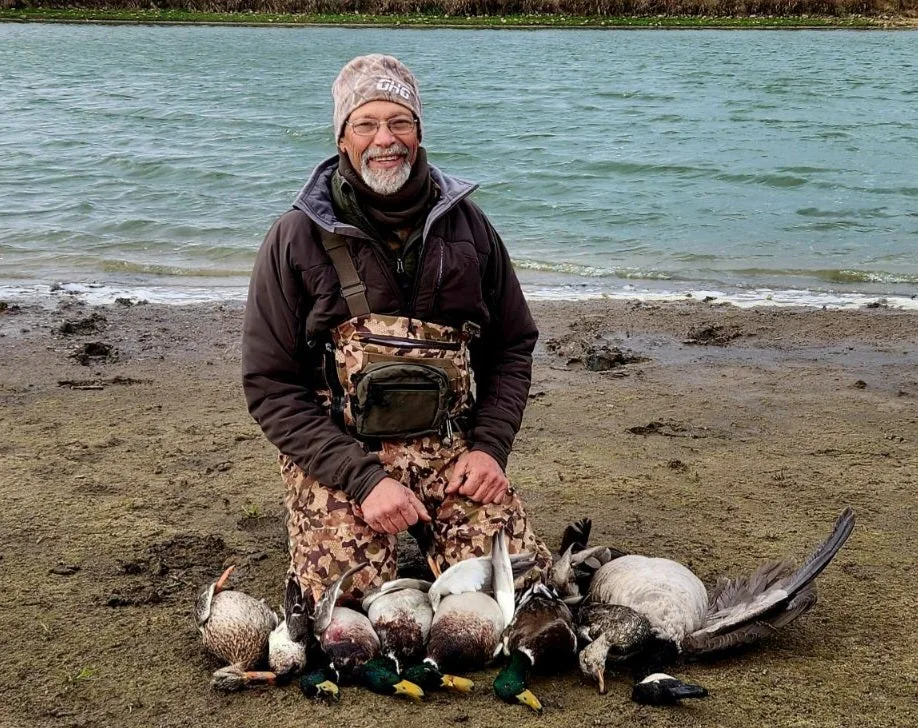
The first ducks in the spread were greenwings, and we shot a pair. Not long after, a big group of mallards worked us, then dropped into the hole. And so it went, until an hour and a half later, I called the shot on a pair of greenheads at ten yards. We stood up, the blind blew down, and we shot our last two ducks of the day.
We added a couple of geese and passed on the shovelers and ruddies that came into the spread. A flock of bluebills landed at the edge of the geese, but they were too bunched up for a clean shot. The point is, everything liked the goose spread that morning. We had a nice bag of mallards, a couple of teal, a gadwall, and some geese. It was proof that a spread of goose floaters can work on ducks just as well as a spread of goose silos and full bodies do in a dry field. And, adding floaters to your collection of goose decoys gives you the ability to target geese on ponds and rivers, where there may be less competition than in dry fields. If you still aren't convinced, here are four reasons big Canada floaters will improve your success on ducks and geese.
1. Practicality
It doesn’t take a huge decoy spread to fool geese over water. Sometimes, as few as four decoys can be enough to pull geese on small ponds or marshes. Plus, geese feel comfortable enough coming to water that even mediocre (that’s putting it kindly) callers like me can honk and cluck a few times to get their attention, and then let the decoys do the work.
2. Easy Hours
The best time and place to hunt geese over water is a loafing spot, which can be whatever pond, marsh, or stretch of river birds go to after breakfast. Find one of these loafing spots and hunt it at “goose time,” which starts about 8:30 and runs through the middle of the day. There’s no need to get up early to hunt a loafing spot, and shooting the roost in the evening is generally frowned upon, as it might move birds out of the area for good. Save a late afternoon roost shoot for the last day of the season. If you’re after a mixed bag of ducks and geese, however, set the alarm early.
3. Aesthetics
If you’ve gotten this far, you’re probably a serious waterfowler, and I don’t have to explain the adrenaline rush of ducks and geese decoying from high altitudes. This leads me to my next point of why you should use goose floaters: geese will lock up as dots in the sky and drop down to water as if on a giant, invisible escalator in a way they rarely do in fields.
I remember honking at a bunch of four passing over from behind me and seeing them stand on their wingtips, drop almost to the water, spin, and come into the decoys, barely skimming the surface as they crossed the pond. It was a sight mesmerizing enough that I turned what should have been an easy triple into a single bird on the water. Watching geese decoy over water is more fun than watching them decoy in dry fields.
4. You’ll Kill More Ducks
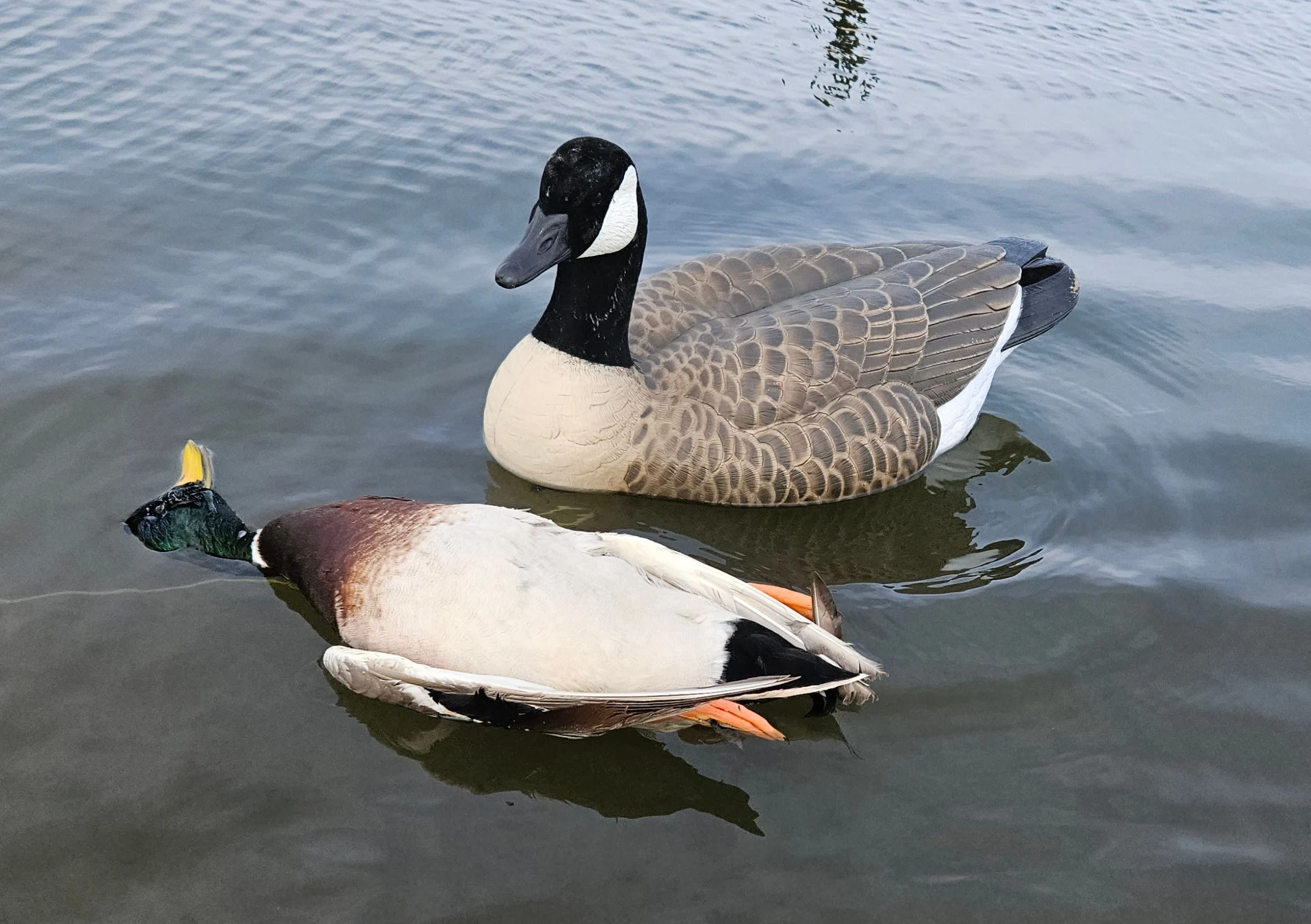
You will shoot far more ducks over goose decoys than you will ever shoot geese over duck decoys. Up to a 90/10 goose-to-duck decoy ratio can work surprisingly well on ducks, and it pulls more geese than a few goose floaters with a large duck spread will. Goose decoys are big, highly visible, and serve as a confidence bird for other waterfowl. This makes your spread not only more appealing and visible to ducks, but also a more secure place for them to land.