On November 17, the Trump Administration’s Environmental Protection Agency and its Army Corps of Engineers issued a new rule that leading conservation groups say will gut the landmark Clean Water Act of 1972. According to groups like Trout Unlimited and the Izaak Walton League, the move threatens fish and wildlife habitat on 80 percent of the nation’s wetlands and up to 50 percent of all stream miles in the Lower 48.
The Clean Water Act passed at a time when water pollution was rampant in the United States and penalties for industries that discharged harmful pollutants directly into streams, lakes, rivers, and wetlands were minimal to nonexistent. It gained unanimous support with the American public in response to environmental disasters like the Cuyahoga River fire of 1969. As originally written, it regulated the discharge of pollutants into any stream or wetland connected to “navigable waters" and gave the federal government jurisdiction over those water bodies.
Waterways protected by the Clean Water Act are commonly referred to as the "Waters of the US" or by the acronym WOTUS. They include countless miles of seasonal or ephemeral streams where native trout thrive. They also encompass millions of acres of wetlands critical for waterfowl populations—\like the famed Prairie Potholes region which covers 100,000 square miles in North Dakota, South Dakota, Montana, Minnesota, and Iowa.
Chris Wood, CEO of Trout Unlimited, tells F&S that the administration's proposed rollback of Clean Water Act protections would take us back to the “bad old days” when industrial pollution made certain waterways unsuitable for hunting and angling. The Izaak Walton League calls it a giveaway for industrial polluters.
"For about half a century, we had relative clarity on what the Clean Water Act applied to because everyone understood that water flows downhill," Wood says. "Unlike some other issues that can be looked at as a zero sum game—Should we drill for oil here, should we not? Should we cut trees here, should we not?—clean water is different.
If there was ever an issue that 100 percent of the American people will get behind, it's clean water. What's disappointing about the Administration's initial offering here is that it doesn't take that reality into consideration—that whether it's for drinking, fishing, swimming, or just for our kids' health, we all support clean water."
The EPA's proposed rule comes on the heels of a 2023 Supreme Court ruling that undercut the Clean Water Act by eliminating protections for ephemeral and intermittent streams and wetlands. That case, known as Sackett v. EPA, originated in Idaho with a couple who wanted to develop a home on a piece of property they owned that included a wetland area protected by the Clean Water Act. When the Supreme Court ruled in their favor, it narrowed the definition of Waters of the US to include only those streams and wetlands with a "continuous surface connection" to broader watersheds.
The EPA's proposed rule goes well beyond Sackett, Jared Mott, the Conservation Director for the Izaak Walton League, tells Field & Stream. "It lays out the most restrictive interpretation of 'Waters of the US' that we've seen yet," Mott says. "It would remove protections for more than 80 percent of wetlands in the Lower 48 and at least 5 million miles of streams."
According to the League's press release, the rule terminates federal jurisdiction over waters that cross state lines. That would remove essential safeguards that are needed in the event that an upstream state's pollution control and public health standards are weaker than a different downstream state’s standards, the press release states.
Joel Webster, Chief Conservation of the Theodore Roosevelt Conservation Partnership, tells F&S that TRCP's stance is that the final EPA rule shouldn't go beyond what the Supreme Court ordered in the 2023 Sackett case. "The Sackett ruling is the law of the land," he says. "We think it is important that the WOTUS rule be consistent with the Supreme Court Sackett rule. Our comments and input will be focused on achieving that outcome."
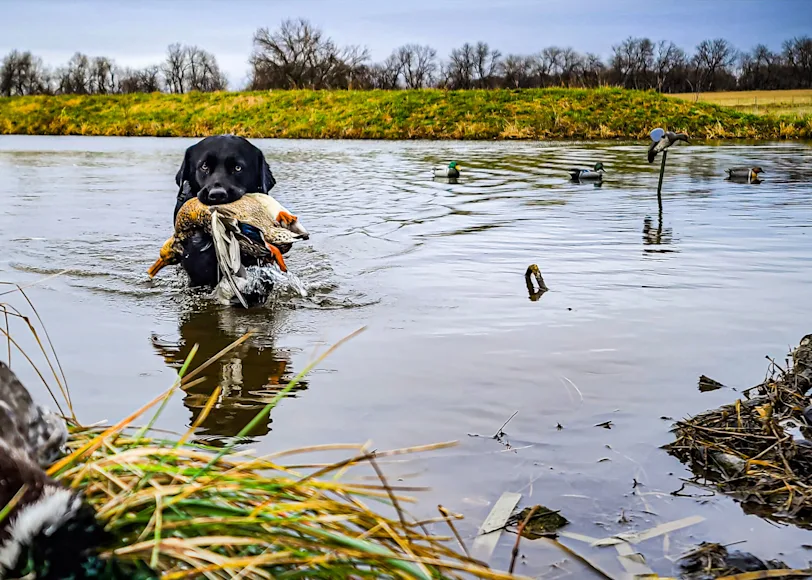
Wood says the proposed rule change has major implications for waterfowl habitat across the country. That's because it would eliminate Clean Water Act protections for critical isolated wetlands like those found in the Prairie Potholes region, which aren’t connected to broader watersheds by visible surface waters. According to Ducks Unlimited, the Prairie Potholes are America's duck factory, hosting anywhere from 34 to 39 million breeding ducks every year. The prospect of losing federal protections for the Prairie Potholes region "should terrify every duck hunter in America," TU's Wood says.
When it announced the rollbacks on Nov. 17, the administration started the clock on a relatively short 45-day public comment period that will close on January 5. Anyone who’d like to weigh in on the decision can do so at regulations.gov by typing “waters of the United States” into the search bar or by clicking here.
You can also contact your representatives to express your support for the Clean Water Act. According to Mott, that strategy is particularly important because it will likely take an act of Congress to restore Clean Water Act protections for the nation's streams and wetlands to where they were in 1972, after the initial passage of the act.
Read Next: Montanans Show Up in Big Numbers to Oppose Mine at Headwaters of Famous Trout Rivers
"We're not helpless here," Mott says. "There are ways to restore the Clean Water Act to what it was originally intended to do, but it's going to take more than a rule-making process run through the EPA or the Army Corps. Congress needs to get involved and to make its intent clear. The interest is there, but we have to get more folks on the Hill comfortable and familiarized with the Clean Water Act as it was originally written."