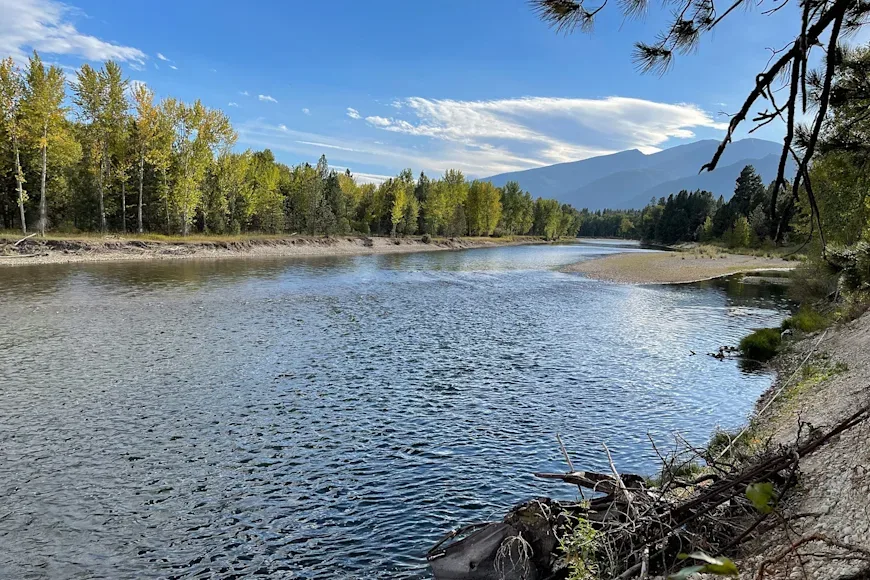
A company with Canadian roots that calls itself “US Critical Materials” is trying to fast track a plan to build a large mine on public land immediately above the headwaters of one of Montana’s best trout fisheries. According to Montana-based conservationists, the West Fork of the Bitterroot River—known for its legendary salmon fly hatches and a native cutthroat trout population that exceeds 1,000 fish per river mile in some sections—could be irreparably damaged if the company is allowed to build its mine, which would be located in an area known as Sheep Creek in the Bitterroot National Forest. Mine opponents say the project would also harm the main stem of the Bitterroot River, which is fed by the West Fork and draws anglers from all over the country.

F&S first reported on USCM’s plan to construct the controversial Sheep Creek mine in May 2023. Since then, the company—by its own admission—has provided surrounding communities with very little information about the specifics of their proposed mine. But according to promotional materials shared with potential investors, the mine site could be one of the largest producers of rare earth elements in the world if it reaches full-scale production. The company's claim site on the Bitterroot National Forest stretches more than 4,500 acres, according to local sources.
Despite its admitted lack of communication with locals in the Bitterroot Valley, USCM has moved forward with an application for so-called "Fast 41" status—a federal program designed to streamline the environmental review and permitting process for large infrastructure projects. Should it be constructed, the company's mine would extract a mineral known as gallium from the Bitterroot's headwaters. Similar mines in other parts of the country and the world all use open-pit mining techniques. But the company claims they've developed methods that will allow them to do all of their mining underground.
Underground mines still come with major environmental risks, however. An underground mine on public land in the San Juan Mountains of Colorado called the Gold King Mine, for example, spilled millions of gallons of toxic acid mine drainage into the Animas River and other downstream watersheds in 2015, and that area is still recovering 10 years later.
Local Opposition to Sheep Creek Reaches a Fever Pitch
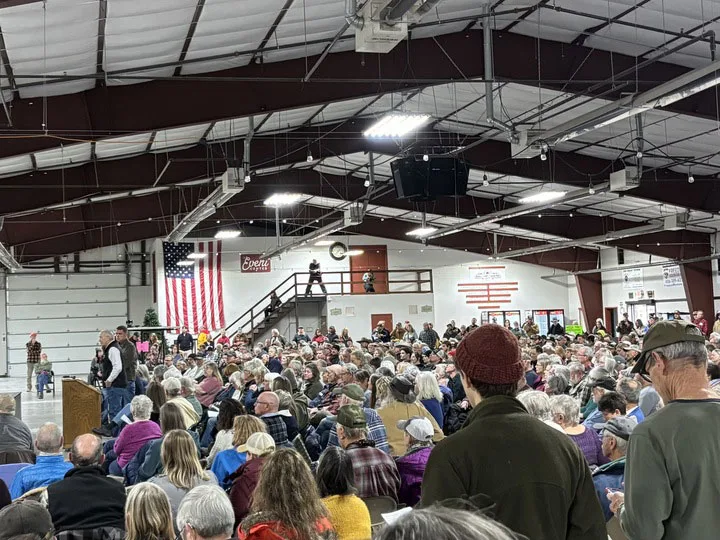
On Monday December 1, representatives from USMC made their first public appearance in the Bitterroot Valley since the company announced its plans more nearly three years ago. Speaking before a packed county commissioners meeting at the Ravalli County Fairgrounds in Hamilton, Montana that drew close 1,000 residents opposed to the project, a USMC employee said that his company has been negligent in its responsibility to keep the public informed about its Sheep Creek operations. While the same employee repeatedly claimed that the mine would be "benign," causing no substantial harm to the fishery, other speakers at the meeting with ties to local conservation groups stated otherwise.

Dr. Philip Ramsey, a local ecologist and an expert on the mining industry’s previous impacts on Montana’s landscape, said the Sheep Creek project could leach radioactive materials like thorium into the famed Bitterroot watershed. Ramsey and his wife Bonnie have been instrumental in raising public awareness about the dangers of the Sheep Creek mine project, hosting continuous community meetings throughout the area since the news broke in 2023.
He also said that some of the samples that USMC has submitted for testing from their exploratory mining activities at the Sheep Creek site show significant portions of arsenic and lead, elements that Ramsey calls river killers. "This would be like dumping toxic waste down a well," Ramsey said during the meeting, adding that, "it's not neighborly."
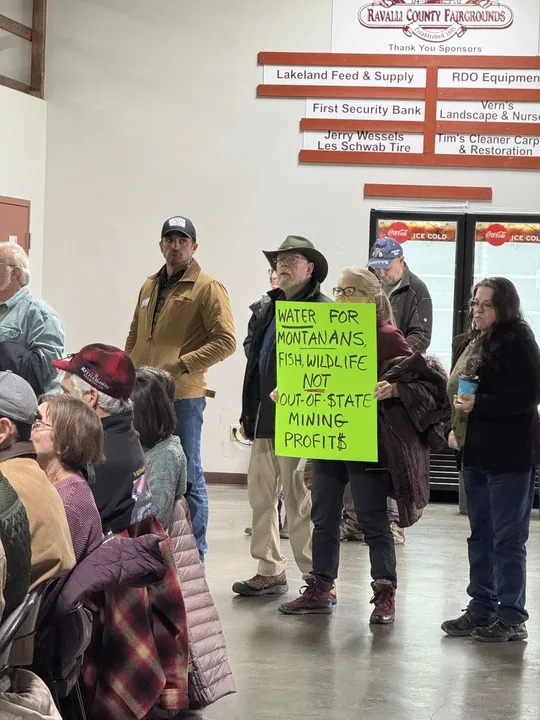
Heather Barber, Executive Director of the Bitterroot Water Partnership, said she is deeply concerned about the proposed mine’s impacts on hunting and fishing in the area. In addition to fly fishing for trout, the area is home to some of the best public land mule deer and elk hunting in Montana. There are also coveted opportunities for big horn sheep and moose hunting in and around the proposed mine site. Barber went on to say that USMC's water use at the mine—once its running at full capacity—could cause parts of the main stem of the Bitterroot River to run dry in the summertime.
Ravalli County Commissioner Jeff Burrows asked probing questions of the USMC representative Scott Osterman, who spoke at Monday's meeting. His inquiries were focused primarily on the amount of industrial mining traffic that will be seen on the narrow, two-lane West Fork Road if and when the mine begins full-on operations. "As county commissioners, one of our main concerns is maintenance of that road," Burrows said. "We'd like to know how many [2-ton] trucks will be coming out of the mine and heading toward Idaho. Wether it's 100 trucks a week or 5,000, that road can't sustain that kind of traffic."
At the end of the meeting, the Ravalli County Commissioners said they would urge Montana's state and national representatives to deny USMC's pending Fast 41 permit. Within hours, Montana Sen. Tim Sheehy released a statement of opposition to the project on X. "I strongly support unleashing Montana’s resource economy and mining industry. I also believe local voices must be heard loudest when considering public lands policy," reads Sheehy's X post. "Regarding the Sheep Creek Mine, local Montanans have made their opposition clear, therefore I oppose efforts to approve the proposed Sheep Creek Mine and encourage the Permitting Council to remove it from their fast-track list."
Read Next: Wyoming Bill Could Privatize the State’s Big Game Animals
On December 2, Montana House Rep. Ryan Zinke echoed Sheehy's stance in a joint statement with the Senator. “Montana knows better than anyone there’s a right and wrong way to mine," Zink said. "Fast tracking a mine with overwhelming public opposition and bypassing the mechanisms that allow for transparency and accountability is the wrong way to do it. Ravalli County officials and residents have been clear in their concerns and opposition to this project. It has fallen on deaf ears and they have received no communication from the company. I urge the council to remove Sheep Creek from the FAST 41 process."